The digital transformation of commerce has fundamentally altered how organizations communicate with consumers, elevating social media marketing from a peripheral experimental tactic to a core pillar of modern corporate strategy. As global digital penetration continues to expand—with billions of active users engaging across various applications daily—brands face both unprecedented opportunities and operational complexities. Social media marketing involves the strategic utilization of digital networks such as Facebook, Instagram, TikTok, and X (formerly Twitter) to achieve overarching commercial objectives. These objectives frequently extend beyond immediate sales conversions to encompass brand awareness enhancement, customer service delivery, community building, and direct product distribution.
Understanding the mechanics of digital ecosystems requires examining how companies navigate consumer expectations. Modern audiences no longer respond favorably to traditional, one-way advertising models. Instead, consumers demand transparency, authenticity, and relational engagement. However, for organizations or leadership teams unaccustomed to daily digital platform usage, initiating a comprehensive social media strategy can present significant operational hurdles. Bridging this gap necessitates a structured approach, aligning platform selection with demographic realities and establishing clear metrics for success.
The Evolution and Chronology of Digital Brand Engagement
The trajectory of social media as a commercial medium has evolved rapidly over the past two decades. In its early phases during the mid-2000s, platforms like MySpace and early Facebook were primarily viewed as interpersonal networking tools for younger demographics. Corporate entities initially treated these spaces with skepticism, often categorizing them as transient digital fads with negligible return on investment.
By the early 2010s, the paradigm shifted. The widespread adoption of smartphones equipped with high-resolution cameras and ubiquitous mobile internet access transformed social platforms into immersive media consumption hubs. Platforms introduced sophisticated advertising algorithms, precise audience targeting capabilities, and native analytics dashboards. This era marked the transition of social media from a purely social space to a data-driven marketplace.
In the subsequent years, the diversification of platforms accelerated. While Facebook consolidated its dominance as a general-interest networking site, visual-first platforms like Instagram captured younger cohorts, and professional networks like LinkedIn established robust utility for B2B (business-to-business) marketing and corporate branding. Most recently, the ascendancy of short-form video algorithms, popularized predominantly by TikTok, has fundamentally compressed consumer attention spans while expanding the potential for organic, viral brand visibility. This historical progression underscores that digital marketing is not a static discipline, but a continuously mutating environment requiring constant strategic adaptation.
Core Components and Strategic Frameworks
Effective social media marketing relies on a synchronized interplay of several foundational elements. Without these components, corporate digital initiatives risk fragmenting, leading to wasted capital and inconsistent brand messaging.
Content creation serves as the primary engine of any social strategy. This involves producing text, imagery, audio, and video assets tailored to the specific algorithmic and cultural norms of individual platforms. Closely tied to content is community management, which involves active listening, responding to consumer inquiries, mitigating public relations risks, and fostering an inclusive digital environment for brand advocates.
Paid advertising represents another critical pillar. Organic reach—the number of users who see content without financial promotion—has steadily declined across major platforms due to algorithmic saturation. Consequently, integrating organic community building with targeted paid campaigns is essential for achieving scalable growth. Finally, analytics and performance measurement close the loop. By tracking key performance indicators (KPIs) such as engagement rates, click-through rates, and conversion attribution, organizations can refine their operational approaches based on empirical data rather than intuition.
Global Landscape and Platform Demographics
Navigating the contemporary social media ecosystem requires a granular understanding of where specific target demographics congregate. While Western markets are heavily saturated by platforms rooted in the United States, global usage patterns vary significantly by geography, culture, and regulatory environment.
Globally, the most prominent platforms utilized by corporate marketers include:
- Facebook: Maintains the largest overarching active user base, offering extensive demographic reach suitable for multi-generational consumer targeting and community-based engagement.
- Instagram: Highly effective for visually driven industries such as fashion, hospitality, and retail, utilizing a mix of permanent grid posts, ephemeral stories, and short-form reels.
- TikTok: Dominates younger demographic segments through algorithmic content discovery, prioritizing creative, authentic, and entertaining video formats.
- X (formerly Twitter): Functions as a real-time information network, ideal for conversational engagement, customer service triage, and culturally resonant commentary.
- LinkedIn: The premier digital environment for professional networking, employer branding, B2B lead generation, and corporate thought leadership.
Beyond these dominant global networks, regional nuances dictate alternative platform integration. For instance, Reddit and Tumblr serve highly specialized, community-driven niches where traditional corporate advertising is frequently met with skepticism, requiring a more nuanced, participatory approach. Furthermore, geographically isolated markets rely entirely on localized ecosystems; platforms such as WeChat and LINE dominate daily communication, commerce, and marketing operations across significant portions of East Asia.
Case Studies in Contemporary Enterprise Execution
Examining organizations that excel in digital engagement provides practical insights into translating theoretical strategy into effective execution. Across diverse industries, successful brands tailor their voice and medium to fit platform-specific expectations.
In the fast-food sector, Wendy’s has established a benchmark for conversational agility on X. By leaning into self-aware humor, witty banter, and culturally relevant commentary, the brand routinely generates viral engagement that traditional billboard or television advertising cannot replicate. This approach humanizes a multinational corporation, transforming a corporate entity into a relatable online personality that actively interacts with consumers.
In the entertainment and streaming sector, Netflix utilizes Facebook not merely as an advertising broadcast channel, but as a community forum. By sharing behind-the-scenes snippets, early trailer releases, interactive trivia, and culturally resonant memes, Netflix creates a digital watercooler where subscribers discuss existing series and anticipate upcoming releases. This strategy fosters deep brand loyalty and organic peer-to-peer recommendations.
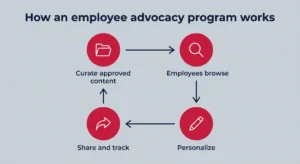
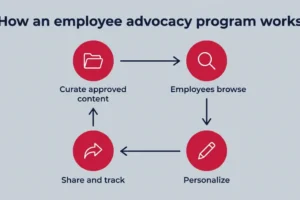
Within the corporate beauty and retail sector, L’Oréal effectively leverages LinkedIn to cater to its professional and values-driven audience of over 85,000 followers. Rather than pushing direct product sales, the company focuses on educational skincare science, employee advocacy spotlights, and transparent updates regarding corporate sustainability and environmental activism. This approach aligns with the expectations of a professional demographic that values corporate social responsibility and expertise.
In the fitness and apparel industry, Gymshark commands significant cultural influence through TikTok. By publishing a blend of instructional workout content, training motivation, and lighthearted fitness humor, Gymshark demonstrates that health-focused brands do not need to take themselves overly seriously. The content acknowledges the intimidation often associated with physical fitness, cultivating an inclusive, community-oriented digital identity that resonates deeply with younger consumers.
Foundational Resources and Implementation Literature
For organizations and marketing professionals seeking to build or refine their digital capabilities, academic and industry literature offers structured guidance on navigating the modern internet.
In See You on the Internet: Building Your Small Business with Digital Marketing, author Avery Swartz addresses the common anxiety of becoming invisible amid the constant influx of new digital enterprises. Swartz emphasizes that an effective social media strategy cannot exist in a vacuum; it must tightly integrate with broader digital touchpoints, including corporate websites, paid search advertising, and email newsletters. The text provides foundational frameworks for setting realistic expectations, defining digital scopes, and establishing coherent online identities for small to mid-sized businesses.
Complementing this operational view, Carlos Gil’s The End of Marketing: Humanizing Your Brand in the Age of Social Media and AI argues that modern consumers purchase from people rather than faceless corporate entities. Gil asserts that successful digital marketing requires shifting the primary corporate mindset away from aggressive selling toward genuine audience engagement. The book outlines tactical best practices for humanizing brand voices across platforms like Facebook and LinkedIn, emphasizing empathy, responsive communication, and narrative transparency as prerequisites for long-term commercial viability.
To operationalize these strategies, marketing teams frequently utilize structured administrative tools. Industry resource hubs, such as those provided by Hootsuite, offer standardized templates, editorial calendars, performance tracking guides, and analytical checklists. These logistical frameworks allow social media managers to maintain consistent publishing schedules, coordinate multi-channel campaigns, and quantitatively measure return on investment across complex digital infrastructures.
Broader Economic Implications and Strategic Outlook
The proliferation of social media marketing carries significant macroeconomic implications. As digital platforms increasingly double as e-commerce checkouts—allowing consumers to discover, evaluate, and purchase products without ever leaving an application—the traditional boundaries between advertising, media consumption, and retail continue to dissolve.
For businesses, this shift democratizes market entry. Smaller enterprises with modest capital can achieve global visibility through creative, organic content execution that previously required substantial television or print media budgets. However, this democratization has also intensified market saturation, forcing organizations to compete aggressively for diminishing consumer attention spans.
Ultimately, the future of social media marketing will likely be shaped by advancements in artificial intelligence, personalized algorithmic delivery, and shifting consumer privacy regulations. Organizations that maintain a balance between data-driven targeting and authentic human engagement will be best positioned to navigate these structural transformations. By anchoring digital initiatives in clear commercial objectives, understanding platform-specific cultural norms, and respecting consumer demand for transparency, businesses can transition social media from an experimental marketing channel into a sustainable engine of long-term enterprise value.