In the hyper-connected digital economy, the internet serves as an unrelenting, global focus group. Every second, millions of consumers voice opinions, share grievances, and express preferences regarding brands, products, and entire industries. For modern enterprises, the challenge is no longer merely participating in this digital dialogue, but systematically capturing and decoding it. Social listening has evolved from a passive tracking exercise into a critical business intelligence discipline. By monitoring the correct quantitative and qualitative indicators, organizations can transform unstructured online chatter into actionable insights that protect reputations, refine messaging, and drive product innovation across departments.

Unlike traditional customer surveys or lagging focus groups, social listening provides unfiltered, real-time access to consumer sentiment. However, the sheer volume of data generated across the web can easily overwhelm even seasoned marketing teams. The core objective is not to gather the largest quantity of data points, but to isolate the metrics that offer genuine strategic utility. Industry experts emphasize that tracking numbers without context is a recipe for misallocation of resources. By understanding the distinction between raw metrics and strategic Key Performance Indicators (KPIs), businesses can align their digital monitoring efforts with overarching corporate goals, ranging from crisis mitigation to competitive market positioning.
Defining Metrics Versus Key Performance Indicators in Social Strategy
To build an effective social listening framework, organizations must first distinguish between a standard metric and a KPI. A metric is simply a measurable data point—such as the number of times a brand name appears online within a 24-hour period. That same data point only transforms into a KPI when it is explicitly tied to a strategic business objective. For example, tracking mention volume becomes a KPI when an enterprise sets a definitive goal to increase brand awareness by a specific percentage over a quarter.

Similarly, share of voice serves as a raw metric of category visibility, but functions as a KPI when management aims to surpass a primary competitor in share of industry discourse over a fiscal year. Sentiment analysis transitions from a background metric into a vital KPI when a company actively seeks to improve overall consumer perception following a product rollout or corporate restructuring. Establishing this baseline distinction ensures that data collection serves a clear purpose, bridging the gap between raw social media analytics and executive-level decision-making.
The Five Core Pillars of Business Impact
The true value of social listening extends far beyond the marketing department, providing critical intelligence for product development, sales enablement, and crisis management teams.
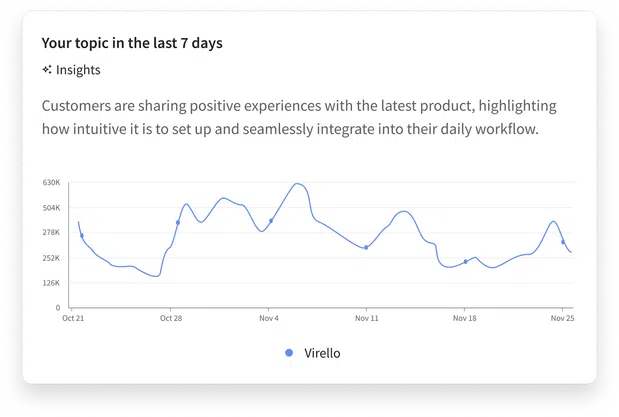
First, social listening fundamentally enhances an organization’s understanding of audience perception. While executive assumptions often dictate messaging strategy, listening tools reveal how consumers actually talk about products in the wild. This uncovers hidden product benefits that marketing teams previously overlooked, as well as persistent consumer misconceptions that require immediate clarification.
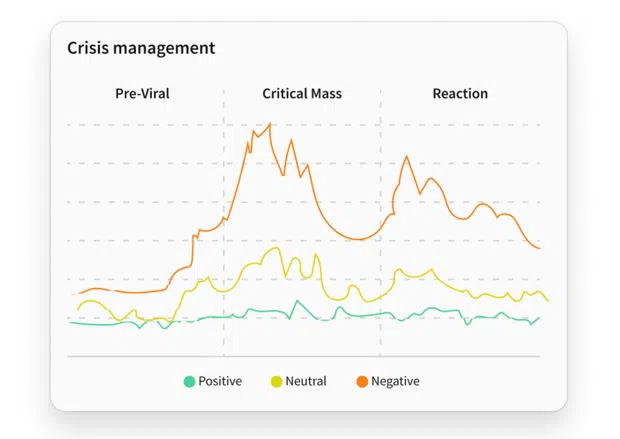
Second, the practice acts as an indispensable shield for brand reputation. In the digital age, negative sentiment can cascade across platforms within hours. Advanced social listening systems provide early warning mechanisms, detecting upward ticks in negative commentary or viral complaints before they escalate into full-scale public relations crises. This early notification window allows communications teams to evaluate the situation methodically, drafting targeted responses or executing pre-planned crisis management protocols.
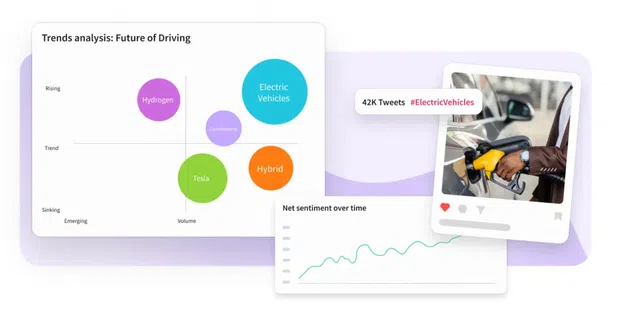
Third, social listening enables proactive trend spotting. The most advantageous time for a brand to capitalize on an emerging cultural or industrial trend is before market saturation occurs. By tracking topic velocity, organizations can identify nascent conversations during their infancy, determining whether a trend aligns with brand values and executing campaigns while the topic remains fresh.
Fourth, the discipline sharpens content creation and brand messaging. A common pitfall in corporate communication is a mismatch between internal product descriptions and external consumer language. By analyzing the exact adjectives and phrases consumers use, brands can eliminate linguistic gaps. Tom Bukevicius, CEO and Founder of Scube Marketing, observed this dynamic during a client campaign. Rather than questioning the core utility of the product, target audiences were expressing confusion over how the offering differed from cheaper market alternatives. By pivoting the campaign messaging from feature-heavy descriptions to clear comparative positioning, the firm successfully resolved the conversion barrier.
Finally, social listening directly informs high-level business decisions. Consumer commentary on digital platforms frequently contains unprompted product feedback that never reaches official support tickets or formal satisfaction surveys. When customers relentlessly praise a specific product feature, research and development teams gain validation for future iterations. Conversely, when a competitor alters its pricing model and consumer forums register widespread dissatisfaction, sales teams can instantly adapt their outreach strategies to capitalize on the competitor’s vulnerability.
The Seven Essential Social Listening Metrics
Industry analysts generally agree that out of dozens of available data points, seven specific social listening metrics provide the highest strategic value for enterprise monitoring programs.

1. Mention Volume
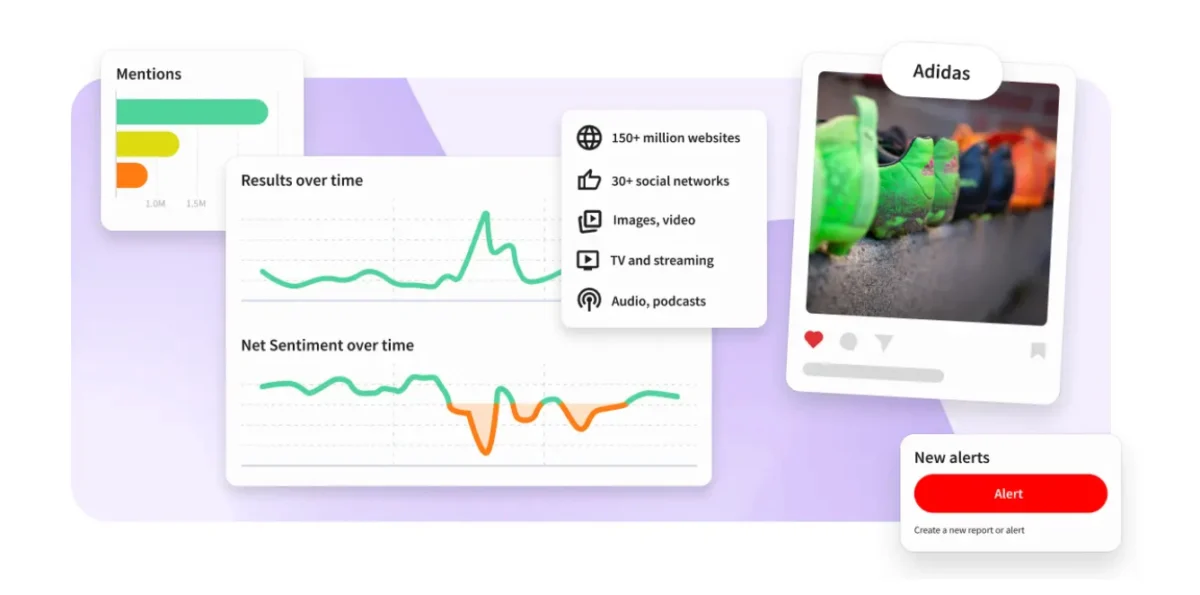
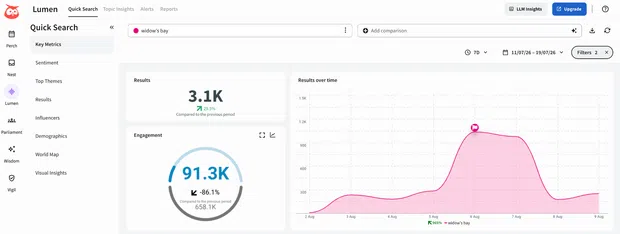
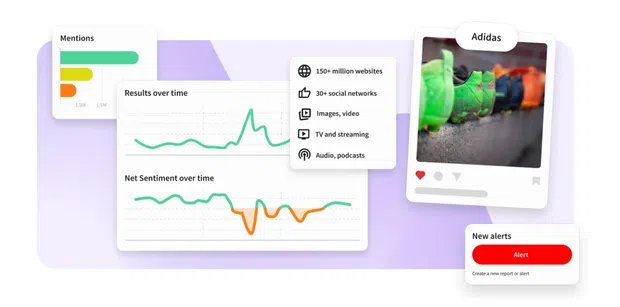
Mention volume tracks the total frequency with which a brand, product, campaign, or competitor is referenced across digital platforms. A sudden anomaly—whether a sharp upward spike or an unexpected decline—serves as an operational trigger. While volume alone cannot define the tone of the conversation, it signals that immediate investigation is warranted to determine whether a campaign has achieved viral success or if an operational failure has occurred.
2. Sentiment Analysis
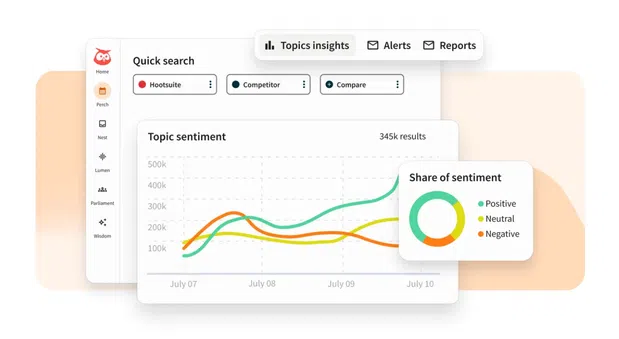
Sentiment analysis categorizes the emotional tone behind online conversations, typically sorting data into positive, negative, or neutral buckets using natural language processing. Because high mention volume can sometimes be driven by a public relations disaster, sentiment provides the necessary emotional context. Tracking net sentiment over time allows brand managers to gauge the health of public perception and evaluate the immediate aftermath of strategic initiatives.
3. Share of Voice (SOV)
Share of voice measures the proportion of industry-wide conversation that a specific brand owns relative to its competitors. A growing SOV indicates expanding market mindshare, whereas a declining percentage suggests that competitors are successfully capturing consumer attention. Tracking SOV before, during, and after major promotional pushes helps marketing executives measure the true impact of advertising spend on market dominance.
4. Reach
Reach estimates the potential audience size that has been exposed to conversations or mentions involving a brand. While impressions measure total views—including repeat views from the same user—reach focuses on unique potential viewers. This metric is particularly vital when evaluating influencer partnerships, as a single endorsement from an authoritative figure can dwarf the reach of numerous unengaged consumer posts.
5. Engagement Rate
Engagement rate quantifies the depth of audience interaction with relevant content through likes, shares, comments, and saves. High engagement signals that a particular topic, theme, or message resonates strongly with the target demographic, providing a clear mandate for brands to replicate successful content strategies in future planning cycles.
6. Trend and Topic Volume
Trend and topic volume monitors the velocity of specific keywords and themes over extended timeframes. By observing the trajectory of these topics, data analysts can identify emerging behaviors and interests before they become mainstream, granting early-mover advantages to brands prepared to adapt their output.
7. Conversation Themes
Conversation themes capture the qualitative substance of digital discourse, identifying recurring questions, feature requests, or complaints. While quantitative metrics show numbers and trends, conversation themes provide the narrative context, enabling organizations to address root causes rather than superficial symptoms.
Implementing Integrated Technological Solutions
To operationalize these metrics efficiently, modern enterprises increasingly rely on sophisticated, all-in-one social media intelligence platforms. Industry-leading ecosystems—such as Hootsuite’s comprehensive suite, which incorporates tools like Lumen for real-time monitoring, Perch for cross-channel performance reporting, and Wisdom for artificial intelligence-driven analysis—streamline the entire workflow from data collection to executive action.
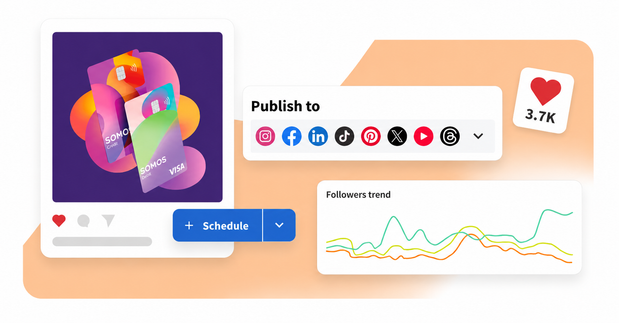
Lumen exemplifies the modern shift toward real-time data ingestion, tracking conversations across more than 150 million online sources simultaneously. By capturing mentions, sentiment shifts, and emerging trends as they happen, such platforms ensure that corporate communications teams maintain narrative control during critical moments. Meanwhile, platforms like Perch integrate social listening insights directly with publishing and publishing performance analytics, allowing marketing teams to correlate listening data with actual content outcomes.
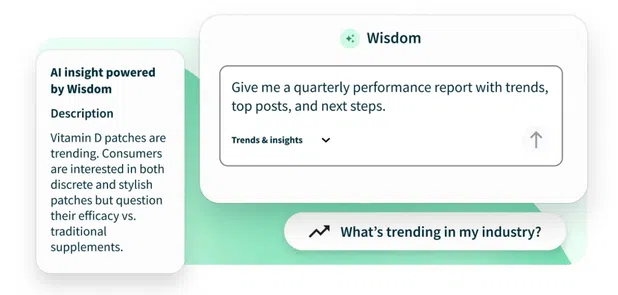
The integration of artificial intelligence further accelerates this analytical process. Tools equipped with conversational AI, such as Hootsuite’s Wisdom, allow stakeholders to query complex data sets using natural language prompts. Instead of manually parsing dense charts, analysts can ask specific operational questions, receiving immediate, actionable recommendations for campaign adjustments, response strategies, or content drafting.
Strategic Implications and Future Outlook
Ultimately, social listening metrics serve as the foundational architecture for proactive brand management. As digital platforms continue to multiply and consumer expectations evolve at an unprecedented pace, the ability to listen intelligently will separate market leaders from lagging competitors. The consensus among digital strategists remains clear: the goal of data collection is not infinite accumulation, but timely pattern recognition. By continuously tracking mention volume, sentiment, share of voice, reach, engagement rates, trend velocities, and conversation themes, organizations can future-proof their operations, ensuring that business decisions are anchored in the authentic voice of the global consumer.