The digital landscape is defined by a relentless competition for human attention. In an era where the average attention span of an internet user has been reported by various studies to be approximately eight seconds, the opening sentence of a blog post functions as a critical gatekeeper. While headlines and search engine optimization (SEO) strategies serve to drive initial traffic to a webpage, the success of content retention relies almost entirely on the quality and engagement level of the opening paragraph.
The Anatomy of Reader Retention
Research from the Nielsen Norman Group confirms that users rarely read web pages word-by-word; instead, they scan for information. This behavior necessitates an opening line that acts as a bridge between the reader’s intent and the content’s value. If the headline is the promise, the opening line is the delivery mechanism. When a reader encounters a lackluster introduction, the bounce rate—the percentage of visitors who navigate away after viewing only one page—tends to increase significantly. For content creators, the objective is to reduce this friction by employing specific psychological triggers that encourage deeper engagement.
1. The Strategic Identification of User Needs
The most direct path to engagement is the alignment of content with the specific problem the reader is attempting to solve. By explicitly identifying a pain point within the first two sentences, a writer signals competence and empathy. Data from content marketing firms suggests that articles which front-load the solution to a specific reader query experience 30% higher completion rates compared to those that employ a gradual, narrative-style introduction.
2. The Power of the Binary Response
Copywriters have long utilized the "Yes-Question" technique to establish a psychological feedback loop. By posing a question that elicits an immediate, affirmative response, the author validates the reader’s presence and premise. This technique relies on the "consistency principle" in psychology; once a reader has mentally agreed with a premise, they are statistically more likely to continue the behavior of reading to maintain that state of alignment.
3. Leveraging Curiosity Gaps
Curiosity gaps involve providing enough information to spark interest while withholding the resolution until later in the text. This is a classic journalistic device, often referred to as the "lead." By posing an intriguing, unconventional question or presenting a paradoxical scenario, the writer creates a cognitive tension that can only be resolved by reading further.
4. Personal Anecdotes and the Humanization of Content
Personal narratives, even those that appear tangential at the outset, serve to break the monotony of formal digital prose. An unexpected story—such as an account of a name mix-up or a personal blunder—humanizes the author, fostering a sense of trust. In professional blogging, this "pattern interrupt" serves to snap the reader out of a passive, scanning state and into an active, attentive one.
5. Utilizing Analogies for Conceptual Clarity
Complex or technical topics often require a bridge to make them accessible. An analogy serves this purpose by mapping a difficult concept onto a familiar scenario. This technique is particularly effective in high-authority niches, such as financial analysis or technical tutorials, where the objective is to simplify dense information without sacrificing accuracy.
6. The Impact of Bold Claims
A well-placed, defensible claim can serve as a powerful hook, provided it is supported by evidence within the body of the article. Assertions such as "The current industry standard is obsolete" or "This method will reduce your workload by 50%" establish authority. However, this strategy carries a high burden of proof; the article must immediately transition into substantiating the claim to avoid eroding reader trust.
7. Navigating Controversy
While polarizing content can stimulate high engagement, it is a tool that requires careful handling. By challenging a common industry practice or addressing a controversial trend, an author can attract a highly engaged, albeit critical, audience. From an analytical perspective, controversy should be leveraged to stimulate debate rather than to incite hostility, as constructive engagement is more likely to yield long-term audience growth.
8. Evoking Sensory Imagery
The use of sensory-rich language—encouraging the reader to "visualize" a scenario—engages the reader’s imagination. This is a common tactic in narrative journalism and persuasive writing. By describing a scene in vivid detail, the author creates a visceral experience that is far more memorable than a dry, factual introduction.
9. The Authority of Statistical Evidence
Hard data remains one of the most effective ways to command attention. Starting a post with a startling statistic—for example, "90% of small businesses fail to leverage their own data"—provides an objective foundation for the discussion that follows. Statistics create an immediate sense of urgency and provide a quantitative reason for the reader to invest time in the article.
10. The Utility of Quotations
A well-selected quote from an industry expert or historical figure can lend immediate credibility to a piece of writing. The key to this strategy is relevance; a quote that is tangential or cliché can have the opposite effect, signaling a lack of original thought. When used correctly, a quote acts as an anchor for the themes that will be explored.
11. Visual Integration as a Hook
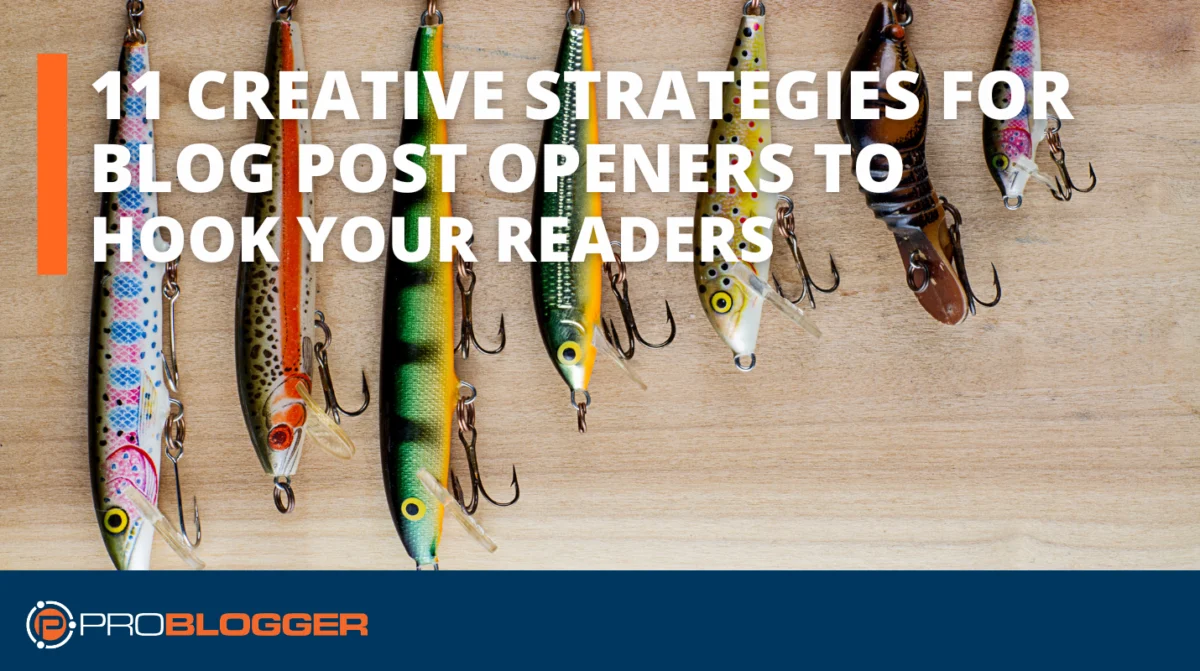
In the age of social media, the visual component of a post is often the first thing a reader sees. An impactful image—whether a photograph, an infographic, or a custom illustration—can function as an opening "line" of its own. Research into visual processing indicates that the human brain processes visual information significantly faster than text. Integrating a high-quality visual at the top of the post can provide the necessary context to draw the reader into the written content.
Analytical Implications for Content Strategy
The cumulative effect of these 11 strategies is a more robust, audience-centric content architecture. Analysis of top-performing digital publications shows that these outlets rarely rely on a single technique; instead, they iterate through these strategies to keep their content feeling fresh.
From a broader perspective, the move toward "hook-heavy" introductions represents a shift in the power dynamic between creators and consumers. As the volume of available content grows exponentially, the responsibility for maintaining engagement has shifted from the reader’s patience to the author’s skill.
Conclusion
The art of the opening line is not about manipulation; it is about respecting the reader’s time. By utilizing one or more of these strategies—identifying needs, leveraging data, or employing narrative elements—writers can ensure that their message is not only delivered but also received. The most effective approach is to maintain a constant awareness of the reader’s perspective: What do they need? What will surprise them? What will make them feel that their time has been well-invested? By addressing these questions at the very beginning of every article, writers can turn a fleeting visit into a long-term engagement.