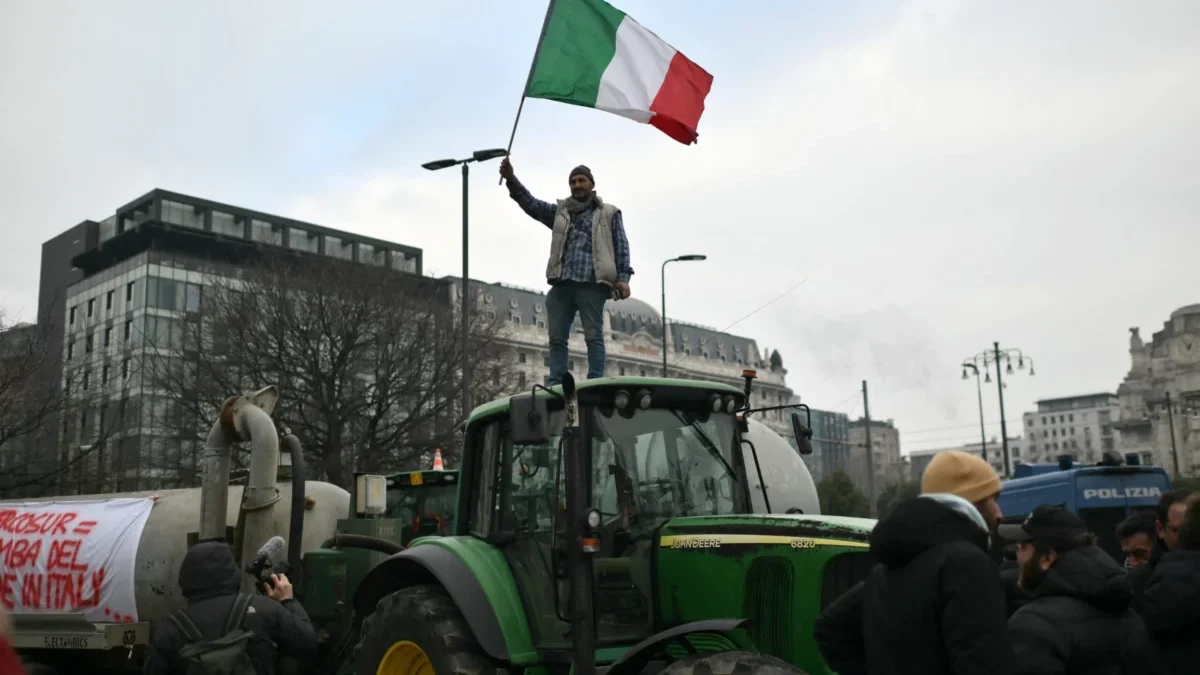
The social and economic fabric of Italy faces an unprecedented strain as tens of thousands of citizens took to the streets across more than 50 cities this past Friday, marking a massive escalation in public discontent. From the industrial hubs of the north to the agricultural heartlands of the south, the demonstrations—coordinated by the grassroots labor union USB—have underscored a deepening divide between the government and a populace reeling from runaway inflation and surging energy costs. In Turin, the unrest turned visceral as farmers dumped two bins of manure in front of the city hall, a symbolic act of defiance against the regional administration’s perceived prioritization of the defense industry over the basic survival of its agricultural sector.
This wave of civil disobedience represents a culmination of months of simmering frustration. The catalyst for the latest demonstrations is a reported 5.4% inflation rate for October, the highest level recorded in Italy in over three years. While global inflationary pressures have affected much of the developed world, Italy’s situation is compounded by a dramatic 31.4% surge in energy prices compared to the previous year. The cost of fuel has reached such prohibitive levels that in some southern municipalities, citizens have resorted to archaic modes of transport, such as riding horses, to navigate city streets.
A Chronology of Economic Instability
The current unrest did not emerge in a vacuum. It is the result of a long-standing erosion of purchasing power and a series of logistical bottlenecks that have crippled the supply chain. The timeline of the recent crisis can be traced back to mid-October, when independent truckers and agricultural workers initiated a series of spontaneous road, port, and fuel depot blockades throughout southern Italy.
By October 20, the impact of these protests began to manifest in the consumer market. Producers of Italy’s signature culinary goods found themselves unable to move products, leading to a ripple effect that hit supermarket shelves nationwide. By October 22, the government of Prime Minister Giorgia Meloni attempted to stem the tide by approving a €175.2 million emergency aid package, which aimed to provide tax credits to truckers, farmers, and fishermen. While this move succeeded in clearing some of the southern pickets by October 23, leaders of the protest groups, such as Vincenzo Aleccia of the Trapani trucking association, argued that the funds were merely a belated repayment of existing debts rather than a substantive solution to the systemic crisis.
The situation reached a boiling point on October 30, when the general strike prompted widespread participation from students, taxi drivers, and workers across various sectors, leading to significant clashes between protesters and law enforcement in major urban centers.
The Breakdown of the Supply Chain: A Case Study in Fragility
The economic implications of the protests were most visible in the collapse of the food supply chain. The agricultural sector, already struggling with a 30% increase in operational costs prior to the blockades, faced a catastrophic week. The case of the Mozzarella di Bufala Campana DOP consortium serves as a grim example of the logistical paralysis. Because this delicate product must be processed within 60 hours of milking, the transport blockades rendered the milk unusable. Pier Maria Saccani, director of the consortium, reported that approximately one million liters of milk were wasted in a single 24-hour period, amounting to a €3 million loss.
Similarly, the pasta industry—a cornerstone of the Italian economy and national identity—faced severe disruptions. Major manufacturers, including Rummo and La Molisana, were forced to suspend production at key facilities in Campania and Campobasso due to the lack of raw materials. In the Puglia region, which accounts for roughly 25% of Italy’s durum wheat production, the inability to transport grain to mills threatened to create a prolonged shortage of semolina. Retailers across Naples and Sicily reported empty shelves for days, with fresh produce rotting in warehouses because it could not reach distribution centers.
Statistical Context and Historical Precedent
The current crisis must be viewed through a long-term lens. According to data from Istat, the Italian national statistics bureau, consumer prices have risen by approximately 63% since 2000. However, the price of food has outpaced general inflation, climbing by nearly 90% in the same period. This discrepancy has created a structural vulnerability where the average Italian household is spending a significantly larger share of their income on basic necessities.
This is not the first time the agricultural sector has challenged the state. In February 2024, tractor convoys famously descended upon Rome, protesting European Union environmental mandates and the influx of low-cost imports. The current administration has responded to this year’s dissent with a notably more rigid approach. In the days leading up to the October 30 demonstrations, the Interior Ministry implemented a strategy of preventive arrests. Furthermore, Transport Minister Matteo Salvini issued threats of sanctions against transport workers, successfully forcing some unions to cancel planned strike actions. In Turin, these measures culminated in a forceful response, as police utilized water cannons to disperse crowds attempting to reach the city’s prefecture.
The North-South Divide and Policy Implications
A critical aspect of the current protests is the geographic disparity in the impact of the crisis. While industrial protests in northern cities like Milan and Bologna often dominate the media cycle, the southern agricultural blockades were initially overlooked. This perceived neglect has fueled resentment among southern farmers and transport workers, who argue that the government’s policies are skewed toward northern industrial interests.
Giuseppe Richichi, representing a Sicilian trucking association, highlighted this sentiment, noting that the blockade of food supplies effectively punished the southern regions more than the rest of the country. The lack of media coverage during the initial weeks of the southern protests contributed to the feeling among rural workers that they were being ignored by both the Meloni administration and European Union policymakers.
The economic implications of this divide are profound. As the cost of diesel remains approximately one-third higher than pre-war levels, the agricultural sector faces a potential wave of bankruptcies. The expiration of a temporary diesel tax discount earlier this month has further exacerbated these costs, pushing many small-scale farmers to the brink of insolvency.
Future Outlook and Analytical Perspective
The government’s decision to utilize a mix of financial aid and heavy-handed policing suggests a strategy of containment rather than long-term resolution. Analysts suggest that while the current €540 million in total tax credits may provide temporary relief, it does not address the underlying causes of Italy’s energy vulnerability.
The reliance on imported energy and the lack of a robust strategy to protect domestic producers from global price volatility remain the primary challenges. As Italy approaches the winter months, the risk of further strikes and civil unrest remains high. The potential for a "second wave" of protests is significant, particularly if the inflation rate does not stabilize or if energy prices continue to climb.
Furthermore, the tension between the government’s commitment to EU-wide environmental regulations and the local demand for economic relief creates a political deadlock. Farmers argue that the stringent "green" requirements imposed by Brussels, combined with the lack of subsidies to transition to more sustainable practices, make it impossible to remain competitive.
As the smoke clears in Turin and other major cities, the Italian government finds itself in a precarious position. The events of October 30 have made it clear that the patience of the working class is wearing thin. Whether the state can navigate these demands without further damaging the fragile economic recovery will depend on its ability to address both the immediate cost-of-living crisis and the structural inequities that have defined the Italian agricultural landscape for decades. For now, the nation remains on high alert, with labor unions and advocacy groups signaling that further action is likely if their demands for a comprehensive review of energy and agricultural policies are not met.