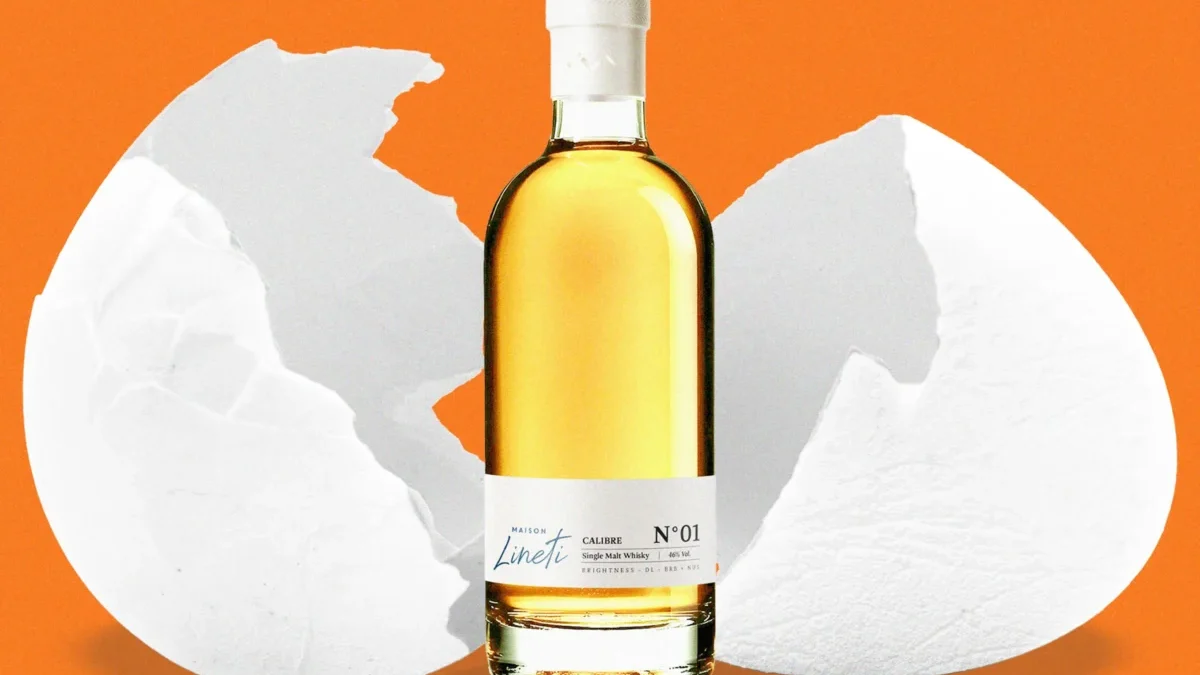
Deep in the heart of France’s Right Bank, where the Dordogne River gently borders centuries-old vineyards first planted by Roman legions in the first century CE, a radical departure from vinicultural tradition is taking shape. While the surrounding clay and limestone soils of Pomerol and Saint-Émilion have historically remained a global sanctuary for Merlot-dominant, fruit-forward red wines, a rebellious distillery named Maison Lineti has chosen a different path. Situated in Les Artigues-de-Lussac near Bordeaux, the innovative company is shunning two millennia of winemaking heritage to produce something entirely unexpected: French single malt whisky. However, rather than simply replicating time-honored Scottish or Irish methods a thousand miles from their historic origins, Maison Lineti is applying advanced wine-science methodologies to the creation of grain spirits—a pioneering fusion of disciplines that industry experts are calling the most significant technical breakthrough in the spirits sector in decades.
The genesis of this unconventional venture dates back to 2018, when co-founders Magali Picard and Alex Cosculluela joined forces with Xavier Payan. Picard, a chemical engineer holding a doctorate in oenology from the University of Bordeaux, brought deep technical expertise in wine science, having previously worked as a spirits development project manager at the esteemed barrel-making firm Demptos. Cosculluela and Payan shared a background in wine and spirits management, providing the commercial and operational acumen needed to turn an audacious concept into reality. When global pandemic lockdowns brought much of the world to a halt, Picard intensified her research, utilizing the downtime to develop a scientifically rigorous, data-driven approach to whisky production. Instead of relying heavily on traditional barrel aging to impart flavor over decades, Picard and Cosculluela shifted their focus to molecular science, sensory analysis, and exhaustive pre-maturation controls, ultimately concluding that a truly exceptional spirit is defined during fermentation rather than through extended barrel maturation.

At the core of Maison Lineti’s physical operations is a striking architectural space known colloquially as the "egg box." This facility houses seven towering, egg-shaped concrete fermenters that reach toward the ceiling. Unlike the traditional stainless steel vessels commonly found in distilleries, thick concrete provides superior thermal mass, allowing for exceptionally precise temperature management throughout the fermentation cycle. Furthermore, the absence of internal ridges inside the concrete eggs facilitates a continuous, natural churning motion of the liquid as active yeasts work their transformation. Before entering these fermenters, organic French barley undergoes a meticulous cold-soaking process designed to extract brighter, more vibrant flavor notes from the grain.
Maison Lineti’s production timeline diverges sharply from traditional whisky-making protocols. While a standard Scottish wash typically undergoes a rapid two-to-three-day fermentation, Lineti extends this critical phase to a full seven days. Following fermentation, the wash is subjected to lees aging, a traditional Champagne and Chardonnay winemaking technique where the liquid remains in prolonged contact with dead yeast cells for two weeks. This process enriches the wash with complex floral and fruit aromas. Additionally, Picard utilizes malolactic fermentation—a secondary biological process strictly prohibited under rigid Scotch whisky regulations, though fully permitted by European Union law. By introducing lactic acid bacteria to convert sharp malic acids into creamy, softer lactic acids, Lineti achieves an unusually rich mouthfeel, lengthened finish, and pronounced floral undertones in its distillate.
This intensive pre-maturation protocol requires several weeks of careful preparation, yet it yields a profound operational advantage: it compresses traditional barrel-aging requirements by two to four years. By engineering a remarkably balanced and flavorful base spirit prior to cask entry, Maison Lineti produces young whiskies that successfully rival single malts twice their age. This acceleration directly mitigates the "angel’s share"—the natural annual loss of approximately two percent of liquid evaporating through porous wooden casks. Cosculluela notes that traditional distillers must overproduce raw stock by roughly 20 percent to account for decade-long maturation losses. By achieving optimal flavor maturity in just three and a half years, Maison Lineti drastically reduces raw material consumption, warehouse storage requirements, and energy expenditure.

This empirical approach relies heavily on data collection. Every batch produced by Maison Lineti is meticulously tracked across approximately 10,000 lines of digital documentation. Brewing parameters such as water volume, pump transfer yields, temperatures, and durations are systematically recorded. Fermentation data is logged at 20-minute intervals, while distillation parameters—including alcohol by volume (ABV), temperature, and distillation speed—are continuously monitored. By isolating variables and altering only one parameter at a time, Picard and Cosculluela can precisely trace the causal relationship between specific technical adjustments and the final sensory profile of the spirit.
Despite its technical sophistication, the journey has not been without severe financial hurdles. In July of the previous year, following years of intensive research, development, and infrastructure investment, Maison Lineti faced corporate liquidation after its primary wine-producing financial backer unexpectedly withdrew from the venture. The crisis threatened to halt operations permanently before the company could bring its spirits to market. Salvation arrived in the form of a confidential new investor—a French entrepreneur who amassed their fortune within the luxury goods sector. This crucial infusion of capital not only rescued the distillery from insolvency but also paved the way for its commercial debut.
Following this financial stabilization, Maison Lineti officially launched its products to the public market in the United Kingdom, marking its international retail debut. The core expression, Calibre No1, is bottled at 47.7 percent ABV and retails at approximately £50 (around $67) for a 70-cl bottle. Described as the foundational DNA of the brand, Calibre No1 delivers a sophisticated, elegant, and complex profile. It is accompanied by two limited-edition releases named "Complications"—a clear conceptual nod to the intricate mechanics of luxury watchmaking. Complication No1, strictly limited to 850 bottles, is aged in ex-bourbon casks and highlights the unique effects of malolactic fermentation. Complication No2, capped at 750 bottles, showcases a flavor profile shaped entirely by Oloroso sherry casks. Company leadership has already signaled plans to expand distribution to the United States market by 2028.

Industry reaction to Maison Lineti’s commercial rollout has been overwhelmingly enthusiastic. Becky Paskin, a prominent drinks writer, presenter, and former editor of The Spirits Business and Scotchwhisky.com, has hailed the distillery’s methodology as a watershed moment for the global spirits industry. Paskin observes that by leveraging their deep academic roots in oenology, the founders have engineered a completely unique style of whisky that will likely inspire other global producers to re-evaluate conventional fermentation science. Similarly, Dave Broom, author of 14 books on the spirit and a leading figure at the World Whisky Forum—which hosted its prestigious event at Lineti’s facilities in June 2025—describes the distillery’s molecular-level analysis of flavor production and wood-spirit interaction as genuinely groundbreaking. Broom characterizes Maison Lineti as one of the most vital and forward-thinking distilleries operating in the contemporary global landscape.
The broader implications of Maison Lineti’s success extend far beyond the borders of the Bordeaux region. By demonstrating that advanced oenological techniques, concrete thermal dynamics, and exhaustive data science can successfully compress the aging timeline without sacrificing complexity, the French distillery is challenging deeply entrenched geographical and procedural orthodoxies. As climate pressures, resource costs, and consumer demand for transparency continue to reshape the alcohol industry, Lineti’s scientific blueprint offers a viable template for sustainable, high-efficiency spirits production. Whether established heritage producers in Scotland, Ireland, and beyond will adopt these winemaking interventions remains to be seen, but the era of unquestioned adherence to traditional whisky craftsmanship has officially entered a period of profound transformation.