Playboy Charts a New Course for Its Relaunch, Emphasizing Inclusivity, Artistic Eroticism, and a Modernized Brand Strategy

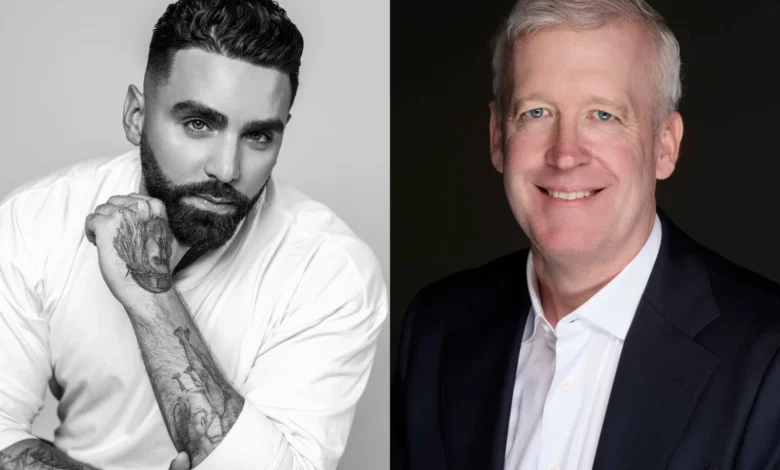
The team behind a relaunched Playboy magazine has articulated ambitious plans for a more “inclusive” iteration of the iconic title, long famous for its distinctive iconography of women clad in rabbit costumes. This strategic pivot aims to redefine Playboy’s legacy for the 21st century, moving beyond its historical reputation to embrace a broader, more contemporary audience while re-establishing its position in media and culture. The initiative, led by editor-in-chief and chief brand officer Phillip Picardi and president of media and brand David Miller, seeks to leverage the brand’s considerable heritage and recognition to forge a new path in a vastly transformed media landscape.
A New Era for an Enduring Icon
The first issue of the relaunched Playboy, featuring Colombian pop superstar Karol G, debuted in April 2026 and quickly sold out its modest initial print run, signaling a promising start for the revamped publication. This initial success underscores the enduring power of the Playboy brand and the public’s curiosity about its reimagining. Phillip Picardi, a veteran of Condé Nast titles such as Teen Vogue and Them, expressed profound satisfaction with the reception, stating, “Dropping a Playboy cover has the kind of impact that I truly have never seen in my career, even when I was working at Condé Nast.” He further elaborated on the unprecedented engagement and press generated, noting, “Putting a woman on the cover of Playboy in this day and age drives the kind of engagement and press that I don’t think I’ve ever experienced anything like this before.”
Building on this momentum, the second issue, unveiled this week, features acclaimed model and actress Cara Delevingne on the cover, strikingly portrayed in a latex corset. This issue will see a slightly larger print run, indicating growing confidence in the market’s appetite for the revitalized magazine. Picardi and Miller were brought on board specifically to revive Playboy, focusing on the elements that, according to Picardi, “initially drove its prestige and its buzz and its interest and its loyalty, which was of course its storytelling” through the print magazine. However, they acknowledge the imperative to “expand that vision” into a comprehensive multi-platform strategy encompassing digital, social media, and video content.
Distinguishing Art from Pornography: A Historical and Contemporary View
Playboy’s 73-year heritage has been characterized by its unique approach to showcasing “the art of the erotic and portraying the art of desire.” Picardi emphasized a critical distinction that the new team seeks to reinforce: “There’s always been a difference between Playboy and porn, especially the kinds of porn that are really prevalent today and that people have access to just by having a Twitter account or a Reddit account.” He articulated the creative challenge and excitement in “bringing back an artfulness and a thoughtfulness to nudity.” This commitment to elevating the aesthetic and conceptual aspects of nudity positions the new Playboy as a counterpoint to the often-gratuitous nature of easily accessible online pornography.
Historically, Hugh Hefner founded Playboy in 1953 with the vision of creating a sophisticated men’s magazine that celebrated the good life, combining high-quality journalism, fiction, and interviews with tastefully presented nude photography. At its peak in the 1970s, Playboy boasted a circulation exceeding 7 million copies, becoming a cultural touchstone and a symbol of sexual liberation. However, the advent of the internet and the proliferation of free adult content led to a significant decline in its relevance and sales. By the early 2000s, circulation had plummeted, and the magazine struggled to adapt. In 2016, a controversial decision was made to remove full nudity from the print edition in an attempt to attract a wider audience, a move that was later reversed. The print magazine reduced its frequency to quarterly in 2019 before ceasing publication entirely in March 2020, with then-CEO Ben Kohn stating the brand had "become far more than a magazine." The current relaunch, therefore, represents a significant undertaking to resurrect the print publication as a cornerstone of the broader Playboy brand.
Empowerment and Consent: A Modern Approach to Nudity
A cornerstone of the relaunched magazine’s philosophy is its approach to featuring Playmates of the Month and cover stars. These models receive prominent billing in the magazine, with their shoots also highlighted across the brand’s website and social media channels, alongside archival content. Picardi detailed a robust framework designed to ensure the agency and empowerment of the women involved. He stated that Playmates and cover stars maintain complete control over the extent of their bodily exposure, and those who choose to appear nude are “fully involved” in every stage of the creative process. This includes having approval over photographers and stylists, with a notable preference for working with women in these roles so far.
While Picardi stopped short of labeling Playboy’s new approach as “feminist,” acknowledging the term’s loaded connotations and potential for disagreement, he underscored the magazine’s commitment to consent and liberation. “What I will say is what our approach with nudity has always been: that it is up to a woman how much she has to show on set,” he explained. He noted that when women are given full permission and control, they often feel “very liberated to make the calls and and do what she wants to do, which is often showing more than we expected or thought of.” This emphasis on autonomy and self-determination aims to distinguish Playboy from exploitative representations of nudity.
Furthermore, Picardi highlighted a deliberate “intentionality” in the casting, aiming for authenticity and a “rawness” in the images. He suggested that the chosen aesthetic diverges from the often-modified or hyper-stylized portrayals seen in some of Playboy’s competitors from earlier decades. The positive feedback received, not only from men but notably “outstanding feedback from women,” suggests that this revised approach is resonating with a diverse audience. This feedback is crucial for a brand attempting to shed past criticisms and build a more inclusive identity.
Targeting a Broader Audience: Women as the "Halo Audience"

While the core target demographic for the relaunched Playboy remains men aged between 25 and 45, Picardi revealed a strategic focus on women as the “most important halo audience.” This is reflected in the brand’s digital engagement, particularly on platforms like TikTok, where its content is reportedly skewing female. Picardi articulated the rationale behind this approach: “Unless women would also find our content interesting and dynamic, and be glad that they would have a man reading this content, we will not succeed in our brand mission and our brand promise which is to be a magazine for men that is actually centred on women and the desire of women.” This perspective marks a significant evolution from Playboy’s origins, acknowledging the critical role women play not just as subjects, but as key arbiters of the brand’s modern appeal and cultural legitimacy.
The brand is also exploring innovative ways to reintroduce its iconic Playboy Bunnies. Far from their original role in the Playboy Clubs of the 1960s-80s, these new Bunnies are envisioned as brand ambassadors who would “basically become like contributing editors to the Playboy universe and are showing up on social and on video.” This modernization of the Bunny role aims to transform them into engaging personalities who can interact with the audience on contemporary platforms. Planned video series like “Bunny on the Street” would feature a Playboy Bunny in nightlife destinations, engaging men and women in candid conversations about dating and sex lives. Another concept, “Bunny on the Green,” would see a Bunny playfully “wreak havoc on a golf course,” imagined by Picardi as “The Simple Life meets Billy on the Street, but on a golf course.” These initiatives aim to inject humor, personality, and relatable content into the brand’s offerings, broadening its appeal beyond traditional erotic imagery.
Journalism and Intellectual Curiosity: Reclaiming a Legacy
Beyond its visual content, Picardi stressed the presence of “incredible journalism” within the new Playboy. He cited an example of work on safe drug-taking in the context of the fentanyl crisis in the US, demonstrating a commitment to serious, timely reporting. The magazine is also reviving classic franchises that were hallmarks of its journalistic past, such as “20 Questions” (recently featuring author David Sedaris) and the renowned “Playboy Interview.” This dual focus on compelling visuals and thought-provoking text aims to restore the magazine’s intellectual credibility and provide a well-rounded reading experience. Picardi noted that this approach makes the brand feel “done in a new way, but it feels familiar,” offering a blend of innovation and nostalgic comfort for long-time readers.
Picardi expressed a broader aspiration for the brand, hoping that Playboy can be “the only publication that is uniquely qualified to invite our readers to reach out and touch each other, and that can be, of course, consensually and sexually, and that can also just be about the need to gather and have human interactions and prioritise the value of human relationships at a moment where they’re just actively being devalued.” This statement positions Playboy not merely as a purveyor of erotic imagery, but as a platform advocating for genuine human connection and interaction in an increasingly disconnected world. This aligns with the brand’s historical roots, where Hefner envisioned Playboy as a magazine for the sophisticated urban man, interested in culture, politics, and social commentary, alongside its famous pictorials.
Lean Operations and a “Flywheel Effect” Business Model
The operational structure behind the relaunched Playboy is notably lean. Currently, Picardi is supported by just one other full-time editorial employee, relying heavily on freelance journalists. On the business side, led by David Miller, two additional hires are imminent, focusing on licensing and subscription acquisition. Job adverts for an art director and a director of audience strategy are also live, indicating a measured, strategic expansion of the team. Miller characterized the new Playboy’s trajectory as a “disciplined growth path,” emphasizing a commitment to not “overextend” too quickly. The strategy involves a continuous cycle of “test, learn, and then iterate and grow from there,” reflecting a start-up mentality within a legacy brand.
The parent company, Playboy Inc (PLBY Group), has adopted an “asset-light model” primarily driven by licensing. This strategy involves outsourcing what Miller described as the more “adult” businesses, including Playboy Club (a creator-fan platform similar to OnlyFans), the pornographic TV and video brand Playboy TV, and Playboy Plus (a subscription service for images and video). Miller asserted that this model has provided the company with a “much stronger financial foundation.” In 2025, Playboy Inc reported revenues of $120.9 million, a 4% increase year-on-year, though it also posted a net loss of $12.7 million, compared to a $79.4 million loss in 2024. These figures highlight the ongoing financial challenges and the importance of a sustainable business model for the brand’s long-term viability.
Miller anticipates that the relaunch of the print magazine and its associated digital content will generate a “full flywheel effect,” significantly boosting the licensing business. This includes “leveraging those Playmates and the bunnies across all of these different platforms to further the brand.” The strategy aims to create a synergistic ecosystem where the magazine’s content drives interest and engagement, which in turn fuels licensing opportunities, events, and brand partnerships. Miller expressed excitement about the potential for “events and other activations, the number of sponsors, and just interest in the brand overall, let alone what we could build from a consumer perspective.” The company is exploring opportunities to revive Playboy parties, host golf tournaments, and delve into thought leadership, including research into the “sex recession” with the Kinsey Institute. These diverse ventures are all designed to amplify the brand’s reach and relevance while maintaining its core tenets of being “respectful, modern, and feel like it’s inviting and inclusive for all individuals.”
Digital Subscriptions and the Power of the Archive
The launch of digital subscriptions, timed with the April print issue, is described by Miller as “nascent.” A digital-only subscription, which provides full access to Playboy’s extensive archive dating back to 1953, current Playmates of the Month, and digital magazine issues, is priced at $59.99 per year, with an introductory offer of $24.99. A print-plus-digital package is available for $99.99 annually. While some online content is freely accessible, nude imagery is primarily paywalled. Miller clarified that the immediate focus is on brand visibility rather than aggressive subscription acquisition, stating, “We’re more interested and focused in the short term on getting the brand in front of people. The subscribers will come as they are reintroduced to the brand, see the quality of the content that Phillip and team are creating, and then we’ll really look to invest in that subscription acquisition and growth in future years.” However, the subscription model is crucial for understanding audience demographics and preferences.
Picardi highlighted the significant appeal of the archive content as a major subscription driver. He noted that many converting subscribers are “tried and true Playboy customers” who have been loyal for decades and are eager to revisit the magazine’s pictorials from its heyday, now conveniently available on their mobile devices. This blend of nostalgic content with fresh, modern offerings is a key part of their strategy to engage both long-standing fans and new audiences. Additionally, Playboy has launched a Substack newsletter, further diversifying its digital footprint and offering a platform for sharing both new and archival features and images.
In essence, the revitalized Playboy is operating with a “start-up culture in what is a legacy and iconic brand.” The team believes in a “long game” for the brand’s revival, carefully pacing their investments and expansions. Picardi concluded, “So year one we are looking at this incredible print product that we have as this lever to pull and this celebrity and iconic leverage to play with that drives conversation and audience growth and serves as a proof of concept for the rest of the exciting things that are very low-hanging fruit that we can activate to show real momentum.” This measured, multi-faceted approach aims to re-establish Playboy not just as a magazine, but as a dynamic, inclusive, and culturally relevant media brand in the modern era.