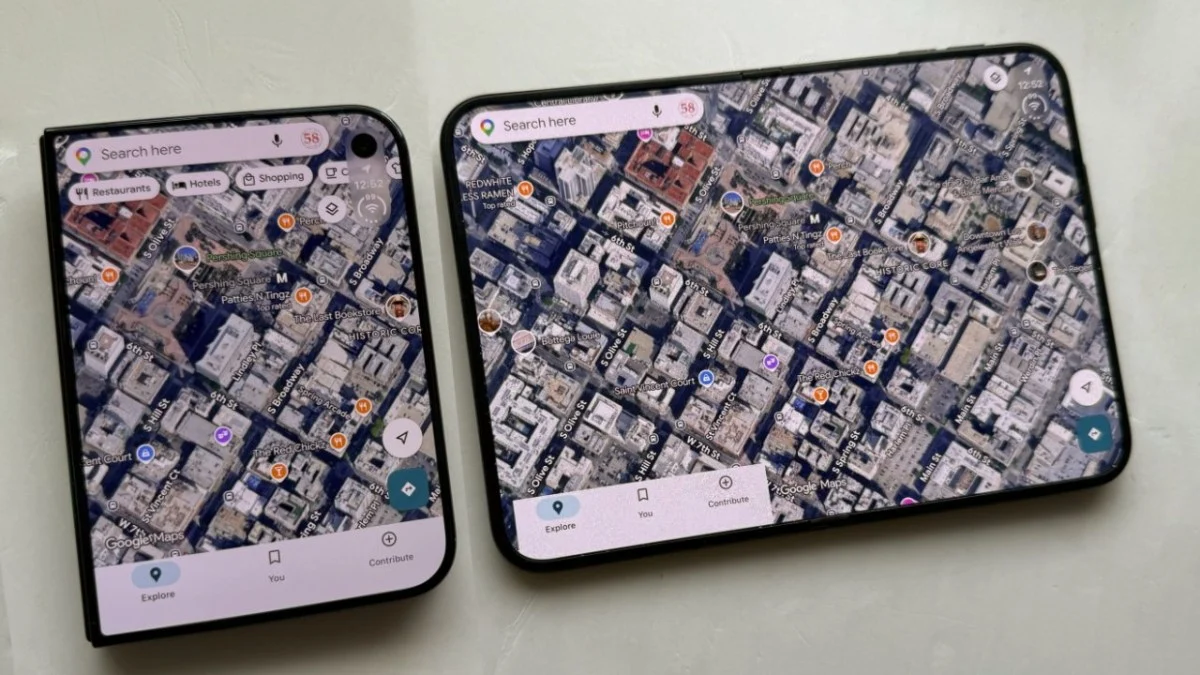
The long-awaited arrival of the iPhone Duo has fundamentally altered the landscape of Apple’s hardware ecosystem, introducing a foldable form factor that demands a paradigm shift in software development. While the device has been in the hands of consumers for several weeks, the transition has been marked by a noticeable lag in third-party application optimization. Users have frequently encountered apps that were either improperly scaled or restricted to a single screen, failing to leverage the expanded canvas provided by the internal display. That narrative is beginning to change as Google has released version 26.44.4 of its flagship navigation tool, Google Maps, which introduces full, native support for the iPhone Duo’s unique dual-screen architecture.
A New Chapter in Mobile Navigation
For early adopters of the iPhone Duo, the initial experience with Google Maps was characterized by compromise. On the device’s primary, exterior screen, the interface appeared slightly shifted to the left, a design adjustment intended to accommodate the updated positioning of the iOS dock. When unfolded to reveal the expansive inner screen, the experience was even more restrictive; the app functioned as a standard iPhone interface, which could be relegated to one side of the display while the other remained entirely blank or underutilized.
The update to version 26.44.4 marks a significant departure from this limitation. By fully utilizing the internal screen real estate, Google has transformed the utility of the navigation software. The interface now adopts a sophisticated, wide-screen layout that mirrors the high-end experience currently found on the iPad. The search bar and primary navigation menus are anchored on the left-hand side, while the interactive map and satellite views extend across the entire width of the internal display. This design choice not only enhances visual clarity but also improves user efficiency, allowing for more comprehensive route planning without the need for constant scrolling or toggling between menus.
The Evolution of the Foldable Ecosystem
The trajectory of the iPhone Duo’s market entry provides essential context for why this update is being met with such enthusiasm by the tech community. When Apple announced the device, it heralded a new era of mobile computing. However, the hardware is only as effective as the software that powers it. Historically, the transition to new screen ratios and form factors has been a slow process for the App Store ecosystem.

In the early weeks of the iPhone Duo’s release, developers were tasked with an immediate challenge: adapting existing codebases to account for dual-display orientations, variable aspect ratios, and the complex mechanics of screen hand-offs. Google, which maintains one of the most widely used utility suites in the world, was expected to lead the charge in optimization. However, the initial silence regarding the iPhone Duo in its release notes—which often cited only vague "bug fixes and performance improvements"—had led some analysts to speculate that major UI overhauls were not an immediate priority for the search giant. The release of version 26.44.4 serves as a formal rebuttal to that concern, signaling that the company is fully committed to the long-term viability of foldable iOS devices.
Detailed Functionality and User Experience
Beyond the basic expansion of the map interface, the update introduces several nuanced features that demonstrate a deeper integration with the iPhone Duo’s hardware capabilities. One of the most prominent additions is the enhanced functionality of the Street View feature.
When a user initiates Street View on the internal screen, the application now intelligently splits the display. The Street View imagery takes up the left portion of the screen, while a live, interactive map remains visible on the right. This dual-pane approach is a significant upgrade for navigation, as it allows users to maintain a sense of geographical context while inspecting specific points of interest. While the current build does not offer the ability to swap the position of these two panels, users retain the option to expand Street View to occupy the entirety of the internal display for a more immersive, cinematic experience.
Furthermore, the transition between the inner and outer screens—often referred to as "app continuity"—has been refined. If a user is actively engaged in a Street View session and decides to close the iPhone Duo, the application gracefully migrates the content to the outer display. A dedicated "close" button allows for a seamless exit, returning the user to the standard map view. This fluidity is a critical component of the foldable experience, ensuring that the user’s workflow remains uninterrupted regardless of how the device is held.
Market Implications and Technical Analysis
The significance of this update extends beyond a single application. As one of the most frequently used apps globally, Google Maps sets a standard for UI/UX expectations on the iPhone Duo. By establishing a layout that emphasizes a multi-column, wide-screen aesthetic, Google is providing a blueprint for other developers who may be struggling to determine the best way to utilize the internal screen real estate of a foldable device.

From an industry perspective, the support for the iPhone Duo also highlights the importance of the iOS SDK’s evolution. Apple has spent considerable time refining the tools available to developers to help them handle screen transitions and layout constraints. The fact that Google has successfully navigated these requirements suggests that the underlying development environment is maturing, which will likely accelerate the pace at which other major developers follow suit.
While the technical hurdles of foldable displays are significant, the potential for increased productivity is vast. For professional drivers, urban explorers, and daily commuters, the ability to view a large-scale map while simultaneously accessing search results or Street View imagery on a single device significantly reduces the cognitive load associated with navigation. The financial investment required for the iPhone Duo—with prices starting in the upper echelons of the smartphone market—is predicated on the promise of this enhanced utility. As more apps achieve this level of optimization, the value proposition of the device becomes clearer to the mainstream consumer.
A Chronology of the iPhone Duo Release
To understand the current state of software support, one must look back at the timeline of the iPhone Duo’s release.
- Initial Announcement: Apple unveiled the iPhone Duo to industry anticipation, promising a seamless transition between a compact external form factor and a tablet-like internal workspace.
- Market Launch: The device began shipping to early adopters, revealing the immediate need for app-specific updates to accommodate the dual-display environment.
- Initial Software Gap: During the first weeks, a significant number of App Store entries relied on standard scaling, which resulted in "letterboxing" or awkward alignment issues on the internal display.
- The Shift: Google’s recent release of version 26.44.4 marks the transition from "compatability mode" to "native support," representing a milestone for the device’s software maturity.
Future Outlook and Developer Responsibilities
The current landscape suggests that the success of the iPhone Duo will be largely determined by the speed at which the developer community adapts. While Google has taken a decisive step forward, many other essential applications—ranging from productivity suites to high-end mobile games—are still lagging.
Industry analysts observe that the "foldable gap" is a common phenomenon in the life cycle of new hardware. Similar challenges were observed during the early days of tablet computing and the introduction of larger-screen "Plus" and "Pro" iPhone models. However, the unique nature of the foldable screen adds a layer of complexity that requires a more thoughtful approach to UI design. Developers must now design for "foldable states" rather than just fixed screen sizes.

As Google Maps sets the precedent, it is highly probable that other high-profile apps will move toward similar split-pane architectures. This is not merely an aesthetic choice; it is a fundamental shift in how mobile information is consumed. By providing users with more data at a glance, applications are effectively increasing the utility of the hardware, which in turn encourages higher rates of adoption for the device itself.
Conclusion
The update to Google Maps version 26.44.4 is a vital development for the iPhone Duo ecosystem. It addresses the primary pain point of the device—the lack of software that truly honors its hardware potential—and provides a functional, intuitive interface that elevates the user experience. While the work of optimizing the entire App Store for the iPhone Duo remains a long-term endeavor, the commitment of a major stakeholder like Google serves as a strong indicator that the foldable future is not just a technological experiment, but a maturing standard. As the community moves forward, users can expect further refinements and, eventually, a standard library of applications that feel as though they were built specifically for the dual-screen reality of the iPhone Duo. For now, those navigating the world with their new devices will find their experience significantly more efficient, visual, and intuitive.