The Federal Aviation Administration (FAA) has officially initiated a monumental shift in national airspace management, deploying a $875 million artificial intelligence software suite aimed at mitigating the chronic air traffic controller shortages that have plagued the United States aviation sector for years. Known as SMART—an acronym for Strategic Management of Airspace, Routes and Trajectories—this cloud-based platform represents the agency’s most significant technological investment in decades. Developed by Air Space Intelligence, the system is designed to act as an automated force multiplier, assisting human controllers in optimizing flight paths, managing airport capacity, and preemptively identifying potential mid-air or ground-based conflicts.
The implementation of SMART marks a departure from traditional, manual traffic management, transitioning toward a data-integrated environment where machine learning models process massive, real-time datasets—including weather patterns, airline schedules, and airport throughput—to suggest the most efficient flow of aircraft. The rollout is scheduled to commence in the Washington, D.C., metropolitan area, serving as a pilot program before the FAA scales the software to high-density hubs across the country over the next twelve years.
A Chronology of the Air Traffic Crisis
The genesis of this initiative lies in a decade-long staffing crisis that has crippled the FAA’s operational flexibility. Following the 2008 financial crisis and subsequent budget sequestering, the agency saw a significant decline in the number of certified professional controllers (CPCs). The situation was further exacerbated by the COVID-19 pandemic, which halted training programs at the FAA Academy in Oklahoma City for extended periods, creating a training backlog that the agency is still struggling to clear.
In early 2026, the Government Accountability Office (GAO) issued a scathing report highlighting that despite thousands of applicants, the FAA remained unable to meet its hiring and training quotas. The agency’s internal data revealed that more than three-quarters of the nation’s 13,000-plus air traffic control facilities were staffed below the recommended levels. This shortage has led to reduced flight volumes, increased delays at major hubs like Newark and JFK, and heightened pressure on an aging, stressed workforce.
The FAA’s response has been twofold. In addition to the "bold, new hiring plan" announced earlier this year—which seeks to streamline the recruitment process and shorten the time from application to facility placement—the agency recognized that human labor alone could not resolve the systemic inefficiencies inherent in the current National Airspace System (NAS). Consequently, the partnership with Air Space Intelligence was finalized to integrate AI as a critical layer of operational support.
Technical Architecture and Operational Impact
According to technical documentation provided by the FAA, the SMART platform functions as an overlay to existing legacy systems. It does not replace the controller; rather, it functions as a highly sophisticated decision-support tool. By aggregating data streams from the National Airspace System, SMART continuously monitors "operational constraints"—a term that encompasses everything from sudden microbursts near runways to taxiway congestion caused by ground vehicle traffic.
The platform uses predictive modeling to calculate the "trajectories" of aircraft long before they reach a sector boundary. If the AI detects a potential conflict—such as two flights arriving at an optimal approach window simultaneously—it provides the controller with a set of optimized rerouting options. This is intended to reduce the cognitive load on controllers, who must otherwise perform these complex calculations mentally or through antiquated, text-based terminal systems.

For an agency that has long relied on systems that trace their roots back to the late 20th century, the shift to a cloud-based, AI-native environment is profound. The $875 million price tag reflects not just the software licensing, but the massive cloud infrastructure required to ensure that flight data is processed with near-zero latency, a requirement for safety-critical aviation applications.
Broader Implications for Aviation Stakeholders
The introduction of SMART carries significant weight for major carriers like United, Delta, and American, all of which have lobbied for modernization to reduce the economic impact of "ground stops" and "flow control" programs. Every minute an aircraft sits on the tarmac due to air traffic congestion results in significant fuel burn and operational costs. By smoothing out traffic flows, the FAA expects to increase the throughput of major airports without necessarily requiring the construction of new runways, which are often hindered by environmental and local zoning constraints.
However, the transition is not without its skeptics. Labor unions representing air traffic controllers have expressed cautious optimism, noting that while technology can assist, it cannot replace the nuanced judgment required in high-stress emergency scenarios. There is also the matter of cybersecurity. Centralizing traffic management into a cloud-based AI system introduces a new attack vector. The FAA has emphasized that the system is designed with multiple redundancies, ensuring that even if the AI platform suffers a total failure, the underlying traditional systems remain active, allowing for a seamless transition back to manual control.
Analytical Perspective: The Future of the NAS
From a systems-engineering perspective, the FAA’s move is a necessary evolution. The U.S. aviation network is currently operating at a scale that exceeds the human capacity of the current controller workforce. By automating the "tactical" side of traffic management—the routing and sequencing—the agency frees up human controllers to focus on the "strategic" and safety-critical aspects of their roles.
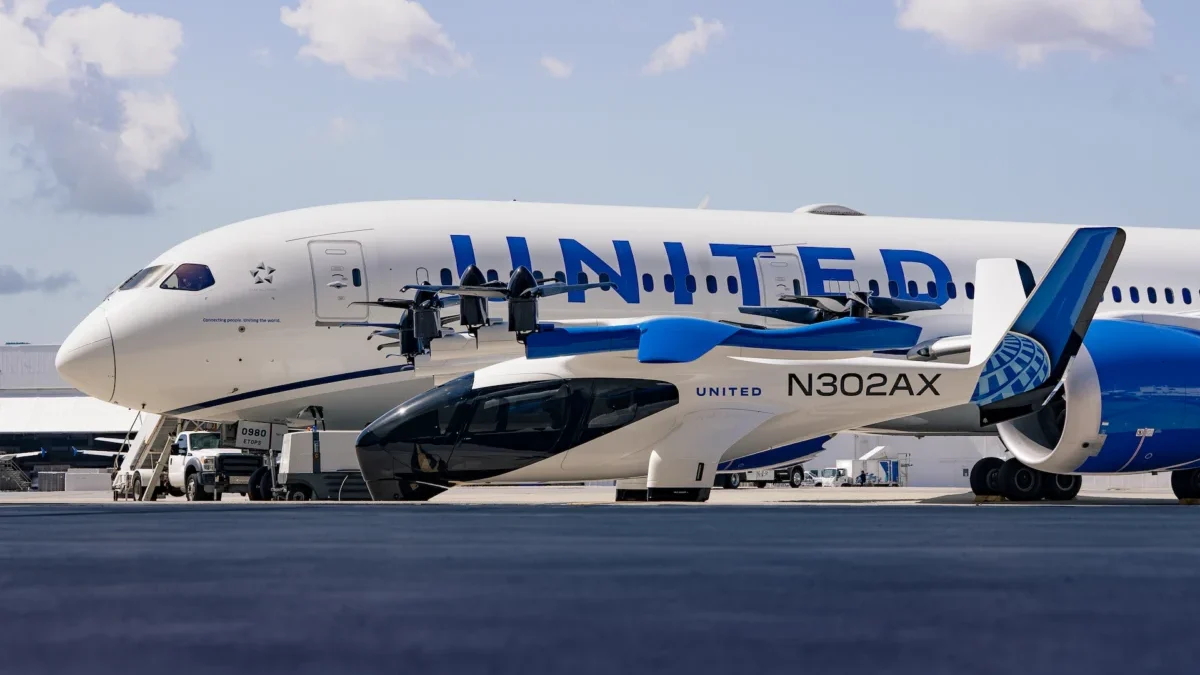
Furthermore, the integration of SMART serves as a testing ground for the future of Urban Air Mobility (UAM) and the proliferation of eVTOL (electric vertical takeoff and landing) vehicles, such as those being developed by companies like Archer Aviation. The airspace of the future will be significantly more crowded, with a mix of commercial jets, cargo drones, and air taxis. Managing this "3D" airspace will be impossible without the high-speed processing power of AI.
The 12-year timeline for the rollout of SMART suggests a phased, conservative approach. The FAA is aware that a "big bang" implementation of a new system across the entire U.S. could lead to catastrophic outages. By starting in the D.C. area—which contains some of the most complex, high-density airspace in the world—the agency is stress-testing the software in an environment where the stakes are high but the local resources for recovery are abundant.
Conclusion and Looking Ahead
As the FAA embarks on this $875 million transformation, the aviation industry will be watching closely. The success of the SMART program will likely dictate the pace of future federal investments in AI-driven infrastructure. If the software successfully reduces delays and eases the burden on the current, overworked controller population, it may prove to be the most effective intervention in the history of modern air traffic management.
However, the agency must balance this technological leap with the reality of its human capital. As the GAO and various labor groups have pointed out, technology is a tool, not a cure-all. Without continued, aggressive recruitment and the retention of skilled personnel, the FAA will find that even the most advanced AI cannot overcome a fundamental lack of qualified human oversight. The coming years will serve as a definitive test of whether the U.S. government can successfully marry high-tech automation with the traditional, human-centric safety culture that has kept the skies safe for over a century.