The Press Gazette has officially unveiled the highly anticipated shortlist for the British Journalism Awards 2026, marking a significant milestone as the prestigious program celebrates its 15th anniversary. Supported by headline sponsor Starling Bank, the annual awards ceremony aims to honor journalistic rigor, investigative bravery, and impactful storytelling that serves the public interest, regardless of the format, scale, or platform on which it was produced.
This year’s selection process was particularly rigorous, reflecting the evolving and fiercely competitive landscape of modern media. A panel of 73 independent judges meticulously evaluated 695 entries submitted over a three-week period. The evaluation culminated in intensive, jury-style deliberations designed to separate exceptional public interest journalism from standard reporting. To be eligible for consideration, all nominated work must have been produced for a UK audience and published between September 1, 2025, and August 31, 2026.
The breadth of the 2026 shortlist underscores a core philosophy of the British Journalism Awards: that impactful journalism is defined by the quality of the story uncovered rather than the financial resources behind its production. Finalists span the entire media ecosystem, ranging from heavily resourced international broadcasting units and legacy broadsheets to nimble local news outlets, independent investigative bureaus, and digital-first operations.
The Evolution and Significance of the British Journalism Awards
Established a decade and a half ago, the British Journalism Awards have grown to become one of the definitive benchmarks of professional excellence within the UK media industry. At a time when traditional publishing models face unprecedented financial headwinds, technological disruptions driven by artificial intelligence, and declining public trust in institutions, these awards provide a vital platform to showcase the indispensable role of a free press.
The program’s focus on revelatory reporting and real-world impact ensures that winning entries go beyond mere commentary or breaking news aggregation. The judges actively seek out investigative pieces that trigger policy changes, expose corruption, protect vulnerable populations, or hold powerful entities—both public and private—strictly accountable.
In addition to Starling Bank serving as the headline sponsor, the 2026 awards are generously supported by several organizations committed to fostering high standards in media, including the Aziz Foundation, Journalist.net, The People’s Postcode Lottery, Orset, and TechnologyOne.
Key Categories and Notable Finalists
The 2026 shortlist spans a wide array of specialized categories, reflecting the diverse beats that make up contemporary journalism.
In the competitive Campaign of the Year category, media organizations demonstrated a profound commitment to driving legislative and societal change. Nominees include The New Statesman for its deep dive into potential systemic failures with "Britain’s next maternity scandal," the Express for its relentless focus on NHS cancer care, and London Centric for exposing illicit commercial operations in the capital with "Dodgy Shops." Other notable campaigns feature The Sunday Times’ scrutiny of "Jury Trials," The i Paper’s investigation into "Killer Kitchens," The Bureau of Investigative Journalism’s exposing of AI-driven misinformation with "Slopaganda," the Daily Mirror’s advocacy for the "SMA Heel Prick Test Now," and The Guardian’s exposé on "The true toll of female suicides with domestic abuse at their core."
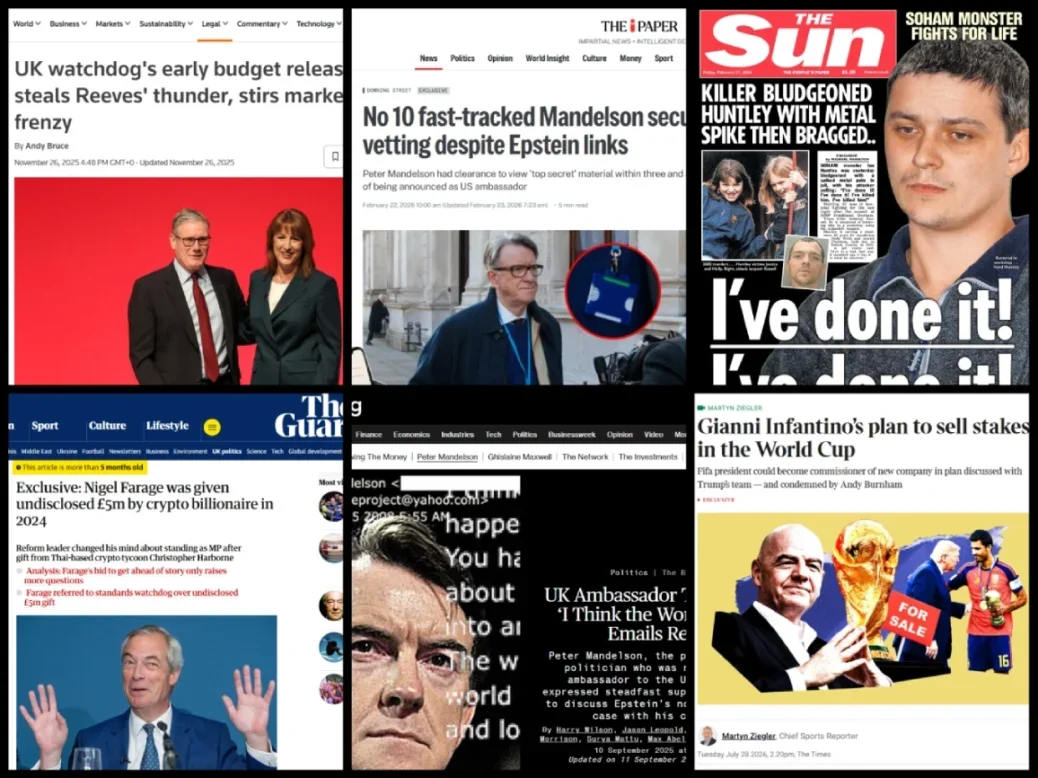
The coveted Scoop of the Year category highlights breaking exclusives that shifted the national conversation, featuring remarkable work by Andy Bruce of Reuters, Kitty Donaldson and Richard Holmes of The i Paper, Mike Hamilton and Paul Sims of The Sun, Anna Isaac of The Guardian, a collaborative team from Bloomberg News featuring Harry Wilson and Jason Leopold, and Martyn Ziegler of The Times.

Investigation of the Year nominees turned up complex systemic abuses, featuring deep-dive projects from BBC Eye Investigations, Anna Isaac and a collaborative reporting team from Paul Lewis, Henry Dyer, and Pippa Crerar at The Guardian, alongside investigative efforts from Reuters and Sky News.
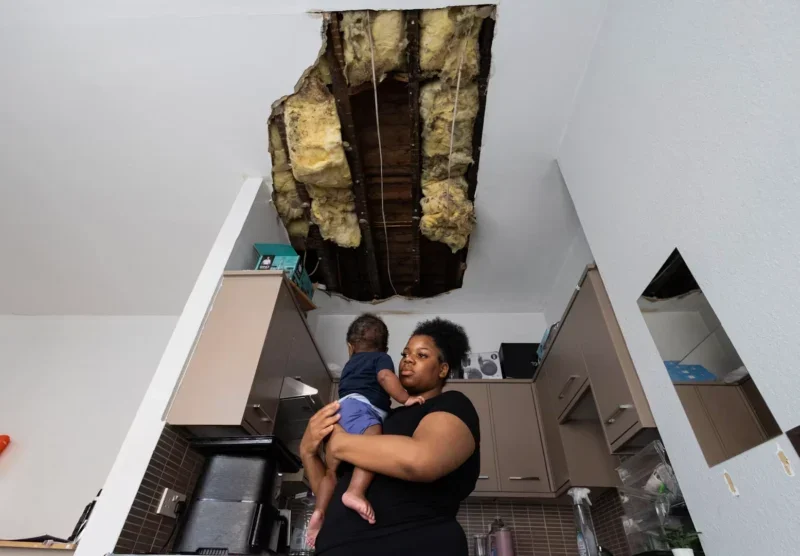
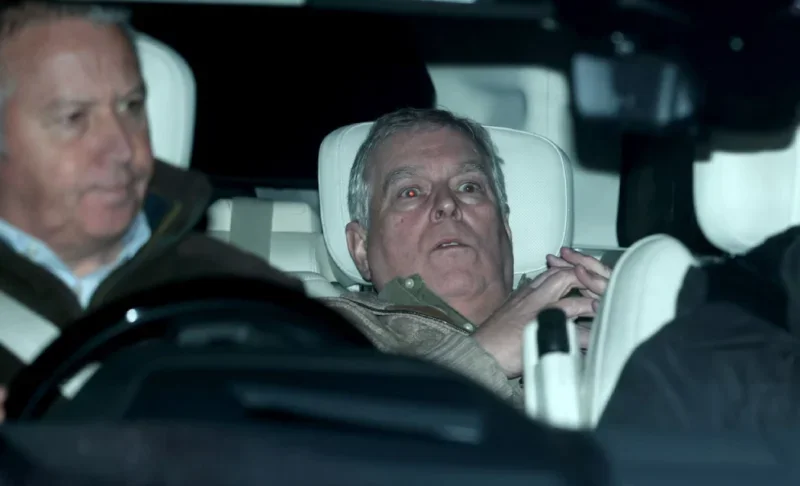
The photojournalism category captures the human cost of global and domestic events through striking visual narratives. Finalists include Facundo Arrizabalaga of MyLondon for his "Broken Homes" series, Jack Hill of The Times for documenting historic moments of civil unrest in Iran, Phil Noble of Reuters for capturing high-profile accountability moments, and contributions from the Press Association Visual Journalist, Kevin Ramarohetra of 1843 Magazine, and Sean Smith of The Guardian.
Local journalism remains a vital pillar of the shortlist, proving that regional watchdogs continue to uncover critical stories despite deep industry contraction. Nominees include Suzanne Antelme of The Reading Chronicle, Jack Dulhanty of The Mill, Emma Glasbey and Jennifer Smith of BBC Yorkshire, Andrew Kersley of The Londoner, Guy Lynn and his team at BBC London, Sean Morrison and Imogen Harper of The Bristol Cable, Daniel Timms and his colleagues at the Sheffield Tribune, and Jim Waterson alongside Polly Smythe of London Centric.
Gala Ceremony and Unannounced Awards
The culmination of the 2026 awards cycle will take place on Thursday, December 10, during a black-tie gala dinner held at London’s Hilton Bankside. The evening will be hosted by renowned impressionist and comedian Rory Bremner, providing a celebratory atmosphere for finalists, editors, and industry leaders. Tickets for the event are currently available through the official National World Publishing events registration portal.
While the vast majority of category winners have been determined by the independent judging panels, the recipients of several prestigious, career-defining honors will be kept under wraps until the night of the ceremony. These include the Public Service Journalism Award, the Marie Colvin Award—which honors courage and dedication in foreign correspondence—and the coveted Journalist of the Year title. Furthermore, a separate shortlist for News Provider of the Year, sponsored by The People’s Postcode Lottery, is scheduled to be published at a later date following a rigorous secondary round of evaluation.
Industry Implications and the Future of Reporting
The release of the 2026 shortlist arrives at a critical juncture for the Fourth Estate. As newsrooms grapple with the rapid integration of generative artificial intelligence, shifting audience consumption habits toward social platforms, and persistent threats to press freedom globally, the nominated works serve as a masterclass in the irreplaceable value of human-led, boots-on-the-ground reporting.

Industry analysts note that the heavy representation of collaborative investigations—where local outlets partner with international bureaus or specialized non-profits—indicates a strategic shift in how modern journalism is funded and executed. By pooling resources, smaller outlets are increasingly capable of punching above their weight, challenging corporate malfeasance, and holding governments to account on a transnational scale.
As the media community looks toward the December gala, the 2026 shortlist stands as a testament to the resilience, ingenuity, and unwavering dedication of British journalists who continue to uncover the truth in an increasingly complex world.