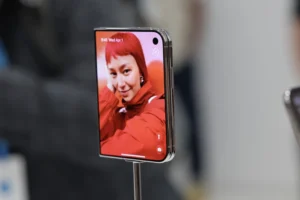
For over a decade, Apple’s smartphone strategy has been defined by a predictable, iterative rhythm. Consumers have grown accustomed to a clear upgrade path: those seeking standard performance opted for the vanilla iPhone, while power users gravitated toward the Pro and Pro Max tiers. This stability fostered a loyal ecosystem where purchase decisions were rarely fraught with uncertainty. However, the introduction of the iPhone Duo—Apple’s inaugural foray into the foldable smartphone market—marks a significant pivot in the company’s hardware philosophy. While the foldable form factor is not new to the global market, its adoption by Apple represents a paradigm shift that forces consumers to weigh the benefits of experimental utility against the refined excellence of the traditional Pro series.
The Evolution of the iPhone Portfolio
The arrival of the iPhone Duo arrives at a time when the smartphone industry has faced a plateau in hardware innovation. Since 2024, market growth has been driven largely by internal component upgrades rather than radical design changes. Apple’s internal data, supported by industry tracking from Q2 2026, confirms that the iPhone 17 series—specifically the vanilla model and the 17 Pro—remains the benchmark for global sales volume.

The iPhone 18 Pro and 18 Pro Max represent the pinnacle of this established formula. They are, by most objective metrics, the most polished handsets Apple has ever produced. Their success is rooted in reliability, imaging excellence, and battery longevity. The iPhone Duo, by contrast, targets a nascent segment of early adopters who prioritize multitasking capabilities and screen real estate over the traditional pocketability of a standard handset.
Comparative Financial Analysis
The price disparity between the new models is stark and serves as the primary filter for potential buyers. The iPhone Duo enters the market at a premium price point of $1,999, positioning it firmly in the ultra-luxury tier. In comparison, the iPhone 18 Pro Max starts at $1,299, while the standard iPhone 18 Pro is priced at $1,199.
This $700 to $800 gap is not merely a reflection of the cost of the flexible OLED panel and the complex hinge mechanism; it is a premium on the engineering required to integrate Apple’s operating system into a dual-display environment. Below is a breakdown of the launch pricing across key global markets:

| Region | iPhone 18 Pro | iPhone 18 Pro Max | iPhone Duo |
|---|---|---|---|
| United States | USD 1,199 | USD 1,299 | USD 1,999 |
| Germany | EUR 1,449 | EUR 1,599 | EUR 2,299 |
| United Kingdom | GBP 1,199 | GBP 1,299 | GBP 1,999 |
| India | INR 164,900 | INR 179,900 | INR 299,900 |
| China | CNY 9,999 | CNY 10,999 | CNY 15,999 |
| Japan | JPY 219,800 | JPY 239,800 | JPY 364,800 |
Engineering and Display Dynamics
The core differentiator for the iPhone Duo is its expansive 7.6-inch inner display. With a 4:3 aspect ratio, this screen effectively serves as a high-performance tablet, offering a surface area of approximately 175cm². For comparison, the iPhone 18 Pro Max offers a 6.9-inch display with a surface area of 117cm², while a dedicated iPad mini provides 204cm².
From an engineering perspective, the Duo boasts two significant advantages: the absence of a camera punch-hole on the inner display and full integration for a dedicated stylus. While competitors like Samsung previously offered these features, their recent iterations have phased out the stylus digitizer and under-display camera configurations. Apple’s decision to prioritize these features suggests a targeted appeal to creative professionals and power users who require a distraction-free canvas for drafting, design, and note-taking.
However, the cover display poses a challenge to the traditional iPhone experience. At 5.4 inches, it is functionally limited. The device’s physical dimensions—a width of 84.1mm and a thickness of 11.3mm—make one-handed operation significantly more difficult compared to the slender 8.8mm profile of the iPhone 18 Pro series. At 254g, the Duo is also the heaviest device in the current lineup, surpassing the Pro Max’s 249g and the base Pro’s 211g.

Imaging Capabilities: Precision vs. Versatility
The iPhone 18 Pro series retains the upper hand in optical performance. Both Pro models feature a sophisticated 48MP main sensor with a variable aperture (f/1.4–f/4.0), allowing for superior low-light performance and depth-of-field control. The Duo, while capable, utilizes a fixed f/1.6 aperture.
The most critical divergence lies in the telephoto lens. The Pro models incorporate a 48MP 4x/100mm telephoto module, which offers significant optical zoom advantages. The Duo, constrained by the physical space required for its folding hinge, relies on in-sensor zoom from its main module. While software post-processing has narrowed the gap, the optical superiority of the Pro series remains unchallenged for those who prioritize long-range photography.
Conversely, the Duo offers a unique "flex" photography mode. By opening the device, users can leverage the primary 48MP camera array for high-fidelity selfies, a feat impossible with the Pro series. However, for quick, casual snapshots, the Pro models include superior 18MP front-facing sensors with integrated depth detection for advanced Face ID authentication, whereas the Duo relies on a 12MP sensor without the same depth-sensing capabilities.

Battery Life and Power Management
Battery performance is often the Achilles’ heel of foldable technology, yet Apple’s efficiency optimizations show promise. The iPhone 18 Pro Max leads the pack with a 5,567mAh battery, rated for 30 hours of regular use and 45 hours of video playback.
The iPhone Duo manages its power consumption through a dual-battery system, resulting in a 24-hour battery life on par with the smaller iPhone 18 Pro (4,288mAh). Interestingly, the Duo demonstrates its versatility in video playback: it lasts 31 hours on the inner display, but jumps to 44 hours when restricted to the cover screen. This implies that for users who primarily utilize the device for standard tasks and only open it for intensive work, the battery life may be comparable to traditional handsets.
Market Availability and Strategic Implications
The rollout schedule further dictates the choice between these models. The iPhone 18 Pro and 18 Pro Max are scheduled for a retail release on Friday, September 18, 2026. The iPhone Duo, however, is not slated to arrive in stores until October 23. This five-week gap is a clear signal from Apple: the Duo is a niche product intended for a specific demographic, while the Pro series remains the volume-driver for the general market.

The implications for the broader market are significant. With the Xiaomi 18 Fold currently limited to the Chinese market, the iPhone Duo and the Samsung Galaxy Z Fold8 are the primary contenders in the global foldable arena. For North American and European consumers, the Duo is effectively the only "wide" foldable option that integrates into the Apple ecosystem.
Conclusion
The choice between the iPhone Duo and the iPhone 18 Pro series is not merely a matter of preference; it is a choice between two distinct ways of interacting with mobile technology. The Pro series represents the perfected evolution of the smartphone—a reliable, high-performance tool that excels in imaging and everyday utility. The iPhone Duo, by contrast, is a statement of intent. It sacrifices the slim profile and optical reach of the Pro series to provide a portable, high-fidelity canvas for those whose work and leisure are increasingly screen-dependent. As the market matures, the success of the Duo will likely determine whether foldables become the new standard or remain a premium, specialized alternative for the foreseeable future.