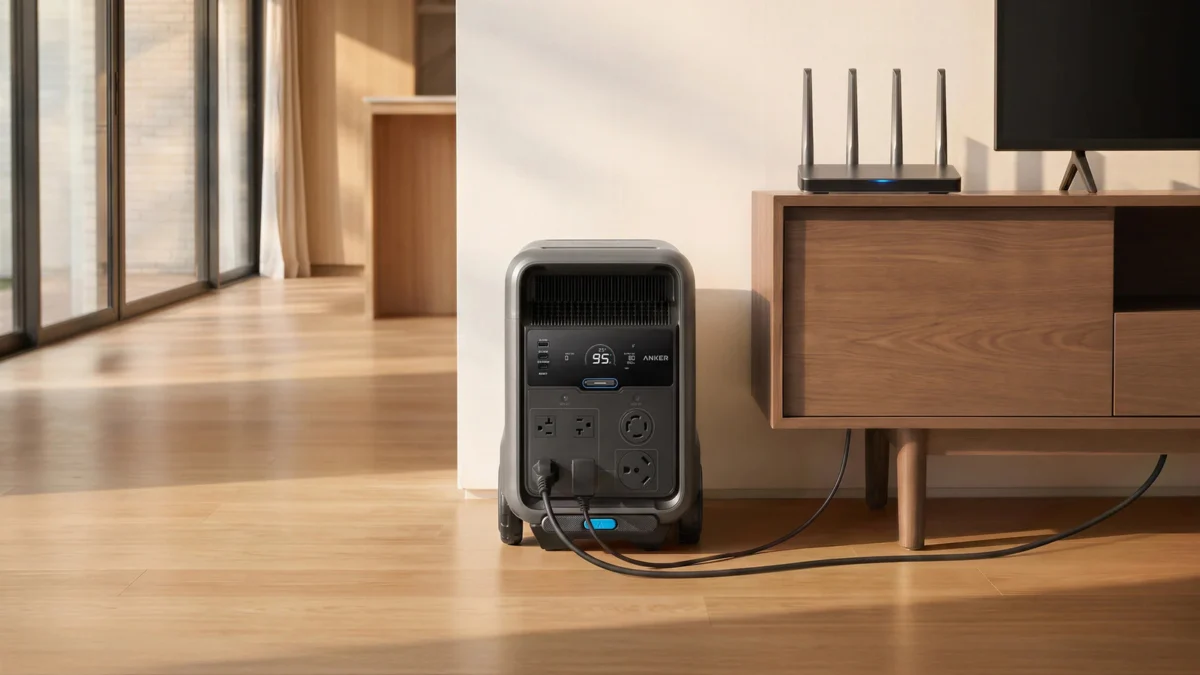
The landscape of residential energy storage is undergoing a significant transformation as Anker, a dominant force in the consumer electronics market, continues its aggressive expansion into the home power sector through its Solix sub-brand. With the official introduction of the Anker Solix S5000, the company is positioning itself to compete directly with established players in the home backup and off-grid power markets. This new unit represents a substantial leap in capacity and output for the brand, targeting homeowners who require reliable, long-duration energy autonomy during utility grid failures or for remote power applications.
The Anker Solix S5000 enters the market with a robust set of specifications designed to address the common pain points of portable power station users: capacity anxiety, charging speed, and long-term hardware degradation. Boasting a 5kWh capacity, the unit is engineered to sustain essential home appliances for up to 48 hours, a critical benchmark for emergency preparedness. By leveraging 314Ah Lithium Iron Phosphate (LFP) cells, the device offers a significant increase in lifespan compared to traditional lithium-ion batteries. Anker reports an estimated 15-year operational life, with the hardware rated for 10,000 full charge cycles. This longevity is a key selling point for consumers looking for a "set-and-forget" investment for their home energy strategy.
Technical Specifications and Performance Capabilities
The technical architecture of the S5000 is built to handle heavy-duty loads, providing up to 4,500W of AC output. This power delivery capability is sufficient to run high-draw household appliances, such as refrigerators, washing machines, or central air conditioning systems, simultaneously. Furthermore, the unit supports versatile charging configurations: 1,800W at 120V for standard wall outlets or a rapid 4,500W charge at 240V for faster replenishment.
The transition toward LFP chemistry in the S5000 reflects an industry-wide trend prioritized by safety and stability. LFP cells are inherently more resistant to thermal runaway and degradation, making them the preferred choice for stationary or semi-portable power storage where safety is paramount. The integration of a sophisticated Battery Management System (BMS) ensures that each cell is balanced efficiently, maximizing the usable energy while protecting the battery from overcharging, short-circuiting, or deep discharge scenarios that can permanently damage capacity.
Market Context and Anker’s Strategic Evolution
Anker’s transition from a manufacturer of mobile phone charging bricks and cables to a comprehensive home energy provider is a calculated strategic pivot. By leveraging its established reputation in the consumer electronics space, the company has managed to capture a significant market share in the portable power station segment. This trajectory follows the success of earlier models, such as the Solix S2000, which gained traction due to its competitive pricing and frequent promotional availability.
Historically, the home power station market was dominated by specialized companies such as EcoFlow and Bluetti. Anker’s entry into this arena has introduced a new dynamic of competitive pricing and ecosystem integration. By offering a tiered system of discounts and rewards, Anker is attempting to secure brand loyalty from consumers who are currently in the process of building their home energy infrastructure. The recent price reduction of the S2000 to nearly half its MSRP earlier this year served as a signal to the market that Anker is willing to engage in aggressive pricing strategies to secure its position.
Incentives and the Launch Strategy
As part of its market entry strategy for the S5000, Anker has introduced a comprehensive incentive program for early adopters. The launch promotion, which prices the unit at $2,499.99—a reduction of $1,100 from its MSRP—is designed to incentivize quick decision-making. However, the manufacturer has gone beyond simple price cuts.
For consumers who engaged with the product campaign page prior to the launch, the "Subscriber Benefits Package" adds approximately $699 in value. This bundle includes an Anker Prime charger, a specialized 240V fast-charging cable, and a two-year extension on the product warranty. The warranty extension is particularly notable, as it suggests the company’s confidence in the long-term reliability of its new hardware. These offers are valid until November 9, 2026.
In an effort to mitigate buyer’s remorse, Anker has also instituted a 180-day price match guarantee. If the product is discounted further within this window, buyers are eligible for additional credits or gifts, provided they register their purchase through the official Anker Solix portal by November 15, 2026. Furthermore, members of the Anker Credits program are seeing double points on these transactions, encouraging participants to remain within the Anker ecosystem for future purchases.
Chronology of Development and Release
The rollout of the S5000 follows a structured timeline characteristic of major tech product launches:
- Initial Teasing Phase: Anker began building anticipation in early 2026, highlighting the need for higher-capacity residential energy solutions.
- Campaign Registration: A pre-launch subscription period allowed interested users to secure early-bird benefits, creating a database of high-intent leads.
- Launch Day: The product became available to the general public with the $1,100 discount, marking the official start of the sales cycle.
- Incentive Window: The current period (ending November 9, 2026) serves as the primary acquisition phase.
- Redemption Deadline: November 15, 2026, marks the final cutoff for users to claim their tiered gifts and register their order numbers for post-purchase protection.
Industry Analysis: The Shift Toward Residential Autonomy
The implications of the Anker Solix S5000 release extend beyond the company’s individual success. As climate-related events increase in frequency and the stability of traditional power grids faces scrutiny in many regions, the demand for residential backup solutions has moved from a niche market for outdoor enthusiasts to a mainstream necessity for urban and suburban homeowners.
The trend toward 48-hour autonomy is a significant shift in expectations. Previously, power stations were designed for weekend camping trips or short-term emergency phone charging. The S5000 represents a new class of "home-critical" infrastructure. The capability to integrate these devices into a household’s electrical grid, combined with the longevity of 10,000 cycles, suggests that these units are intended to serve as permanent fixtures rather than transient gadgets.
However, market analysts note that challenges remain. While the hardware specifications are impressive, the ability of a 5kWh station to handle the total load of an average household is limited. Users must be cognizant of their consumption patterns, likely prioritizing refrigeration, lighting, and communication devices over high-wattage heating or cooling systems. Anker’s success will ultimately depend on its software integration, specifically how well the accompanying app can help users monitor and throttle their energy consumption in real-time.
Future Outlook and Sustainability
As Anker continues to iterate on its Solix line, the focus is likely to shift toward modularity and solar integration. With the S5000, the company has established a platform that can support significant energy throughput. Future developments in this sector will likely involve tighter integration with home solar arrays and smart home management systems.
For the consumer, the current launch represents a critical entry point. With the combination of a $1,100 discount, the bundled $699 benefits package, and the long-term security of a 15-year rated lifespan, the S5000 is positioned as a high-value proposition in a crowded market. The decision by Anker to extend warranties and provide a price match guarantee indicates a long-term commitment to this segment, signaling to both competitors and customers that they are here to stay. As the energy landscape continues to decentralize, products like the Solix S5000 will likely become foundational elements of the modern, resilient household.