In an increasingly competitive digital arena, artificial intelligence (AI) SEO tools are rapidly transitioning from optional enhancements to essential components for small businesses striving to maintain relevance and drive growth. The proliferation of AI capabilities across virtually every marketing platform has created both unprecedented opportunities and a daunting selection challenge for lean teams. Businesses are grappling with the critical task of identifying which AI solutions truly deliver tangible value without overwhelming already stretched resources.
The Imperative of AI in Modern Marketing
The integration of AI into marketing strategies is no longer a futuristic concept but a present-day reality, with adoption rates surging globally. Data underscores this fundamental shift: a recent HubSpot "AI Trends for Marketers" report reveals that a significant two-thirds of marketers worldwide now leverage AI in their professional roles. Among American marketers, this figure climbs even higher to 74%, illustrating a clear national trend towards AI integration. This widespread adoption signals that businesses neglecting AI risk falling behind competitors who are harnessing its power for efficiency and enhanced performance.
For small businesses, the decision to invest in AI SEO tools—whether through time dedicated to learning or direct financial outlay—is no longer a matter of choice but a strategic necessity. The digital landscape is continuously reshaped by algorithmic advancements and evolving user behaviors, with AI at the forefront of these changes. From streamlining content creation to uncovering hidden keyword opportunities and optimizing technical performance, AI tools empower small businesses to achieve more with less, a crucial advantage in resource-constrained environments. This guide aims to demystify the landscape of AI SEO tools, highlighting those that offer ongoing value and are actively utilized by lean teams to maximize their digital footprint.
Strategic Considerations for AI SEO Tool Adoption
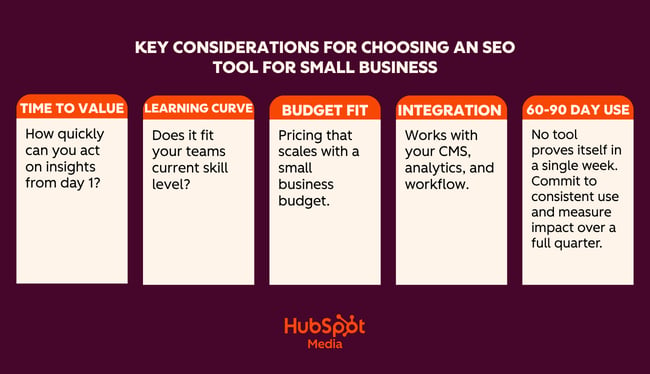
Navigating the crowded market of AI SEO tools requires a methodical approach, particularly for small businesses with limited budgets and personnel. The efficacy of any tool is not merely in its features but in its practical application and the return on investment it delivers. Key factors that dictate the value proposition of AI SEO tools include time-to-value, learning curve, cost, and ease of integration.
-
Expedited Time-to-Value: For small businesses operating with lean teams, the speed at which an AI tool delivers actionable insights and measurable results is paramount. Tools that demand extensive setup or require external consultants to configure often present a barrier to entry. Conversely, solutions like Google Search Console (GSC) exemplify rapid time-to-value; once a tracking script is installed, GSC automatically collects invaluable data on website and SEO performance within 24 hours. This immediate feedback loop on organic visibility, technical issues, and search queries makes it a non-negotiable for virtually all websites. In contrast, comprehensive platforms like HubSpot, while offering deeper functionality across multiple marketing facets, typically involve a greater initial investment of time and potentially capital to unlock their full potential. The trade-off lies in the breadth of capabilities: GSC excels at specific SEO diagnostics, whereas HubSpot provides an integrated ecosystem for marketing, sales, and customer service. The decision hinges on whether a tool’s broader impact on business operations justifies the extended setup.

-
Accessible Learning Curve: The utility of an AI tool is directly proportional to a team’s ability to use it consistently and effectively. Overly complex platforms designed for large enterprise SEO agencies can overwhelm small business users with an abundance of features they may never utilize. The most effective AI SEO tools for smaller teams are those that offer intuitive interfaces, guided workflows, clear recommendations in plain language, and straightforward next steps, rather than raw data requiring expert interpretation. The goal is to empower marketers and content creators, not to necessitate the hiring of a dedicated SEO specialist solely for tool operation.
-
Cost-Effectiveness and Budget Alignment: The ideal AI SEO solution for a small business resides at the intersection of practical utility, affordability, and scalability. Tools must solve a genuine problem at a price point that aligns with budget constraints. Furthermore, businesses must consider the long-term cost implications, evaluating whether upgraded packages will remain affordable as the business grows. Investing in a tool that becomes cost-prohibitive in a few years can lead to the disruptive and time-consuming process of switching platforms. A pragmatic approach involves identifying the most time-consuming SEO tasks that are not addressed by existing tools and then evaluating platforms specifically against these bottlenecks. A tool that effectively resolves one critical pain point often delivers more value than a multi-feature platform that superficially addresses several.
-
Seamless Integration: The ability of an AI SEO tool to integrate with existing systems significantly boosts its adoption rate and overall effectiveness. According to insights from MuleSoft, a substantial 86% of IT leaders recognize that AI agents can introduce complexity rather than value if not properly integrated into the existing technological stack. When SEO data flows seamlessly into a Content Management System (CMS), Customer Relationship Management (CRM) system, or other marketing platforms, it enhances existing workflows rather than creating isolated, disparate processes. Such integrations improve data coherence, enrich insights, and motivate teams to engage with the new tool more readily. When comparing platforms, assessing their compatibility with current tools is a crucial step.
-
The 60- to 90-Day Usage Test: Initial enthusiasm from demonstrations or trial periods often provides an incomplete picture of a tool’s true value. A more reliable measure of utility is sustained, consistent usage by teams at the 60- to 90-day mark, coupled with the ability to attribute specific positive outcomes directly to the tool. Small businesses should seek flexible testing periods, either through extended trials or monthly payment options, before committing to long-term contracts.
The Evolving Role of AI in SEO Workflows: Capabilities and Critical Human Oversight
While AI SEO tools offer powerful capabilities, small business SEO strategies cannot rely solely on automation. A nuanced understanding of AI’s strengths and limitations is crucial for optimal implementation.
-
Content Drafting and Scaling (with Caution): AI excels at generating initial drafts of various content types, including blog posts, FAQs, service page copy, and meta descriptions, in a fraction of the time a human would require. This is a significant time-saver for businesses struggling with consistent content output. For objective topics or straightforward informational queries (e.g., "What is anchor text?"), AI can produce high-quality, factually accurate content. However, for thought leadership pieces, content requiring unique expert perspectives, or nuanced discussions (e.g., "Is SEO dead in the age of AI search?"), human intervention is indispensable. AI often lacks the ability to infuse content with genuine expertise, original insights, or a distinct brand voice. Consequently, all AI-generated content must undergo thorough human review for factual accuracy, nuance, personalization, and alignment with brand guidelines. Google’s emphasis on E-E-A-T (Experience, Expertise, Authoritativeness, Trustworthiness) further underscores the enduring value of human-crafted content that reflects genuine firsthand experience.
-
Keyword and Topic Ideation: AI tools are highly effective for brainstorming keyword clusters, generating customer-centric questions, and identifying related topics that might otherwise be overlooked. This can significantly reduce the manual research burden on small teams. However, AI often suggests keywords without validated search volume data. Human marketers must still leverage tools like Google Keyword Planner or apply their industry intuition to validate demand and strategic relevance before committing to content creation. While AI can spark ideas, in-depth content clustering and comprehensive Search Engine Results Page (SERP) analysis still benefit immensely from human strategic input.
-
Optimizing Existing Pages: AI tools can efficiently analyze existing web pages and suggest improvements for title tags, meta descriptions, heading structures, and overall readability. This automated audit-and-improve workflow can yield significant results for businesses with numerous underperforming pages, particularly those with limited budgets for extensive manual optimization. For less critical pages, AI-generated optimizations can be implemented with minimal human review. However, for high-value or cornerstone pages, a layer of human judgment is essential to ensure that optimizations align with overarching strategic goals and brand messaging.
Key AI SEO Tools for Small Businesses: A Comprehensive Review
The following tools are recognized for their practical utility and genuinely useful AI capabilities, solving real problems for lean teams.
Tools for Foundational SEO and Technical Audits
-
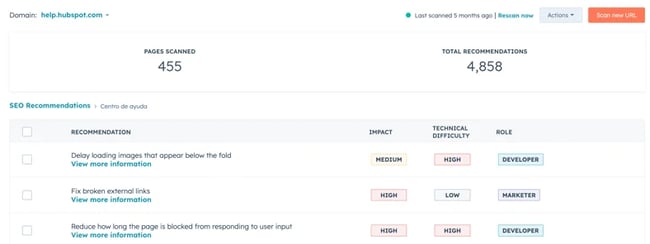
HubSpot SEO Recommendations: Integrated within HubSpot’s Marketing Hub, this tool offers a uniquely unified approach to SEO. Unlike standalone platforms that merely list issues, HubSpot connects SEO recommendations directly to its content editor, CRM, and reporting dashboard. This integration ensures that every fix and content improvement is directly linked to measurable business outcomes. The platform prioritizes on-page updates for non-experts, explaining why an issue is flagged, its impact on search performance, and the specific action required to resolve it. This clarity empowers even non-specialists to understand and address technical SEO challenges, such as broken links, missing meta descriptions, or slow page loading times. HubSpot’s CRM integration further elevates its value, making it a powerful tool for B2B businesses by directly tying organic traffic and ranking improvements to leads, pipeline, and revenue data. This allows businesses to demonstrate the tangible value of SEO efforts beyond mere clicks. Available across various HubSpot editions, with advanced features requiring Pro or Enterprise subscriptions.
-
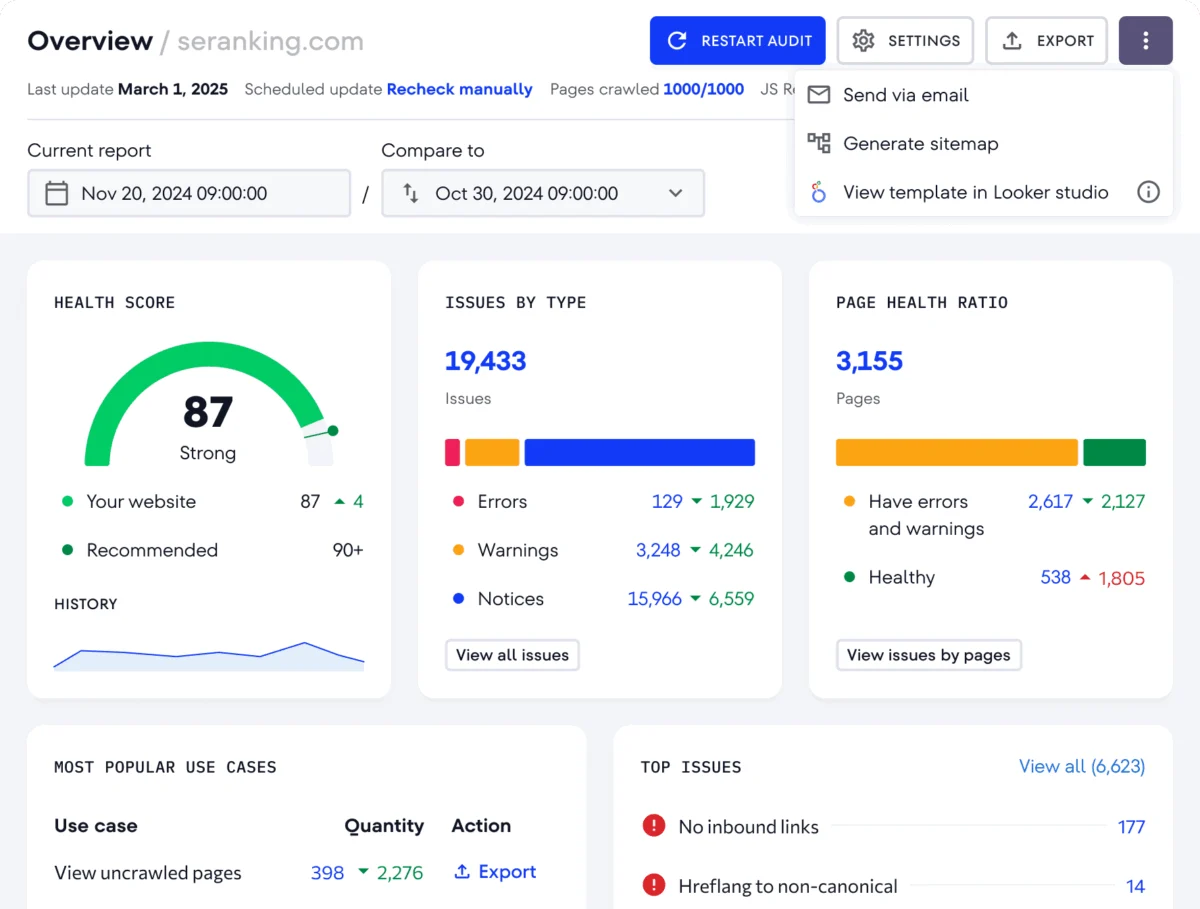
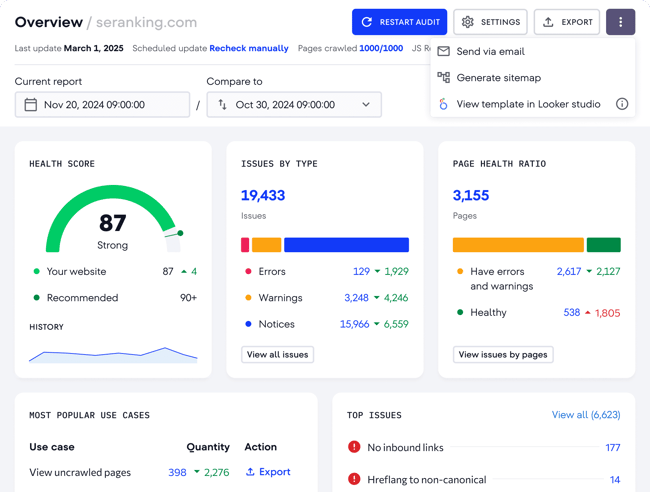
SE Ranking: This comprehensive, AI-powered platform strikes an excellent balance between feature depth and affordability, making it highly suitable for small businesses. SE Ranking offers robust keyword tracking, site audits, competitive research, and backlink analysis. Its AI-specific insights extend to content gap identification and overall search optimization. The platform’s clean interface and actionable recommendations simplify complex SEO tasks, guiding users on what to do about identified problems, which is invaluable for teams without an in-house SEO expert. While industry giants like Semrush and Ahrefs offer unparalleled depth, SE Ranking provides a full-featured alternative at a more accessible price point. Plans start at Wallet tier, with a 14-day free trial available.
-
Google Search Console (GSC): An indispensable, free tool provided directly by Google, GSC offers unparalleled insights into a website’s performance in Google Search. It tracks which search queries generate impressions and clicks, identifies indexed pages, flags technical issues, and reports on Core Web Vitals. The data originates directly from Google, ensuring its reliability for understanding actual search performance. GSC’s AI capabilities simplify complex data into plain English explanations, making it highly accessible for small teams without dedicated SEO expertise to monitor and understand their website’s health. Free forever.
-
Google Analytics (GA4): The cornerstone of any small business analytics setup, GA4 is another free, essential tool from Google. It tracks traffic sources, visitor behavior, and conversion outcomes on a website. While not primarily an SEO tool, its integration with GSC provides a holistic view of user journeys from search to conversion. GA4 leverages AI for predictive metrics (e.g., churn probability, purchase probability), anomaly detection, and automated insights, alerting businesses to significant shifts in data. Its ability to segment audiences by referral source, including emerging AI traffic, allows businesses to track the impact of AI-driven search experiences on conversions. Free forever.
Tools for Automated Content Optimization
-
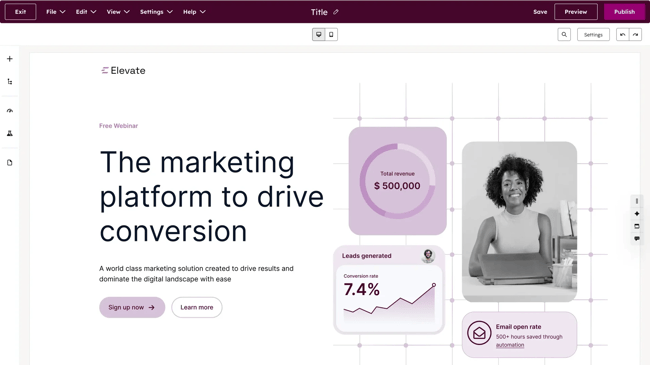
HubSpot Content Hub: This platform unifies content strategy, creation, optimization, and performance measurement. Its topic cluster tool is particularly valuable for small businesses, enabling them to organize content around core pillar pages and supporting cluster content. This structured approach signals topical authority to search engines, a proven method for compounding organic traffic. Content Hub features "Breeze," HubSpot’s AI layer, which functions as a co-pilot for content writers. Breeze assists in drafting and refining on-brand content, generating structured drafts, suggesting internal links, and reformatting content for readability. Critically, Breeze’s "Brand Voice" capability ensures AI-generated content aligns with established tone and language parameters, preventing generic output. Its integration with HubSpot’s CRM allows for performance tracking tied directly to leads, pipeline, and revenue, enabling businesses to quantify the content’s contribution to sales. Available as a standalone product (free plan available, paid plans start at $20/month per user) or as part of broader HubSpot subscriptions.
-
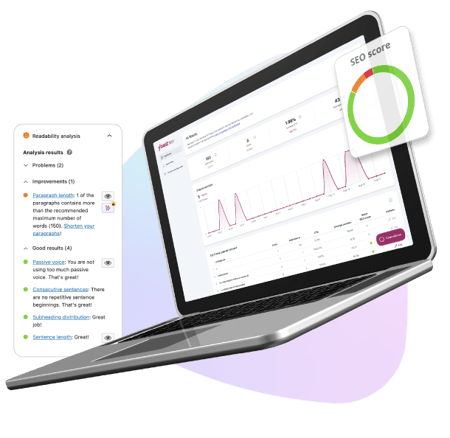
Yoast SEO: For small businesses utilizing WordPress, Yoast has been the default SEO plugin for millions. It seamlessly integrates AI-assisted SEO recommendations directly into the WordPress editor, providing real-time guidance on on-page optimization. Key features include readability analysis, focus keyphrase optimization, internal linking suggestions, and automated XML sitemaps. While the free version offers substantial utility for basic on-page SEO, Premium and AI+ packages provide enhanced support. Yoast acts as an optimization assistant rather than a full SEO platform, making it an excellent complement to tools focused on keyword research or competitor analysis. Free package available, Premium and AI+ packages start at $9.90/month.
-
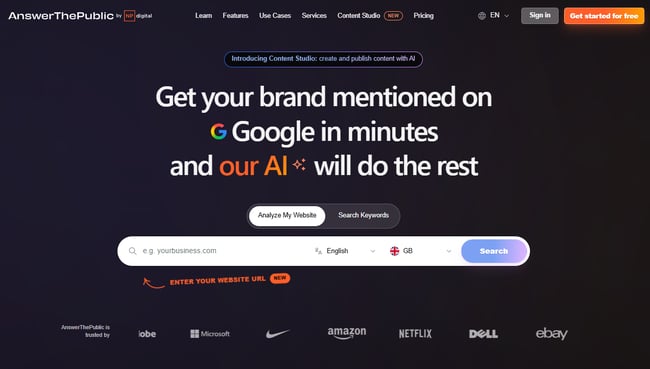
AnswerThePublic: This content ideation tool leverages Google autocomplete data to generate visual maps of questions, prepositions, comparisons, and related searches surrounding a given keyword or topic. It’s an invaluable resource for lean teams seeking to quickly identify content ideas that resonate with audience queries. The visual format helps spot content opportunities that can naturally form topic clusters. AnswerThePublic removes much of the guesswork from content planning, providing a fast and affordable way to populate a content calendar with genuinely searched topics. Three free searches per day, paid packages start at $13.33/month.
Tools for Tracking Rankings and AI Visibility
-
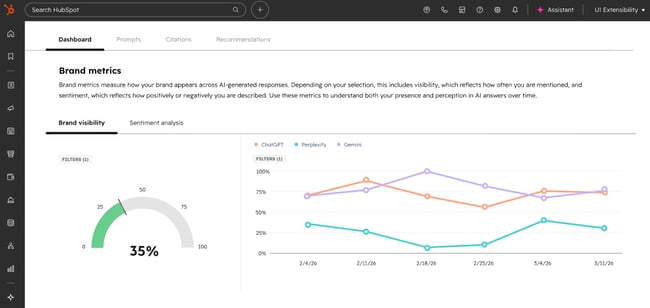
HubSpot AEO (Answer Engine Optimization): As AI answer engines like ChatGPT, Perplexity, and Gemini become prevalent, tracking brand visibility in AI-generated answers is as crucial as traditional SEO. HubSpot AEO is specifically designed to monitor how a business appears within these AI environments and provides actionable steps for improvement. Its unique CRM integration allows the tool to suggest prompts based on customer segments, industries, and competitors, offering contextual insights that standalone AEO tools lack. HubSpot AEO runs daily prompts across major AI engines, tracking brand mentions, descriptions, competitor comparisons, and identifies gaps in AI presence. A brand visibility scorecard helps monitor performance and signals optimization opportunities. Free 28-day trial, then $50/month (or $45/month billed annually).
-
HubSpot AEO Grader: This free diagnostic tool offers a quick, no-setup snapshot of how AI engines currently perceive a brand. By inputting company name, location, industry, and product/service description, the grader analyzes AI visibility across ChatGPT, Perplexity, and Gemini, producing a composite score out of 100. The score is broken down across five dimensions: brand presence, accuracy, sentiment, comparative positioning, and relevance. It serves as an excellent starting point for businesses new to AI visibility, providing a clear, plain-English assessment of a brand’s current standing before considering ongoing monitoring solutions. Free forever.
Industry Perspectives and Expert Consensus
Industry analysts consistently emphasize that the future of digital marketing for small businesses is inextricably linked with AI adoption. "The ability to leverage AI for mundane, repetitive tasks frees up valuable human capital for strategic thinking, creative problem-solving, and building genuine customer relationships," states a leading digital marketing strategist. "Small businesses that embrace AI will not only see gains in efficiency but also a significant uplift in their competitive edge." Experts agree that the key is not blind automation, but rather intelligent integration—using AI as a powerful assistant to augment human capabilities, not replace them. The focus must remain on producing high-quality, valuable content and user experiences that both traditional search engines and AI answer engines can confidently recommend.
Broader Implications for Small Business Competitiveness
The strategic adoption of AI SEO tools carries profound implications for small business competitiveness. By automating keyword research, content drafting, and technical audits, AI levels the playing field, allowing smaller entities to compete more effectively with larger, resource-rich corporations. It enables them to maintain a consistent online presence, react quickly to market trends, and deliver optimized content at scale. Conversely, businesses that fail to adapt risk falling into digital obscurity, unable to keep pace with the optimized content and visibility of their AI-enabled competitors. The era of AI in SEO is not just about rankings; it’s about business survival and sustainable growth in a rapidly evolving digital ecosystem.
Conclusion
For small businesses aiming to simplify their technology stack while maximizing their digital marketing capabilities, a