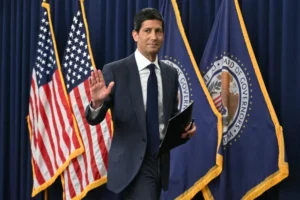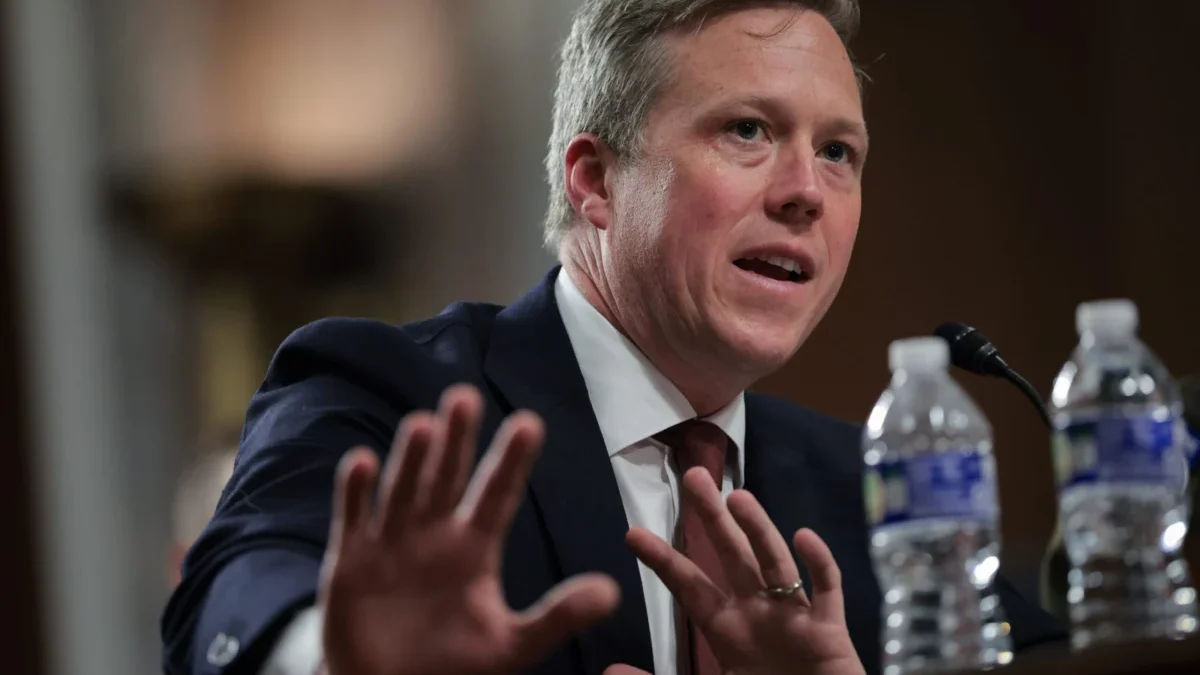
OpenAI’s decision to appoint former U.S. Army Secretary Dan Driscoll as its new senior counselor for national security modernization represents a significant escalation in the artificial intelligence industry’s integration with the American defense apparatus. This appointment, confirmed by the company on Monday, signals a concerted effort by the San Francisco-based frontier lab to navigate the complex regulatory and operational landscape of the Pentagon. Driscoll, who exited his post in the Trump administration just two months ago following a well-publicized friction with Defense Secretary Pete Hegseth, is now tasked with bridging the gap between cutting-edge commercial AI capabilities and the strategic requirements of national security.
The move is far from an isolated incident; rather, it is a deliberate expansion of OpenAI’s "military-industrial" footprint. By onboarding a figure with deep, recent experience in the Pentagon’s internal bureaucracy, OpenAI is positioning itself not merely as a software vendor, but as a critical advisor in the modernization of U.S. defense policy. This strategy aligns with a broader trend among major technology firms that view the Department of Defense (DoD) as an essential, high-growth client for advanced algorithmic systems, ranging from predictive logistics to autonomous drone coordination.
A Chronology of Increasing Integration
OpenAI’s pivot toward the defense sector has accelerated significantly over the past two years. The progression of its relationship with the U.S. government provides a clear map of how the company has moved from general research to becoming an active participant in national security infrastructure:
- June 2024: OpenAI made a major organizational shift by appointing retired U.S. Army General Paul Nakasone, the former director of the National Security Agency (NSA) and commander of U.S. Cyber Command, to its board of directors. This provided the company with an unparalleled level of high-level strategic intelligence regarding cybersecurity and intelligence-gathering protocols.
- February 2026: Following a breakdown in negotiations between the Pentagon and rival AI firm Anthropic, OpenAI secured a landmark deal to integrate its models into the DoD’s secure networks. This agreement followed a controversial "supply chain risk" designation placed on Anthropic by Secretary Hegseth, which effectively blacklisted the company from federal procurement.
- June 2026: The company secured a $200 million contract with the Department of Defense. This deal, aimed at designing AI tools for national security challenges, cemented OpenAI’s role as a primary contractor for the federal government.
- September 2026: Dan Driscoll resigned as Army Secretary after 18 months in office, citing fundamental disagreements with Secretary Hegseth regarding the pace of modernization and the nature of military personnel promotions.
- November 2026: OpenAI officially announced the hiring of Driscoll, tasking him with the mission of aligning AI deployment with the needs of the U.S. and its international allies.
The Strategic Value of the Driscoll Hire
Driscoll brings a specific set of experiences to OpenAI that are highly coveted by private sector firms looking to penetrate the Pentagon’s procurement process. During his tenure as Army Secretary, he was a vocal proponent of "commercial off-the-shelf" (COTS) software, pushing to move the military away from expensive, custom-built solutions that often became obsolete before deployment. His initiatives to streamline the acquisition of low-cost battlefield drones and reduce the administrative "red tape" facing defense contractors have made him a hero in Silicon Valley circles.
Furthermore, his background as a negotiator—specifically his clandestine efforts to facilitate communication between Ukrainian, European, and Russian officials—demonstrates a high degree of geopolitical fluency. OpenAI CEO Sam Altman, in a statement accompanying the announcement, emphasized that the U.S. faces a "historic opportunity" to lead in the global adoption of "democratic AI." For OpenAI, Driscoll is the perfect avatar to sell this vision to government stakeholders who are wary of the safety guardrails typically associated with LLMs.
Implications of the "Revolving Door"
The transition of officials from high-ranking government posts directly into private sector roles—the so-called "revolving door"—has sparked intense debate among policy experts. Dr. Gwanhoo Lee, chair of the Department of Information Technology and Analytics at American University’s Kogod School of Business, argues that this trend poses structural risks to the fairness of federal procurement.
"When AI firms aggressively recruit individuals who, until recently, held the keys to procurement budgets and policy decisions, it inevitably raises questions about the integrity of the selection process," Lee noted. "If contracts are awarded based on deep-seated social networks and personal relationships rather than the objective merit of the technology, the government risks entering into inefficient partnerships. We need more rigorous oversight to prevent the blurring of lines between the public interest and private profit."
The concern is that the expertise Driscoll gained while overseeing the Army’s budget and strategic priorities will now be leveraged to ensure OpenAI’s systems become the "standard" for all military AI applications, potentially freezing out smaller or more ethically restrictive competitors.
Balancing Innovation with Ethical Guardrails
A central tension in OpenAI’s defense work remains the balance between "all lawful use" and the potential for abuse. The contract signed in February 2026, which allowed OpenAI’s models into the Pentagon’s secure network, included an "all lawful use" clause that was initially criticized for being overly broad.
Critics, including the Center for Democracy & Technology, have pointed out that under current U.S. law, the government can legally purchase massive datasets from commercial brokers. When these datasets are processed by powerful AI models, the distinction between "analyzing information" and "mass surveillance" becomes dangerously thin. While OpenAI has updated its internal policy to explicitly forbid the intentional use of its models for domestic surveillance or the tracking of U.S. citizens, experts remain skeptical about how these safeguards will hold up under the pressure of national security emergencies.
"The language in the agreement is a start," says policy analyst Samir Jain, "but legal loopholes are vast. If the Pentagon uses a third-party contractor to feed data into an OpenAI model, is that considered ‘intentional’ surveillance by the company? The definitions remain untested in the courts."
The Road Ahead for OpenAI
For OpenAI, the path forward is a high-wire act. By partnering with firms like Anduril—which specializes in autonomous defense hardware—the company is moving toward a future where AI does not just inform military decisions but actively executes them. The addition of Driscoll is meant to provide a veneer of administrative legitimacy and strategic oversight to this rapid expansion.
As the company moves into 2027, it faces a two-fold challenge. First, it must continue to satisfy the Pentagon’s hunger for rapid technological superiority to compete with international adversaries. Second, it must navigate the domestic skepticism regarding its role in government surveillance. Whether the appointment of Dan Driscoll serves to stabilize these concerns or further entrench the perception of a tech-defense monopoly remains to be seen. What is clear is that OpenAI has moved beyond its origins as a research lab and has become a central pillar of the U.S. national security architecture, a transition that will undoubtedly shape the future of global conflict and technological governance for years to come.