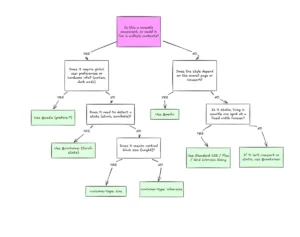
The modern web development landscape has long relied on procedural determinism, where every pixel, coordinate, and transition must be explicitly defined through declarative code. However, the introduction of native pseudo-randomness into Cascading Style Sheets (CSS) through the emerging random() specification represents a paradigm shift toward controlled chaos in user experience (UX) design. Spearheaded by Apple’s WebKit team in late 2025, this feature allows developers to introduce generative visual variations directly within stylesheets, eliminating the traditional reliance on JavaScript plugins for dynamic elements like particle effects, starfields, and grid layouts.
Despite its innovative appeal, the adoption of CSS random() has encountered significant fragmentation across browser engines. While Safari integrated the draft specification into its core architecture in late 2025, Chromium-based browsers and Firefox have lagged behind, leaving developers facing compatibility hurdles. To address this disparity, the open-source community has engineered novel polyfill solutions, ensuring that the benefits of native-style CSS randomness can be harnessed across all major web browsers while the World Wide Web Consortium (W3C) standardizes the underlying protocols.
Chronology and Evolution of CSS Randomization
The conceptual framework of introducing non-determinism into stylesheet architecture originated from longstanding discussions within the CSS Working Group regarding the integration of dynamic evaluation modules. Historically, introducing variance into user interfaces required external scripts, heavy DOM manipulation, or server-side rendering logic. As web applications increasingly embraced generative UI patterns to enhance visual engagement—ranging from subtle confetti bursts in corporate software to complex, data-dense dashboards—the performance overhead of JavaScript-driven randomness became increasingly apparent.
By the fourth quarter of 2025, the W3C CSS Values and Units Module Level 5 introduced formal syntax drafts for the random() function, alongside preliminary concepts for random-item(). Apple’s WebKit team emerged as the early pioneer of this initiative, deploying experimental support in Safari Technology Preview before officially rolling it out in Safari 26.2. This milestone marked the first instance where a major browser engine allowed developers to execute mathematical randomization directly within style declarations, aligning with the W3C’s Rule of Least Power by solving presentational tasks within the most appropriate, least complex language layer available.
Nevertheless, the cross-platform rollout stalled as Chromium and Gecko-based development teams prioritized competing specification milestones. Consequently, developers attempting to implement modern generative UI components faced a fractured ecosystem, where demonstrations optimized for Safari failed to render on standard personal computers running alternative engines.
Technical Implementation and Browser Compatibility
The native syntax of CSS random() is designed to accept minimum values, maximum values, and optional step intervals, alongside advanced caching parameters and scoping options. For example, developers can declare properties such as:
.star
  --random-star-size: random(1px, 7px, 1px);
  width: var(--random-star-size);
Furthermore, the specification supports element-shared base values, enabling synchronized randomization across multiple related elements—such as tilting an entire set of geometric stars to a unified angle while preserving individual position variance.
Because native support remains restricted primarily to Apple’s ecosystem, developers have turned to runtime bridging mechanisms. A prominent solution involves the integration of client-side polyfills that intercept computed styles during the document loading phase. By leveraging underlying calculation libraries—such as MIT-licensed PostCSS calculation parsers adapted for browser runtimes—these polyfills evaluate custom CSS properties prefixed with --random, compute the randomized values dynamically using cryptographic utilities, and apply inline property overrides before the rendering tree is fully painted.
This methodology circumvents many traditional pitfalls associated with CSS polyfilling, such as heavy stylesheet parsing or runtime refetching overhead. By reading arbitrary expressions through JavaScript’s getComputedStyle API, the polyfill evaluates the required variance without breaking the underlying declarative syntax. Once native browser support eventually reaches a universal baseline, developers can simply remove the script reference, allowing the browser to process the native random() function natively without requiring codebase refactoring.
Industry Implications and Generative UI Integration
The push toward programmatic chaos in web design extends far beyond aesthetic enhancements like starfields and rotating fortune wheels. Industry analysts note that generative UI techniques, when applied judiciously, can break the monotonous predictability of standardized corporate templates, creating more organic digital environments. However, extreme implementations—such as fully generative user interfaces driven by artificial intelligence models—have drawn mixed reviews from users concerned with predictability, accessibility, and navigation consistency.
The introduction of CSS-native randomness strikes a balance between total determinism and chaotic artificial intelligence generation. By restricting randomness strictly to the presentation layer through declarative CSS rules, developers maintain strict control over layout boundaries, accessibility landmarks, and structural integrity while introducing subtle organic variations that enrich the visual experience.
Furthermore, advanced explorations into custom CSS functions and inline conditional logic within Chromium-based engines have demonstrated that developers can simulate complex data selection routines—approximating future specifications like random-item()—without waiting for official standards ratification. By defining modular custom functions that evaluate indexed variables against conditional states, engineers can build robust, multi-type selection arrays directly within stylesheets.
Future Outlook
As the CSS Values and Units Module Level 5 continues to evolve from an editor’s draft toward Candidate Recommendation status, browser vendors are under increasing pressure to synchronize their implementation roadmaps. While major breaking changes are still anticipated within the draft specification, the existence of robust client-side polyfills bridges the interim period of browser fragmentation.
For enterprise consultants, frontend engineers, and UI designers, the emergence of CSS randomization signals a mature phase in stylesheet architecture—one where the traditional boundaries between static presentation and dynamic behavioral variation continue to dissolve. Whether these tools are utilized for subtle branding animations or complex data-visualization backdrops, the capability to inject controlled chaos directly into CSS marks a fundamental milestone in the evolution of web standards.