The landscape of digital discovery has undergone a profound transformation, moving beyond the traditional keyword-driven searches that defined a generation. Today, buyers are increasingly bypassing conventional search engines like Google, instead turning to sophisticated AI-powered platforms such as ChatGPT, Gemini, and Perplexity for direct answers to their queries. This seismic shift means that if a brand is not actively cited or positively mentioned within these AI-generated responses, it risks becoming invisible to a significant and growing segment of its target audience. This evolution underscores the critical importance of understanding and implementing Answer Engine Optimization (AEO), a strategic imperative that complements traditional Search Engine Optimization (SEO) in the AI era.
The urgency to adapt to this new paradigm is supported by compelling data. HubSpot’s internal research indicates that a substantial 42% of CRM buyers are already incorporating AI search into their evaluation processes. Furthermore, the impact on traditional organic traffic is stark, with a reported 27% year-over-year decline for some customers. Conversely, AI referral traffic has not only tripled but also boasts a conversion rate three times higher than that of traditional search visitors. This data points to a clear trend: AI-referred leads are not just more numerous but also significantly more qualified. Independent research from Ahrefs further corroborates this, showing that AI search visitors have generated a remarkable 23 times better conversion rate than those from traditional organic search, highlighting the immense value locked within this emerging channel.
Against this backdrop, marketing teams are now faced with a pivotal question: how best to secure and optimize their brand’s presence within these AI-driven answer engines. This strategic challenge has brought two distinct categories of solutions to the forefront: purpose-built AI visibility tools like HubSpot AEO, and comprehensive SEO platforms such as SE Ranking, which have begun to integrate AI tracking features. Adding a layer of complexity, SE Ranking has also launched a specialized, standalone product, SE Visible, designed specifically for AI visibility monitoring. Understanding the nuanced capabilities, pricing structures, and ideal use cases for each of these platforms is crucial for any organization aiming to thrive in the AI-powered digital ecosystem.
The Evolution of Search: From Keywords to Conversational AI
For decades, digital marketing revolved around SEO, a discipline focused on optimizing websites to rank highly on search engine results pages (SERPs). The goal was to capture user intent expressed through keywords and guide them to a brand’s website. However, the advent of large language models (LLMs) and generative AI has fundamentally altered this interaction. Users are no longer just typing keywords; they are asking complex, conversational questions, expecting synthesized, definitive answers directly from the AI. This shift moves the brand-discovery moment from a click on a SERP to a direct mention within an AI’s response.

The implications for brands are profound. If an AI, when asked "What’s the best CRM?" or "Compare Project Management Tools," does not name or positively describe a particular brand, that brand effectively ceases to exist in that critical initial consideration phase. The user, having received a concise answer, may never feel the need to click through to a traditional website. This necessitates a new optimization strategy: Answer Engine Optimization (AEO), or sometimes Generative Engine Optimization (GEO). AEO is not about competing with SEO but rather complementing it. SEO continues to drive qualified traffic through traditional search results, ensuring a strong foundational online presence. AEO, on the other hand, specifically targets visibility and favorable representation within AI-generated answers, influencing the very narrative an AI constructs about a brand. The most forward-thinking marketing teams are now strategically investing in both.
A Deep Dive into Key Platforms: HubSpot AEO, SE Visible, and SE Ranking
To navigate this complex environment, businesses need specialized tools. The current market offers a range of solutions, each with its own strengths and strategic alignment.
HubSpot AEO: The Specialist for Integrated AI Visibility
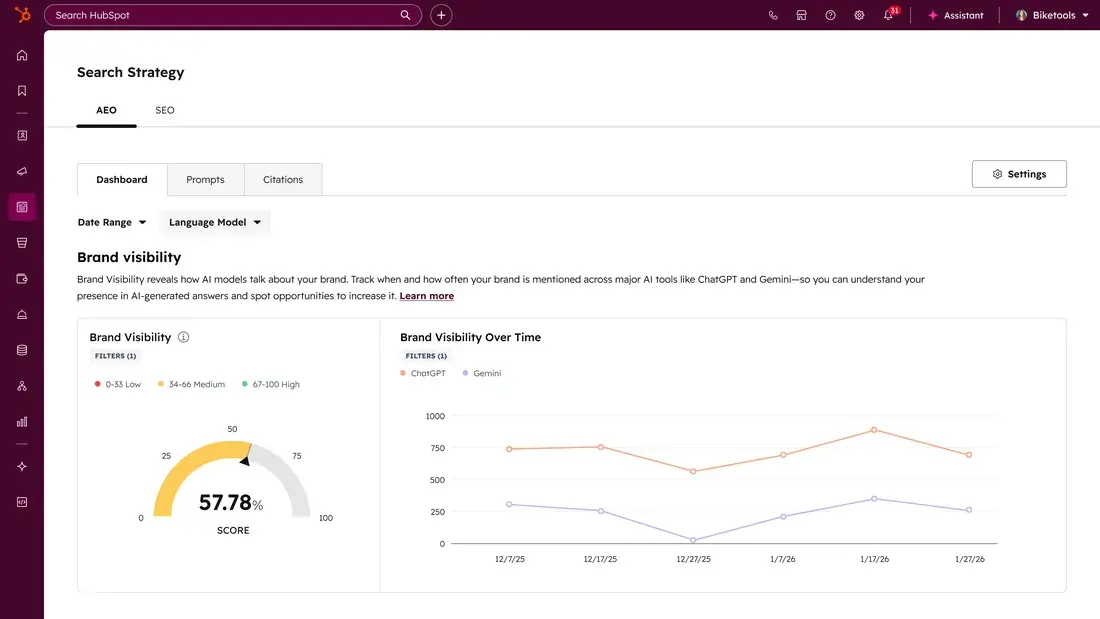
HubSpot AEO emerges as a dedicated specialist, purpose-built for AI visibility and actionability. Its core function is to track how a brand appears in answers generated by major AI engines, including ChatGPT, Gemini, and Perplexity. It goes beyond mere monitoring by integrating with HubSpot’s broader marketing ecosystem, offering a unique value proposition for existing HubSpot users.
SE Visible (by SE Ranking): The Dedicated AI Monitoring Solution
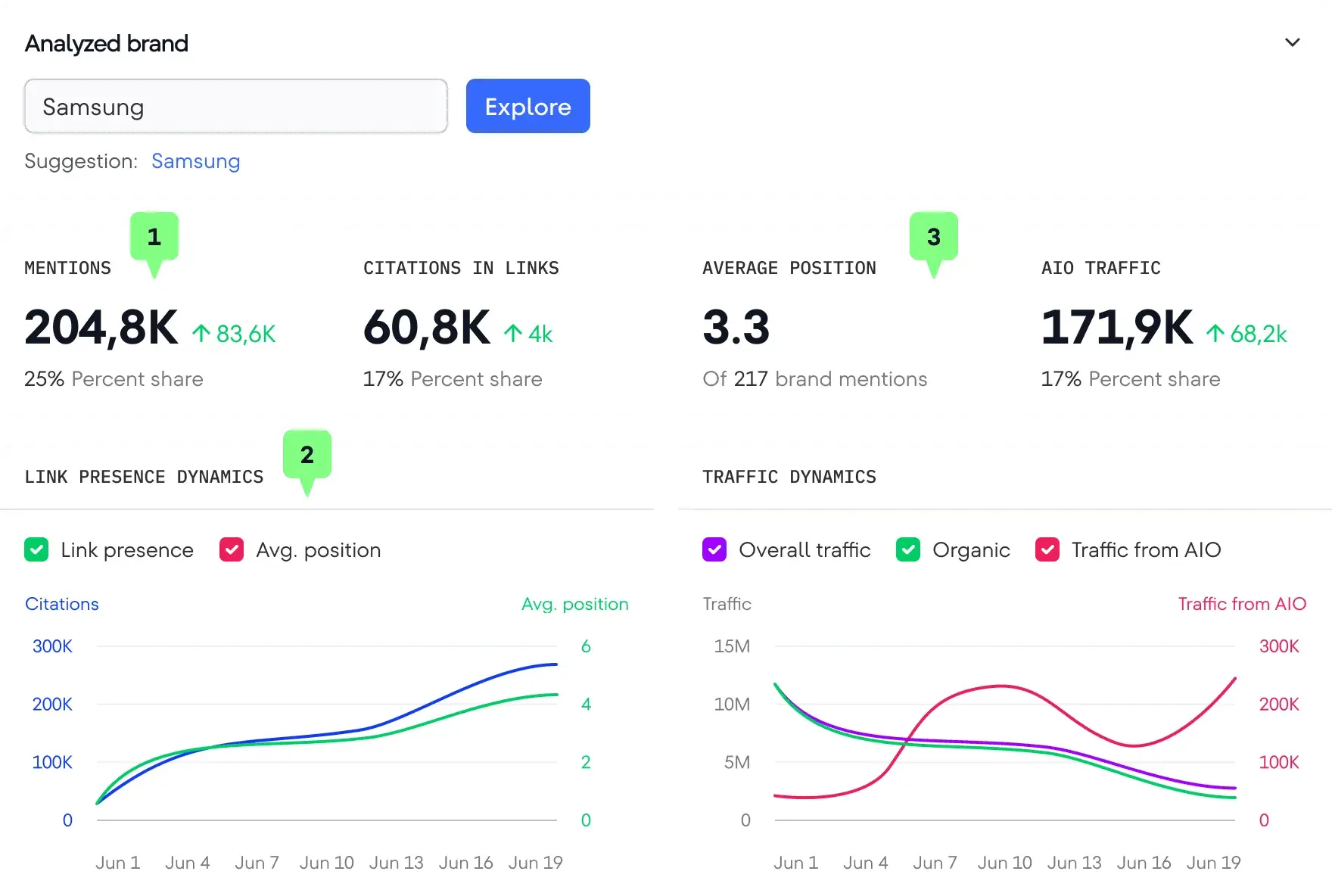
SE Visible is a distinct product from SE Ranking, operating as a standalone AI visibility monitoring platform. It is engineered to provide comprehensive insights into how brands are represented, cited, and perceived across a wider array of AI search platforms, including Google AI Overviews and Google AI Mode, in addition to ChatGPT, Gemini, and Perplexity. Its emphasis is on robust, multi-market monitoring.
SE Ranking: The Comprehensive SEO Suite with AI Additions
SE Ranking, at its core, remains a comprehensive SEO suite, offering traditional tools for rank tracking, site audits, backlink analysis, and keyword research. Recognizing the shift, it has recently integrated an "AI Search Toolkit" into its platform, allowing users to monitor AI performance alongside their conventional SEO efforts. This makes it a generalist solution for teams managing a broad spectrum of digital marketing tasks.
Feature Comparison and Analytical Insights
A detailed comparison reveals how these platforms cater to different needs and operational workflows.
AI Visibility Tracking & Prompt Management:
All three platforms offer some form of AI visibility tracking, but with varying degrees of depth and coverage.
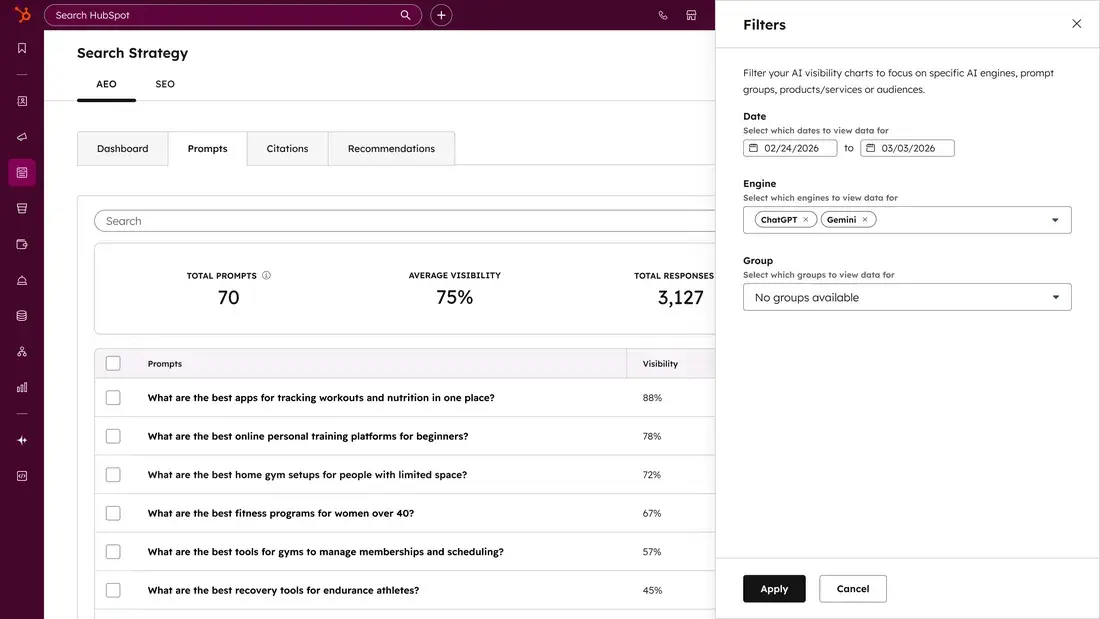
- HubSpot AEO tracks brand mentions across ChatGPT, Gemini, and Perplexity. A key strength lies in its daily tracking of custom prompts, with the base plan allowing for 25 such prompts, emphasizing granular, actionable insights.
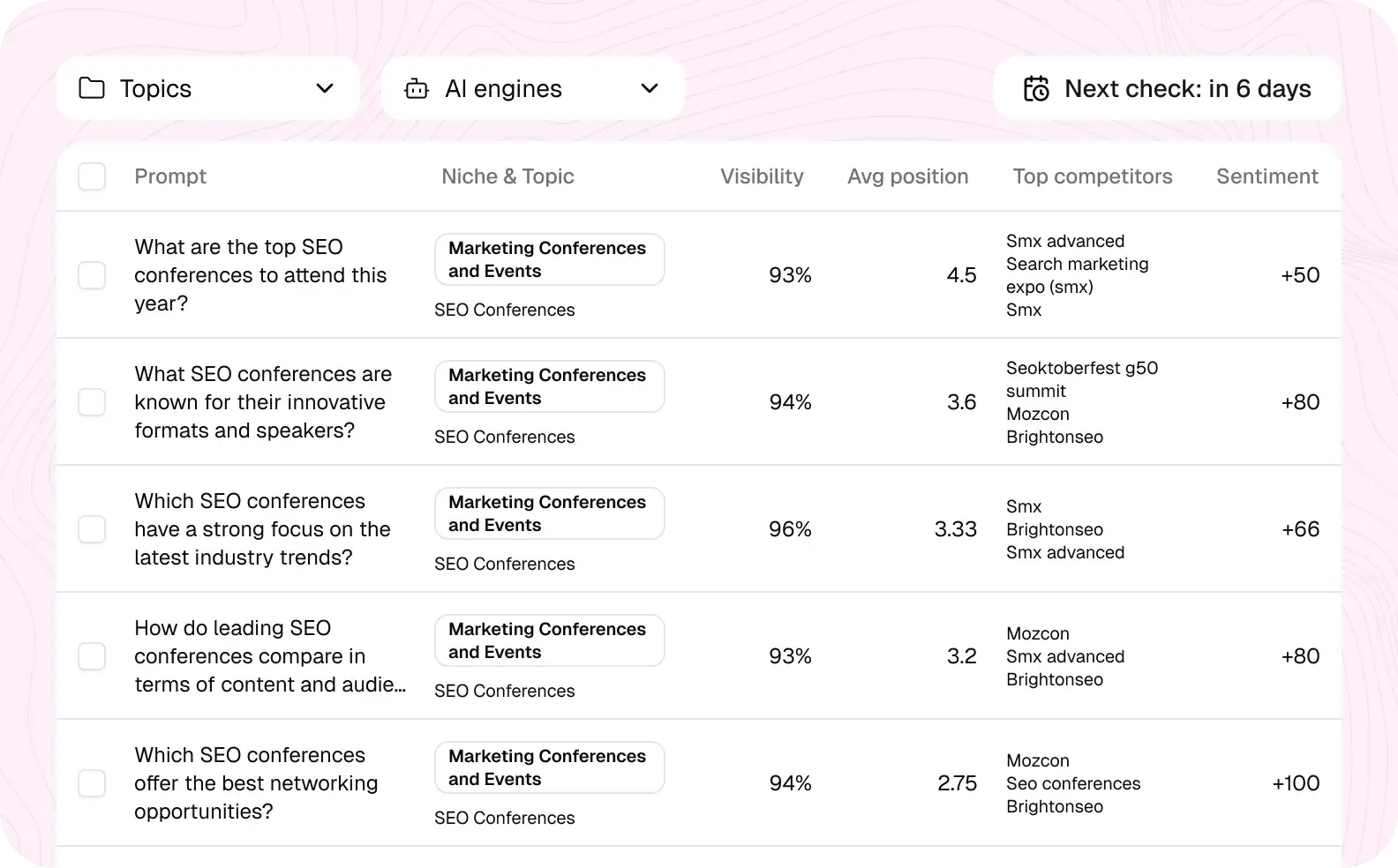
- SE Visible provides broader coverage, monitoring ChatGPT, Gemini, Perplexity, Google AI Overviews, and Google AI Mode. It offers higher prompt volumes, ranging from 200 to 1,000 prompts depending on the plan, making it suitable for larger-scale monitoring.
- SE Ranking (via its AI Search Toolkit) also monitors ChatGPT, Gemini, Perplexity, Google AI Overviews, and AI Mode, offering 100 prompts per day on its Core plan. While integrated, its AI features are an add-on to its primary SEO functionalities.
Competitor Benchmarking & Citation Analysis:
Understanding competitive performance and citation sources is vital for AEO strategy.
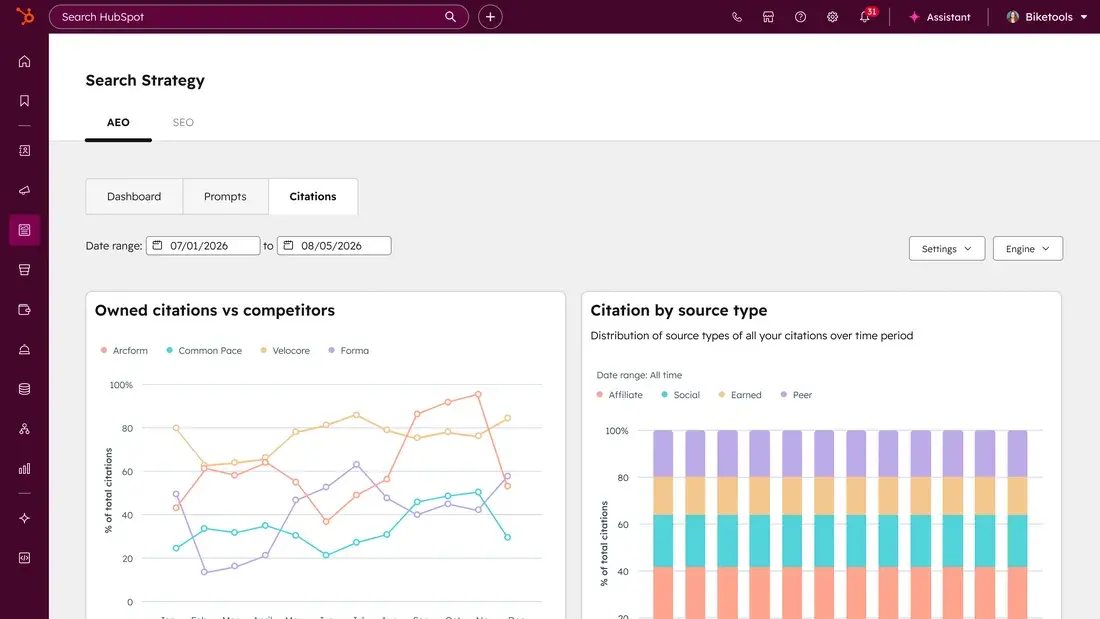
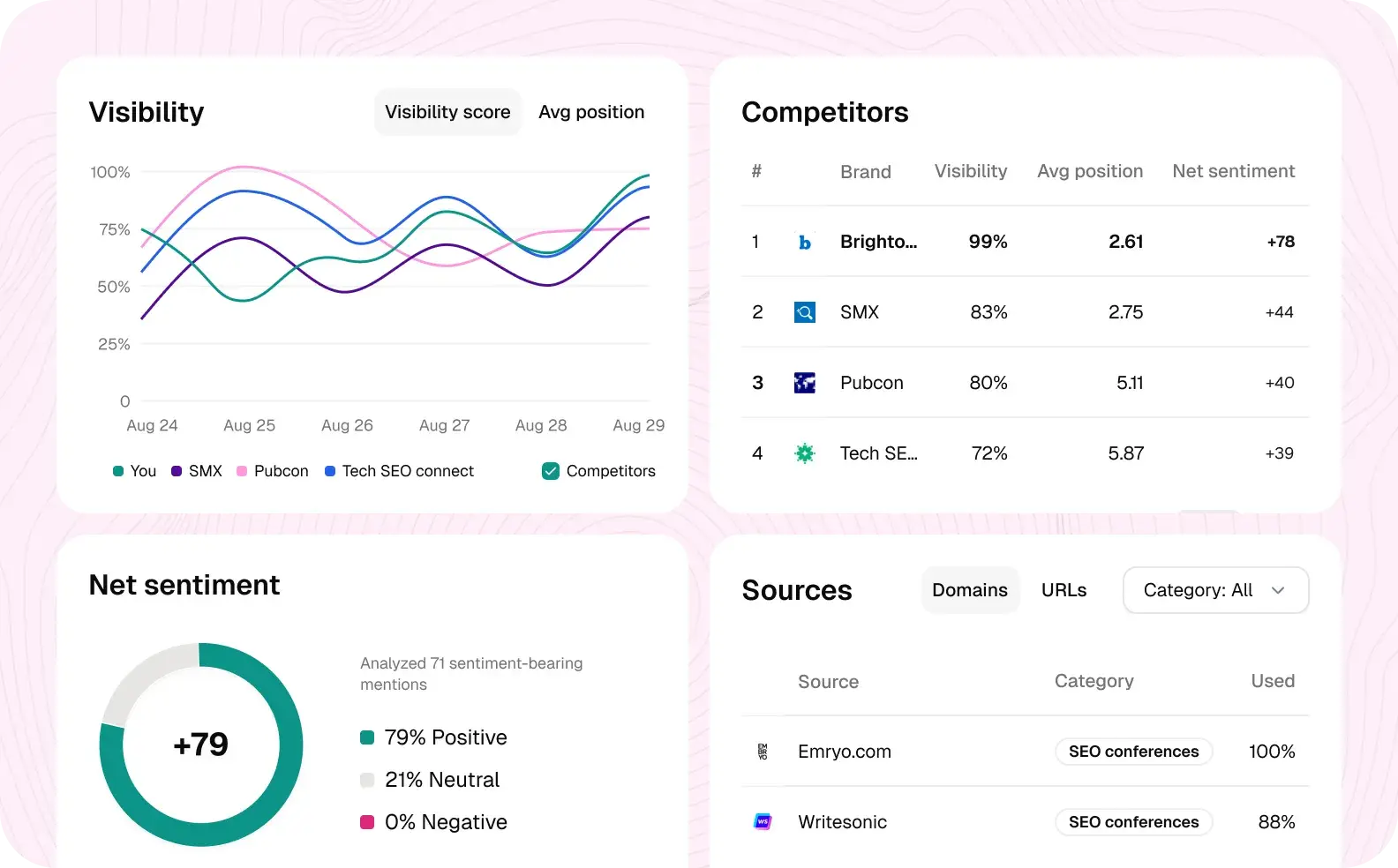
- HubSpot AEO provides competitor benchmarking, clearly showing which sources AI cites for both your brand and your competitors. This allows for direct comparison of authority and influence.
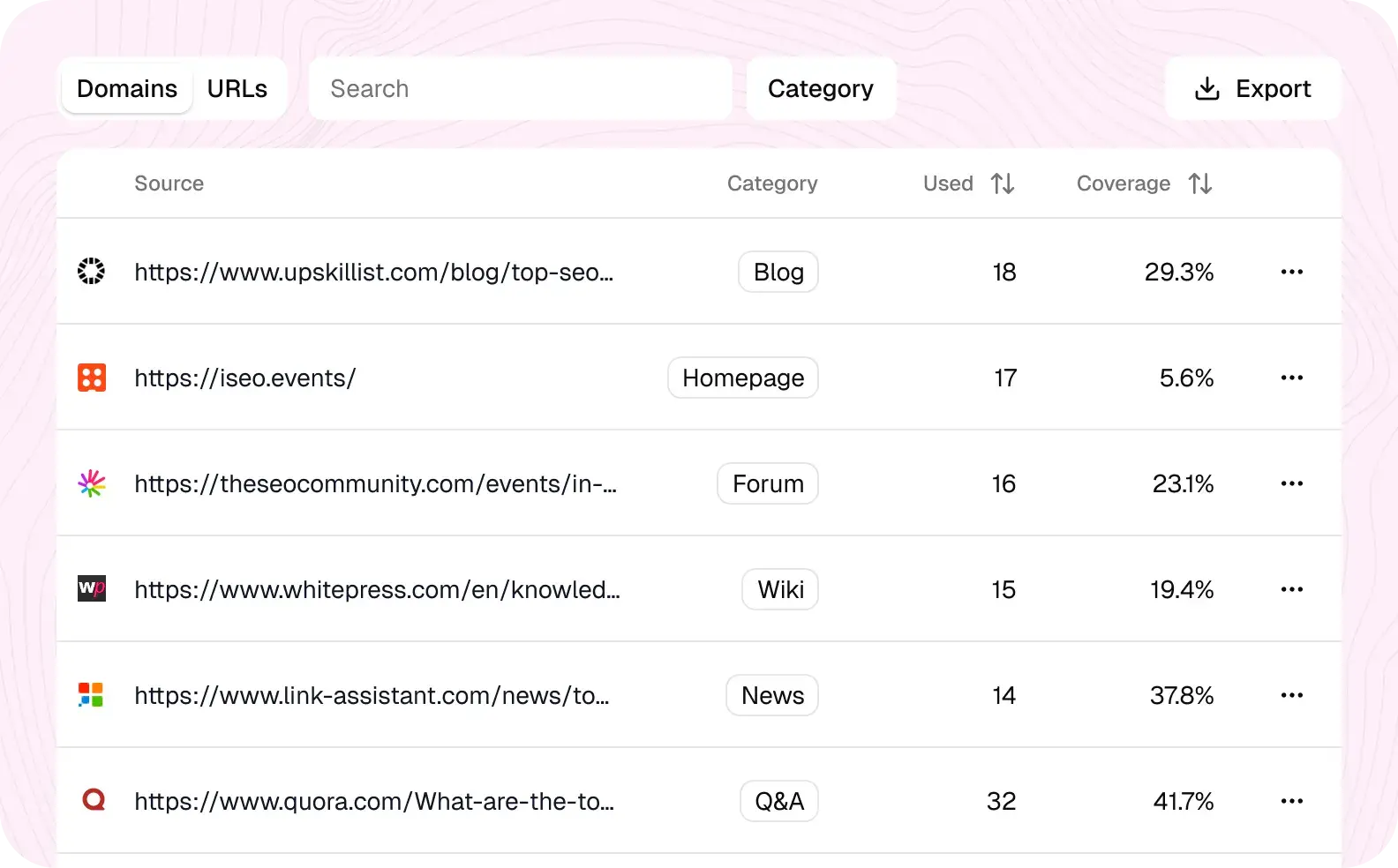
- SE Visible offers a more granular analysis, breaking down source categories (media, blogs, forums) and identifying top-cited URLs. Its multi-country/language support across seven countries and five languages is a significant advantage for international brands, allowing for visibility, sentiment, and source gap analysis against competitors in diverse markets.
- SE Ranking’s AI toolkit offers limited competitor insight, primarily tracking mentions rather than providing deep citation intelligence. Its multi-country/language capabilities within the AI toolkit are also more restricted compared to SE Visible.
Actionability & Workflow Integration:
The true value of an AEO tool lies in its ability to translate data into actionable strategies and streamline marketing workflows.
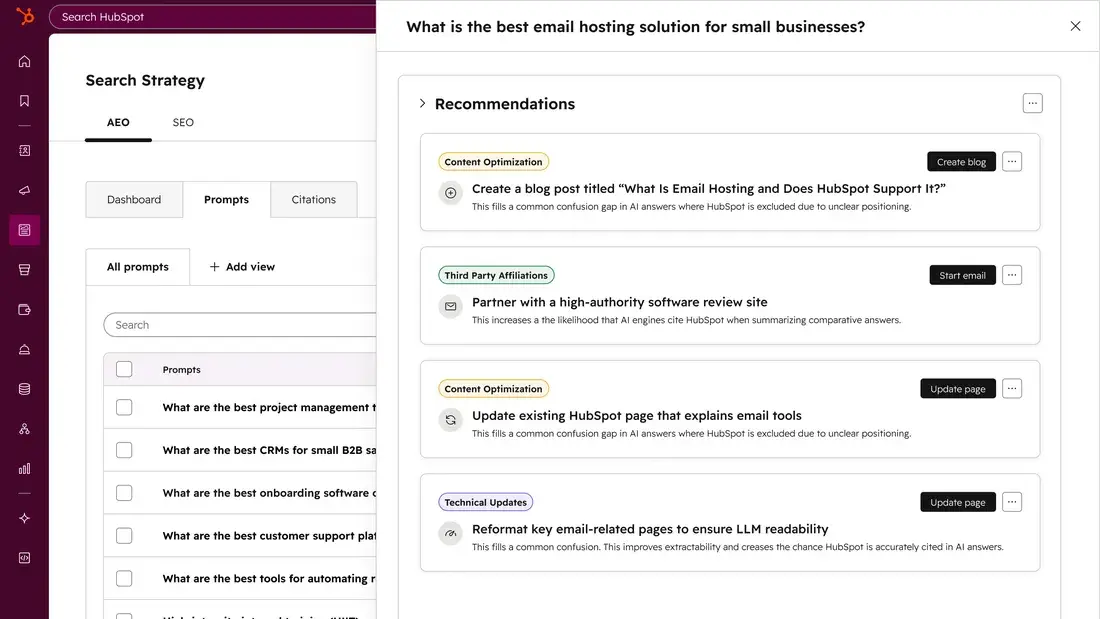
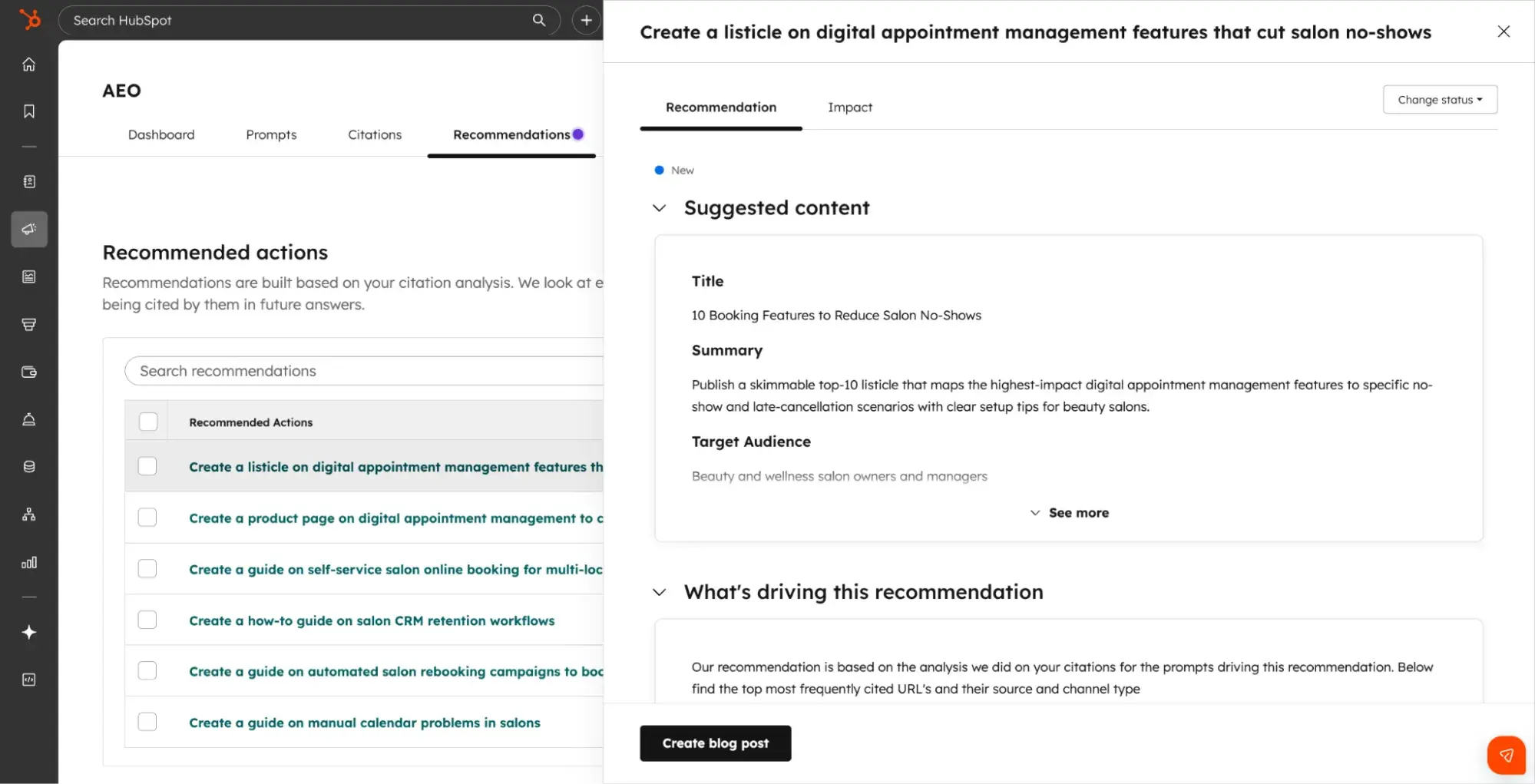
- HubSpot AEO excels in this area with its native CRM integration and built-in content workflow. When the tool identifies a prompt where a competitor is outperforming, it generates prioritized recommendations. For users of Marketing Hub Pro or Enterprise, these recommendations directly link to content creation tools and CRM data, enabling content drafting within the platform. This direct connection ensures that competitive intelligence is customized to actual customer segments and streamlines content audits and updates. HubSpot AEO effectively automates the end-to-end AEO workflow, continuously refreshing recommendations as AI visibility shifts.
- SE Visible is primarily a monitoring and analysis platform. While it provides invaluable data on brand representation, sentiment, and source behavior, it does not include a built-in content workflow or direct CRM connection. Teams using SE Visible would typically export CSV data and utilize its dashboards to inform their content, PR, and brand strategies through external processes. For brand and PR teams whose primary need is comprehensive, scalable data for their existing workflows, this can be an ideal fit.
- SE Ranking automates traditional SEO workflows, including daily keyword rank checks and scheduled technical site audits. Its AI Results Tracker monitors search surfaces in the background, but SE Ranking heavily relies on integrations with third-party tools like Zapier, Make, n8n, Looker Studio, and Google Search Console for custom automated reporting and data pipeline creation. While it offers a content marketing tool on some plans, it lacks the native, CRM-connected content recommendations found in HubSpot AEO.
Traditional SEO Capabilities:
A key differentiator is whether the tool is purely AEO-focused or a broader SEO suite.
- HubSpot AEO and SE Visible do not include traditional SEO features like rank tracking for keywords, site audits, or comprehensive keyword research. They are specialized for AI visibility.
- SE Ranking, conversely, offers these as core features, including 2,000 keywords per day on its Core plan for SEO rank tracking, 120+ technical SEO metrics for site audits, and extensive keyword research tools with gap analysis.
Pricing Models and Value Proposition
The financial commitment for these platforms varies significantly, reflecting their distinct offerings.
HubSpot AEO Pricing:
HubSpot AEO offers a highly accessible entry point. It starts with a completely free AEO Grader, which assesses baseline brand visibility across sentiment, share of voice, presence quality, brand recognition, and market position. The standalone product is priced at $50 per month ($45 per month when billed annually) and includes a 28-day free trial. This tier provides tracking for 25 prompts across ChatGPT, Gemini, and Perplexity, deep citation analysis, and prioritized recommendations without requiring any other HubSpot subscription. For teams already using Marketing Hub Pro or Enterprise, the CRM-connected AEO tools are natively included at no additional cost, enhancing its value significantly through integration.
SE Visible Pricing:
SE Visible has a higher entry price point but offers greater prompt volume at its base tier. Its Basic plan begins at $99 per month (billed monthly) or $79 per month (billed annually), including 200 prompts, approximately 12,000 AI answers analyzed per month, and 3 projects. The Plus plan scales to $355 per month (billed monthly) for 1,000 prompts, approximately 60,000 AI answers analyzed, and 10 projects. All plans include access to five AI engine integrations, unlimited users, and CSV export. A 10-day free trial is available. For organizations focused on large-scale AI visibility monitoring, especially across multiple brands or international markets, SE Visible’s volume limits offer strong value. Custom plans are also available.
SE Ranking Pricing:
SE Ranking, as a comprehensive SEO suite, carries a higher entry cost. Its Core plan, after a 14-day free trial, is $103.20 per month (billed annually) or $129 per month (billed monthly). This plan includes management for up to 10 projects, 2,000 daily keyword checks, 120+ point site audits, backlink analysis, and tracking for 100 GEO prompts per day across various AI engines. The Growth plan scales to $223.20 per month (annually) for 30 projects and 5,000 daily keyword checks, adding API access and historical data. A critical cost factor for SE Ranking is its keyword tracking limit calculation, which multiplies keywords by the number of search engines tracked, potentially increasing effective costs for comprehensive SEO efforts.
In summary, HubSpot AEO provides a significantly cheaper and more user-friendly option for dedicated AI tracking, particularly when integrated with a CRM. SE Visible is a robust, scalable choice for dedicated AI visibility monitoring across multiple markets. SE Ranking is more expensive but offers exceptional value as a comprehensive SEO suite, economical for teams looking to consolidate multiple SEO tools into a single platform.
Strategic Implications and Best Fit Scenarios
The choice of platform should align seamlessly with an organization’s existing structure, workflow, and strategic priorities.
Choose HubSpot AEO if:
- Your team is primarily focused on optimizing brand visibility specifically within AI-generated answers.
- You are an existing HubSpot Marketing Hub Pro or Enterprise user, seeking to leverage native CRM integration for AEO recommendations tied to actual customer segments.
- Your marketing team values an integrated platform that connects AI insights directly to content creation and workflow automation.
- You require a cost-effective, standalone solution for dedicated AI visibility tracking.
Choose SE Visible if:
- Your primary need is robust, scalable AI visibility monitoring across a wide range of AI engines.
- Your brand operates in multiple countries and languages, requiring sophisticated multi-country/language support for AI citation and sentiment analysis.
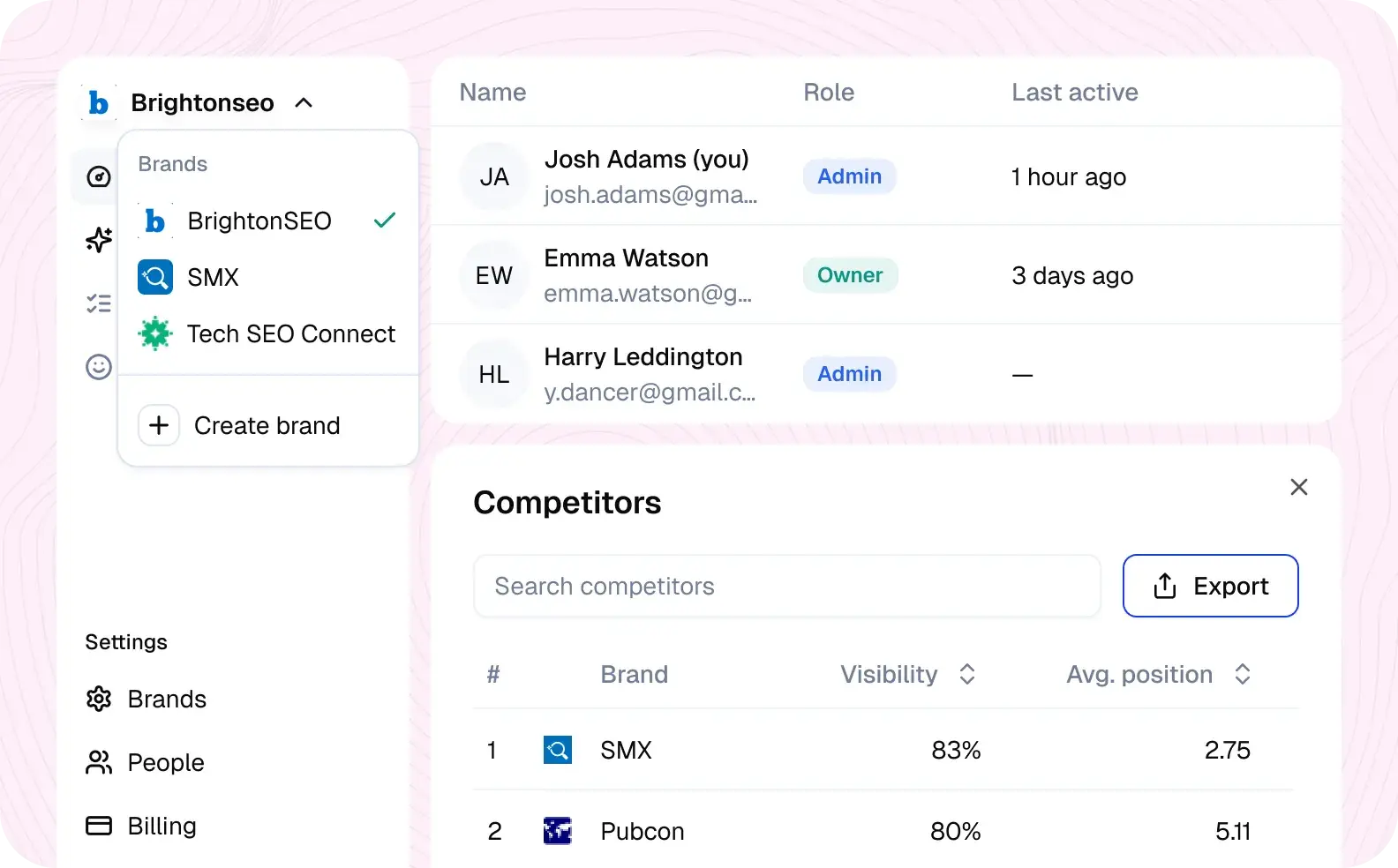
- You are an agency or PR team focused on comprehensive brand reputation and citation tracking in the AI space, and can integrate data exports into your existing content and PR workflows.
- You need granular data on source categories and top-cited URLs to inform your outreach strategies.
Choose SE Ranking if:
- Your team requires a full-fledged SEO suite that integrates traditional rank tracking, site audits, backlink analysis, and keyword research alongside AI search monitoring.
- You manage multiple projects or clients and need a comprehensive platform to handle diverse SEO tasks.
- Your workflow benefits from automated technical SEO maintenance, scheduled reporting, and API access for custom data pipelines.
- You are looking for a single, economical platform to replace several individual SEO tools, with AI features as a valuable addition.
Practical Implementation: A 14-Day AEO Sprint
Implementing AEO doesn’t require a months-long project. Given the dynamic nature of AI models, meaningful data can be gathered and strategic adjustments initiated almost immediately. A 14-day sprint is an effective timeline to establish a baseline and launch initial content optimizations.
How to Get Started with HubSpot AEO:
- Day 1: Utilize the Free AEO Grader. Begin by generating an immediate baseline score for your brand across key dimensions like sentiment, share of voice, presence quality, brand recognition, and market position. This provides a crucial starting point.
- Day 2: Launch the 28-day Free Trial. Activate the trial and set up your initial 25 prompts. Focus these prompts on direct questions your target buyers ask during their evaluation process to ensure maximum relevance and value.
- Days 3-5: Review Visibility Score and Citation Analysis. Allow the platform a few days to collect comprehensive data. Analyze your brand visibility score and, critically, the citation analysis. This will reveal which domains and content types AI models are referencing to construct their answers.
- Days 6-10: Execute Prioritized Recommendations. Identify the top two to three highest-impact content actions from HubSpot AEO’s prioritized recommendations list. Assign these to your content team for immediate updates or new content creation, leveraging the platform’s integrated workflow if on Marketing Hub Pro/Enterprise.
- Day 14: Compare Visibility Score. Although large-scale changes typically manifest over 4-8 weeks, compare your visibility score at the two-week mark against your initial baseline. This will help identify early signals regarding how AI is describing your brand and inform subsequent, more granular content optimization strategies.
How to Get Started with SE Visible:
- Day 1: Start the 10-day Free Trial. Create your brand profile and connect the relevant domains for monitoring. Agencies should configure separate projects for each client.
- Day 2: Configure Prompts and Topics. Load in buyer questions and product topics relevant to your brand. Utilize SE Visible’s localized topic suggestions if monitoring multiple countries or languages.
- Days 3-5: Review Brand Visibility and Source Analysis. After data collection, examine which domains AI engines are citing. Analyze the source breakdown by category (media, blogs, forums) to pinpoint areas for PR and content outreach to earn more citations.
- Days 6-10: Run a Competitor Benchmarking Report. Compare your brand’s AI visibility and sentiment against key competitors. Identify prompts and sources that favor competitors to prioritize content and PR sprints to address these gaps.
How to Get Started with SE Ranking:
- Day 1: Start the 14-day Free Trial. Connect your domain and immediately set up a rank tracking project to establish your traditional SEO baseline.
- Days 2-3: Run a Full Site Audit. Before diving into AI optimization, ensure your technical SEO foundation is robust. A full site audit will identify critical technical issues (e.g., crawlability, indexability) that could impede both traditional SEO and AI visibility.
- Days 4-5: Set Up the AI Search Toolkit. With the technical foundation assessed, configure the AI Search Toolkit to actively monitor your brand’s mentions across ChatGPT, Perplexity, and Google AI Overviews.
- Days 6-10: Execute a Keyword Gap Analysis. Utilize SE Ranking’s comprehensive keyword research tools to perform a gap analysis. This will uncover topics and search queries where competitors rank but your brand is absent, informing future content strategy for both traditional SEO and potential AI mentions.
Broader Impact and Future Outlook
The rise of AEO is not a fleeting trend but a fundamental shift in how brands must engage with their audiences in the digital realm. As AI models continue to evolve and become more integrated into daily information consumption, optimizing for answer engines will become as crucial as traditional SEO. Brands that embrace AEO proactively will gain a significant competitive advantage, securing mindshare at the earliest stages of the buyer journey. This necessitates continuous monitoring, strategic content adaptation, and a deep understanding of how AI interprets and synthesizes information. The future of digital marketing demands a dual strategy: a strong SEO foundation paired with a dynamic AEO approach to ensure omnipresence in both traditional search results and the definitive answers provided by artificial intelligence.
Ready to See Where Your Brand Stands?
The fastest way to understand and improve your AI visibility is to measure it. Whether your priority is integrated workflow, comprehensive multi-market monitoring, or a full SEO suite with AI capabilities, the market now offers specialized tools to meet these evolving demands. The imperative is clear: assess your brand’s current standing, choose the right tools, and adapt your digital strategy to the AI-first future.