The modern digital marketplace has fundamentally rewritten the rules of customer engagement. Traditional customer relationship management systems—once built primarily around static, historical data such as email logs, transactional receipts, and telephonic support tickets—are undergoing a massive structural evolution. Today, enterprises are increasingly turning to Social Customer Relationship Management (Social CRM) to capture, analyze, and operationalize the wealth of unstructured data generated across social media networks, direct messages, brand mentions, and public comment threads.

As consumer expectations shift toward instant digital responsiveness, organizations across retail, technology, and financial services find themselves racing to bridge a widening customer experience gap. Industry analysts note that traditional, reactive customer service models are no longer sufficient when a single public complaint on Instagram or X (formerly Twitter) can instantly damage brand equity. By integrating real-time social listening and engagement data directly into core databases like Salesforce, HubSpot, and Microsoft Dynamics 365, companies are redefining how marketing, sales, and support teams operate under a unified framework.
Understanding the Mechanics of Social CRM
At its core, Social CRM bridges the gap between public social media interactions and private customer records. While legacy CRM infrastructure focuses heavily on structured, historical actions, social CRM introduces real-time, unstructured data streams into the enterprise ecosystem. This includes tracking brand sentiment, analyzing consumer intent through comment sections, and utilizing advanced social listening algorithms to detect market trends before they escalate.
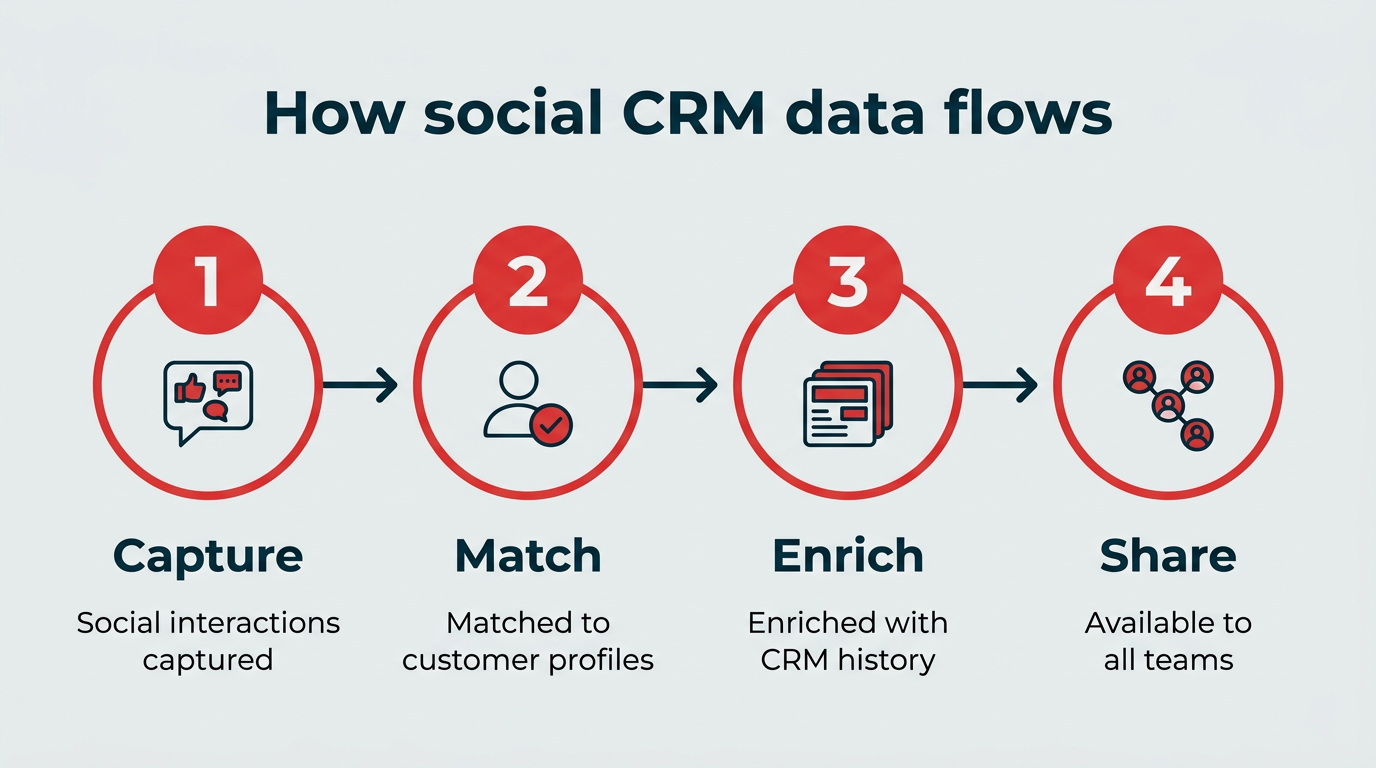
The operational workflow of a robust social CRM framework typically follows a four-stage lifecycle: capture, match, enrich, and share. First, incoming social interactions are aggregated from connected channels across platforms like LinkedIn, Facebook, Instagram, and TikTok. Next, automated algorithms match these incoming touchpoints to existing customer profiles or generate new records if the user is a prospective lead. The profile is then enriched with historical context—pulling in past purchases, prior customer support inquiries, and previous brand interactions—before the consolidated data is made available to cross-departmental teams in real time.
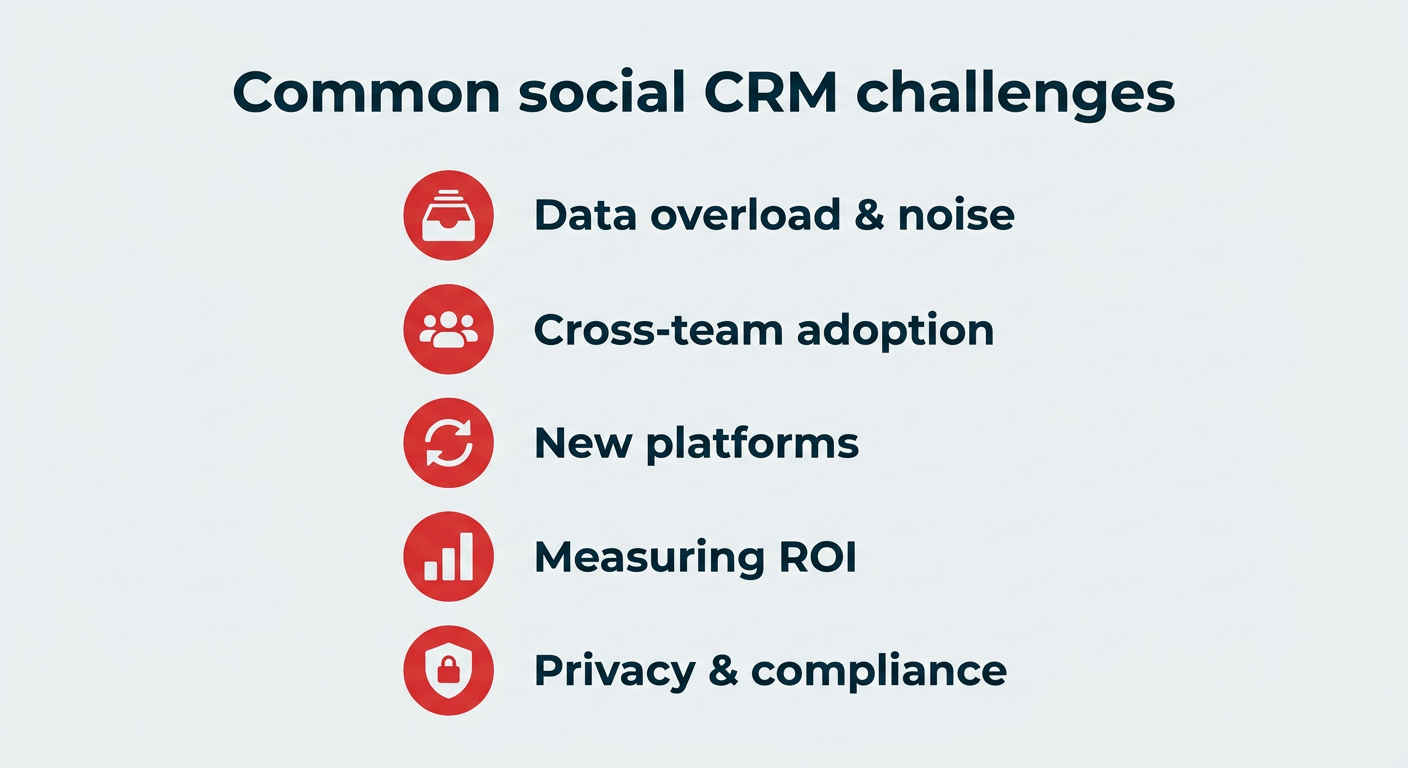
This architectural shift addresses a critical pain point identified in recent market research: the growing expectation gap between the experiences brands intend to deliver and the actual service consumers receive. According to consumer sentiment reports, a significant majority of buyers expect brands to address direct inquiries and complaints within the same business day. Furthermore, studies consistently show that failing to respond to community interactions or ignoring negative public feedback leads to immediate audience attrition, with a notable percentage of consumers actively unfollowing brands that practice digital silence.

The Rise of AI-Driven Triage and Automation
The exponential growth of social media mention volumes has rendered manual data entry obsolete. In the past, customer service agents or social media managers manually copied insights from direct messages into separate CRM database fields—a process that inevitably caused bottlenecks and missed communications. Today, artificial intelligence has become the primary engine driving modern social CRM tools, fundamentally altering how enterprises process incoming queues.

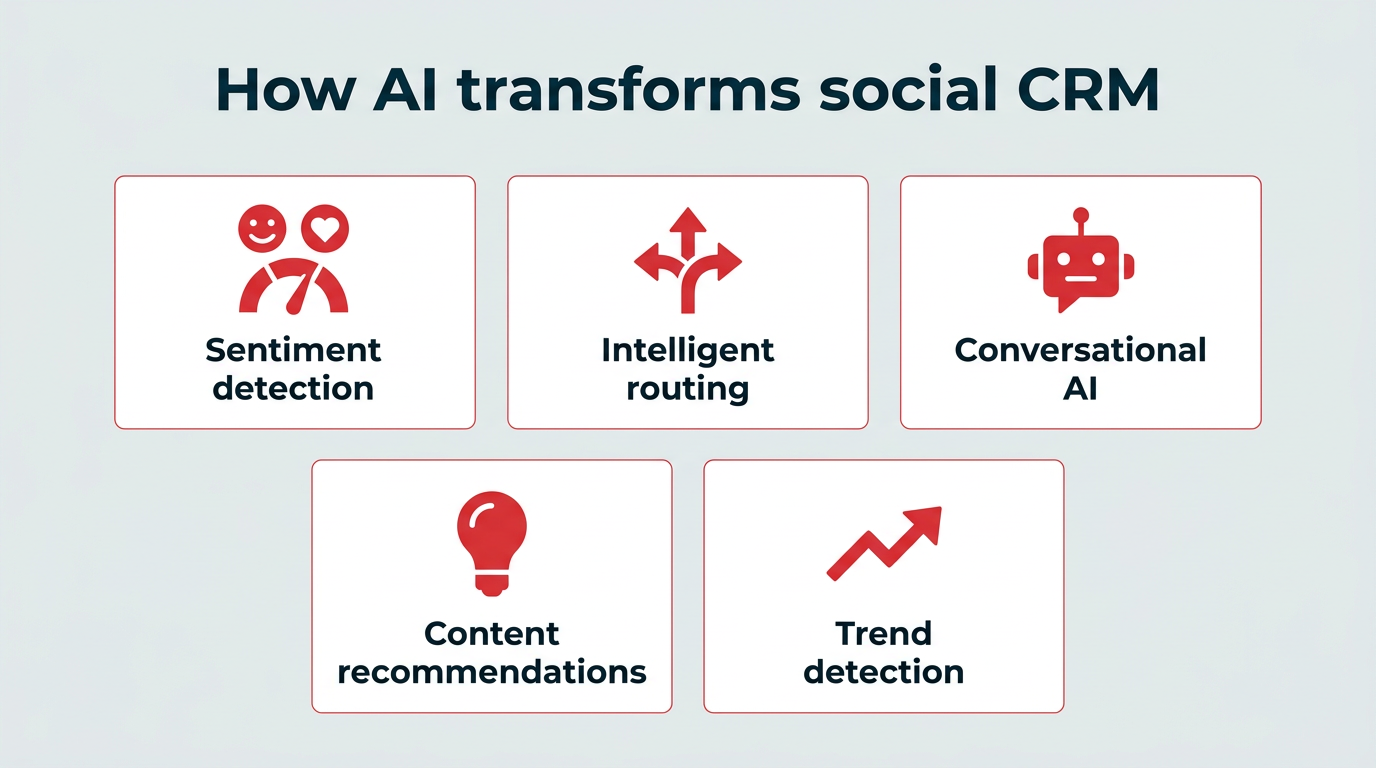
Leading enterprise platforms now deploy sophisticated AI layers to automate the initial triage of digital interactions. Instead of human agents manually sorting through hundreds of unorganized comments, AI-powered systems automatically categorize incoming messages by sentiment, urgency, and topic. Critical complaints involving product failures or billing errors are instantly escalated to the top of support queues, while routine inquiries are addressed with automated, context-aware responses.

Furthermore, advanced social listening tools utilize natural language processing to monitor multi-language conversations on a global scale. This capability allows multinational corporations to detect regional customer dissatisfaction trends and local market shifts weeks before they translate into widespread public crises. By synthesizing unstructured social chatter into actionable CRM inputs, artificial intelligence ensures that customer-facing teams possess complete context before initiating any communication.
Bridging Marketing, Sales, and Support Silos
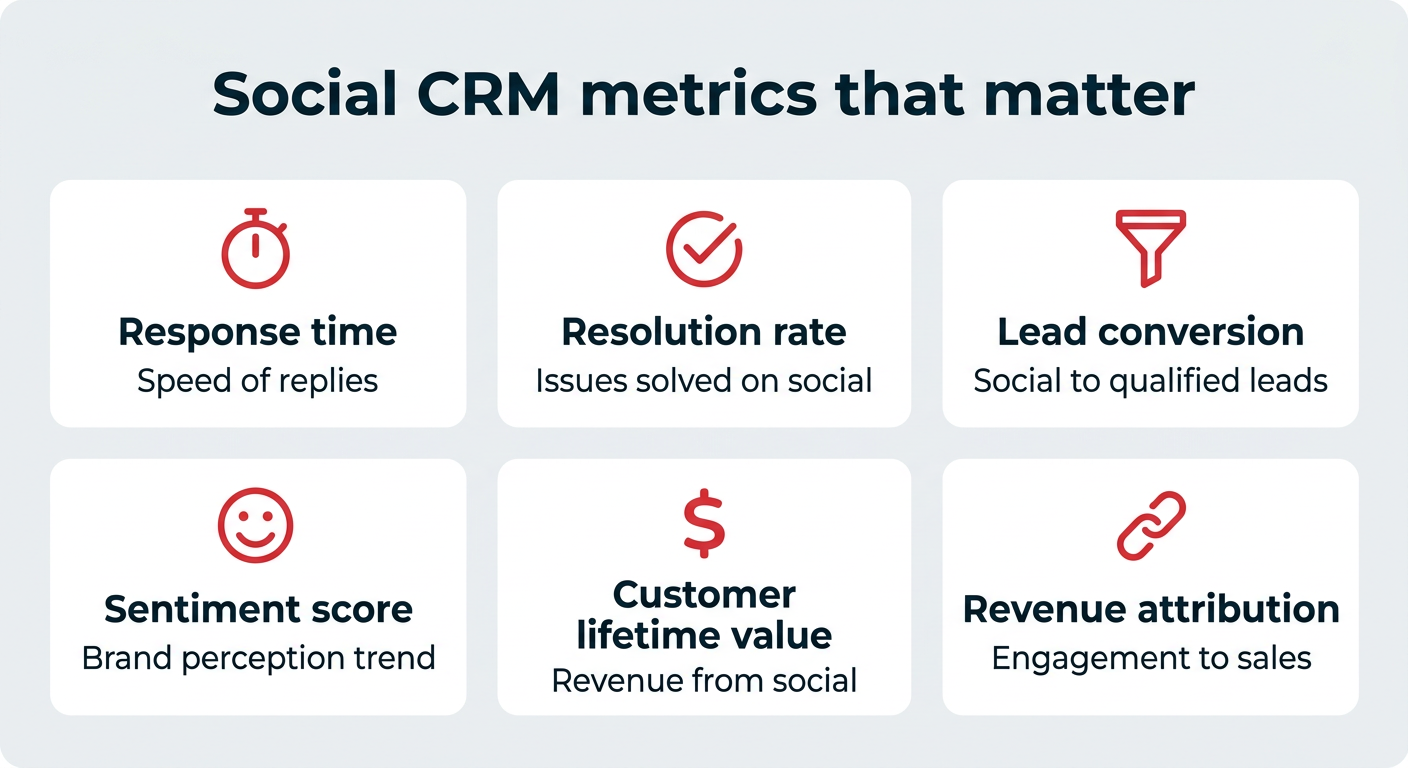
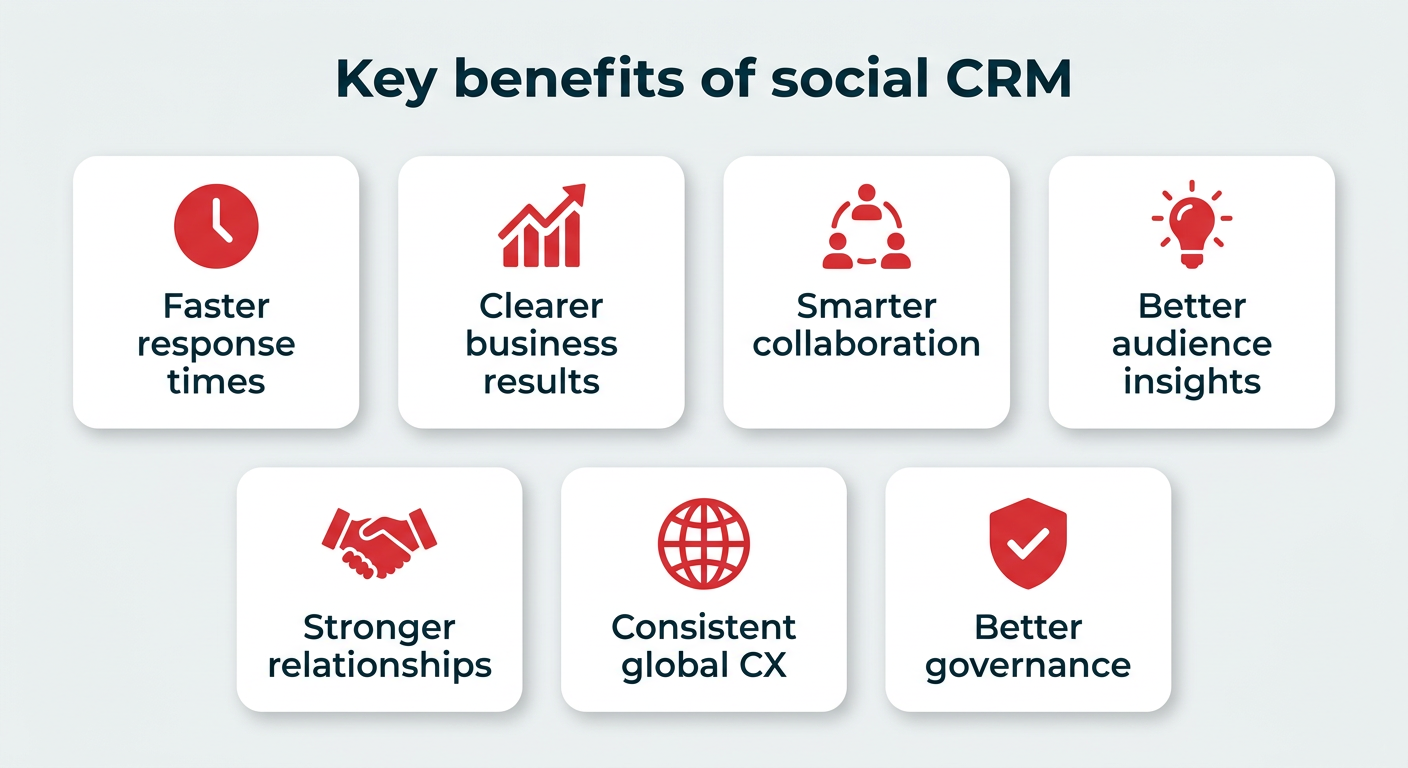
The integration of social data into enterprise resource planning and CRM software delivers tangible operational benefits across three distinct business verticals: customer service, lead generation, and targeted marketing.
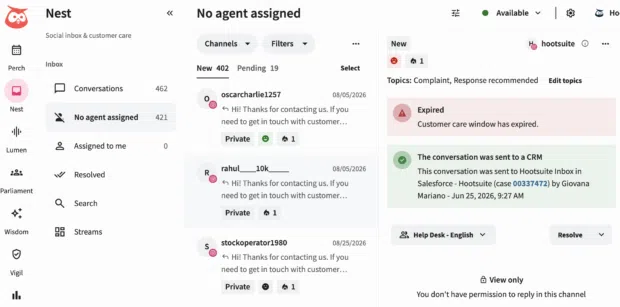
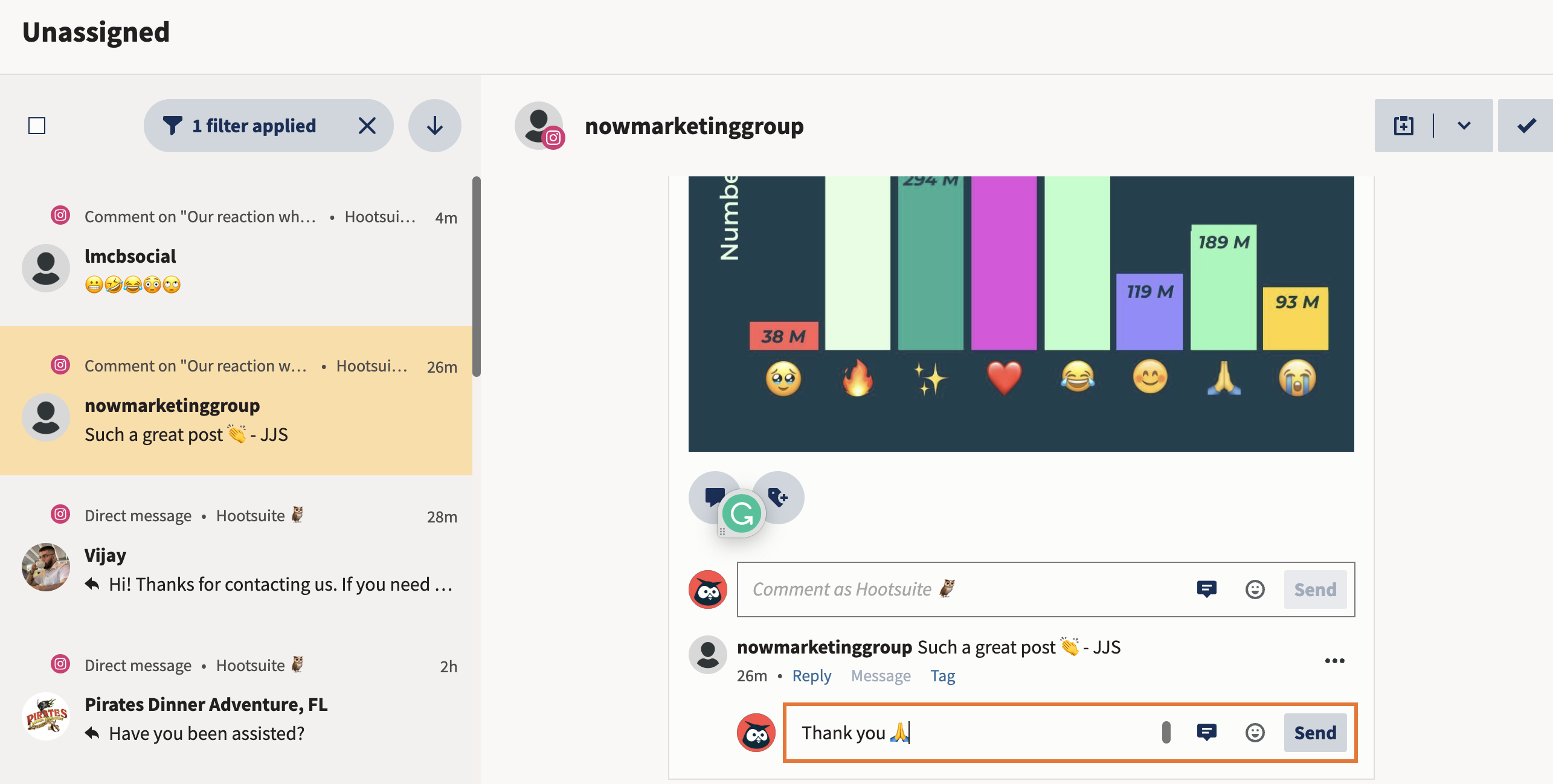
In the realm of customer support, social CRM eliminates the friction caused by multi-channel disconnects. When a customer reaches out via an Instagram direct message regarding an issue previously discussed over email, support agents no longer require the customer to repeat their history. A unified inbox consolidates all past interactions, allowing representatives to deliver personalized, rapid resolutions. This seamless continuity measurably increases relationship quality and directly improves customer lifetime value metrics.

For sales divisions, social media has transitioned from a purely branding-focused channel into a high-intent lead generation engine. Traditional outbound prospecting relies heavily on cold outreach, but social CRM enables sales representatives to identify prospects based on demonstrated behavioral intent. A prospective buyer who repeatedly engages with product tutorials, saves comparative content, and inquires about pricing via direct message exhibits high-value signals. When these signals are automatically logged into the CRM pipeline, sales teams can prioritize outreach based on real-time intent rather than alphabetical contact lists.

Meanwhile, marketing departments leverage social CRM insights to refine content strategy and advertising precision. Rather than relying on generalized demographic assumptions, marketing teams can analyze actual customer feedback, common pain points, and sentiment shifts to build high-performing lookalike audiences and targeted campaigns. By tagging social-sourced leads within standard pipeline reporting, organizations can accurately attribute revenue generation to specific social media initiatives, thereby resolving the long-standing challenge of proving comprehensive social return on investment (ROI).

Strategic Implementation and Technological Integration

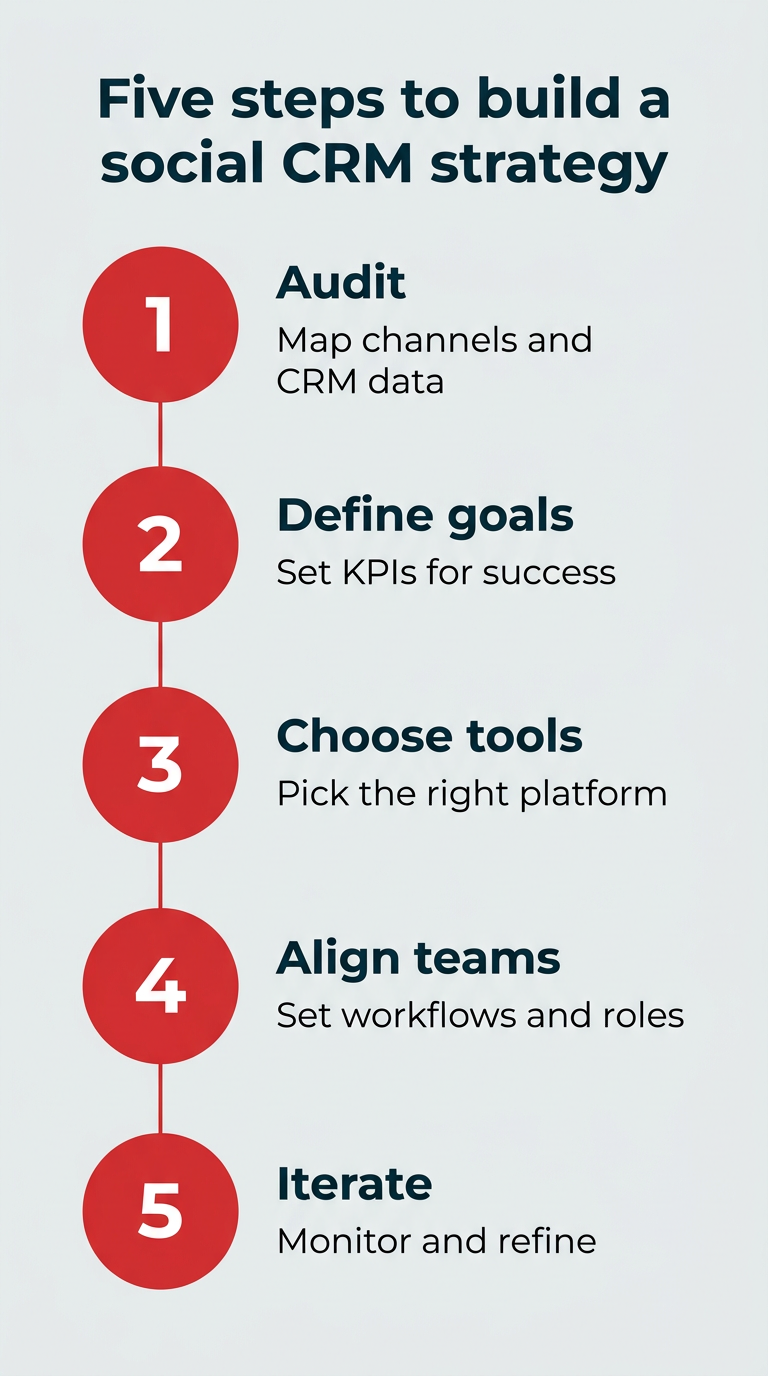
Deploying a successful social CRM strategy requires a structured, multi-phase approach to ensure technological alignment and cross-departmental buy-in. Industry experts recommend a five-step implementation framework for organizations seeking to modernize their customer data infrastructure:

- Conducting a comprehensive audit of existing social channels and current CRM data to identify operational gaps and integration bottlenecks.
- Establishing clear, quantifiable goals and key performance indicators (KPIs)—such as target response times, lead conversion rates, and customer sentiment scores.
- Selecting software solutions that seamlessly connect social listening and engagement tools with established enterprise databases like Salesforce, HubSpot, or Microsoft Dynamics 365 with minimal manual intervention.
- Aligning internal workflows across marketing, sales, and support departments to establish clear routing rules, ensuring that no customer interaction slips through administrative cracks.
- Continuously monitoring, measuring, and iterating strategies based on real-time analytics and AI-driven performance insights.
As the enterprise software landscape continues to mature, the boundary between dedicated social media management tools and traditional CRM databases will continue to blur. Organizations that successfully unify their digital conversations with comprehensive customer records will be best positioned to meet rising consumer expectations, mitigate brand risk, and drive measurable revenue growth in an increasingly competitive digital economy.