In the modern corporate ecosystem, customer relationship management (CRM) has evolved far beyond legacy databases tracking structured interactions like historical email threads, billing invoices, and closed support tickets. As digital channels shift from supplementary marketing forums to primary touchpoints for brand interaction, organizations increasingly rely on Social Customer Relationship Management (Social CRM) to bridge the gap. By systematically capturing unstructured social media data—such as direct messages, public comments, brand mentions, and sentiment fluctuations—Social CRM converts ephemeral social engagement into actionable, unified enterprise context.

The Transition from Reactive History to Real-Time Engagement
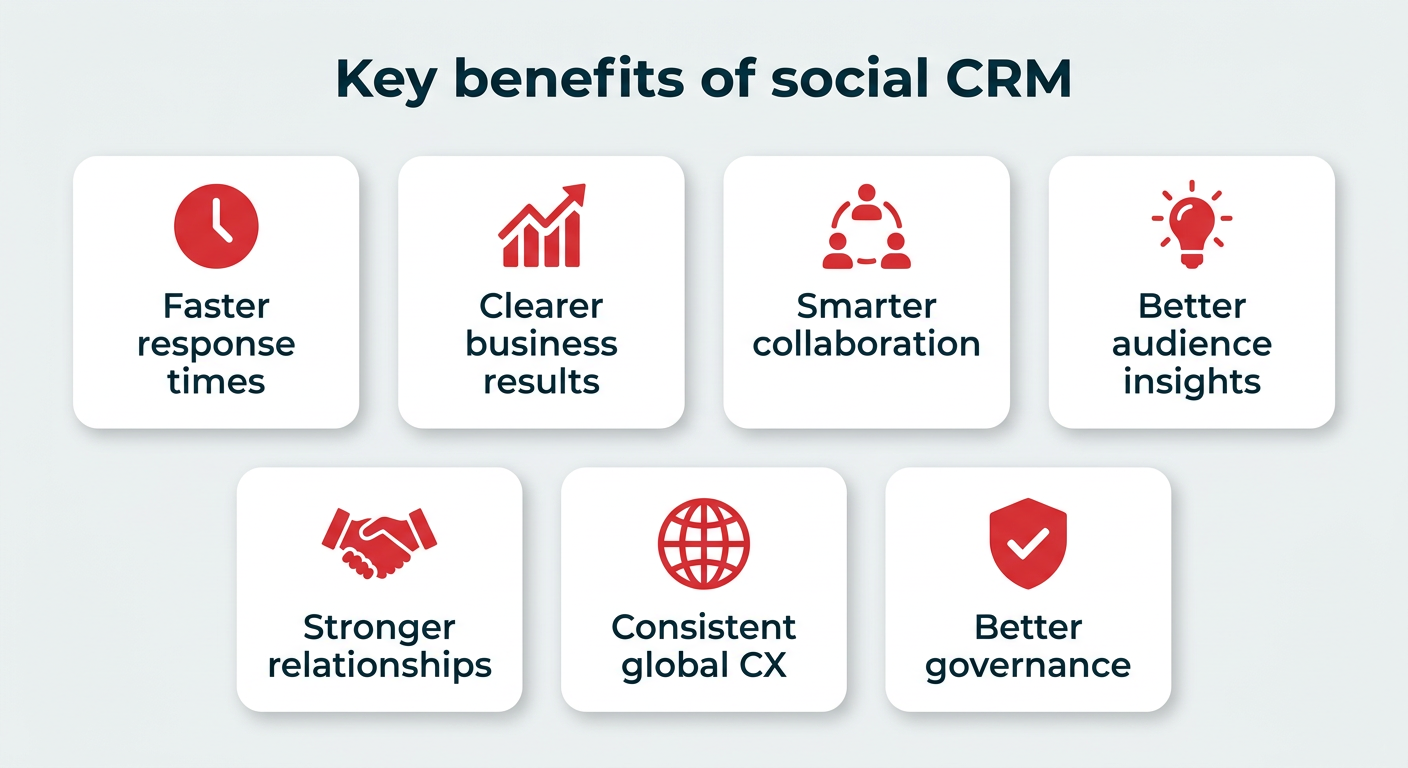
Traditionally, customer relationship systems functioned reactively, archiving past actions to help departments understand historical customer value. However, contemporary consumer behaviors demand immediate engagement. Industry research underscores a profound widening of the customer experience (CX) gap, where the experiences brands intend to deliver frequently fall short of consumer expectations. Public visibility on social media means that service failures, praise, and comparative shopping occur in plain sight, making responsiveness an existential brand metric.

According to proprietary consumer research from digital management platforms, a significant majority of consumers prioritize rapid responses to direct questions and complaints on social channels. Conversely, institutional silence carries immediate penalties, with substantial portions of modern audiences opting to unfollow brands that fail to interact with or acknowledge their digital communities. Consequently, organizations can no longer rely on manual workflows where support agents copy-paste social mentions into isolated fields; modern enterprise volume mandates seamless, automated integrations between social channels and centralized CRM architectures.
Architectural Frameworks and the Convergence of Tools
Deploying a Social CRM strategy typically involves navigating three primary technological frameworks: built-in extensions, standalone platforms, and hybrid social operating systems.
Built-in options integrate basic social management directly into existing CRM suites, keeping databases centralized but often lacking advanced social media capabilities. Standalone social platforms specialize in deep social listening, publishing, and engagement before syncing their outputs back to core enterprise databases via API integrations. Meanwhile, a rising hybrid model utilizes sophisticated social operating systems that sit natively between engagement layers and legacy databases. These platforms incorporate listening tools, unified governed inboxes, and artificial intelligence agent layers to route sentiment data directly into enterprise infrastructure, blurring the once-rigid lines between communication tools and core CRM systems.
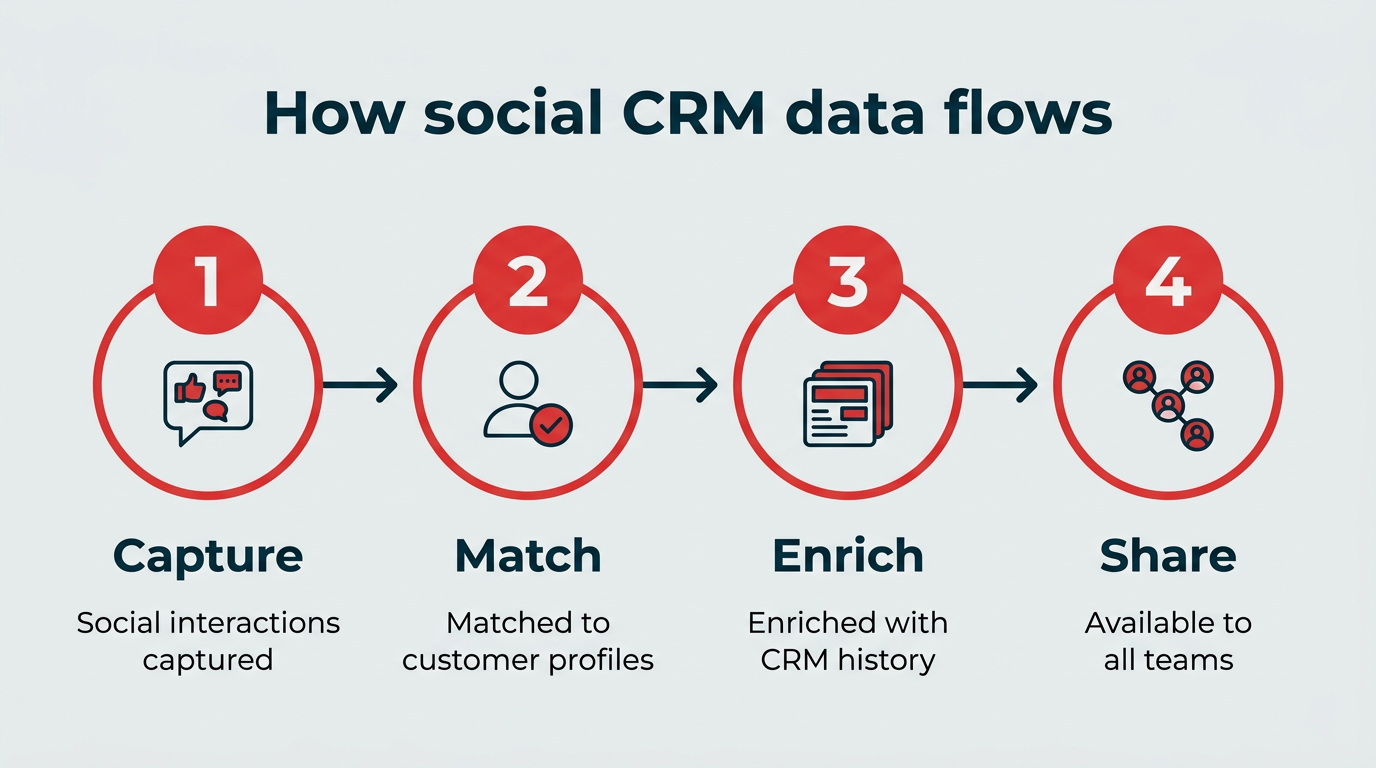
Data flows within these ecosystems follow a rigorous, four-tier lifecycle. First, interactions are captured from disparate networks including Instagram, X, Facebook, and LinkedIn. Second, these touchpoints are dynamically matched to existing customer profiles or instantiated as new leads. Third, profiles are enriched with historical context, aggregating past purchases and support tickets with recent social activities. Finally, this unified 360-degree view is disseminated across marketing, sales, and support teams to ensure cohesive cross-departmental operations.
The Role of Artificial Intelligence in Triage and Sentiment Analysis
As social data volumes scale exponentially, artificial intelligence has emerged as an indispensable operational component. Industry analysts note that modern sales and service platforms are fundamentally transforming into AI-driven systems capable of real-time cognitive processing.
AI-powered social CRM alters enterprise workflows by automating the sorting, reading, and prioritizing of high-volume message queues. Instead of human agents manually processing hundreds of unassorted inquiries, AI models execute automated triage—surfacing urgent consumer complaints, identifying recurring product issues, and flagging verified high-value customers with their associated purchase history.
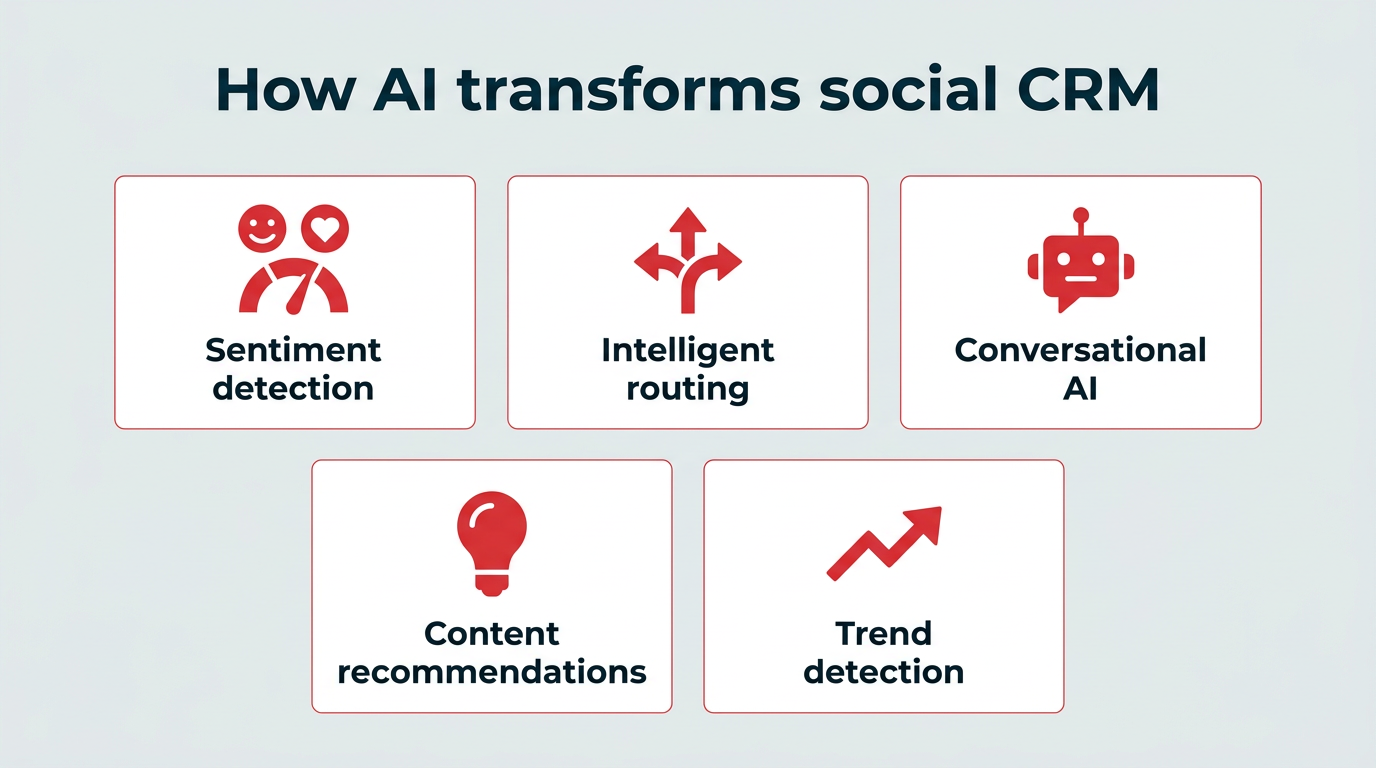
Furthermore, advanced AI-driven social listening transforms unstructured human conversation into structured telemetry. While manual monitoring captures only explicit keyword searches, natural language processing models gauge sentiment, sarcasm, emotional drivers, and regional topic clusters across multiple languages simultaneously. This allows brands to identify localized customer frustration trends and neutralize emerging PR challenges before they escalate into global crises.
Cross-Departmental Utility: Sales, Support, and Marketing Integration

When properly implemented, a Social CRM breaks down organizational silos, empowering distinct departments with shared, contextualized intelligence.
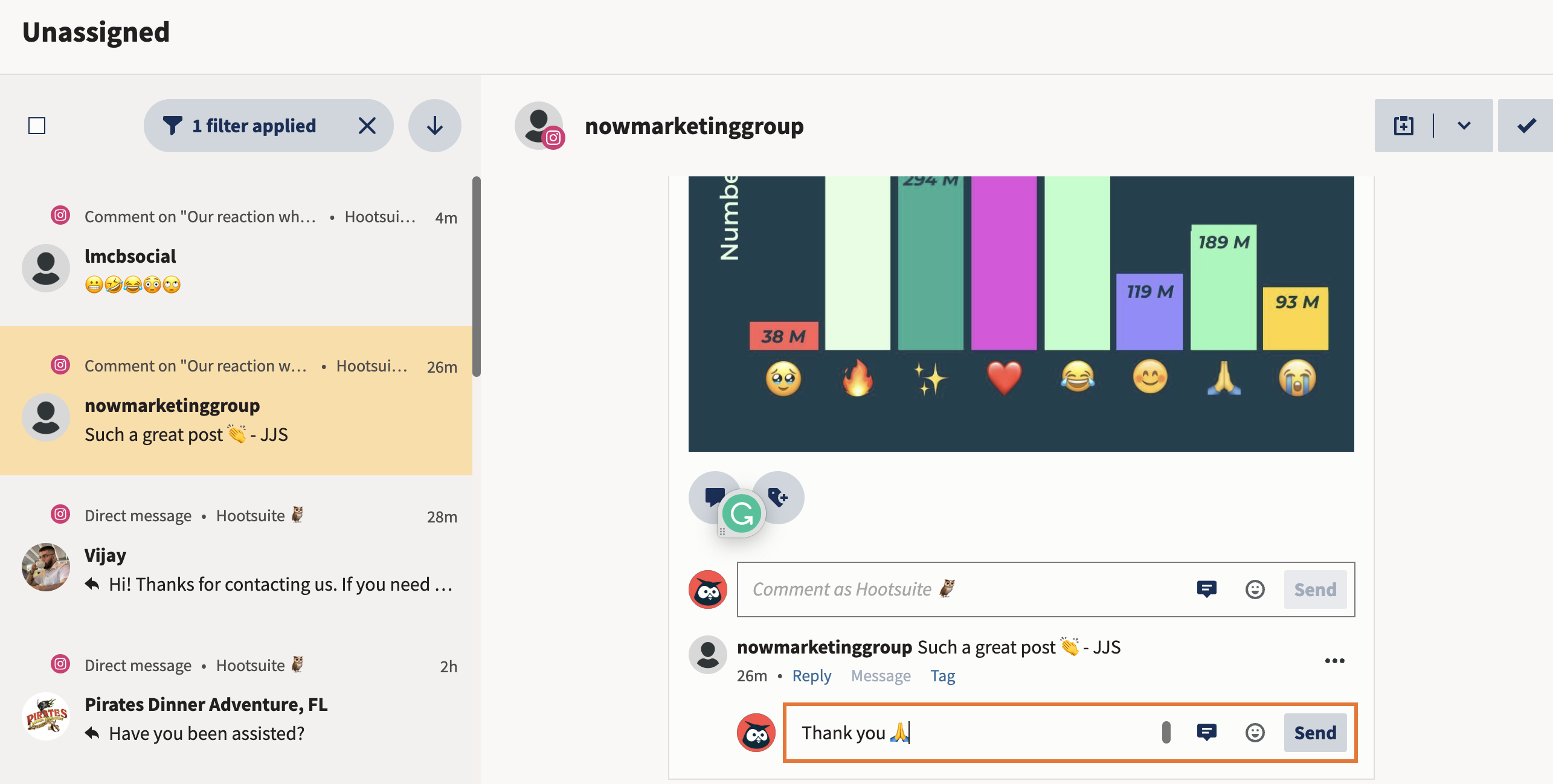
For customer support teams, unified inboxes eliminate the friction of multi-channel communication. When a customer contacts a brand via an Instagram direct message after submitting an email ticket, support representatives immediately access the complete interaction history. This eliminates redundant questioning, accelerates resolution times, and drives higher relationship quality. Organizations like Starbucks have successfully operationalized this model, responding publicly to digital feedback and swiftly transitioning complex service issues to direct messaging channels to protect brand equity.
Sales teams leverage Social CRM by shifting from cold outreach to intent-driven prospecting. Social interactions—such as repeated product mentions, saved video content, and direct inquiries regarding pricing—serve as powerful indicators of buyer intent. When these behavioral signals integrate into CRM lead-scoring models, sales professionals can prioritize outreach based on real-time engagement patterns rather than static lists.
Simultaneously, marketing divisions utilize social listening and CRM data alignment to transition from speculative campaigns to precise content planning. By mapping social engagement back to specific demographic and purchasing records, marketers can generate tailored content, build accurate lookalike audiences for paid acquisition, and accurately measure social return on investment (ROI) through direct pipeline reporting.

Strategic Implementation Roadmap
Enterprise adoption of a Social CRM requires a structured, multi-step framework to ensure sustainable alignment across departments:

- Setup Audit: Map out existing social media channels against current CRM architectures to identify data silos and operational gaps.
- Goal Definition: Establish concrete key performance indicators (KPIs) focused on specific organizational objectives, such as reduced first-response times, increased lead conversion rates, or enhanced customer lifetime value.
- Tool Selection: Deploy scalable software solutions—ranging from specialized social management platforms like Hootsuite to comprehensive enterprise suites like Salesforce, HubSpot, Microsoft Dynamics 365, and SugarCRM—that feature robust native integrations and automated data syncing.
- Workflow Alignment: Define clear inter-departmental routing rules and governance policies between marketing, sales, and customer service teams to prevent missed inquiries.
- Iterative Measurement: Continuously monitor performance metrics, leveraging AI-driven insights to refine strategies dynamically rather than relying on delayed reporting cycles.
Implications for the Future of Enterprise Relationships
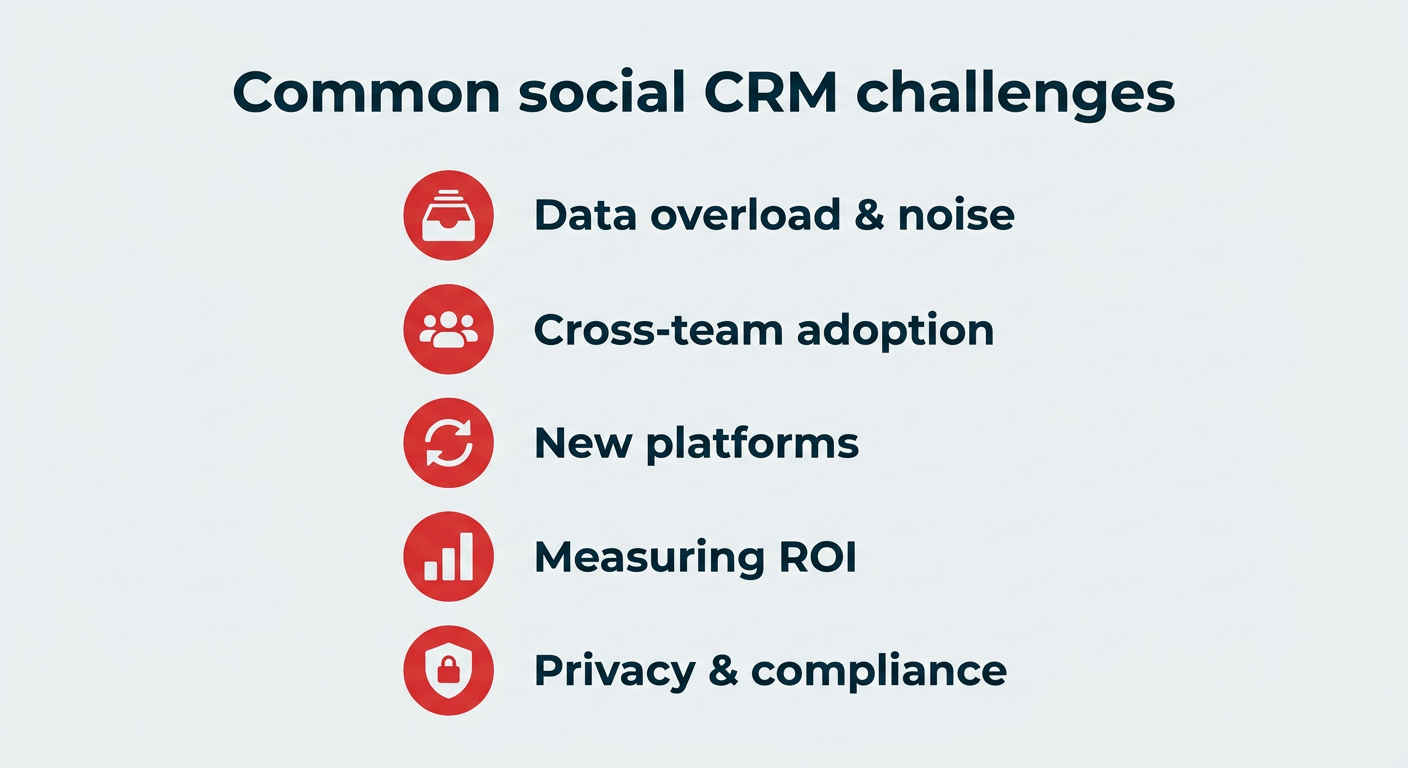
As digital platforms continue to dictate consumer sentiment and purchasing behaviors, the integration of social data into enterprise resource planning is no longer optional. Organizations that successfully deploy Social CRM bridge the critical gap between customer expectations and brand delivery. By combining the immediacy of real-time social conversations with the analytical depth of traditional CRM databases, modern enterprises secure a sustainable competitive advantage built on responsiveness, contextual intelligence, and long-term relationship equity.