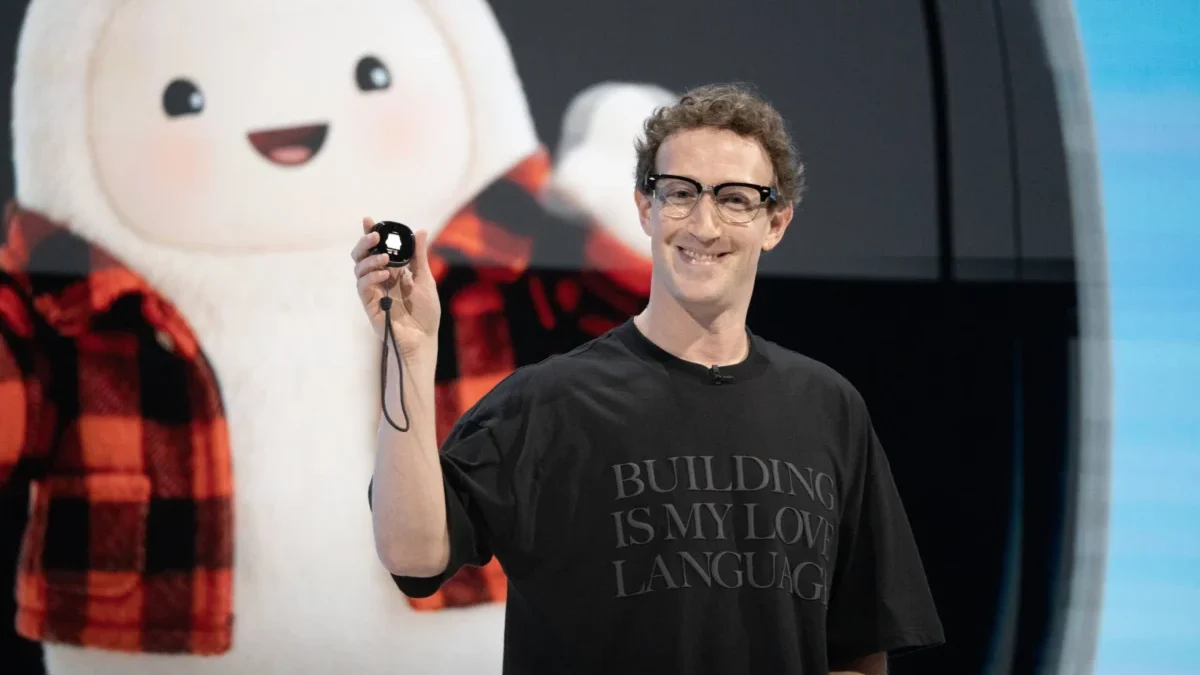
Meta Platforms has once again found itself at the center of a cultural and regulatory firestorm, this time driven not by algorithms or data leaks, but by a deceptively adorable mascot named Jolly. Designed as the personal representative for Meta’s flagship AI agent, Muse, Jolly features rounded, cuddly proportions reminiscent of classic preschool toys. While the Muse ecosystem is strictly restricted to users aged 18 and older, the aesthetic choice has sparked intense debate among marketing experts, child advocates, and privacy watchdogs. As Meta prepares to launch a Tamagotchi-style wearable device for the character later this year, critics argue that the "kawaii-coded" branding is a calculated strategy to lower consumer resistance, deflect public skepticism, and mask deeper data-collection practices.
The Rise of Muse and the Cult of Jolly
Meta introduced the Muse personal AI agent during its Meta Connect event, positioning the technology as a privacy-focused, highly capable digital assistant designed to handle complex day-to-day tasks. The agent’s core digital utility quickly propelled it to the top of mobile application charts, but it was the introduction of Jolly that truly captured the cultural zeitgeist.
Jolly serves as a customizable digital avatar for the user’s Muse agent. Much like a virtual doll, the mascot can be dressed in various outfits, ranging from a classical toga and laurel wreath to modern athletic gear. This high degree of personalization has been heavily promoted across Meta’s advertising channels on Instagram. Furthermore, high-ranking company executives have embraced the character; Alexandr Wang, Meta’s chief AI officer, frequently shares viral memes of Jolly across social media platforms.
Despite being targeted explicitly toward adult users—with Meta enforcing age-verification protocols and birth-date checks during account creation—the visual language of the mascot has drawn immediate comparisons to children’s entertainment. Critics have likened Jolly to classic preschool characters like the Teletubby, noting that the soft, rounded forms are psychologically primed to appeal to very young audiences. This dichotomy between an adult-only utility and a child-friendly aesthetic has become the focal point of a growing controversy.
Chronology of Meta’s AI and Regulatory Hurdles
The rollout of Muse and its mascot arrives at a delicate time for Meta, which has faced mounting public scrutiny over its product ecosystem. The timeline of recent events highlights the company’s dual track of aggressive AI expansion and heavy legal settlements:
- August: Meta reaches a massive legal settlement regarding claims of social media addiction, agreeing to pay up to $16.7 billion and implement stricter protective features for teenagers on Instagram and Facebook.
- Meta Connect Event: Mark Zuckerberg unveils the Muse AI agent, alongside initial demonstrations of the Jolly mascot and its customizable wardrobe features.
- Post-Event Marketing Push: Meta launches targeted Instagram advertisements featuring Jolly in various lifestyle scenarios, while company executives circulate viral memes of the character.
- Upcoming Q4 Launch: Meta announces plans to release the "Muse Charm," a Tamagotchi-style physical wearable device designed to house and interact with the user’s Muse agent on the go.
The Psychology of Cute: Marketing to Skeptical Consumers
The employment of cute, anthropomorphic characters in technology is not a novel concept. Historically, companies have frequently used adorable mascots to bridge the gap between complex software and human users. From Microsoft’s notoriously pestering Clippy to Japan’s extensive cultural reliance on kawaii branding, tech enterprises recognize that friendly faces disarm users.
However, marketing professionals and behavioral experts point out that Meta faces a uniquely steep uphill battle. Julian De Freitas, an associate professor of marketing at Harvard University who specializes in AI companions, notes that public trust in Meta has been severely compromised by recent legal judgments concerning user addiction and data privacy.
"These types of cute factors can make the product seem warm and less threatening," De Freitas explains. Given the negative public sentiment surrounding generative AI and data harvesting, anthropomorphizing an AI agent serves a strategic purpose. By wrapping a powerful, data-hungry digital assistant in a harmless, playful package, companies can foster a false sense of security, making users more willing to overlook potential risks.
Industry and Expert Reactions
The deployment of the Jolly mascot has elicited sharp divisions across academic, advocacy, and corporate spheres.
Youth advocacy organizations, particularly Fairplay, have emerged as vocal critics of the design choices. Josh Golin, executive director of Fairplay, did not mince words regarding the aesthetic resemblance to children’s media. "This is so clearly a character that would appeal to very young children," Golin states, emphasizing that developmental psychology consistently demonstrates how preschool-aged audiences are drawn to specific rounded, friendly shapes. Golin and other child advocates view the introduction of the upcoming Tamagotchi-style wearable as a concerning escalation, warning that it represents an inappropriate attempt to embed AI habits early in impressionable demographics.
Conversely, Meta defends the creative direction as an intentional move to enhance user engagement and remove corporate sterility. Mona Sarantakos, vice president of Product Management at Meta Superintelligence Labs, explained in a co-authored blog post that the design process deliberately prioritized "delightful" elements. The goal, according to Meta, was to create an interactive experience that feels significantly more personal and approachable than communicating with a traditional corporate logo or generic chatbot interface.
Addressing these concerns, Meta spokesperson Daniel Roberts emphasized the company’s strict enforcement of age boundaries. "People want to be able to create their own avatar with personality and unique style, because it’s fun and brings them joy," Roberts noted. He reiterated that the platform requires date-of-birth verification, actively blocks suspected underage users, and employs secondary screening measures to ensure account holders are strictly over the age of 18.
Surveillance, Privacy, and the Passive User
Beyond the debate over aesthetics and age appropriateness, privacy researchers argue that the primary concern lies in how these charming interfaces alter user behavior. Jathan Sadowski, an associate professor at the Emerging Technologies Research Lab at Monash University, suggests that adorable branding is a deliberate mechanism designed to suppress critical thinking.
"Design features like being cute and frictionless, or tapping into nostalgia for devices that didn’t constantly surveil and intervene in our lives, are sly ways to make people drop their guard, stop asking critical questions, and slip into being passive users," Sadowski warns. He characterizes agents like Muse as sophisticated portals into corporate servers, disguised as harmless companions living in a user’s pocket.
This concern is amplified by Meta’s underlying data practices. By default, Meta trains its artificial intelligence models on user interactions within the Muse platform unless individuals actively navigate settings to opt out. While Meta has announced plans to release a "confidential" version of its virtual machine architecture later in 2026—potentially utilizing cryptographic verification to prevent the company from accessing user data—privacy advocates argue that the initial friction of opting out leaves the average consumer vulnerable.
Broader Implications for AI Assistants
As AI agents transition from simple text-based chat interfaces to deeply integrated personal assistants, the relationship between humans and software is fundamentally changing. Ryan Calo, a law professor at the University of Washington and faculty co-founder of its Tech Policy Lab, draws an analogy to hiring a travel tour guide. When consumers rely entirely on an AI intermediary to navigate digital spaces, commerce, and information, they surrender direct oversight, often remaining unaware of underlying commercial biases, third-party partnerships, or data-sharing agreements.
The upcoming holiday release of the Muse Charm wearable device will test whether adult consumers embrace the physical integration of these anthropomorphic AI agents. For regulators and consumer protection groups, however, the mascot represents a broader regulatory challenge: determining where engaging design ends and manipulative marketing begins. As long as tech companies rely on cuddly avatars to soften the perception of complex surveillance systems, the debate over the ethics of digital "kawaii" will remain at the forefront of the technology sector.