The modern digital publishing landscape is undergoing a structural shift, driven by the rapid evolution of artificial intelligence, changing search algorithms, and a shifting reader ecosystem. According to the newly released Pugpig Media App Report 2026, mobile applications have solidified their position as the primary battleground for reader engagement and revenue generation. Analyzing analytics from more than 440 apps across 140 publishing portfolios, the report offers a comprehensive look at how media organizations are adapting to user habits, overcoming internal bottlenecks, and trying to secure their long-term financial viability.
The findings highlight a paradox at the heart of modern journalism: while approximately 80% of publishing executives view mobile apps as crucial to their business strategy over the next 12 months, internal operational limitations threaten to stall their progress. Half of all surveyed publishers point to product team capacity as the single greatest barrier to developing and growing their app audiences. In an era where traditional web traffic from search engines and social media networks faces unprecedented volatility due to generative AI overviews, building robust, direct-to-consumer channels has transformed from a luxury into an existential necessity.

The Evolving Anatomy of News App Engagement
User behavior within mobile publishing environments has matured significantly. The 2026 data indicates a marked increase in both average session duration and monthly session frequency compared to previous years. On average, a typical news app user engages in roughly 15 sessions per month, interacts with 20 screen views per session, and maintains a session duration just shy of 10 minutes. Cumulatively, users spend close to 200 minutes per month actively consuming content inside dedicated news applications.
This heightened engagement is largely fueled by the implementation of richer, more interactive multimedia experiences. Rather than serving as mere digital containers for static text, successful news apps are transforming into immersive products. The report reveals that apps incorporating interactive features—such as puzzles, games, video integration, and audio listening options—drastically outperform basic text-only platforms.
The statistical impact of these features is pronounced. Users who engage with embedded games open their apps 2.7 times more often than those who do not. Similarly, video consumers spend 3.3 times more time within the app each month, while audio listeners record a 2.5-fold increase in overall time spent. Furthermore, breaking and developing news continues to act as the primary anchor for daily traffic, followed closely by digital replicas of print editions and casual gaming features.
Behind these aggregate figures lies a heavily skewed distribution of user activity. The data underscores the critical role of "super users"—a dedicated cohort representing the top 20% of monthly active users who account for roughly three-quarters of all app sessions. Major international and regional players, such as The Times and the Daily Mail, continue to lead the industry in maintaining these high levels of sustained reader interaction.
The Retention Metric Gap and Product Capacity Bottlenecks
Despite the clear enthusiasm for mobile applications, publishers face steep structural challenges in accurately tracking and optimizing their performance. When asked to identify the most critical metric for assessing app success, 70% of publishing professionals cited subscriber retention as "very important." However, nearly half of those same respondents admitted that their current technological infrastructure lacks the capability to measure subscriber retention as a reliable key performance indicator (KPI).
This tracking deficit underscores a broader operational constraint. With 50% of publishers identifying product team capacity as their primary roadblock, many news organizations struggle to secure the engineering talent, design resources, and data analytics tools necessary to refine their software products. Editorial ambition frequently outpaces technical execution, leaving newsrooms unable to implement advanced personalization algorithms, seamless subscription paywalls, or sophisticated retention campaigns.

Jonny Kaldor, CEO of Pugpig, emphasized that the data points toward substantial commercial value in cultivating deeper relationships with a publisher’s most dedicated readers. According to Kaldor, identifying the specific types of content and functional features that inspire repeat usage is paramount. He noted that as AI fundamentally alters how audiences discover information online, publishers are actively seeking reliable, direct relationships with their audiences, making dedicated mobile apps the most dependable channel to achieve this goal.
The Push Notification Conundrum and the Anonymous User Opportunity
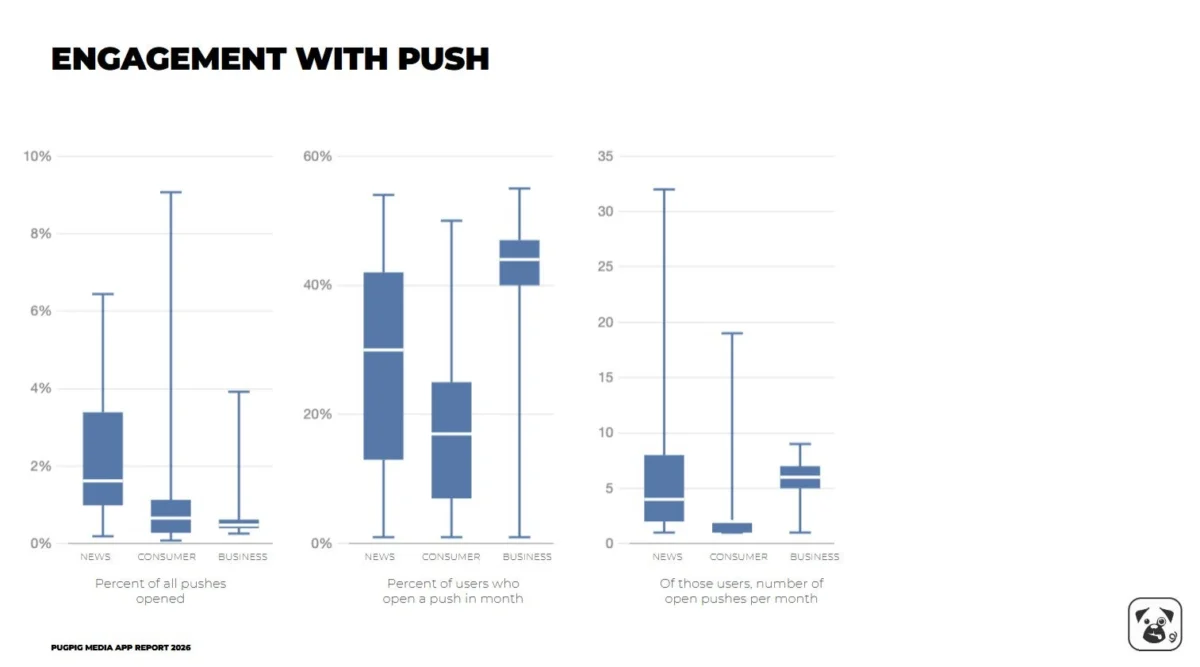
One of the most revealing insights from the 2026 report centers on the mechanics of audience re-engagement, specifically concerning push notifications. While approximately half of all users across the surveyed apps have opted in to receive push alerts, actual open rates remain relatively low, with only about a third of users opening an app via a notification in any given month.
The vast majority of app sessions are initiated directly by the user rather than being triggered by external alerts, email links, or social media referrals. This indicates that while notification opt-in rates are healthy, publishers are failing to consistently capture user attention through alerts. Two-thirds of publishing professionals have designated push notification strategies as a top organizational priority, signaling an urgent need to refine messaging frequency, personalization, and timing.

Compounding this challenge is the vast presence of anonymous, non-subscribing users. The research shows that nearly half of all app users are non-subscribers—a demographic characterized by the lowest overall engagement rates. While subscribers demonstrate significantly higher activity levels, proving the commercial strength of a paid relationship, only a small minority of publishers are actively optimizing their app funnels to convert these anonymous visitors into paying members. This leaves a substantial volume of potential revenue and audience loyalty untapped.
Strategic Implications for the Future of Digital Publishing
The findings of the Pugpig Media App Report 2026 outline a clear roadmap for the publishing industry’s immediate future. As traditional web referral traffic faces mounting pressure from technological disruption, the survival of independent journalism increasingly depends on proprietary platforms owned and operated by the media companies themselves.
To capitalize on the growing appetite for mobile media, publishers must address their internal structural deficits. Overcoming product team constraints, upgrading data analytics capabilities to accurately monitor subscriber retention, and optimizing the conversion pathways for anonymous app users will dictate which media brands thrive in the years ahead. By moving beyond simple text distribution and investing in multimedia features like audio, video, and gaming, news organizations can transform casual readers into deeply engaged super users, securing a sustainable economic foundation for digital journalism.