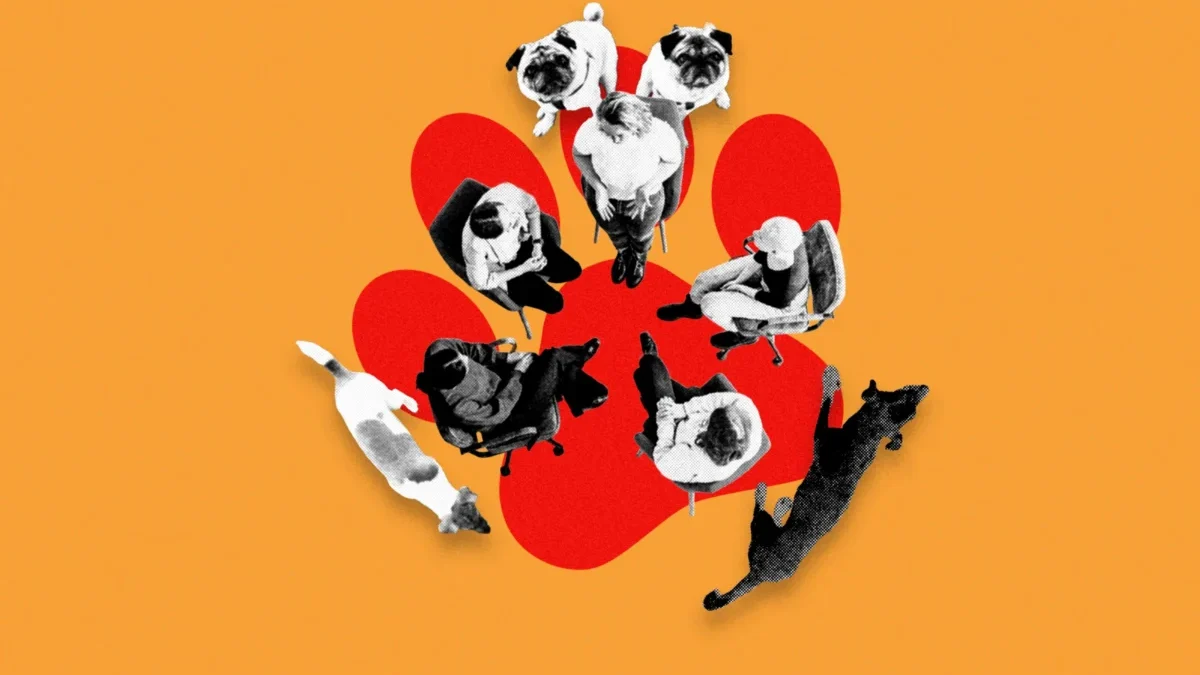
Just past 6 p.m. on a recent Wednesday night, half a dozen pet owners logged into a secure Zoom meeting to confess something they are deeply afraid to talk about in public: They are entirely fed up with their dogs. In a society that treats pet ownership as an unmitigated joy and dogs as universally beloved family members, admitting to feelings of resentment, exhaustion, or regret remains one of the last major domestic taboos. Yet, behind closed doors and away from the judgmental eyes of dog parks and social media feeds, a growing number of pet owners are finding solace in a novel, peer-led sanctuary modeled after traditional recovery programs.
Before any behavioral discussion could begin during the mid-week session, Louise Crane, the president and co-founder of Dogs Anonymous—the organization hosting the virtual gathering—recited the seven foundational acknowledgements that all participants must formally accept. The very first statement sets a sobering, radically honest tone for the hour: "I admit that life with my dog is not what I imagined." Crane, wearing a black T-shirt emblazoned with "Abolish ICE" in thick white lettering, guided the group through the preamble designed to strip away the suffocating armor of perfectionism that many modern pet owners feel pressured to wear.
The Realities of Canine Behavioral Crises
As the conversation opened up, the emotional dam broke. "I may need to be talked off a ledge," one attendee confessed as she described the acute stress of managing her boxer’s sudden, unpredictable mood swings. Her household had recently navigated a tumultuous period of transition: the death of a long-time family dog, the introduction of a new foster dog, and the subsequent psychological fallout. Her once-reliable boxer had become unsettled, chronically grumpy, and prone to "demand barking"—a behavioral regression that had never previously been part of the animal’s temperament.
Other attendees quickly followed, confessing their own private shames and household anxieties. One participant revealed that her shepherd mix had begun exhibiting intense "resource guarding," a behavioral phenomenon wherein dogs aggressively defend high-value items, such as food, toys, or resting spaces, from perceived threats. "He got into it with my sister’s little wiener dog the other day because they both were begging for food," she shared, her voice heavy with the lingering anxiety of the near-conflict.
Another participant, a woman navigating the sensory overload of living in a bustling urban apartment complex, sought practical coping mechanisms for her dachshund’s relentless, anxiety-driven barking at strangers in the hallway. In strict adherence to the organization’s confidentiality framework, Dogs Anonymous requested that identifying details, geographic locations, and real names of participants be withheld, cultivating a sterile room of absolute trust where individuals can bare their frustrations without fear of professional or social reprisal.
The Weight of Societal Shame and Isolation
For many participants, the behavioral challenges of their pets are secondary to the crushing psychological weight of shame. "The embarrassment of having a dog that’s losing its shit, especially as a woman, is difficult for some people," Crane explained during an interview prior to the evening session. Society historically places a disproportionate emotional burden on women to maintain domestic harmony, transforming a misbehaving pet into a public indictment of a caregiver’s competence, patience, and moral character.
This pervasive cultural expectation—that a "good" owner naturally possesses a perfectly obedient, serene animal—leaves struggling pet guardians isolated. When a dog bites, destroys property, reacts aggressively on-leash, or simply fails to bond with its humans, the owners often internalize the failure. They stop inviting friends over, avoid neighborhood walks during peak hours, and suffer in silence, terrified of being labeled bad pet parents or, worse, being forced to surrender an animal to an already overwhelmed shelter system.
The Genesis and Structure of Dogs Anonymous
To combat this widespread psychological isolation, Crane, alongside co-founders Daphne Mendoza-Tervanis and Jerri Scherff, launched Dogs Anonymous in 2025. Operating as a specialized nonprofit organization, the initiative bridges the gap between professional animal behavior consulting and emotional peer support. The founders recognized that traditional training programs often focus exclusively on the mechanics of modifying canine behavior while completely ignoring the psychological distress, financial depletion, and burnout experienced by the human at the other end of the leash.
"We wanted to give people not just a space they could trust for advice on behavior issues or if they are having a crisis with their dog, but also a place where they don’t feel judged to ask questions and admit that maybe it’s a little bit too much for them," Mendoza-Tervanis explained.
The organizational blueprint of Dogs Anonymous owes a profound debt to the mechanics of addiction recovery. Jerri Scherff, a co-founder who has lived with 13 years of personal sobriety, recognized that the structural traditions of groups like Alcoholics Anonymous (AA) could be effectively translated to the realm of pet stewardship. "We wanted to create something that was repeatable, sustainable, and eventually autonomous, which is the way that recovery groups work," Scherff noted.
Central to this model is the absolute rule of anonymity: what is discussed within the virtual walls of a Dogs Anonymous meeting stays firmly within the group. This confidentiality removes the paralyzing fear of public cancellation or community shaming, enabling participants to speak with unvarnished candor about thoughts of rehoming, deep resentment, and the quiet grief of realizing their pet ownership experience bears no resemblance to the idyllic fantasies peddled by pet food commercials and Instagram influencers.
A Global Reach for a Universal Problem
Although the meetings are primarily attended by residents across the United States, the digital accessibility of Zoom has organically expanded the footprint of Dogs Anonymous. Previous sessions have drawn distressed dog owners from as far away as Singapore, Costa Rica, and various European nations, highlighting that the crisis of modern pet ownership is not culturally bound to North America.
The attendee demographic is remarkably diverse, spanning first-time puppy owners grappling with the reality-check of sleepless nights, seasoned handlers dealing with geriatric canine cognitive decline, formal adopters navigating the unpredictable trauma histories of rescue dogs, and foster caregivers carrying the temporary burden of rehabilitation. Intriguingly, the sessions also occasionally attract professional dog trainers who log in not to teach, but to seek peer support and confidential advice on how to manage exceptionally difficult client aggression cases without burning out.
The Mechanics of Peer Healing: Sharing Experience, Strength, and Hope
The foundational philosophy of Dogs Anonymous rests on the premise that clinical advice and obedience tips, while valuable, are insufficient to heal caregiver burnout. True relief, the founders argue, stems from the radical validation of shared human struggle.
"The magic of AA and the community is that you are going through something that somebody else has either been through or they’re going through the same thing," Crane noted. This approach mirrors the classic 12-step tradition of "sharing your experience, strength, and hope." By articulating their private hardships aloud and hearing identical confessions from peers, participants are systematically guided out of isolation and invited to reframe their personal challenges within a collective context.
When a participant hears that another owner has also wept on their kitchen floor out of sheer frustration with a reactive dog, the psychological burden shifts from a personalized failure to a shared, manageable obstacle of modern animal husbandry.
The Science of Caregiver Burden in Pet Ownership
The anecdotal experiences shared during Dogs Anonymous sessions are increasingly validated by empirical research into human-animal relationships. A comprehensive scientific survey published in June in the journal Pets, which examined the intersections of guilt, burden, and psychological wellbeing among owners of dogs with behavioral problems, painted a stark picture of modern pet ownership.
According to the study’s findings, an overwhelming 78 percent of respondents reported experiencing "elevated caregiver burden"—a clinical term used to describe the profound emotional, physical, and financial strain associated with long-term caregiving responsibilities. Furthermore, 53 percent of surveyed pet owners reported feeling chronically alone in their struggles. These statistics underscore a silent public health and mental health issue: as pet adoption rates have soared, particularly in the wake of the COVID-19 pandemic, the complexity of behavioral cases has risen, while the community infrastructure to support overwhelmed humans has largely lagged behind.
Implications for Animal Welfare and Human Mental Health
The emergence of peer support organizations like Dogs Anonymous highlights a critical blind spot in the broader pet industry and animal welfare sector. For decades, the cultural narrative surrounding companion animals has emphasized unconditional love while systematically ignoring the conditional realities of behavioral compatibility, financial costs, and mental health tolls.
When owners are forced to navigate severe behavioral challenges—such as dog-on-dog aggression, severe separation anxiety, or human-directed bite histories—without adequate emotional outlets, the ultimate casualties are often both human and canine. Unchecked caregiver burnout frequently leads to impulsive surrender, behavioral euthanasia, or prolonged domestic stress that compromises the welfare of the animal.
By providing a structured, non-judgmental forum for radical honesty, groups like Dogs Anonymous are pioneering a preventative model of animal welfare. By keeping human mental health afloat and dismantling the paralyzing stigma of pet-related resentment, these recovery-style meetings may ultimately keep more dogs in their homes, preserving families through shared vulnerability, institutional anonymity, and the profound, stabilizing realization that no struggling owner is ever truly alone on the other end of the leash.