
Social media measurement has evolved from a superficial tracking exercise into a mission-critical business discipline. As global digital budgets expand—with worldwide social media ad spend projected to hit $338.75 billion—organizations can no longer rely on guesswork or vanity metrics. Today, social media measurement uses advanced data analytics and specialized listening tools to evaluate a brand’s holistic performance, map audience behavior, benchmark against competitors, and connect digital engagement directly to revenue, pipeline growth, and customer retention.

The Evolution of Social Media Measurement
In the early days of corporate digital marketing, success was largely defined by follower counts and raw impressions. However, modern enterprise operations demand a much more rigorous approach. Contemporary social media measurement connects the performance of individual posts to broader brand strategy, proving to executive leadership how social channels contribute to overarching business objectives.
Data collection without strategic intent often leads to information overload. Industry experts emphasize that a metric only earns a place on a dashboard if it drives an actionable decision. For instance, tracking a raw follower count provides little strategic value on its own. Conversely, pairing a follower growth rate with demographic shifts offers critical intelligence regarding whether a brand is successfully reaching its intended target market. This fundamental difference separates vanity metrics from true Key Performance Indicators (KPIs).

Core Pillars of Social Media Data Analysis
Effective measurement systems unlock five primary categories of insight: audience behavior, target market preferences, competitive positioning, content performance, and overall brand reputation.
Audience and Market Insights
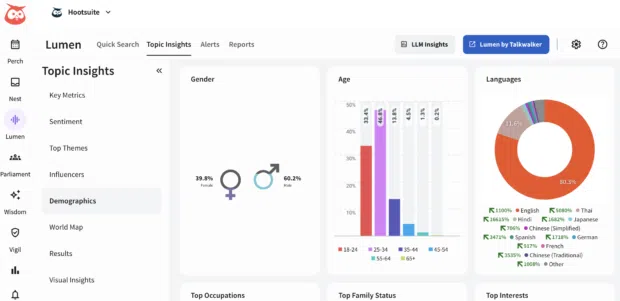
Understanding basic audience demographics serves as the foundation of any digital strategy. Recent data underscores platform disparities, such as 84% of U.S. adults utilizing YouTube compared to roughly half engaging with Instagram. Beyond surface-level demographics, deep measurement reveals consumer preferences, pain points, and peak online activity windows. By distinguishing between a general audience and an ideal customer profile, brands can refine their messaging, voice, and product development cycles.
Competitive Benchmarking
Market intelligence requires organizations to measure their standing against industry peers. Competitive insights allow digital teams to track competitor posting frequencies, content formats, and engagement rates. Furthermore, monitoring social share of voice provides a reliable indicator of whether a company is gaining or losing ground within the broader industry conversation.
Micro and Macro Content Performance
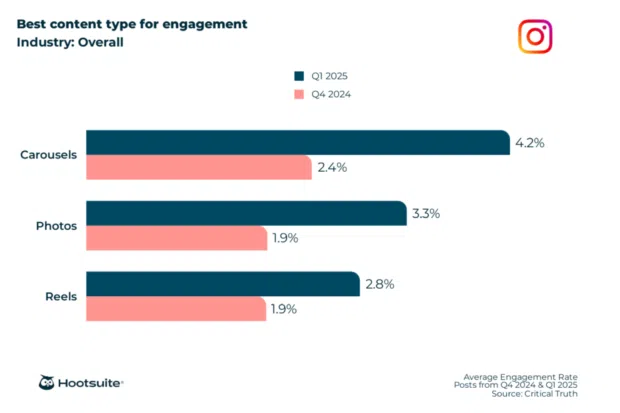
Analyzing content performance requires a dual-lens approach. At the macro level, teams observe broad trends in engagement, follower growth, and overall reach to evaluate the health of the overarching social strategy. At the micro level, analytics evaluate specific campaigns and individual posts—such as comparing the engagement of short-form video versus carousel graphics—to optimize future creative production.
Brand Reputation and Sentiment Analysis
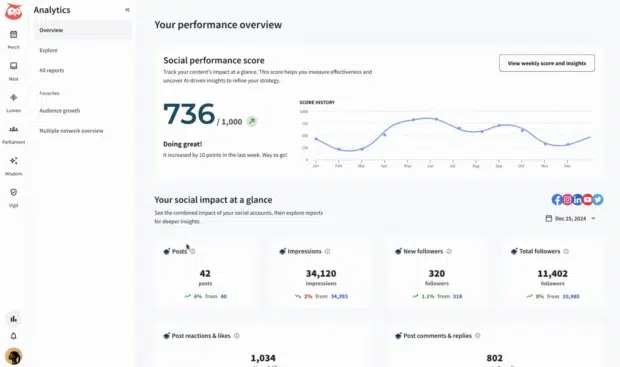
Quantitative data regarding mention volume must be paired with qualitative sentiment analysis to paint an accurate picture of public perception. Tracking sentiment scores over time alerts communications teams to sudden market shifts, enabling organizations to amplify successful campaigns or mitigate emerging public relations crises before escalation occurs.
Mapping Business Goals to Actionable Metrics
Establishing a successful measurement framework requires working backward from desired business outcomes. Different organizational objectives necessitate distinct tracking mechanisms:
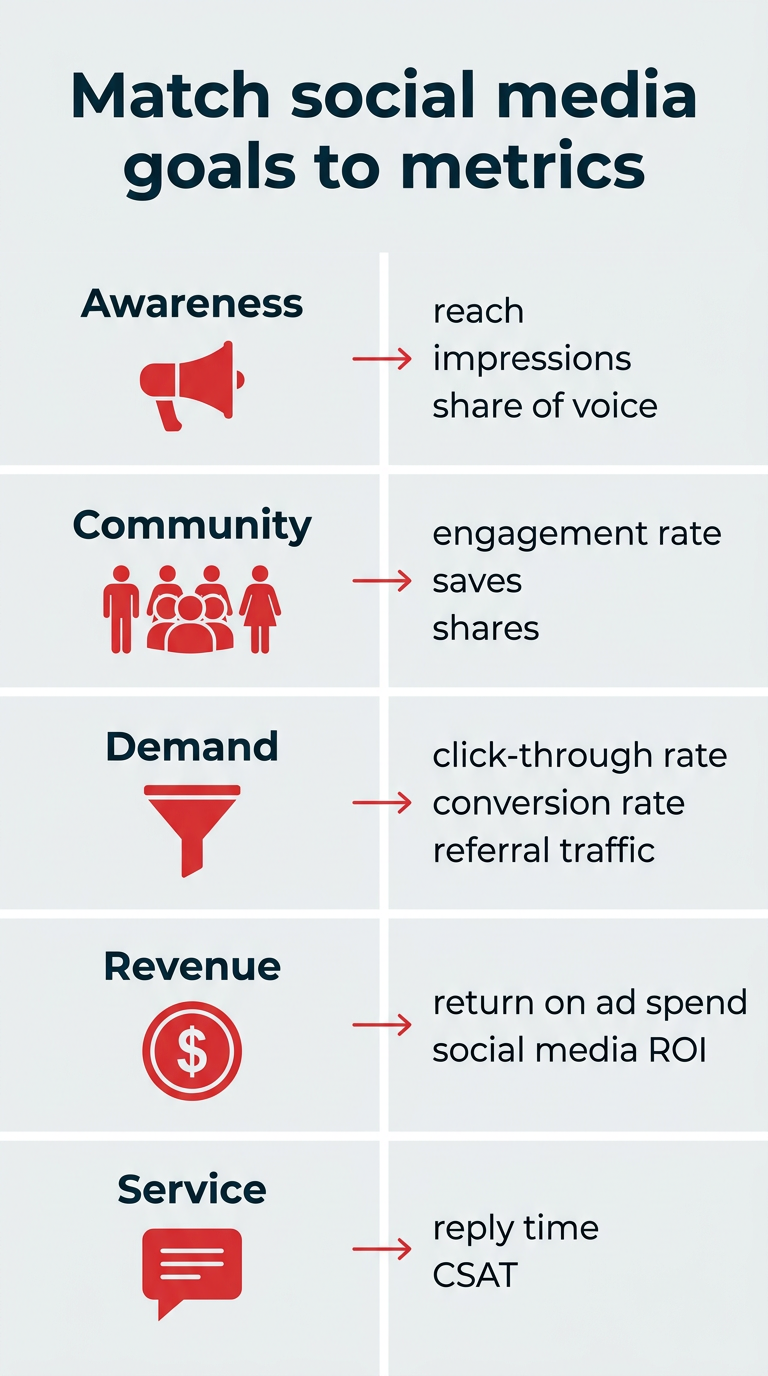
- Brand Awareness: Measured primarily through reach, impressions, social share of voice, and follower growth rate.
- Engagement: Evaluated via engagement rate, qualitative comments, content shares, and saves.
- Lead Generation: Tracked using click-through rates (CTR), conversion rates, and social referral traffic via integrated platforms.
- Revenue and ROI: Quantified through return on ad spend (ROAS), overall social media ROI, and cost-per-click (CPC) metrics.
- Customer Satisfaction: Assessed by measuring customer satisfaction scores (CSAT), Net Promoter Scores (NPS), and average support reply times.
Essential Metric Categories for Modern Digital Teams
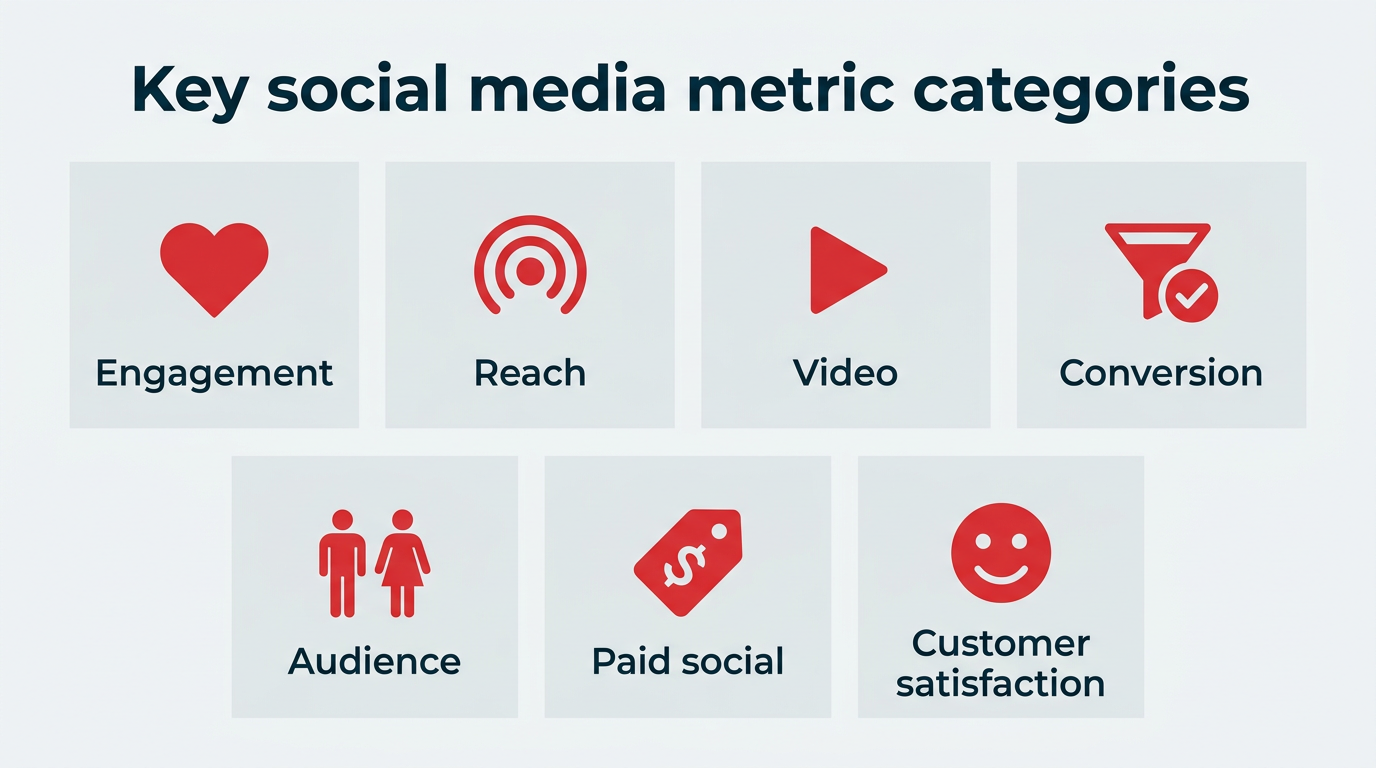
To maintain a comprehensive overview of digital health, marketing departments focus on several critical measurement verticals:
Engagement Metrics
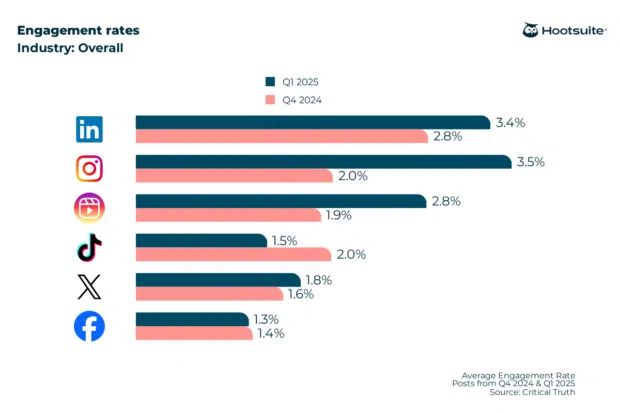
Engagement measures the depth of interaction between an audience and published content. While likes indicate passive approval, comments and saves signal higher user intent and algorithmic favorability. Industry benchmarks show that engagement rates vary significantly by platform and sector, necessitating contextual comparisons.
Reach and Awareness Metrics
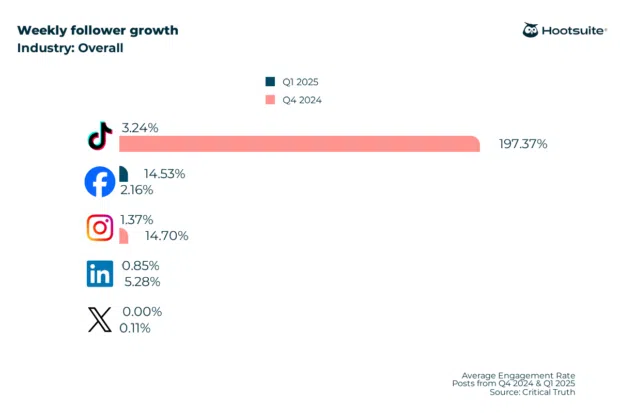
Reach metrics determine the scale of a brand’s audience and its ability to penetrate new markets. A high ratio of non-follower reach typically signifies that content is successfully distributed via shares or algorithmic recommendations, validating brand awareness efforts.
Video Performance Metrics
With video dominating feeds across networks like TikTok, Instagram, and YouTube, specialized metrics such as view-through rates, completion rates, and watch time are vital. Interestingly, platform-specific research often shows varying engagement yields across formats; for example, static carousels occasionally outperform Reels in direct engagement on specific channels, highlighting the need for multi-format testing.
Conversion and Multi-Touch Attribution
Proving the financial value of social media requires tracking conversions and implementing sophisticated attribution models. While traditional last-touch reporting often undervalues social channels, nearly 47% of U.S. marketers are investing in advanced marketing mix modeling and multi-touch attribution to credit social interactions fairly across the entire buyer journey.
Paid Social and Customer Care Metrics
Paid metrics—including cost per thousand impressions (CPM) and cost per click (CPC)—ensure efficient ad spend. Simultaneously, customer care metrics track response times and resolution rates, reflecting how effectively brands manage inbound support inquiries across social channels.
A Five-Step Framework for Implementation
Deploying a repeatable social media measurement system involves five distinct operational phases:
- Define Clear Objectives: Connect social media metrics directly to broader enterprise goals rather than collecting data indiscriminately.
- Select Targeted KPIs: Choose a concise set of metrics that accurately gauge progress toward established goals.
- Implement Analytic Infrastructure: Utilize native platform tools alongside robust cross-channel software and social listening applications to capture both internal performance and external market conversations.
- Integrate with CRM Systems: Sync social data with customer relationship management platforms (such as Salesforce) to unify sales, support, and marketing intelligence, thereby clarifying the path from social engagement to closed revenue.
- Report, Reassess, and Optimize: Treat reporting cycles as strategic decision points. Adjust variables systematically and ensure reports clearly communicate the business value generated by the social team.
Industry Tooling and Software Ecosystems
Selecting the appropriate measurement software depends heavily on team size, enterprise complexity, and reporting requirements. Modern organizations typically choose from a robust market of specialized solutions:
- Unified Operating Systems: Comprehensive platforms like Hootsuite Social OS combine publishing, engagement, and listening capabilities into a single environment. These systems facilitate cross-channel benchmarking, automated optimal-posting-time recommendations, and seamless CRM integrations, enabling enterprise teams to analyze organic and paid performance side-by-side.
- Competitive Analysis Tools: Software solutions such as RivalIQ offer advanced analytical capabilities designed for rapid data-driven decision-making, featuring machine learning detection for competitor-boosted posts and comprehensive hashtag tracking.
- Web Analytics Platforms: Google Analytics (GA4) remains an indispensable complement to social tools, tracking downstream user behavior, conversion events, and UTM-tagged campaign performance once visitors transition from social networks to a corporate website.
Strategic Implications and Future Outlook
As digital ecosystems become increasingly crowded, the organizations that thrive will be those that treat social media measurement not as an administrative afterthought, but as a core driver of business intelligence. By anchoring data collection to concrete business goals, leveraging advanced multi-touch attribution, and fostering cross-departmental data sharing between marketing, sales, and executive leadership, modern brands can secure sustainable growth, protect brand equity, and accurately prove the true return on investment of their social strategies.