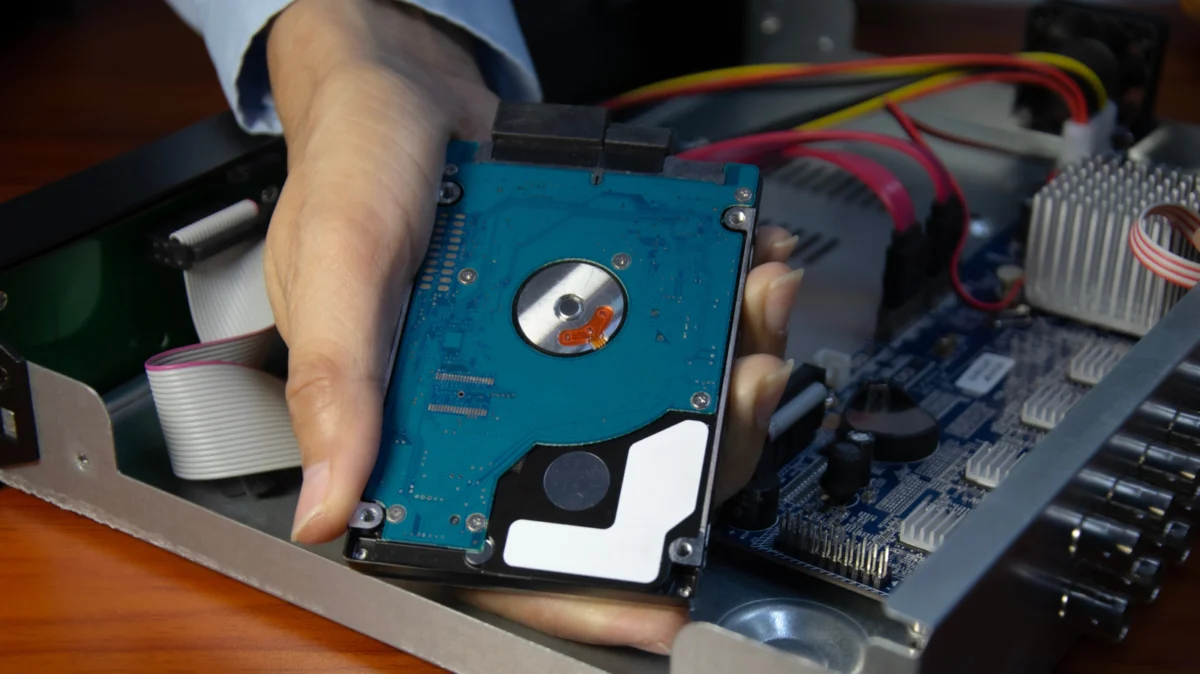
The reliability of mechanical storage remains a critical concern for data centers, enterprises, and individual consumers alike. As digital dependency grows, the physical integrity of Hard Disk Drives (HDDs) becomes the final line of defense against data loss. New peer-reviewed research conducted by Christoph Siemroth and Yeomyung Park, recently published in IEEE Xplore, has provided a granular look at manufacturer-specific reliability. By analyzing a massive dataset of over 400,000 hard drives, the study offers a sobering reminder that not all hardware is engineered to endure the same operational lifespan.
The study, titled "Are There Manufacturer Differences in Hard-Drive Reliability?", utilized publicly available data provided by cloud storage giant Backblaze. This dataset spanned from 2013 through the second quarter of 2025, covering 443,156 individual drives and accounting for over 1.66 million drive-years of operational data. By applying rigorous duration regression models that controlled for variables such as drive age, capacity, form factor, and operating temperature, the researchers were able to isolate the impact of the manufacturer on overall hardware longevity.
Identifying the Failure Patterns
The research identified Toshiba as the manufacturer with the highest failure rates within the observed sample. According to the data, Toshiba HDDs exhibited a monthly failure rate of between five and six out of 1,000 units once the drives reached the 50 to 100-month age bracket. This represents a significant deviation from the rest of the industry, where other major manufacturers averaged 2.5 or fewer failures per 1,000 units in the same period.
Perhaps most concerning for IT administrators is the trajectory of these failures. The study noted that for Toshiba drives, the failure rate accelerates sharply after the 60-month mark, reaching levels four times higher than those observed during the early stages of the drive’s life. This "wear-out" phase is more pronounced in Toshiba units than in those produced by their competitors, suggesting that enterprise environments relying on older Toshiba stock may face a heightened risk of synchronized hardware failure.
A Comparative Look at Reliability
To establish a clear benchmark for comparison, the researchers designated Seagate as the baseline, assigning it a 100% failure rate index. When measured against this baseline, the differences between the four major manufacturers—HGST, Western Digital, Toshiba, and Seagate—became stark.
Toshiba outperformed the baseline in terms of failure, registering at 107% relative to Seagate. While this suggests Toshiba hardware was the least reliable in the cohort, the margin indicates that Seagate’s own reliability metrics are also subject to scrutiny. Seagate drives, according to the study, tend to show higher failure rates in the early stages of deployment, whereas other brands demonstrate more stability during their infancy.
In contrast, HGST and Western Digital emerged as the top performers in terms of longevity. HGST—now a subsidiary of Western Digital—recorded the lowest failure rates of the group, hovering between 39% and 41% of the Seagate baseline. Western Digital maintained a strong second position, with a failure rate of approximately 51% to 52% relative to the baseline. These figures suggest that, within the scope of the sample, HGST and Western Digital have managed to achieve a level of manufacturing consistency that significantly reduces the frequency of hardware replacement cycles.
The Impact of Environmental and Technical Factors
The study serves as a vital reminder that hardware failure is rarely the result of a single factor. By controlling for operating temperature, the researchers were able to quantify the impact of heat on mechanical components. The results were dramatic: every one-degree increase in operating temperature was associated with a 2.1% increase in the failure rate.
This finding carries significant implications for data center design and server room management. If a server rack experiences a temperature spike of 10 degrees, the projected failure rate for the drives within that rack increases by approximately 23.1%. This compound effect explains why thermal management systems are not merely secondary concerns but are essential for the mechanical integrity of high-density storage arrays.
Interestingly, the study also provided data regarding drive capacity. Contrary to the assumption that more complex, higher-density drives might be more prone to failure, the research found that larger-capacity HDDs actually trended toward higher reliability. Specifically, for every 1 TB increase in capacity, the failure rate was estimated to decrease by 3.4%. While the study did not explicitly detail the engineering reasons behind this, it suggests that the newer, more advanced manufacturing processes used to create higher-capacity drives may benefit from tighter quality control and more modern internal components.
Limitations and Industry Context
It is essential to contextualize these findings within the scope of the data source. The Backblaze dataset is composed primarily of enterprise-grade hardware. These drives are designed for continuous, high-intensity operation, which differs significantly from the usage patterns of consumer-grade HDDs found in home desktop computers or external backup drives. Therefore, while the findings provide a high-level view of manufacturer reliability, they should not be viewed as a definitive guide for home users, whose drives may be subjected to different physical stresses, such as vibrations or power cycles.
Furthermore, the study acknowledges that "workload" remains a variable that is difficult to capture. Enterprise drives are often subjected to varying read/write intensities, and because the researchers could not directly measure the specific data-traffic load on every individual drive, the study focuses on the statistical likelihood of failure based on duration and environmental conditions.
The Broader Implications for Data Strategy
For businesses, the primary takeaway is the necessity of a diversified storage strategy. Relying on a single manufacturer for a large-scale storage deployment could result in a "correlated failure" scenario, where an entire array begins to degrade at the same time due to the specific aging characteristics of that brand’s hardware.
The fact that reliability changes over the lifecycle of a drive is also a cautionary tale for those who purchase refurbished or second-hand hard drives. While cost savings are often the primary driver for such purchases, the research suggests that once a drive passes the 50 or 60-month threshold, the risk of failure increases—particularly for certain brands. In a professional setting, the cost of data recovery and system downtime almost always outweighs the initial savings of buying used hardware.
Moving Forward
The research by Siemroth and Park provides a robust, evidence-based framework for evaluating the long-term viability of mechanical storage. As the industry continues to balance the high capacity of HDDs with the rising speeds of Solid State Drives (SSDs), the mechanical HDD remains a staple for cold storage and massive data archiving.
Understanding the nuances of failure rates—the "when" and the "why"—allows IT departments to transition from reactive maintenance to predictive replacement. By monitoring drive temperatures, tracking the operational age of individual units, and selecting hardware with documented reliability histories, organizations can mitigate the risks inherent in physical storage. While no mechanical device is designed to last forever, this study confirms that the choice of manufacturer, when coupled with strict environmental controls, remains a significant factor in determining the longevity of the digital archives that underpin modern society.