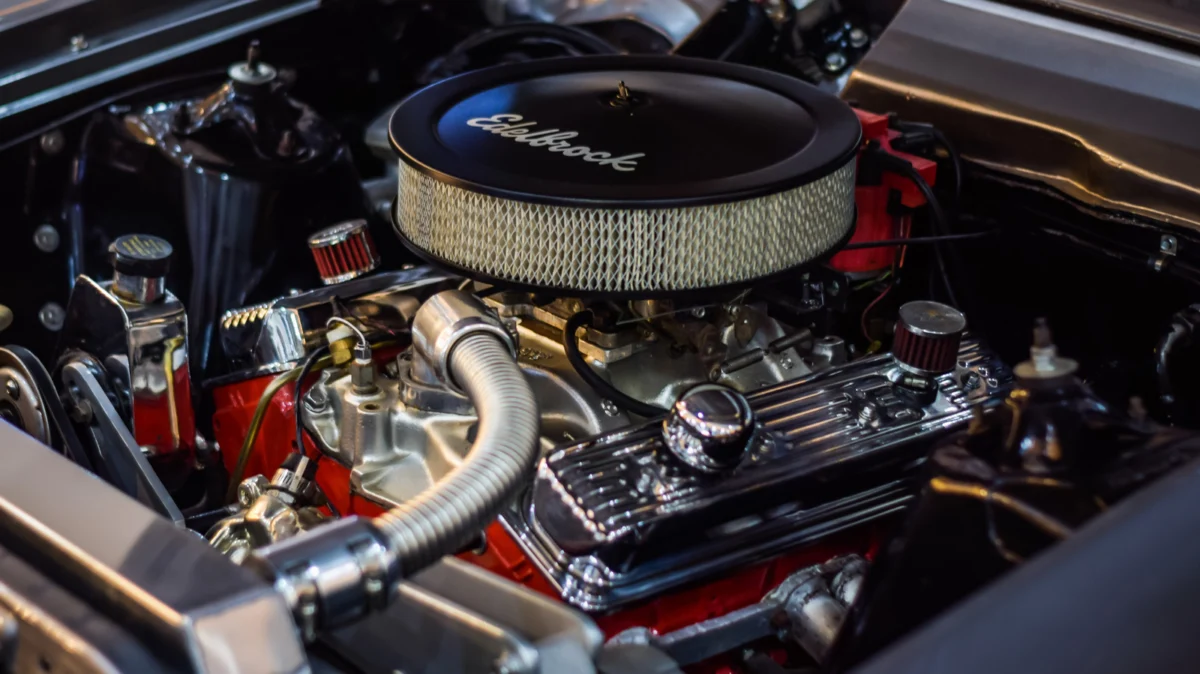
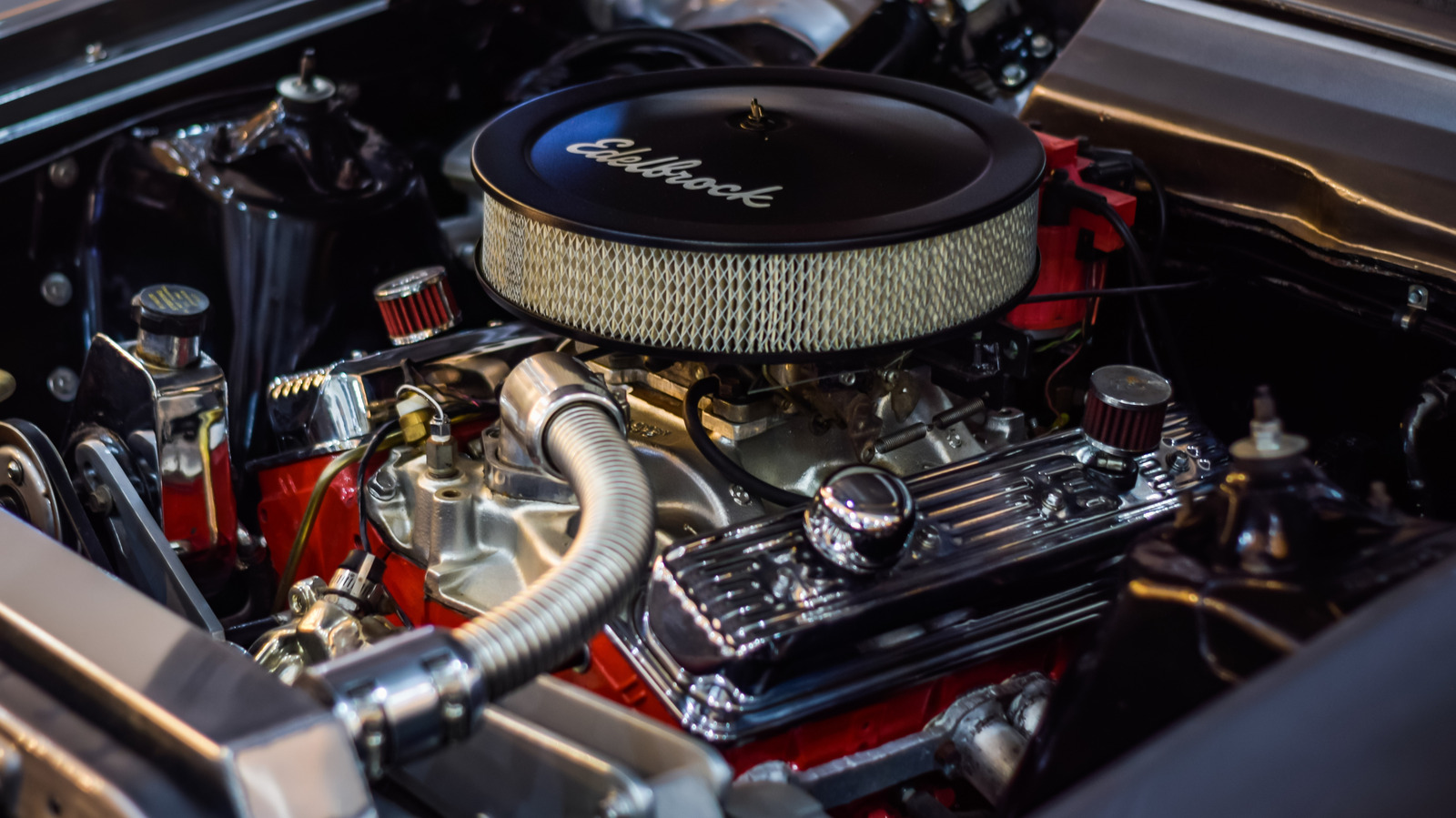
For over a century, the pushrod engine has been a cornerstone of automotive power, propelling everything from iconic muscle cars and heavy-duty trucks to specialized marine applications and the V8s that forged entire automotive legacies. This venerable engine design, characterized by its camshaft located within the engine block and operated by lifters, pushrods, and rocker arms to actuate the valves, offers distinct advantages. Its inherent compactness results in a shorter, lighter, and mechanically simpler architecture compared to overhead-cam (OHC) configurations. This simplicity translates to fewer components requiring maintenance and a reduced susceptibility to failure points, a pragmatic advantage that continues to influence manufacturers. Notably, General Motors, a long-standing proponent of this design, still equips its Chevrolet Corvette, Camaro, and full-size truck lineups with pushrod V8 engines, underscoring their enduring appeal and performance capabilities.
Despite the persistent advantages of the pushrod design, the automotive industry has witnessed a significant technological shift. Driven by increasingly stringent emissions regulations and a global demand for greater fuel efficiency, engineers have increasingly embraced forced induction, particularly turbocharging. The advent of smaller, turbocharged engines promised enhanced power output from reduced displacement, improved efficiency, and better fuel economy. By forcing more air into the combustion chambers, these smaller engines can achieve performance levels previously associated with larger, naturally aspirated units. However, the narrative of turbocharged dominance is not absolute. A select group of pushrod engines continues to deliver performance figures that challenge the perceived superiority of modern turbocharged powerplants, proving that displacement and a well-engineered mechanical design can still hold their own. This article explores five such pushrod engines that, in their factory-delivered configurations, demonstrably outpace many contemporary turbocharged offerings.
The Demon 170’s Supercharged 6.2L HEMI: A Final Reign of Tyranny
In the pantheon of modern muscle cars, the Dodge Challenger SRT Demon 170 stands as a formidable testament to the raw, unadulterated power of the pushrod V8. This supercharged 6.2-liter HEMI engine represents the pinnacle of American performance, delivering staggering output figures that redefine the limits of a production vehicle. When fueled with E85, the Demon 170 unleashes an astonishing 1,025 horsepower and 945 pound-feet of torque. Even when running on standard E10 pump gasoline, it produces a formidable 900 horsepower and 810 pound-feet of torque.
This exceptional performance is particularly striking when contrasted with Dodge’s future powertrain strategy. The automaker’s forthcoming replacement for the HEMI, a 3.0-liter twin-turbocharged Hurricane inline-six, peaks at 550 horsepower and 531 pound-feet of torque in its most potent configuration – a substantial deficit of nearly 500 horsepower compared to the outgoing pushrod V8. The Demon 170’s engineering prowess is further underscored by its launch capabilities. Dodge claims a launch force exceeding 2 g, a figure unmatched by any other production car. This translates to a blistering 0-to-60 mph sprint in a mere 1.66 seconds. On a prepped drag strip, the Demon 170 has achieved an NHRA-verified quarter-mile time of 8.91 seconds at 151.17 mph, making it the first factory-produced muscle car to break into the eight-second barrier. While its top speed is electronically limited to 149 mph to preserve its specialized drag radials, its dominance in straight-line acceleration is undeniable. Even hypercars like the Yangwang U9 Xtreme, with its claimed 3,000 horsepower electric powertrain, fall short, posting a quarter-mile time of 9.78 seconds – nearly a full second behind the archaic pushrod Dodge. The Demon 170’s existence serves as a defiant roar against the trend of downsizing and electrification, proving that the HEMI’s legendary pushrod design can still dominate the performance landscape.
Chevrolet Performance ZZ632/1000 Crate Engine: Displacement as a Performance Pillar
While some engines achieve their power through intricate engineering, exotic materials, and high-revving capabilities, others rely on sheer displacement. The Chevrolet ZZ632/1000 crate engine exemplifies this latter philosophy, showcasing the immense power that can be extracted from brute force and an expansive engine architecture. This behemoth pushrod V8 displaces a colossal 632 cubic inches (10.4 liters), and in its naturally aspirated form, it generates an awe-inspiring 1,004 horsepower at 6,600 rpm and 876 pound-feet of torque at 5,600 rpm. Chevrolet specifies that this engine requires premium pump gas with an octane rating of 93 or higher to perform optimally.
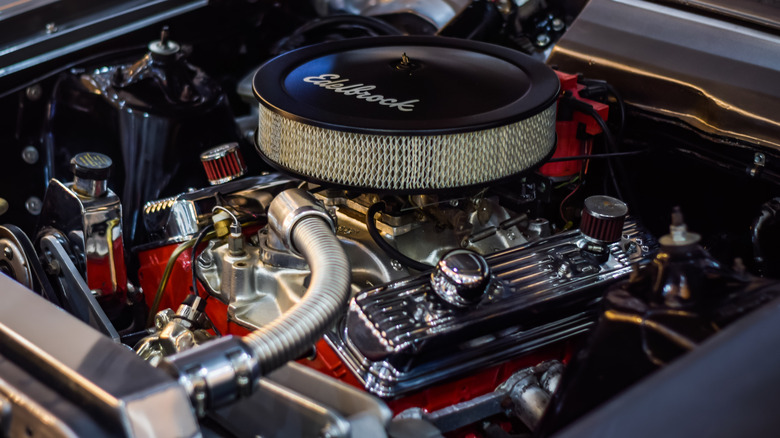
A key innovation in the ZZ632’s design is its CNC-machined aluminum cylinder heads, featuring a symmetrical port design dubbed RS-X Symmetrical Port. This meticulous engineering ensures that every intake and exhaust port is precisely uniform in size and shape, a departure from the historical variations often found in traditional big-block Chevy designs. Chevrolet attributes this advanced porting technology to Ron Sperry, a seasoned engineer with over five decades of experience in GM powertrain development. To validate this design, Chevrolet subjected a single ZZ632 engine to the equivalent of over 200 simulated drag strip runs on a dynamometer before its production release.
While the ZZ632 is sold as a crate engine and thus lacks official factory quarter-mile or 0-60 mph figures, its potential has been explored through simulations. The trade publication OnAllCylinders modeled the engine’s performance in drag strip simulation software, placing it within a theoretical 1966 Chevrolet Chevelle. Their projections for the quickest simulated configuration, a 3,425-pound build equipped with 13-inch slick tires, indicated an estimated quarter-mile time of 8.98 seconds at 151.3 mph. This simulation highlights the ZZ632’s exceptional capability, demonstrating that even without forced induction, sheer displacement combined with advanced engineering can deliver performance on par with or exceeding many contemporary turbocharged powerplants. The ZZ632 stands as a testament to the enduring efficacy of large-displacement, naturally aspirated pushrod V8s for extreme performance applications.
The Corvette ZR1’s Supercharged LT5: A Front-Engine Farewell to Power
Though the C7 generation of the Chevrolet Corvette ZR1 has concluded its production run, its supercharged LT5 pushrod V8 remains a benchmark for performance in Chevrolet’s celebrated sports car lineage. This 6.2-liter V8 engine earned an SAE-certified output of 755 horsepower and 715 pound-feet of torque, figures that were officially validated by GM and not merely marketing claims. The LT5’s substantial power is generated in part by its oversized supercharger, a 2.6-liter unit that significantly dwarfs the 1.7-liter Eaton supercharger found in the Z06’s LT4 engine—a difference of 52 percent by volume. This larger supercharger spins its rotors to nearly 15,900 rpm, generating up to 13.96 psi of boost. While the supercharger itself consumes up to 110 horsepower at peak operation, its parasitic drag is remarkably low during steady-state cruising, drawing only about 1 horsepower at an 80-mph speed with virtually no boost applied.
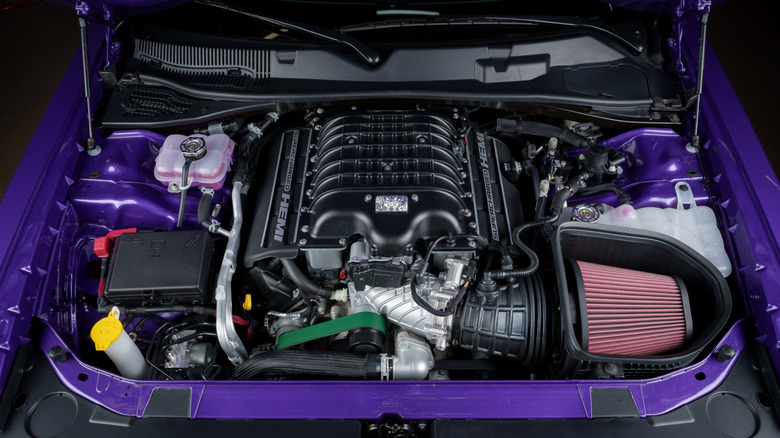
Fueling this potent V8 is an advanced direct- and port-injection system, ensuring optimal fuel delivery under all operating conditions. Chevrolet’s factory-stated performance figures for the ZR1 included a 0-to-60 mph time of 2.9 seconds and a quarter-mile pass of 10.6 seconds at 134 mph. Independent testing by MotorTrend, however, yielded slightly different results on their own scales, recording a 3.0-second 0-to-60 mph time and a 10.8-second quarter-mile pass at 133.1 mph. The magazine attributed this minor discrepancy to the use of 91-octane fuel instead of the recommended 93-octane. At its electronically limited top speed of 212 mph, the ZR1 benefits from extensive aerodynamic enhancements that generate approximately 950 pounds of downforce, representing a 60% increase over the Z06/Z07 models. The LT5 represents the most powerful pushrod V8 ever offered in a front-engined Corvette, marking a significant chapter in the car’s performance evolution before the adoption of the flat-plane crank V8 in the subsequent LT6 and LT7 engines.
The Supercharged 6.2L Hellcat HEMI V8: A Force of Nature in Multiple Forms
The lineage of the Dodge Challenger SRT Demon 170’s supercharged HEMI V8 can be traced back to the formidable 6.2-liter Hellcat engine. While the Demon 170 represents a significant evolution, sharing only its camshaft with earlier Hellcat iterations according to Motor1 reports, the fundamental architecture of this pushrod V8 continues to power high-performance Mopar vehicles. The Ram 1500 TRX pickup truck, for instance, utilizes a standard-tune Hellcat engine, eschewing the Demon’s bespoke supercharger and reinforced internals. This configuration delivers 702 horsepower and 650 pound-feet of torque to the TRX, enabling a quarter-mile time of 12.9 seconds at a 108-mph trap speed, with a 0-to-60 mph sprint of approximately four seconds. Due to its off-road oriented tires, the TRX’s top speed is electronically capped at 118 mph.
However, when this potent Hellcat architecture is transplanted into a lighter, rear-wheel-drive coupe, its performance potential is dramatically amplified. A closer examination of the Dodge Hellcat Redeye reveals an output of 797 horsepower. Dodge’s own figures indicate a 0-to-60 mph acceleration time of 3.6 seconds. The range-topping Super Stock trim further pushes these boundaries, with Dodge claiming a 0-to-60 mph time of just 3.25 seconds. On the drag strip, Dodge reported quarter-mile times of 10.8 seconds for the widebody Redeye and 11.1 seconds for the standard Hellcat model, with both versions achieving a claimed top speed of 203 mph. These figures underscore the extraordinary power and versatility of the supercharged 6.2-liter Hellcat HEMI V8, a pushrod engine that continues to define extreme performance in the automotive world.
The Escalade-V’s Supercharged LT4: SUV Dominance Redefined
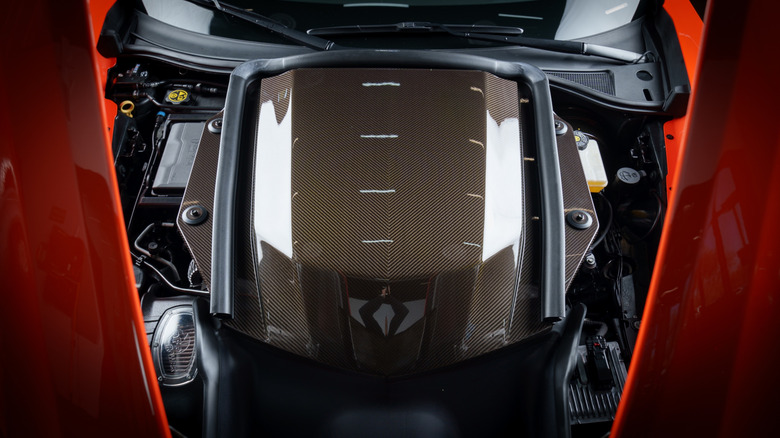
As previously noted with the LT5, its foundation lies in the LT4 engine, essentially the same architecture but equipped with a significantly larger Eaton supercharger to achieve its 755-horsepower output. However, the LT4 engine in its standard configuration remains a formidable powerplant, capable of delivering impressive performance even when housed within a three-row SUV designed to accommodate seven passengers. Cadillac’s decision to reintroduce a supercharged V8 to its lineup, a move not seen since the discontinuation of the CTS-V, was cemented with the Escalade-V.
The Escalade-V’s supercharged 6.2-liter LT4 engine produces a robust 682 horsepower at 6,000 rpm and 653 pound-feet of torque at 4,400 rpm. This engine utilizes the same cam-in-block pushrod architecture that powered earlier iterations of the CTS-V and the previous-generation Corvette Z06. Cadillac’s official performance estimates for the Escalade-V include a 0-to-60 mph time of 4.4 seconds and a quarter-mile pass of 12.74 seconds. Independent testing conducted by Car and Driver yielded slightly quicker results, with a 4.3-second 0-to-60 mph time and a 12.7-second quarter-mile pass at 111 mph. While these numbers may not sound as extreme as some other engines on this list, they are exceptionally impressive considering the Escalade-V’s substantial curb weight, exceeding 6,200 pounds when fully loaded. Cadillac electronically limits the Escalade-V’s top speed to 125 mph. To provide context, BMW’s competitor in the full-size performance SUV segment, the X5 M Competition, utilizes a twin-turbocharged 4.4-liter V8 producing 617 horsepower and 553 pound-feet of torque—falling short by 65 horsepower and 100 pound-feet of torque compared to the supercharged Cadillac. The Escalade-V demonstrates that pushrod V8 technology, when applied with sufficient engineering and the right vehicle application, can deliver exhilarating performance in unexpected packages.
The Method Behind the Muscle: A Curated Selection of Enduring Power
The compilation of this list is not intended to be exhaustive, but rather to highlight specific examples of pushrod engines that, in their factory-produced form, represent the apex of performance for their design philosophy. It acknowledges that many of these engines have even more potent siblings or can be further enhanced by aftermarket tuners. For instance, specialists like Hennessey and Lingenfelter have pushed LT4 and Hellcat blocks to outputs well exceeding 1,000 horsepower. Similarly, aftermarket 632-cubic-inch big-block engines can be custom-built to surpass the ZZ632’s rated output with the addition of nitrous oxide or turbocharging. Even the Demon 170 has seen owners opt for larger superchargers than those fitted from the factory.
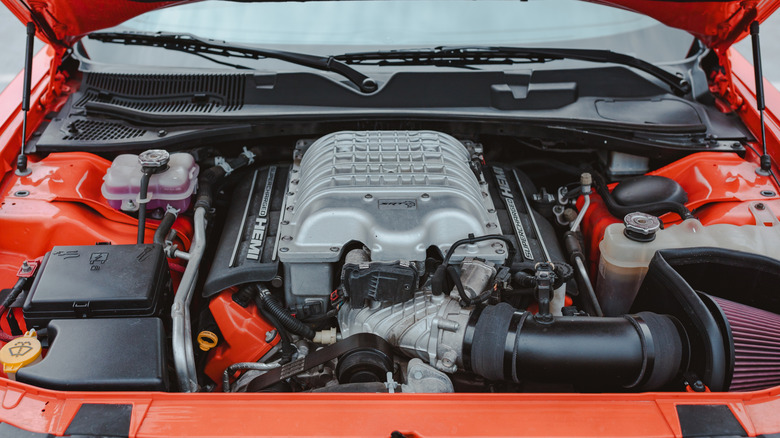
However, these enhancements do not diminish the core point of this selection. In their as-sold, production-ready configurations, these five engines stand at or near the zenith of what a pushrod engine has ever achieved. In numerous head-to-head comparisons, they continue to outperform many of their modern, sophisticated turbocharged counterparts. The performance figures cited throughout this article are rigorously sourced from official manufacturer press releases and product documentation from Chevrolet, Dodge, Cadillac, and Stellantis. For acceleration and quarter-mile data, the article prioritizes independent, instrumented testing from reputable automotive publications such as MotorTrend, Car and Driver, and Motor Authority, rather than relying solely on manufacturer claims. Technical and engineering insights have been drawn from specialized trade outlets including Motor1, AutoEvolution, Forbes, MotorAuthority, GM Authority, CAR Magazine, and OnAllCylinders. In instances where real-world testing data was unavailable, such as with the ZZ632, this limitation is clearly stated to maintain factual accuracy. This commitment to verifiable data ensures that the performance claims are grounded in objective reality, reinforcing the enduring power and relevance of these exceptional pushrod engines in the current automotive landscape.