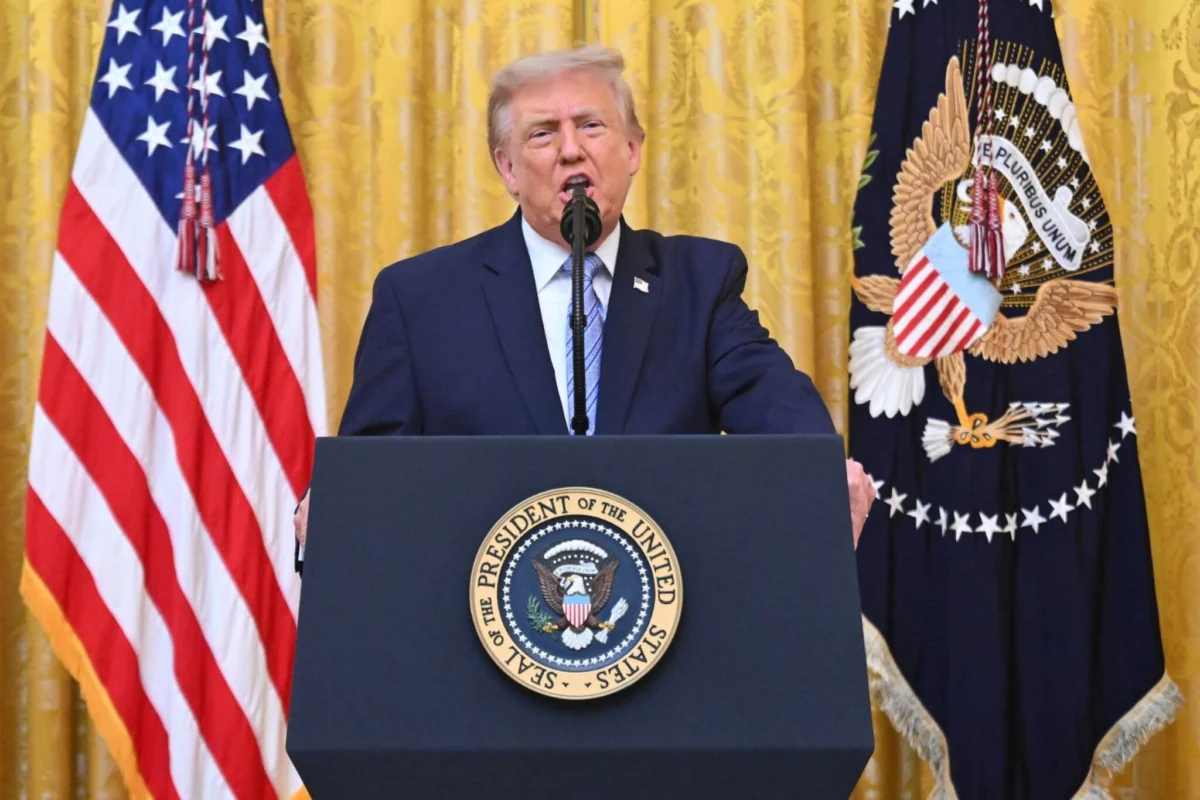
President Donald Trump delivered a contentious 22-minute address to the nation on Thursday night, using the White House platform to cast significant doubt on the legitimacy of the 2020 presidential election results and to propagate a series of unsubstantiated accusations regarding the safety and security of electoral processes within the United States. The speech, characterized by many as "rambling," sparked immediate controversy and reignited the perennial debate surrounding the media’s responsibility in covering statements that are widely disputed or demonstrably false.
The Substance of the President’s Claims
During his prime-time broadcast, President Trump reiterated long-standing, unproven allegations of widespread fraud in the 2020 election, an election he lost to challenger Joe Biden. He asserted that the election was "rigged" and "stolen," drawing selectively from documents his aides had purportedly published online. These documents, though heavily redacted, were noted by journalists to be far more guarded in their conclusions than the President’s pronouncements suggested. Among the more striking accusations was a claim that the Chinese government had actively attempted to influence the 2020 election, an argument that has consistently lacked credible evidence.
The President’s focus on the 2020 election stands in stark contrast to his acceptance of the 2016 and 2024 election outcomes, both of which he won. This selective questioning of electoral integrity has consistently drawn scrutiny, particularly given the timing of Thursday’s address—less than four months before a critical midterm election cycle that, by many political analyses, appeared challenging for Republicans. This strategic timing suggested to many observers a deliberate effort to rally his base and influence public perception ahead of the upcoming polls.
A History of Skepticism: Media Pre-Empts the Speech
The highly anticipated address was preceded by a wave of skepticism from media commentators and analysts, many of whom highlighted President Trump’s established pattern of making unsubstantiated claims regarding election processes. Questions abounded in the days leading up to the speech about its factual basis and the potential for it to disseminate misinformation.
Veteran CNN anchor John King articulated this apprehension on air, stating, "Sadly, we have no choice but to be skeptical when this president talks about elections because what he says, at least what he has said in the past, is often just not true." Similarly, MSNBC’s Chris Hayes remarked, "It has become abundantly clear that Donald Trump would rather cheat than win. His primetime speech tonight is another example of that." These sentiments underscored a broader concern within the journalistic community about the ethical obligations involved in broadcasting a live address from the nation’s highest office when there was a strong pre-existing indication that it would contain falsehoods.
This discourse led to extensive internal deliberations among television networks regarding whether to air the speech live, and if so, how to do so responsibly without inadvertently amplifying misinformation. The core dilemma revolved around balancing the public’s right to hear directly from the President with the journalistic imperative to provide accurate, fact-checked information.
Network Responses: A Spectrum of Approaches
The major broadcast and cable news networks adopted a variety of strategies for covering President Trump’s address, reflecting the complex ethical landscape.
-
NBC and ABC: A Shift to Streaming
NBC and ABC, two of the nation’s leading broadcast networks, announced earlier on Thursday that they would not carry the President’s address live on their main terrestrial channels. Instead, they opted to air the speech on their respective streaming news platforms: NBC News NOW and ABC News Live. This decision represented a significant shift, prioritizing the ability to provide context and fact-checking over immediate live broadcast to their widest audiences. Following the speech, both networks did break into regular programming to offer recaps and panel discussions, with ABC specifically stating it would only do so if "news warranted." Ultimately, both networks provided post-speech analysis, acknowledging the newsworthiness of the event while controlling the immediate dissemination of potentially unverified claims. -
CBS: Straddling the Line
All media eyes were particularly focused on CBS, given its corporate ownership by Paramount, led by Trump ally David Ellison. Ellison was, at the time, in the midst of a controversial acquisition of Warner Bros. Discovery, a merger that would require approval from the Trump administration. This perceived conflict of interest added another layer of scrutiny to CBS’s decision-making process.CBS News attempted a nuanced approach. It broke into regular programming with a special report hosted by "CBS Evening News" anchor Tony Dokoupil. Initially, the network did not air the speech in real-time. Dokoupil opened the segment by acknowledging the expected content of the speech, stating, "And honestly, much of what this president has said on this topic has been false." He then addressed the ethical quandary directly: "There’s an argument that it is irresponsible to air the president’s speech tonight. But this speech will be made, it will be news and it’s our job to cover the news."
Eventually, CBS did go live to President Trump for several minutes. However, as the President’s remarks became more rambling and replete with unsubstantiated claims, the network cut away from the live feed, returning to Dokoupil and a panel discussion. CBS also actively engaged in fact-checking during its coverage and, notably, allowed John Solomon, an advisor to the Trump administration, to present the President’s case on air, attempting to offer a semblance of balance. By 10 p.m. Eastern, an hour after Trump began his speech, the major broadcast networks had returned to their scheduled programming.
-
Cable News: A Divided Landscape
The cable news networks exhibited a more varied response, largely consistent with their established editorial leanings.- Fox News: As anticipated, Fox News, traditionally supportive of President Trump and the Republican Party, aired the speech in its entirety. However, even within this network, there were subtle shifts. Sean Hannity’s show, preempted for the speech, dedicated surprisingly little time to its content afterward, quickly pivoting to other news topics such as the war in Iran, wildfires, and floods. Furthermore, Fox News White House correspondent Aishah Hasnie, while reporting on Trump’s claims about electronic voting machines, acknowledged that the network had "not seen evidence of that and were not in the position to evaluate the accuracy of Trump’s claims." This brief but significant caveat marked a departure from outright endorsement.
- CNN: CNN opted not to air the speech live. Instead, its anchors and panel monitored the address and reported on its contents after it concluded, allowing for immediate contextualization and fact-checking without providing an unfiltered platform for disputed claims.
- MSNBC: MSNBC began airing the speech live but pulled out after approximately 15 minutes. Anchor Jen Psaki immediately commenced fact-checking President Trump’s statements, joined by panelists who systematically identified and poked holes in his claims. This aggressive approach underscored MSNBC’s commitment to challenging potentially misleading narratives in real-time.
The collective response from the networks highlighted the ongoing struggle for journalistic institutions to navigate the complexities of covering a political figure who frequently challenges established facts. While there is no universally agreed-upon "easy answer," many responsible networks ultimately prioritized contextualization, fact-checking, and avoiding the uncritical amplification of potentially misleading or false statements.
President Trump’s Retribution: A Call for License Revocation
Predictably, President Trump swiftly criticized NBC and ABC for their decision not to carry his address live on their main networks. He went as far as to suggest that their broadcast licenses should be revoked, asserting, "They and others in the media are part of a plot. They want to continue this fraud for whatever reason. They want to keep it going. They want to protect the radical left. They can’t have a great country. And that’s true. You can’t have a great country without free and fair elections."
This demand for license revocation echoed his past criticisms of media organizations and raised significant constitutional concerns regarding freedom of the press. In the United States, broadcast licenses are granted by the Federal Communications Commission (FCC) and are typically renewed based on a station’s adherence to public interest standards, not on the political content of their programming or their perceived alignment with a presidential administration. Such calls are widely seen as attempts to intimidate the press and undermine its role as a watchdog, a cornerstone of democratic governance.
The Teleprompter Scandal: Insider Trading in the White House
Adding another layer of intrigue and controversy to the day’s events was the revelation of an alleged insider trading scheme involving a White House employee. Gabriel Perez, who runs the teleprompter for the White House and has worked there since 2016, is under investigation for allegedly using privileged information to place bets on the content of President Trump’s speeches, including the State of the Union address.
It is believed that Perez may have won approximately $100,000 by leveraging his access to advance speech texts, placing bets on which specific words or phrases President Trump would use. These trades were reportedly made on Kalshi, a prediction markets platform where users can wager on the outcomes of real-world events.
ABC News reported that Kalshi, the platform facilitating these bets, alerted its regulator, the Commodity Futures Trading Commission (CFTC), to "suspicious activity" on its "Mentions" market. Bobby DeNault, Kalshi’s head of enforcement, confirmed the referral, stating, "Our surveillance team promptly flagged and referred these trades to the CFTC, and we are cooperating and assisting regulators."
NPR’s Bobby Allyn noted that while prediction markets—allowing people to bet on elections, global policy, or even trivial matters like a president’s tie color—have seen explosive growth and some instances of high-profile insider trading, this marks the first time someone inside the White House has been investigated for allegedly abusing such access for personal gain in these markets. Reports indicated that Kalshi traders had already wagered nearly $1 million on whether President Trump would use specific words like "Hormuz," "rigged election," or "fake news" in his national address on Thursday night.
Allyn detailed that Kalshi’s surveillance systems detected unusual betting patterns in "mention" markets involving the President, which did not align with typical behavior. Upon examining the accounts, investigators discovered the individual was a federal employee, prompting the referral to the CFTC.
White House press secretary Karoline Leavitt addressed reporters on Thursday morning, confirming that President Trump was aware of the teleprompter investigation. She stated that the President "believes it’s deeply unfortunate and frankly a disgrace." This incident raised serious questions about ethical conduct within the executive branch, the integrity of White House operations, and the nascent but rapidly expanding prediction market industry. It also underscored the need for robust regulatory oversight as new forms of financial speculation emerge, especially when they intersect with government functions.
Other Notable Developments on a Busy News Day
-
Karoline Leavitt’s Return: Thursday also marked White House press secretary Karoline Leavitt’s first full press briefing in nearly two months. She had been on maternity leave since late April, having given birth to her second child, a daughter, on May 1. Her return was signaled by her opening remark, "Let’s get back to work," indicating a resumption of full press operations.
-
A Frightening Scene at "Today": A security breach at NBC’s "Today" show studio in Rockefeller Plaza on Thursday morning created a frightening moment. Around 9 a.m., an individual managed to bypass security and enter the studio, confronting "Today" co-host Craig Melvin, who is Black. The man reportedly yelled racial slurs at Melvin and allegedly lunged at him after initially asking for co-host Al Roker.
NBC News issued a statement confirming the "security incident," noting that an individual "entered an unauthorized area in a vestibule near Studio 1A. The person approached anchor Craig Melvin, who alerted security. The individual was detained and taken into custody by law enforcement without further incident. There was no altercation, and no one was injured." The network emphasized its commitment to the safety and security of its employees and guests, stating it was reviewing the incident and its security protocols. This event highlighted the persistent challenges of ensuring security for public figures and media personalities in high-profile locations.
Implications for Journalism and Public Discourse
Thursday’s events, from President Trump’s election integrity address to the varied media responses and the teleprompter scandal, collectively underscored critical challenges facing contemporary journalism and the broader public sphere. The media’s struggle to cover a president who frequently traffics in unverified claims highlights the ongoing tension between providing direct access to a head of state and fulfilling the journalistic duty to inform accurately. The differing approaches taken by networks illustrate the lack of a universal consensus on how to navigate this complex terrain, but the trend towards immediate fact-checking and contextualization rather than unfiltered amplification signals a growing commitment to journalistic responsibility.
The teleprompter scandal, meanwhile, brought to light a new dimension of ethical vulnerability within government operations and the rapidly evolving landscape of prediction markets. It raised concerns not only about potential insider trading but also about the integrity and perceived neutrality of White House staff. As political discourse becomes increasingly fragmented and information flows through diverse, often unregulated, channels, the incidents of Thursday serve as a potent reminder of the vigilance required from both journalistic institutions and regulatory bodies to uphold truth, transparency, and ethical conduct.