
The landscape of digital publishing and email newsletter administration has undergone a profound structural shift over the past several years, driven largely by the emergence of specialized Email Service Providers (ESPs). Rather than forcing a binary choice between dominant platforms, veteran digital publishers and niche site creators are increasingly adopting a dual-platform strategy. By deploying both Beehiiv and ConvertKit concurrently, publishers can leverage the distinct technical architectures of each system to match specific monetization models, audience sizes, and content delivery requirements.

Evolution of Email Service Providers and Market Positioning
For over a decade, traditional email marketing platforms such as Mailchimp, AWeber, and GetResponse dominated the digital publishing sector. These legacy systems were engineered primarily for standard e-commerce enterprises and generalized corporate communications. However, the explosive growth of independent creators, media startups, and curated newsletters created a market demand for tools specifically optimized for audience acquisition, content curation, and native monetization.
ConvertKit entered this space years ago by targeting professional bloggers, course creators, and digital entrepreneurs. Its architecture was built around advanced tagging, behavioral segmentation, and automated visual funnels. This made it indispensable for creators selling high-ticket digital products, coaching services, or specialized online courses where individual subscriber value is exceptionally high.

Conversely, Beehiiv arrived more recently as a purpose-built publishing platform designed by former Morning Brew executives. Recognizing the operational needs of high-volume media operations, Beehiiv prioritized rapid audience scaling, flat-rate pricing tiers for massive subscriber lists, and sophisticated built-in growth mechanisms such as recommendation networks and referral programs. Consequently, the two platforms have evolved to serve fundamentally different segments of the digital publishing economy.
Cost Analysis and Scaling Economics
A critical factor in determining which platform to utilize—or whether to adopt both—is the economic model governing subscriber volume versus monthly overhead.

For high-volume publications with lower revenue per individual subscriber, traditional ESP pricing structures can quickly become economically unviable. For example, managing an audience of nearly 50,000 subscribers on Beehiiv typically incurs a predictable, flat-rate expense of approximately $99 per month, with scalability allowances reaching up to 100,000 subscribers under specific tier models.
In contrast, platforms engineered for complex automation, such as ConvertKit, scale their pricing aggressively based on active subscriber counts. Managing an audience of under 20,000 subscribers on ConvertKit can easily surpass $279 per month. For general lifestyle publications, hobby blogs, or traffic-referral newsletters where monetization relies primarily on display advertising or general site traffic rather than high-ticket sales, absorbing higher ESP overhead diminishes profit margins unnecessarily.

Comparative Analysis of Writing Editors and Content Curation
The day-to-day operational experience of creating and dispatching broadcasts depends heavily on the underlying writing editor of the ESP.
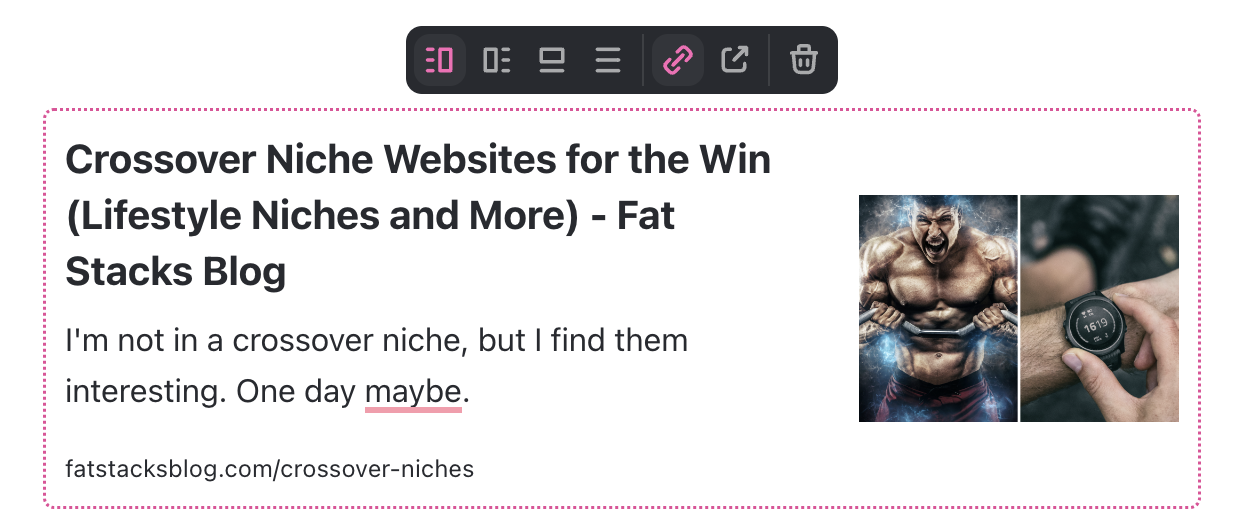
Beehiiv offers a modern, block-based editor designed explicitly for content-heavy newsletters and media curation. One of its standout architectural features is a native URL embed capability. When a publisher inputs a target web address, the editor automatically extracts and populates the article title, metadata description, and featured image into a clean, customizable visual card. This functionality drastically reduces production time for curated digests or multi-article roundups.

ConvertKit’s editor, while functionally adequate for plain-text, narrative-driven emails, historically lacks certain modern conveniences. A frequent operational critique among daily users is the absence of a reliable "undo" command within the editing interface. Accidental deletions of extensive paragraph blocks can occasionally prove permanent within specific workspace parameters, introducing friction into the publishing workflow.
Third-Party Integrations and Advanced Automations
While Beehiiv excels in content presentation and rapid scaling, ConvertKit maintains a distinct structural advantage in workflow automation, behavioral segmentation, and third-party software integrations.
ConvertKit was engineered from its inception to function as the central hub of a creator’s tech stack. It offers native integrations with virtually every prominent e-commerce platform, courseware provider (such as Teachable), and webinar tool on the market. This native connectivity allows publishers to establish complex, multi-step automated sequences, behavioral triggers, and granular tagging protocols without relying on external middleware.
By comparison, Beehiiv relies more heavily on third-party integration platforms like Zapier or Integrately for extensive software synchronization. While functional, middleware solutions introduce recurring subscription costs and potential points of technical failure where automated data pipelines can break unexpectedly. For businesses that depend on precise customer tagging—such as immediately isolating and segmenting verified purchasers of a digital course—ConvertKit’s robust automation engine remains the superior technical choice.

Built-In Monetization and Growth Infrastructure
Monetization capabilities within modern ESPs have expanded beyond traditional affiliate marketing and direct sponsorships to include native ad networks and referral ecosystems.
Beehiiv provides integrated monetization frameworks, including a partner program that connects newsletter operators with third-party sponsors willing to pay on a per-click basis for top-of-email ad placements. Additionally, Beehiiv incorporates native growth tools such as "Boosts" (paid subscriber acquisition), internal recommendation networks, and "Magic Links," which automatically subscribe existing readers to secondary publications within a publisher’s network.

ConvertKit approaches growth and monetization through alternative channels, such as its Creator Network, which facilitates mutual subscriber recommendations among creators within business and professional niches. For advanced publisher-to-publisher referral tracking, ConvertKit often integrates with specialized external networks like Sparkloop. While Sparkloop provides powerful scaling metrics, utilizing it introduces an additional monthly software expenditure.
Strategic Implications for Modern Publishers
The decision to deploy Beehiiv, ConvertKit, or a combination of both rests entirely on the publisher’s economic model and niche categorization.
- High-Value Niches: Businesses operating in high-intent sectors—such as finance, B2B software, professional development, and specialized health—generate substantial revenue per subscriber. For these operations, ConvertKit’s advanced segmentation, reliable integrations, and sophisticated funnel automation justify the higher operational costs.
- High-Volume/Lifestyle Niches: Publishers operating broad consumer, hobby, or lifestyle publications rely on sheer audience volume and traffic generation. For these use cases, Beehiiv offers a cost-effective infrastructure, superior content design tools, and native growth mechanisms that protect profit margins while accelerating subscriber acquisition.
Ultimately, digital publishers are not bound by platform exclusivity. As software ecosystems mature, adopting a multi-platform strategy allows creators to deploy the right tool for the right audience, optimizing both operational efficiency and revenue potential across diverse digital portfolios.