
The rapid ascent of pickleball from a niche backyard pastime to a global sporting phenomenon offers a compelling blueprint for digital content creators. Combining elements of tennis, badminton, and table tennis, pickleball has evolved into the fastest-growing sport in the United States, according to the Sports & Fitness Industry Association (SFIA). With participation numbers surging by over 200% over the past three years, the sport’s meteoric rise provides a relevant case study for bloggers aiming to scale their platforms, cultivate community, and maintain long-term audience engagement.
Historical Context and Evolution
Pickleball originated in 1965 on Bainbridge Island, Washington. Founders Joel Pritchard, Bill Bell, and Barney McCallum developed the game as a solution to summer boredom, utilizing makeshift equipment and a modified badminton court. For decades, it remained a localized activity, primarily popular among retirees and recreational enthusiasts.
The pivot toward mass-market adoption began in the early 2020s, accelerated by the COVID-19 pandemic. As outdoor activities gained preference, the low barrier to entry—minimal equipment requirements and a court size that facilitates social interaction—allowed the sport to capture a diverse demographic. For content creators, this trajectory mirrors the growth of a successful digital publication: a project starting with minimal resources that, through consistent refinement and accessibility, achieves widespread recognition.
Data-Driven Growth and Strategic Parallels
Recent data from the Association of Pickleball Professionals (APP) indicates that there are now over 36 million active players in the U.S. alone. This expansion has been fueled by the sport’s inherent design: it is easier to learn than tennis but offers enough strategic depth to remain competitive.

Bloggers can draw a direct correlation between this accessibility and user retention. Much like a "dink"—the soft, precision-based shot used to control the tempo of a pickleball match—content creators must prioritize clarity and simplicity. Analysis of high-performing blogs reveals that the most successful sites often distill complex industry jargon into digestible, actionable content. By reducing the "cognitive load" on the reader, creators effectively mirror the low-entry barrier that made pickleball a household name.
Chronology of Digital Transformation
The digital landscape has undergone a shift similar to the professionalization of pickleball. The timeline of this transformation is marked by:
- The Infrastructure Phase (2010–2015): The rise of user-friendly content management systems, akin to the standardization of pickleball court dimensions.
- The Social Integration Phase (2016–2020): The transition from static content to interactive, community-driven platforms, mirroring the rise of local pickleball leagues and social clubs.
- The Competitive Monetization Phase (2021–Present): The emergence of professional leagues and high-level sponsorship, paralleling the current era of professional blogging and affiliate marketing ecosystems.
Community Engagement and the "Rally" Concept
In sports science, the length of a rally is often cited as a metric of both player skill and spectator interest. Similarly, in the digital publishing sector, "Time on Page" and "Bounce Rate" serve as key performance indicators (KPIs) for reader engagement.
Experts in digital community management suggest that, much like a pickleball rally, a blog’s vitality depends on the back-and-forth exchange between the publisher and the audience. This includes active moderation of comments, the hosting of live Q&A sessions, and the utilization of social media to extend the dialogue beyond the primary post. By fostering a sense of ownership among readers, creators convert passive observers into a loyal, recurring community.
Strategic Positioning and the "Kitchen" Analogy
In pickleball, the "kitchen" (the non-volley zone) is a restricted area that dictates strategy. Players must manage their positioning to avoid fouls while maximizing offensive potential. In the context of blogging, this translates to "strategic positioning."
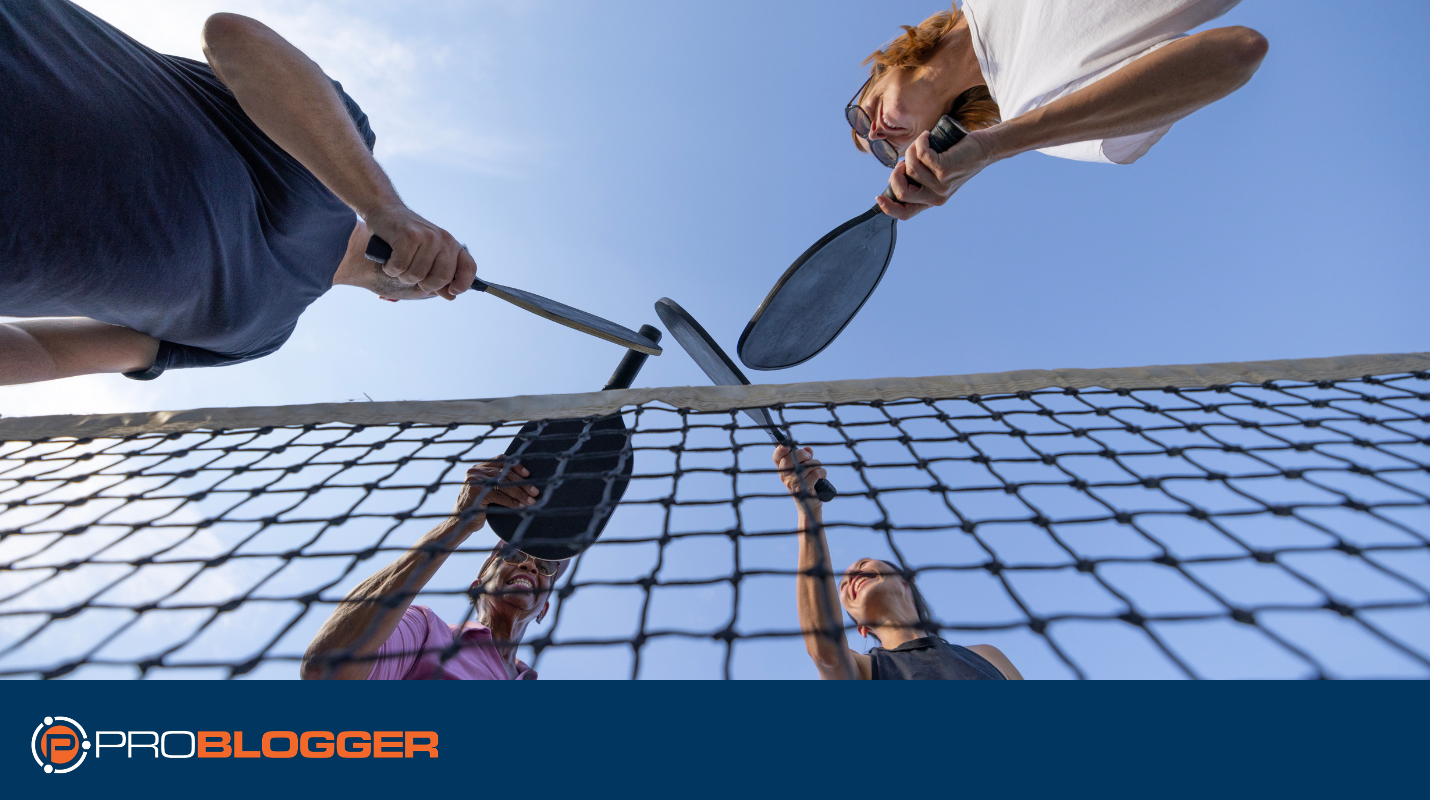
Market analysts emphasize that successful bloggers identify their specific niche—their "sweet spot"—where they can engage their audience without overstepping into irrelevant territory or compromising their brand voice. A failure to identify this zone leads to content that is either too sales-heavy, which alienates readers, or too distant, which fails to provide value. Maintaining this balance is essential for sustaining long-term growth in an increasingly crowded marketplace.
Resilience and the "Whiff" Mentality
Data on content performance consistently shows that not every publication achieves viral status. In professional sports, the "whiff"—a failed shot—is treated as a diagnostic tool. Coaches analyze the mechanics of the miss to prevent future errors.
The blogging industry requires a similar resilience. Quantitative analysis of content audits shows that top-performing blogs often iterate based on failed posts rather than exclusively focusing on successes. By treating underperforming content as data points rather than personal failures, bloggers can refine their SEO strategies, headline structures, and timing to ensure higher engagement on subsequent attempts.
Adaptability in a Fluctuating Market
The sports industry has seen professional pickleball organizations rapidly adapt to changing broadcast standards and fan preferences. Similarly, the digital landscape is in a constant state of flux. Algorithmic changes by search engines and the rise of short-form video platforms require bloggers to remain agile.
A formal analysis of digital trends suggests that those who rely on a single channel for traffic are increasingly vulnerable. The most successful content strategies today incorporate a "multi-court" approach, where creators repurpose long-form articles into social media snippets, newsletters, and podcasts. This adaptability ensures that the core message reaches the audience regardless of the changing digital environment.

The Importance of the "Serve"
The serve is the foundational moment of any pickleball point, setting the tone for the ensuing action. In content strategy, the introduction—or the "hook"—functions as the serve. Statistical analysis of reader behavior reveals that the first 50 words of an article dictate whether a reader stays or navigates away. A strong, clear, and value-driven introduction is the primary determinant of a reader’s decision to commit to the remainder of the piece.
Professional Implications and Future Outlook
As pickleball continues its integration into the mainstream, its growth underscores a shift toward accessibility, community, and continuous, incremental improvement. For the blogging industry, these pillars remain the gold standard for sustainability.
The implication for digital publishers is clear: the era of "set it and forget it" content is ending. Future growth in the blogging sector will likely be driven by creators who treat their platforms as dynamic, interactive ecosystems. By applying the principles of strategic positioning, audience engagement, and rapid adaptation, content creators can achieve the same level of ubiquity and longevity that pickleball has realized in the physical sporting world.
Ultimately, the crossover between the court and the keyboard is not merely metaphorical. It is a pragmatic approach to navigating a digital economy that rewards those who are fast on their feet, attentive to their audience, and committed to the process of constant refinement. As the digital ecosystem matures, those who emulate the strategic discipline found in professional sports will be best positioned to thrive.