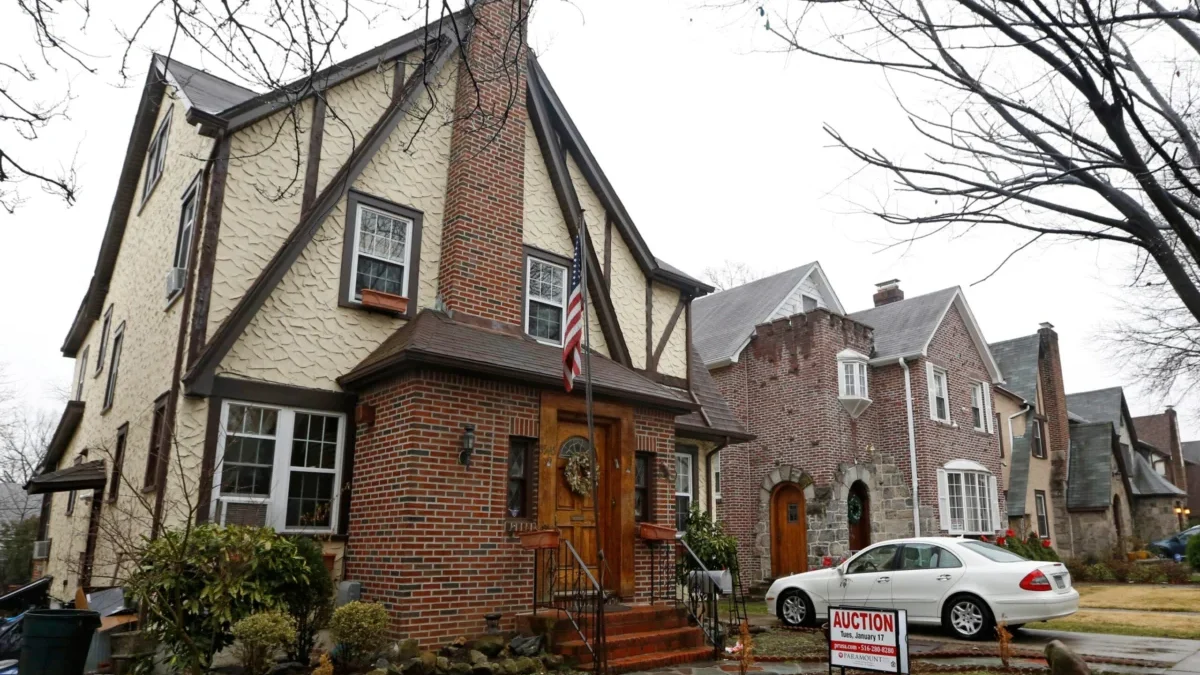
The Tudor-style residence in the affluent Jamaica Estates neighborhood of Queens, New York, where Donald Trump spent the first four years of his life, has officially changed hands for $1.93 million. The sale marks the latest chapter in the tumultuous history of the property, which has transitioned from a neglected, mold-ridden structure into a modern, high-end family home. The transaction, which concluded this past Friday, reflects both the shifting real estate market in New York City and the persistent allure of properties associated with high-profile political figures.
The home, originally constructed in 1940 by the future president’s father, developer Fred Trump, served as the foundational residence for the Trump family. While the family moved on from the property decades ago, the house has remained a point of interest for historians, real estate investors, and political observers alike.
A Transformation from Decay to Luxury
The recent sale follows an intensive eight-month restoration project spearheaded by developer Tommy Lin. Lin acquired the property last year for $835,000, at a time when the home had fallen into a state of severe disrepair. Reports indicated that the house had sat vacant for years, suffering from significant water damage caused by a burst pipe, which subsequently fostered a mold infestation and allowed a colony of feral cats to take up residence in the structure.
Recognizing the potential inherent in the property’s architectural history and its location within the prestigious Jamaica Estates enclave, Lin invested an additional $500,000 into a comprehensive interior overhaul. The renovation was designed to modernize the five-bedroom, three-bathroom residence while maintaining its original Tudor charm. Key upgrades included the installation of a professional-grade chef’s kitchen, the restoration of traditional herringbone wood flooring, and the addition of spa-like bathrooms featuring modern fixtures. These improvements were essential in elevating the property’s market value, which had languished during its period of neglect.
Chronology of a High-Stakes Asset
The history of 85-15 Wareham Place is characterized by a series of dramatic price fluctuations and ownership changes that mirror the broader arc of Donald Trump’s public life.
- 1940: Fred Trump completes construction of the residence in Jamaica Estates. The Trump family occupies the home until 1944.
- 2017: Shortly after Donald Trump’s inauguration as the 45th President of the United States, the home sold for $2.14 million. The buyer, an entity identified as Trump Birth Home LLC, attempted to capitalize on the property’s historical significance.
- 2017–2018: The property was briefly listed on Airbnb. Marketing materials leaned heavily into the presidential connection, featuring life-sized cardboard cutouts of Donald Trump, copies of his memoir "The Art of the Deal," and a framed People magazine cover featuring the president.
- 2019: The home was returned to the market with an ambitious asking price of $2.9 million. Despite the high-profile nature of the listing, it failed to attract a buyer, ultimately languishing on the market for years.
- 2025: Tommy Lin purchases the property for $835,000, signaling a significant decline in value from the 2017 peak.
- 2026: Following a $500,000 renovation, the property enters contract in July and closes in September for $1.93 million.
Real Estate Analysis and Market Context
The sale price of $1.93 million provides a compelling case study in how "celebrity-associated" real estate performs over time. While historical significance can initially inflate a property’s value—as evidenced by the 2017 sale—that premium often dissipates if the physical asset is not maintained. The decline from the 2017 high of $2.14 million to the 2025 purchase price of $835,000 underscores the reality that structural integrity and modern amenities are the primary drivers of long-term property value in the New York City residential market.
Furthermore, the fluctuations in this home’s valuation reflect the broader economic shifts in the Queens housing market. Jamaica Estates has long been considered a premier neighborhood, but like many areas, it is subject to the cooling effects of high interest rates and the rising costs of construction and labor. The fact that a developer was willing to invest half a million dollars into renovations suggests a calculated bet that the luxury market remains robust for turnkey properties, regardless of political provenance.
The Influence of the Trump Aesthetic
The narrative surrounding the home is inextricably linked to the personal brand of Donald Trump. Throughout his career, Trump’s real estate developments, most notably Trump Tower in Manhattan, have been defined by a specific, opulent aesthetic characterized by gold-plated fixtures, marble finishes, and a penchant for grandiosity.
As president, observers have noted that this signature style has influenced his management of the White House. Reports indicate that the administration has overseen significant interior projects, including the addition of a massive ballroom and the selection of decor for the Oval Office that mirrors the aesthetic hallmarks found in his private portfolio. The irony of the childhood home’s transition—from a modest Tudor to a modern, high-end residence—highlights the contrast between the president’s humble beginnings and the high-luxury brand he has cultivated over the past five decades.
Broader Implications and Public Perception
The sale of the home has drawn attention from urban historians and political analysts who view the building as more than just a piece of real estate. For some, the home represents the "American Dream" narrative that was a central component of the Trump campaign. For others, the building’s periods of neglect and subsequent renovation serve as a metaphor for the polarized nature of the president’s legacy.
Local residents of Jamaica Estates have historically had a complicated relationship with the property. While the neighborhood takes pride in its history, the presence of Airbnb renters and the constant media spotlight created by the home’s sale status often caused friction within the quiet, residential community. The sale to a private owner—presumably for residential use—marks a return to normalcy for the street, as the property transitions from a public tourist curiosity back into a private family home.
Conclusion
The sale of Donald Trump’s childhood home for $1.93 million is a definitive conclusion to a period of instability for the historic Jamaica Estates residence. By shedding its status as a tourist rental and undergoing a significant structural and aesthetic overhaul, the property has been repositioned as a viable asset in the current real estate market.
While the home will always be tethered to the history of the 45th president, its future is now firmly rooted in the local residential market. As the new owners prepare to move into a property that has been both a site of private family life and a flashpoint for national political discourse, the house stands as a testament to the enduring, albeit fluctuating, power of iconic real estate in New York City. The successful sale at nearly $2 million demonstrates that while historical notoriety can fade, quality craftsmanship and smart renovation remain the most reliable avenues for securing value in the competitive landscape of the New York housing market.