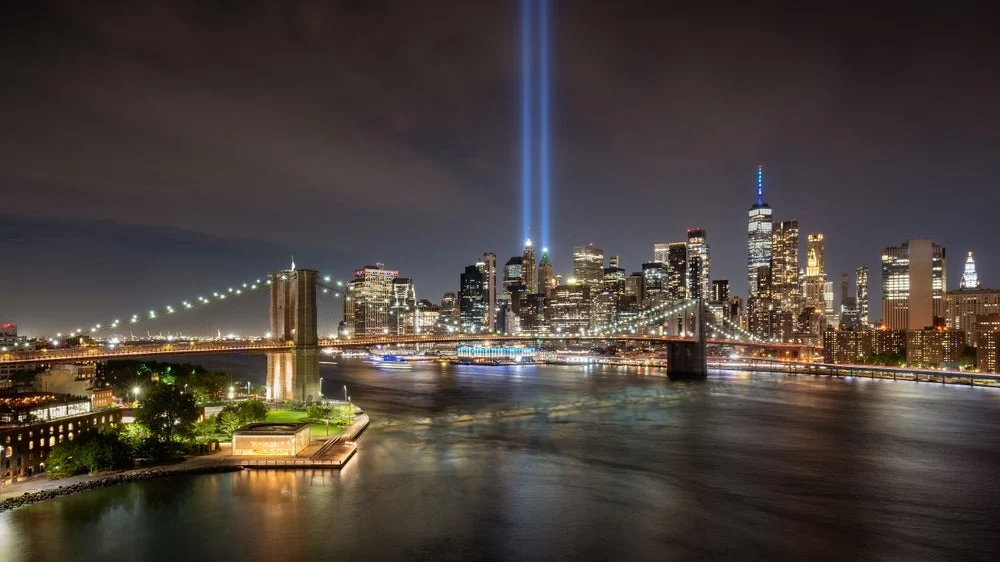
Twenty-five years after the morning of September 11, 2001, the world continues to feel the seismic aftershocks of a tragedy that permanently altered geopolitics, aviation, national security, and public discourse. While the historical record heavily documents the immediate rescue efforts, policy shifts, and geopolitical consequences, the distinct perspective of the public relations and communications community remains a vital lens through which to understand the disaster. Communicators, by the nature of their profession, are tasked with constructing clarity and imparting vital information when language fails. On that fateful Tuesday morning, thousands of public relations professionals, corporate communicators, internal relations managers, and media liaisons found themselves on the front lines of an unprecedented national emergency.
To mark the 25th anniversary of the attacks, PRNEWS gathered personal accounts from across the communications sector. These narratives trace a vivid picture of an industry forced to adapt in real time, shifting from routine corporate operations to life-saving crisis management, internal safety coordination, and the daunting responsibility of telling history as it unfolded.
Chronology of a Changing World: September 11, 2001
The events of that Tuesday unfolded with rapid, terrifying precision, catching a global audience and the institutional communication apparatus off guard.
At 8:46 a.m. EDT, American Airlines Flight 11, hijacked by terrorists, crashed into the North Tower of the World Trade Center in New York City. Initially, many observers, including journalists and corporate workers watching from nearby high-rises, suspected a tragic aviation accident.
Moments later, at 9:03 a.m. EDT, United Airlines Flight 175 struck the South Tower. Live television broadcasts beamed the horrific reality to millions, confirming beyond doubt that the United States was under coordinated attack.
At 9:37 a.m. EDT, American Airlines Flight 77 struck the western facade of the Pentagon in Arlington, Virginia, forcing federal authorities to immediately evacuate government offices in Washington, D.C., including the White House and the U.S. Capitol.
Amid the escalating chaos, passengers aboard United Airlines Flight 93 revolted against their hijackers, forcing the plane down in a rural field in Shanksville, Pennsylvania, at 10:03 a.m. EDT, preventing what is widely believed to have been an attack on the U.S. Capitol or the White House.
By 9:59 a.m. EDT, the South Tower of the World Trade Center collapsed, followed by the collapse of the North Tower at 10:28 a.m. EDT. The resulting devastation claimed the lives of 2,977 victims, excluding the 19 hijackers, making it the deadliest act of terrorism in world history.
As the physical towers fell, the information infrastructure of the United States experienced a parallel crisis. With telecommunication lines jammed, transportation networks locked down, and millions demanding answers, communicators faced an unprecedented professional test.
Crisis Communications in Action: From Routine Media Relations to Lifesaving Information
For professionals working in media relations, government affairs, and humanitarian response, the hours following the attacks demanded an immediate pivot. Neal Gorman, then working in media relations for the American Red Cross in Rochester, New York, recalls his pager and cell phone ringing continuously with inquiries from reporters, family, and worried citizens. Gorman conducted hours of uninterrupted interviews outside Red Cross facilities, eventually deploying to Washington, D.C., and later to the Brooklyn Red Cross headquarters and Manhattan family resource centers. "It was an overwhelming, nonstop fire hose of raw input and experiences," Gorman noted, reflecting on a career-defining period that ultimately shaped his long-term dedication to community service and public compassion.
Similarly, Susana Leyva, stationed in the Crisis Center at United Airlines, witnessed the tragedy from the perspective of an airline dealing with the direct operational fallout. Leyva recalled watching United Flight 93 turn around on radar, tracking the frantic logistics of grounding hundreds of aircraft across North America, and coordinating with federal law enforcement as passenger lists identifying the hijackers were processed. In environments where sleep was impossible and resources were strained, communicators like Leyva had to balance intense corporate crisis duties with human empathy.
In Washington, D.C., communications professionals faced immediate physical threats alongside logistical challenges. Debra Silimeo, a consultant with Hager Sharp whose office sat mere blocks from the White House, returned from cancer surgery on the morning of September 11. As rumors swarmed that the White House was the next target, gridlocked streets trapped employees inside the danger zone. In the wake of the attacks, Silimeo channeled her professional skills into a public service campaign for the U.S. Fire Administration, leveraging the newfound public reverence for first responders to promote residential fire safety and smoke alarm maintenance. The resulting Public Service Announcement generated more than $10 million in airplay value, proving that strategic communications could yield tangible, life-saving outcomes.
Internal Communications and Employee Safety
While external media relations managed public panic, internal communications professionals faced the sacred duty of accounting for employee safety and maintaining transparent lines of communication within fractured corporate structures.
Joseph Caldwell, managing editor of an employee newsletter for a national insurer headquartered in Manhattan’s Flatiron District, watched the towers fall from a conference room projector screen. As gasps turned to silence, his team pivoted to emergency intranet protocols. Caldwell volunteered to remain behind to code and publish critical leadership updates, walking an abandoned Park Avenue late that evening to catch what was likely the last outbound train from Grand Central Station.
For Nicole Hawkins, public relations director at the Capital One Arena in Washington, D.C., returning from family wedding travel meant immediately navigating a high-security lockdown zone situated squarely between the Capitol and the White House. The experience permanently altered her philosophy on crisis planning, underscoring that employee safety and transparent, timely internal messaging must always precede external corporate marketing.
Career-Defining Moments and the Evolution of the Profession
The psychological weight of September 11 catalyzed profound career shifts across the communications sector. Young students and entry-level professionals suddenly found their career trajectories redirected by the gravity of the historical moment.
Blair Huddy, then a 13-year-old student, watched the saturation news coverage and felt an immediate pull toward journalism, recognizing the vital role media plays in documenting human history. Jordan Valdés, entering her freshman year of college, shifted her academic focus to political science and Middle East conflict, eventually working as a reporter in the Gulf region.
For others, the disaster served as a catalyst for entrepreneurial independence. Sheri Singer, driving along Route 110 when American Airlines Flight 77 struck the Pentagon, was forced to cancel an industry roundtable. Recognizing the fragility of life and corporate bureaucracy amid a crisis, she resolved to launch her own communications firm within weeks, establishing a lasting career as an independent agency head.
Similarly, international communicators experienced the shockwaves of the tragedy from afar. Caroline James, working at Porter Novelli in Melbourne, Australia, helped integrate "traumatic events" into a national wellbeing index survey following the attacks. The resulting research demonstrated that societal-level traumatic events temporarily suppress overall public wellbeing for approximately three months before metrics return to baseline—a groundbreaking data point for public health and corporate communicators studying collective trauma.
Enduring Lessons for Modern Communicators
A quarter-century later, the lessons forged in the fires of September 11 continue to guide the public relations industry. The consensus among veteran communicators is clear: effective crisis communication relies not merely on pre-scripted talking points, but on deep empathy, rigorous audience analysis, and absolute dedication to factual truth.
When institutions face moments of extreme uncertainty, the imperative of the communicator is to replace panic with clarity, foster community resilience, and prioritize human welfare over corporate expediency. As the communications landscape continues to evolve through technological disruption and global interconnectedness, the professional community remains bound by the solemn realization articulated by countless practitioners who lived through that Tuesday morning: storytelling is not just about shaping brand perception; it is about documenting human history with integrity, accuracy, and profound respect.