Navigating the complexities of digital advertising requires precision, timing, and strict adherence to platform algorithms. For modern marketing professionals, few occurrences are as frustrating as logging into the Facebook Ads Manager to discover that an active campaign has completely ground to a halt, generating zero impressions and yielding no return on investment. This phenomenon, officially categorized by Meta as ads "not delivering," presents a significant operational hurdle for businesses relying on social media outreach to drive revenue, capture leads, and maintain brand visibility.
Understanding the mechanics behind ad delivery failures is essential for maintaining efficient marketing operations. When an active ad fails to serve its target audience, it indicates an interruption in the complex ecosystem of Meta’s auction system, automated compliance checks, budget constraints, or audience parameters. Industry data indicates that digital marketers frequently encounter these delivery bottlenecks, particularly during peak retail seasons when ad volume surges. To mitigate downtime, digital marketing teams must possess a comprehensive understanding of the root causes behind non-delivering campaigns and the systematic protocols required to restore them to active status.
Defining the "Not Delivering" Status in Meta Ads Manager
The term "not delivering" signifies that an ad campaign or ad set has been designated as active within the Ads Manager dashboard, yet it is failing to enter the auction or reach the specified target demographic. Consequently, the campaign accumulates zero impressions and remains stagnant. This issue can impact entirely newly created ad sets or abruptly disrupt campaigns that have historically performed well.

To diagnose this issue, media buyers must navigate to the Meta Ads Manager and closely examine the "Delivery" column. If a technical or structural impediment is actively preventing the system from distributing the creative, a sub-status such as "Update required" will typically be displayed. Fortunately, the vast majority of these delivery halts are tied to specific, identifiable triggers within the account settings, creative assets, or targeting configurations. By conducting a systematic audit of the ten most prevalent causes of delivery failure, marketing professionals can rapidly identify the friction point and implement corrective measures.
1. Unavailability of the Associated Social Post or Asset
One of the most frequent structural causes of ad delivery failure is the underlying unavailability of the post or asset linked to the advertisement. When an advertiser utilizes an existing organic page post for an ad campaign—a common tactic for social proof accumulation—any modification to the original post’s visibility can immediately stall the ad. If the parent post is deleted, archived, restricted by privacy settings, or if the associated Facebook Page experiences permission changes, Meta’s system loses its anchor.
When this occurs, Ads Manager will typically flag the ad set with an "Update required" sub-status. Resolving this issue requires a straightforward operational fix. Media buyers must navigate to the ad configuration, verify the status of the organic post, and ensure that page permissions remain intact. Alternatively, advertisers can select a completely different post or switch to a newly constructed ad creative. Once the structural error is rectified and permissions are restored, toggling the ad set back to active will clear the warning and re-enter the creative into the delivery queue.
2. Extended Ad Review and Moderation Queues
Every advertisement submitted to the Meta platform undergoes a mandatory compliance evaluation to ensure adherence to community standards and advertising policies. This screening process utilizes a hybrid approach, combining automated machine learning algorithms with manual reviews conducted by human moderation teams. According to Meta’s published business resources, the standard review window is completed within 24 hours, though operational backlogs frequently extend this timeline.
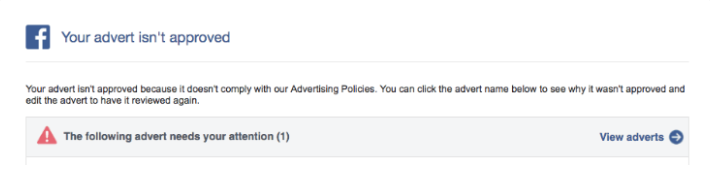
During peak advertising periods—such as the fourth-quarter holiday shopping season, major retail events like Black Friday, and election cycles—review queues expand significantly. Consequently, ads may remain in a "Pending Review" state far beyond the initial 24-hour window, halting delivery.
To prevent campaign launch delays, industry best practices dictate scheduling ad campaigns well in advance. Incorporating a multi-day buffer between ad submission and the official campaign start date accommodates potential manual reviews. Furthermore, digital marketers must exercise caution regarding edits. Making substantive changes to the targeting, budget, creative, or landing page URL of a scheduled or active ad automatically triggers a fresh review cycle, temporarily pausing delivery. Media buyers are advised to avoid editing pending or newly launched campaigns until Meta’s moderation systems have officially approved them.
3. Policy Rejections and Compliance Violations
When an advertisement violates Meta’s extensive advertising policies, it is systematically rejected, rendering it incapable of reaching any audience segment. Ad rejections are a routine occurrence in programmatic advertising, typically accompanied by an automated email notification detailing the specific policy infringement. Advertisers can also independently verify rejection statuses directly within the Ads Manager interface via the Account Quality dashboard.
Meta’s automated filters and human reviewers flag content for a wide array of violations, including prohibited substances, misleading claims, sensationalized language, intellectual property infringement, discriminatory targeting parameters, and the inclusion of profanity. Crucially, Meta’s compliance protocols extend beyond the ad creative itself, rigorously examining the destination landing page. If a landing page is non-functional, features a product or service that deviates from the ad’s premise, or employs deceptive headlines, the entire campaign will be disapproved.
Resolving a policy rejection involves two primary pathways: editorial revision or formal appeal. If an ad contains restricted terminology or prohibited phrasing, marketers can modify the ad copy, eliminate the offending elements, and resubmit the asset for review. Conversely, if an advertiser believes the rejection was made in error—a frequent occurrence with automated moderation systems—a formal appeal can be submitted through the Account Quality center. Additionally, campaigns falling under specialized categories, such as housing, employment, credit, or social issues, must be explicitly designated under Meta’s Special Ad Categories framework to avoid regulatory penalties and delivery restrictions.
4. Reaching Account-Wide Spending Thresholds
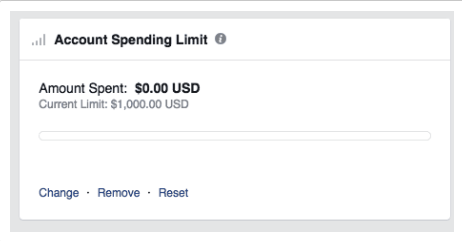
A frequently overlooked administrative error involves hitting the pre-established account spending limit. Account spending limits function as an overarching financial ceiling for all ad campaigns executed under a specific Business Manager or ad account. Once cumulative spending reaches this defined threshold, Meta automatically suspends the delivery of all active campaigns across that account, regardless of individual campaign budgets.
This issue typically arises when digital marketers establish a temporary spending cap during an initial audit phase or client onboarding process and subsequently fail to adjust the parameter as scaling occurs.
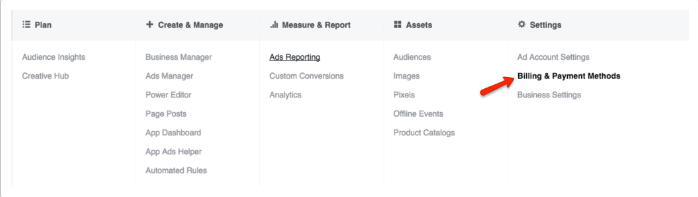
To rectify this limitation, administrators must access the Ads Manager navigation menu, proceed to Settings, and select Billing and Payment Methods. The account spending limit interface displays the precise financial consumption against the established threshold. By increasing, resetting, or completely removing the spending limit, marketers can instantly lift the administrative restriction, allowing the system to resume normal ad delivery almost immediately.
5. Overly Restrictive Budgets and Bid Constraints
The allocation of financial capital directly dictates the efficacy of Meta’s machine learning optimization algorithm. When a daily or lifetime budget is set too low, the algorithm lacks the financial resources necessary to distribute the advertisement broadly enough to gather statistically significant performance data.
For instance, establishing a nominal daily budget—such as three dollars—prevents the system from conducting adequate market testing, ultimately causing the algorithm to abandon delivery entirely. Similarly, implementing a rigid bid cap that sits significantly below the prevailing market auction price severely restricts opportunities to win ad auctions. If the algorithm cannot secure ad placements due to stringent bidding limits, delivery ceases.
Industry experts recommend maintaining budgets and bids at levels that provide the delivery algorithm sufficient flexibility to optimize. Transitioning from restrictive daily budgets to a lifetime budget allows Meta’s system to dynamically pace spending across the entire operational lifecycle of the campaign. Furthermore, utilizing automated bidding strategies—such as the lowest-cost bid strategy—ensures that ad sets remain competitive within live auctions without prematurely pricing the brand out of the market.
6. Excessively Narrow Audience Targeting Parameters
While precise audience segmentation is a cornerstone of effective digital marketing, over-segmentation can severely hinder algorithmic delivery. Meta’s advertising infrastructure requires a baseline audience size to effectively cycle creatives and optimize delivery; highly restricted custom audiences or overly layered demographic and interest filters can shrink the target pool below viable thresholds.
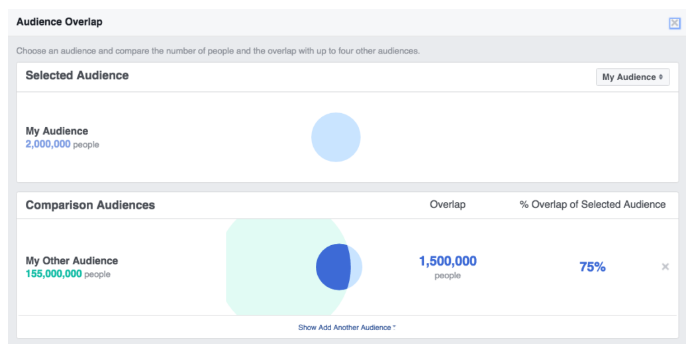
When an ad set’s estimated daily reach falls into extremely narrow parameters, the system struggles to identify enough users to generate meaningful conversion signals. To counteract this, digital marketers must systematically expand their target parameters. Strategies for audience expansion include incorporating Meta’s Advantage+ Audience expansion tools, broadening geographic radiuses, loosening age and gender parameters, and layering broader interest categories. Additionally, lookalike audiences should initially be established at higher percentage tiers (such as 2% to 5%) before attempting hyper-focused 1% lookalike variations.
7. Internal Auction Overlap and Self-Competition
When multiple ad campaigns or ad sets from the same advertiser target overlapping audience segments, an internal phenomenon known as auction overlap occurs. Rather than allowing an advertiser to bid against themselves and artificially inflate auction prices for a single pool of users, Meta’s internal deduplication algorithms intervene.
During the real-time bidding process, the system evaluates competing ad sets from the same account and selects the creative possessing the highest total value to enter the auction. Simultaneously, it automatically pauses or suppresses the delivery of underperforming or lower-value overlapping ad sets. While designed to maximize budget efficiency, this protective mechanism frequently results in the sudden halting of secondary campaigns.
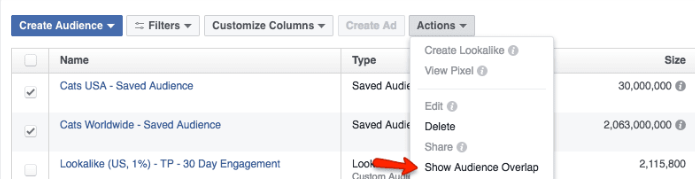
Media buyers can diagnose this structural inefficiency by utilizing Meta’s native Audience Overlap tool, housed within the Audiences tab of Ads Manager. By selecting multiple target groups and analyzing the overlap metrics, marketers can visualize the exact percentage of shared audiences. To resolve high auction overlap, professionals can consolidate competing ad sets into a single campaign, merge overlapping custom audiences, or differentiate the targeting parameters of individual ad sets to ensure distinct demographic reach.
8. Suboptimal Ad Engagement and Relevance Diagnostics
Meta’s primary operational objective is to maintain a positive user experience by serving highly relevant, engaging content across its platforms. Consequently, the ad delivery algorithm continuously evaluates user interaction metrics—such as clicks, shares, comments, and negative feedback—to determine an advertisement’s relevance score.
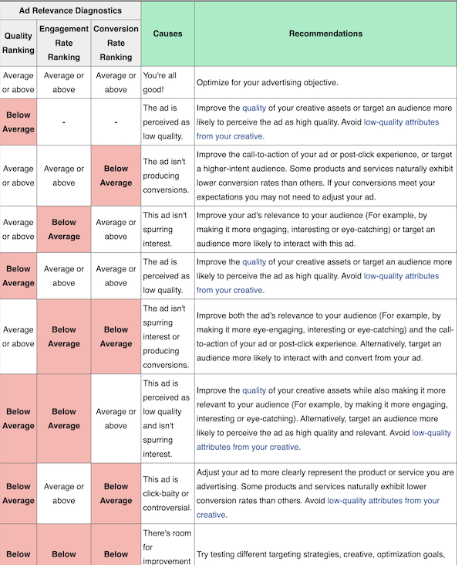
Ad relevance diagnostics evaluate three core components: quality ranking, engagement rate ranking, and conversion rate ranking. If an advertisement registers low scores across these diagnostic categories compared to competing ads targeting the same audience, Meta’s system systematically reduces its delivery frequency in favor of higher-performing creatives.
To resolve low engagement and reverse delivery suppression, media buyers must refresh their creative assets. Introducing new visual formats, refining copywriting hooks, optimizing landing page user experiences, and shifting focus toward high-intent audience segments are proven methods for improving relevance scores. Industry data indicates that elevating a metric ranking from "low" to "average" yields a substantially greater positive impact on delivery than pushing an already strong metric from "average" to "above average." Consequently, diagnostic troubleshooting should focus primarily on critically underperforming assets.
9. Scheduling Conflicts and Temporal Parameters
Temporal configuration errors represent a straightforward yet surprisingly common cause of non-delivering ads. Meta’s delivery architecture strictly adheres to the schedule established by the media buyer. If a campaign or ad set experiences scheduling anomalies, impressions will immediately cease.
Primary scheduling errors include expired end dates, manually paused campaigns, or future-dated launch parameters incorrectly configured in the system. Additionally, improper timezone alignment between the ad account settings and the target geographic market can cause ad delivery to activate at unexpected times or remain dormant.
Resolving scheduling issues requires a comprehensive review of the ad set’s timeline settings within Ads Manager. If an expiration date has lapsed, extending the campaign timeline or removing the end date will restore functionality. If a campaign has been inadvertently paused or scheduled for a future epoch, updating the status and adjusting start parameters immediately re-enters the creative into the active distribution queue.
10. Misaligned Optimization Goals and Conversion Volume Deficits
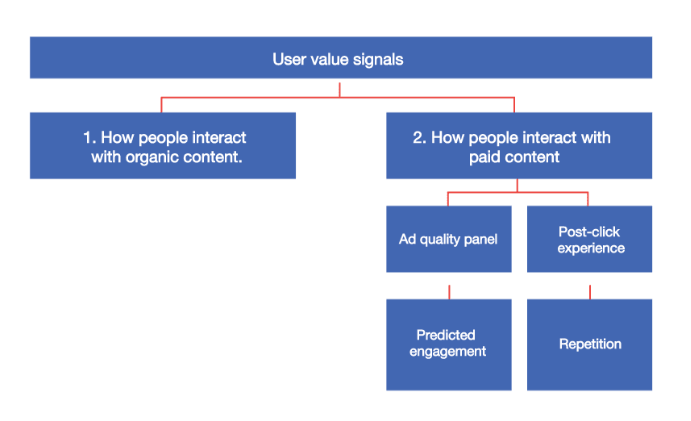
The optimization goal selected during the ad set creation process instructs Meta’s machine learning algorithm on the specific user action the campaign is designed to achieve. Whether optimized for brand awareness, link clicks, app installs, or online purchases, the algorithm analyzes user value signals to locate individuals most likely to complete the desired action.
However, optimizing for bottom-of-the-funnel conversion events—such as completed purchases or high-value subscription sign-ups—can backfire if the ad campaign lacks sufficient historical conversion data. If a newly launched ad fails to generate conversions rapidly, the algorithm cannot gather the necessary behavioral signals to identify prospective buyers. Deprived of optimization data, Meta will ultimately scale back or completely halt delivery.
To overcome this delivery barrier, media buyers are advised to transition their optimization goals upward along the conversion funnel during initial phases. For example, shifting an optimization goal from "Completed Purchases" to "Add to Cart" or "Initiate Checkout," or temporarily pivoting entirely to "Link Clicks," provides the algorithm with a higher volume of positive engagement data. Once the campaign establishes consistent conversion volume and trains the machine learning model, marketers can seamlessly transition the optimization goal back to their ultimate conversion objective without sacrificing ad delivery stability.