
The digital marketing landscape relies heavily on predictable performance metrics, making it a matter of acute operational concern when an active paid campaign abruptly halts its delivery. For media buyers and digital advertising professionals managing enterprise budgets, logging into Meta Ads Manager to find zero impressions can signal a critical bottleneck. Industry data indicates that algorithmic delivery interruptions account for millions of dollars in delayed ad spend annually, affecting both emerging brands and established Fortune 500 advertisers. Understanding the exact mechanics of the Meta delivery system is essential for maintaining campaign momentum and protecting return on ad spend.
When an ad campaign displays a "Not delivering" status within the Ads Manager delivery column, it signifies that active promotional assets are failing to reach the designated target audience, resulting in zero impressions. This phenomenon can manifest in newly launched creative assets or legacy campaigns that have historically performed well. Technical interruptions typically display a sub-status of "Update required," prompting immediate administrative intervention. Resolving these delivery stalls requires a systematic audit of creative assets, account settings, bidding strategies, and audience parameters.

1. Unavailable Associated Posts and Broken Creative Assets
A frequent catalyst for delivery failure involves the underlying post or creative asset associated with an ad becoming unavailable. This typically occurs when a page post used for dark-posting or boosting is deleted, hidden from the public timeline, or restricted by page-level permission changes. Furthermore, if a dynamic creative element or specific media asset is removed from the catalog or page backend, the delivery system immediately halts the distribution of impressions to prevent broken user experiences.
To resolve this issue, media buyers must navigate to Ads Manager, identify the affected ad set displaying the "Update required" notification, and either restore the original post permissions or substitute an alternative, active post ID. Once the necessary modifications are saved and the ad set is toggled back to an active state, the delivery system re-evaluates the asset, clearing the error status and resuming standard impression distribution.
2. Extended Ad Review and Automated Compliance Checks
Meta’s advertising infrastructure utilizes a dual-layered review protocol consisting of automated machine learning algorithms and manual human moderation. According to Meta’s Business Help Centre, standard compliance reviews are typically finalized within a 24-hour window. However, high-volume periods—such as major retail holidays, global elections, and seasonal promotional windows—frequently cause review queues to bottleneck, extending approval times significantly beyond the standard threshold.
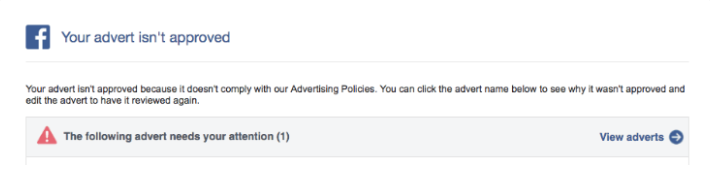
Mitigating review delays requires proactive campaign scheduling. Industry best practices dictate building and submitting campaigns several days ahead of their intended launch date, utilizing explicit start and end parameters within the budget configuration. Furthermore, advertisers must exercise extreme caution regarding pre-approval edits. Altering the creative copy, landing page URL, targeting parameters, or bidding structure of a pending or active ad automatically triggers a fresh review cycle, resetting the queue position and further delaying delivery.
3. Policy Violations and Ad Disapprovals
Campaigns that breach Meta’s rigorous advertising policies face immediate rejection, preventing the delivery system from serving the content to users. Automated filters and human reviewers routinely scan for prohibited content, restricted product categories, misleading claims, sensationalized language, and landing page discrepancies. When an ad is disapproved, account administrators receive an automated notification email, accompanied by an explicit rejection flag within Ads Manager detailing the specific policy infraction.
Resolving a disapproved ad involves either restructuring the creative assets to comply with community standards or submitting a formal appeal through Account Quality. Common triggers include the use of profanity, exaggerated income claims, unverified health statements, or landing page misalignment—where the destination URL fails to match the promised offer or features broken elements. For campaigns operating in special ad categories, such as credit, employment, housing, or social issues, targeting options are legally restricted by age, gender, and postal code, necessitating strict adherence to category-specific compliance protocols to avoid persistent delivery blocks.
4. Account Spending Limits and Financial Thresholds
Enterprise-level budget controls often include account spending limits designed to prevent runaway ad spend. When a campaign account reaches its predefined lifetime financial ceiling, Meta’s system instantaneously pauses all active ad sets across the account, regardless of their individual daily budgets or performance metrics. This safety mechanism is frequently forgotten by marketing teams after initial setup, leading to unexpected delivery halts.
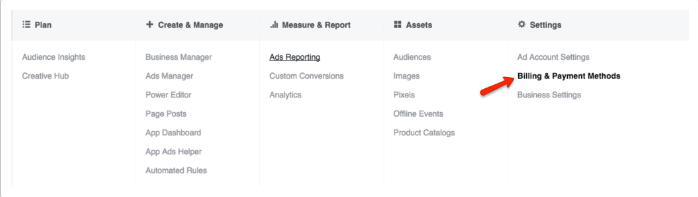
Reactivating delivery in these scenarios requires administrative access to the Ads Manager settings interface. By navigating to the Billing and Payment Methods tab, managers can inspect the account spending limit monitor against cumulative expenditures. Resetting, increasing, or entirely removing the account spending limit immediately signals the algorithm to lift the restriction, allowing paused ad sets to resume standard delivery within minutes.
5. Over-Restrictive Budgets and Sub-Optimal Bid Caps
The Meta ad auction operates on a complex bidding ecosystem where algorithms balance advertiser budgets against user relevance. Implementing excessively conservative daily budgets or overly restrictive bid caps starves the algorithm of the capital and data necessary to optimize delivery. For instance, setting a nominal daily budget of three dollars fails to provide the machine learning system with sufficient financial leverage to test audience segments effectively, forcing the system to suspend delivery entirely.

Similarly, implementing tight bid caps alongside high daily budgets restricts the auction participation rate, preventing the ad from winning competitive impressions. Digital marketing experts recommend transitioning from daily budget caps to lifetime budgets when managing sensitive campaigns, allowing the algorithm flexibility to pace spending across the campaign lifecycle. Additionally, initializing new campaigns with lowest-cost automatic bidding establishes a strong data baseline before introducing manual bid caps based on historical performance.
6. Excessively Narrow Audience Parameters
While granular audience targeting is a cornerstone of modern direct-response marketing, overly restrictive parameters can inadvertently trigger delivery suppression. Meta’s advertising algorithms require a critical mass of users—typically a minimum of one thousand active profiles within a given target set—to effectively evaluate user behavior and optimize ad delivery. Hyper-segmented custom audiences or overly filtered core demographics often fall below this algorithmic threshold.
Expanding audience reach is the primary remedy for delivery stagnation caused by narrow parameters. Media buyers can resolve this by broadening geographic radiuses, expanding age brackets, reducing the number of overlapping detailed targeting criteria, and enabling Advantage+ Audience expansion features. These adjustments allow the machine learning system to identify converting users more efficiently without sacrificing lead quality.
7. Internal Auction Overlap and Self-Competition
Managing multiple ad sets targeting overlapping demographic segments creates internal market friction known as auction overlap. When an advertiser deploys multiple campaigns targeting identical or highly similar audiences, Meta’s delivery system intervenes to prevent the brand from bidding against itself. The algorithm evaluates the total value of competing ad sets, prioritizing the highest-performing asset while automatically pausing lower-value counterparts.
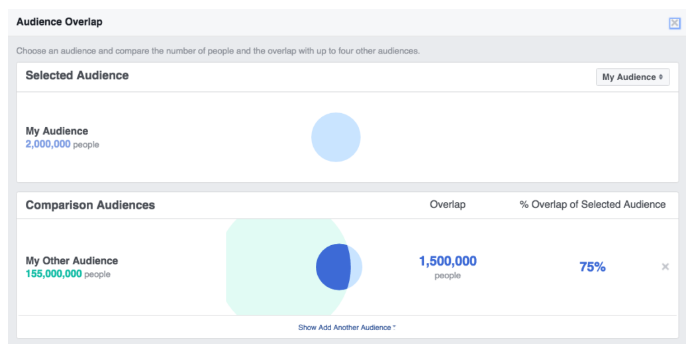
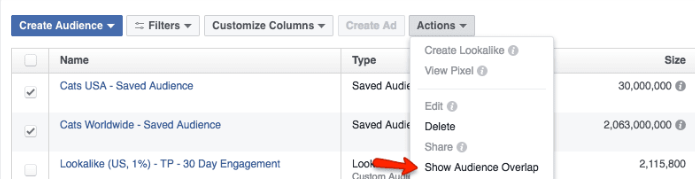
To diagnose and resolve auction overlap, media managers utilize the native Audience Overlap tool found within the Audiences tab of Ads Manager. By analyzing comparative overlap charts, marketing teams can identify precisely which ad sets are cannibalizing each other’s delivery. Remediation strategies include consolidating overlapping ad sets into a single unified campaign, broadening audience differentiation, or restructuring account hierarchies to eliminate internal competition.
8. Low Ad Engagement and Relevance Diagnostics
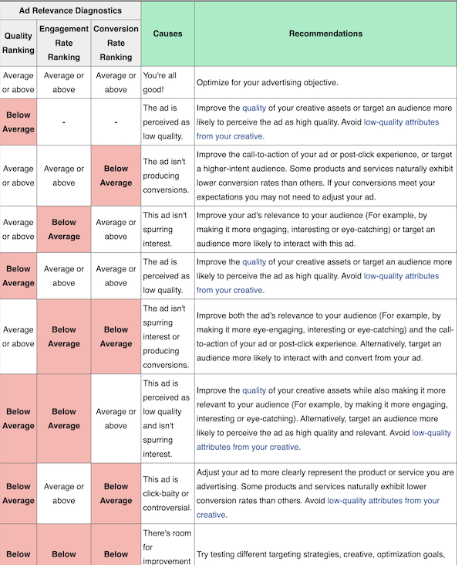
Meta prioritizes user experience by favoring ads that generate high positive engagement and relevance. The platform evaluates active campaigns using ad relevance diagnostics, which measure quality ranking, engagement rate ranking, and conversion rate ranking against competing advertisers targeting the same demographic pool. Ads that consistently underperform in these metrics experience a progressive reduction in delivery frequency as the algorithm redirects inventory toward more resonant creative assets.
Addressing low relevance scores requires a comprehensive creative overhaul. Digital strategists recommend testing fresh visual concepts, refining copywriting hooks, and optimizing post-click landing page experiences to align with user intent. Industry data emphasizes that elevating a ranking metric from "low" to "average" yields a significantly higher return in delivery volume than attempting to push an "average" asset into the "above average" tier, making foundational creative repairs the top priority.
9. Scheduling Conflicts and Temporal Misconfigurations
Temporal configuration errors remain a frequent, easily overlooked cause of ad delivery failures. Meta’s delivery engine strictly adheres to pre-set scheduling parameters. Campaigns featuring expired end dates, manually paused ad sets, or future-dated launch schedules will fail to secure impression inventory until administrative parameters are updated to reflect the current operating window.
Restoring delivery in these instances requires auditing the campaign schedule within Ads Manager. Updating past-due end dates, toggling paused campaigns back to active status, and recalibrating delayed launch timestamps instantly realigns the asset with the active delivery queue, prompting the system to recommence impression distribution.
10. Misaligned Optimization Goals and Conversion Deficits
The optimization goal selected during campaign setup instructs the Meta algorithm on the specific user action the advertiser intends to drive, such as link clicks, lead submissions, or completed checkouts. Selecting high-intent optimization goals—such as direct purchases—for an unproven campaign or an account with insufficient conversion history can stall delivery. If the pixel or conversion API fails to record regular conversion events, the algorithm lacks the feedback loop required to identify interested users, ultimately halting ad delivery.
Resolving conversion-based delivery stalls involves shifting the optimization focus upstream within the conversion funnel. Media buyers frequently switch optimization targets from "Purchases" to "Add to Cart" or "Initiate Checkout," or temporarily pivot the campaign optimization goal to "Link Clicks." This adjustment provides the machine learning system with a higher volume of behavioral data points to identify receptive audience segments. Once the campaign establishes a consistent stream of micro-conversions, advertisers can safely transition the optimization goal back to bottom-funnel purchase objectives, securing sustained long-term delivery and campaign profitability.