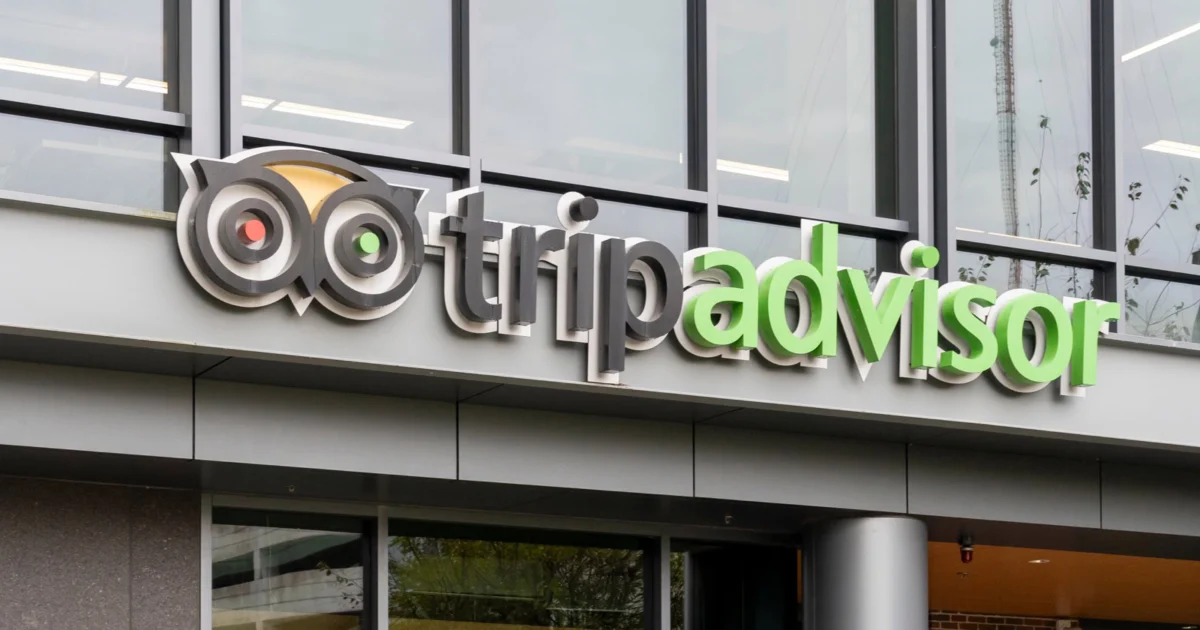
Tripadvisor Inc. has reported a substantial $369.5 million non-cash goodwill impairment charge during its third-quarter fiscal results, a figure that underscores the mounting pressure the company faces from a rapidly evolving digital search landscape. The writedown specifically impacts the firm’s legacy Hotels and Other segment, which encompasses its hotel metasearch engines and various media advertising initiatives. As the travel giant grapples with diminished organic traffic, management has signaled that the challenges posed by search engine optimization (SEO) are expected to remain a significant barrier to growth well into 2027.
The impairment reflects a stark reality for many legacy digital platforms: the decline of traditional search-driven traffic as search engines prioritize proprietary AI-driven results and direct-answer modules. For Tripadvisor, this shift has manifested as a 23% revenue contraction within its Hotels and Other segment, which generated $151.6 million during the quarter. According to the company’s official SEC filings, these persistent traffic headwinds have accelerated over multiple reporting periods, forcing the business to pivot its operational strategy toward more expensive, paid marketing channels.
A Chronology of Declining Search Visibility
The struggle to maintain organic search traffic is not a recent development for Tripadvisor, but the intensity of the trend has shifted significantly over the past eighteen months. Historically, Tripadvisor functioned as a primary gateway for travelers conducting research via search engines like Google. However, as search engines have transitioned toward "zero-click" experiences—where users receive the information they need directly on the search engine results page (SERP) without needing to visit the underlying website—the referral traffic to legacy travel platforms has waned.
In August, during the company’s second-quarter earnings disclosure, CFO Mike Noonan estimated that SEO-related drag was negatively impacting the Experiences segment’s booking growth by approximately 5 percentage points. By the third quarter, that figure had moderated slightly to roughly 3%, as the segment’s total booking mix became less reliant on organic search. While this moderation suggests the "SEO drag" may be shrinking in relative terms, it is largely because organic search is becoming a smaller component of the total business volume, rather than an improvement in search engine referral performance.
The Financial Burden of the Paid-Channel Pivot
As the efficacy of organic search declines, Tripadvisor has been forced to increase its reliance on paid marketing channels to sustain its customer acquisition funnel. In the third quarter, marketing expenditures climbed to 48.8% of total revenue from continuing operations, up from 43.3% during the same period in the previous year. While the absolute dollar amount spent on marketing remained relatively flat at approximately $213 million, the decline in overall revenue—down 11% to $436.4 million—exacerbated the impact of these costs on the company’s bottom line.
CEO Matt Goldberg noted during the earnings call that the search engine marketing (SEM) auctions have grown increasingly competitive. As the company migrates away from free, organic traffic, it must bid in higher-cost environments. This transition is proving difficult; the company has found that some SEM spending has become less efficient, prompting a strategic pivot toward social media and other mid-funnel marketing channels where user engagement can be cultivated away from the traditional, crowded search auctions.
Addressing the "Google Zero" Phenomenon
During the earnings conference call, the conversation turned to the prospect of "Google Zero," a term describing a scenario where a website receives no organic traffic from search engines. Barclays analyst Ross Sandler probed management on the extent of Tripadvisor’s exposure to this trend. CFO Mike Noonan revealed that the company’s SEO exposure is currently in the "mid to high teens" as a percentage of its traffic—a significant reduction from the previous year, though he declined to provide the exact baseline total.
This disclosure highlights a fundamental divergence between Tripadvisor’s core brand and its subsidiary, Viator. While the legacy Tripadvisor brand remains heavily tied to search-driven discovery, Viator, which focuses on experience bookings, has demonstrated a lower reliance on organic search. Noonan emphasized that the company expects the SEO headwind to continue through 2027, though he expressed cautious optimism that the company could eventually "mechanically get out of that headwind" by diversifying its traffic sources and enhancing its direct-to-consumer brand equity.
AI Integration and Future Traffic Streams
Despite the erosion of search traffic, Tripadvisor is exploring new avenues for user acquisition through artificial intelligence. CEO Matt Goldberg noted that the company is currently working with several major AI platforms, including OpenAI, Anthropic, Gemini, and Meta, to provide data and citations for travel-related queries. While AI-driven traffic currently accounts for less than 1% of the company’s total volume, the conversion rates are remarkably high.
Tripadvisor data suggests that traffic originating from AI platforms converts at roughly twice the average rate on the Tripadvisor site and nearly five times the average rate on Viator. These figures provide a glimmer of hope that the company’s vast repository of user-generated content—which remains highly valued by LLMs for training and citation purposes—can be monetized in a post-search era. Goldberg pointed out that the company’s unique contributor base has remained stable, suggesting that despite a decline in direct traffic, the inherent value of the content produced by the Tripadvisor community remains a robust asset.
Broader Industry Implications and Corporate Transition
Tripadvisor’s challenges mirror those seen across the digital publishing and travel sectors. Other major media entities, such as Condé Nast, have reportedly instructed internal teams to operate as if search traffic will eventually drop to zero. Similarly, Reddit has recently reported a decline in search referrals, further validating the industry-wide consensus that the era of relying on search engines for consistent, free traffic is drawing to a close.
The financial pressure is also catalyzing significant leadership and structural changes at Tripadvisor. Both CEO Matt Goldberg and CFO Mike Noonan are slated to exit their roles in the coming months, with the company currently engaged in an executive search for successors. Kristen Dalton, the firm’s head of strategy and operations, is set to assume the role of interim CFO starting January 1. Furthermore, the company continues its ongoing portfolio review, evaluating strategic alternatives that could include the divestiture or restructuring of various business units.
Analytical Outlook: Navigating the Headwinds
The $369.5 million impairment charge is more than a mere accounting entry; it is a clear indicator that the market value of Tripadvisor’s legacy assets is being recalibrated to reflect a future where search engine dominance is no longer the status quo. The company’s focus on the Experiences segment, particularly Viator, represents its most promising path forward. By prioritizing direct bookings and mid-funnel social marketing, Tripadvisor is attempting to build a sustainable ecosystem that exists independently of Google’s algorithm updates.
However, the path to 2027 remains perilous. The company must successfully navigate a transition that involves both the reduction of costs associated with inefficient paid channels and the successful integration of its content into the AI-centric search environment. While the conversion rates for AI-referred traffic are encouraging, the volume remains insufficient to replace the millions of visitors previously delivered by standard search results.
As Tripadvisor prepares for a change in executive leadership, the strategic focus will likely remain on controlling the "SEO drag" while simultaneously proving that its brand and content are resilient enough to survive in an era defined by decentralized traffic and fragmented discovery. The company’s fourth-quarter performance, and its subsequent ability to keep the Experiences segment at a break-even point or better, will be the primary metric for investors gauging whether the company has successfully bottomed out of its current transition period.