
The fundamental way consumers navigate the digital landscape has undergone a profound structural shift. Rather than relying exclusively on traditional search engines like Google or Bing to answer queries, a growing majority of internet users—led heavily by Generations Z and Alpha—are turning directly to social media platforms. Platforms like TikTok, Instagram, YouTube, LinkedIn, Pinterest, and Reddit have effectively evolved into specialized social search engines. This transition changes how digital content is discovered, evaluated, and ranked, forcing brands and marketers to adapt their foundational SEO strategies for the social era.

Understanding the Evolution of Social Search
A social media search engine is defined as any interactive platform where users actively type specific queries into a designated search box to retrieve content, products, or information, bypassing the passive experience of scrolling through a curated algorithmic feed. Recent data highlights the scale of this behavioral change. According to the Pew Research Center, approximately 90% of U.S. teens utilize YouTube, while 63% actively rely on TikTok. Furthermore, roughly one in five teens report being on TikTok and YouTube almost constantly. As Generation Alpha enters their teenage years, they arrive with the exact same expectations for instantaneous, visual, and peer-driven information retrieval.

Tech companies have rapidly restructured their infrastructure to accommodate this shift. TikTok, Instagram, and YouTube have all integrated sophisticated, artificial intelligence-assisted search features. These tools include suggested queries embedded directly inside comment threads, advanced keyword search mechanics that extend far beyond simple hashtags, and results summarized or grouped neatly by topic. For modern consumers, a single-thumb mobile search on a trusted social platform often outshines traditional web search engines when it comes to discovering, evaluating, and saving practical information, inspiration, or product recommendations.
Social Search Versus Traditional Search Mechanics
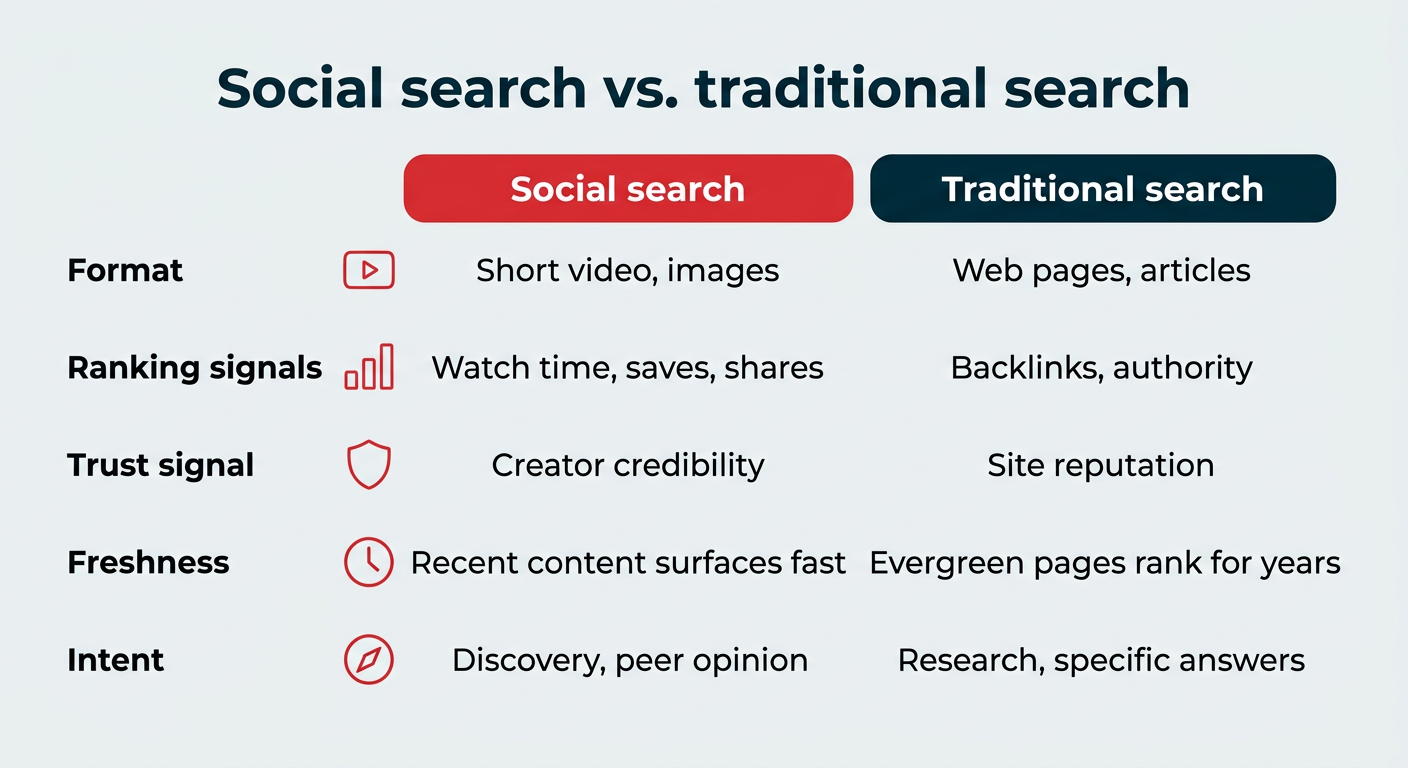
To master modern digital marketing, professionals must understand the distinct operational differences between social media search engines and traditional web-based search engines. While traditional search engines like Google traditionally reward domain authority, robust backlink profiles, and technical site architecture, social media search engines prioritize creator credibility, real-time engagement, and immediate contextual relevance.
On Google, a web page ranks primarily based on inbound citations and how effectively its structured data matches a text query. Conversely, on TikTok or Instagram, a post surfaces based on natural keywords integrated into captions and on-screen text, watch time completion rates, bookmark saves, shares, comment volume, and historical user behavior patterns. Notably, social search features a powerful freshness bias. A brand-new account with zero historical domain authority can quickly outrank an established corporate entity if its short-form video or image post generates immediate, high-velocity user engagement.

However, these two digital ecosystems are not mutually exclusive; rather, they continually feed into one another. Major search engines regularly index social media posts from platforms like TikTok, Instagram, Reddit, and LinkedIn, frequently displaying them prominently on traditional results pages. Consequently, a single well-optimized social post can capture organic visibility across both search paradigms simultaneously. While traditional SEO captures high-intent users who already know precisely what they want to purchase or research, social search captures these same consumers much earlier in their journey, while they are still actively exploring and seeking peer validation.
Platform-Specific Search Optimization Breakdown

Because search mechanics vary drastically across individual platforms, a generic, one-size-fits-all optimization checklist is largely ineffective. Marketers must tailor their tactics to the specific algorithmic and behavioral nuances of each network.
TikTok operates as a massive visual search engine, processing over three billion searches daily. The platform’s underlying technology reads video captions, parses on-screen text, transcribes spoken audio, and analyzes comment threads to determine content context. To rank effectively on TikTok, creators must consciously verbalize their primary keywords aloud within the video, embed those keywords visually as on-screen text, and incorporate them naturally into the caption.

Instagram search has similarly evolved beyond rigid hashtags and account handles to process natural language keywords. Typing queries such as "sourdough starter" now delivers a mixed results page featuring top accounts, relevant posts, and dominant Reels. Instagram’s Explore tab acts as a secondary discovery engine driven by historical engagement, rewarding captions and alt text written in the actual vocabulary used by everyday consumers.
LinkedIn functions as a professional search engine built around three core pillars: people, companies, and content. It heavily indexes profile and page fields, meaning professional job titles, specific skills, headlines, and corporate descriptions directly dictate search visibility. For B2B marketers, LinkedIn search serves as a direct sales pipeline, as prospective buyers routinely research vendors and individual decision-makers using granular filters such as industry, company size, and professional role before initiating formal business communications.

Meanwhile, YouTube continues to operate simultaneously as a massive video platform and a premier search engine, where titles, chapters, descriptions, and automated transcripts dictate rankings, while sustained watch time governs long-term visibility. Pinterest acts as an indispensable visual search engine centered heavily on planning and transactional intent, relying on optimized boards, pin titles, and rich descriptions. Reddit has also emerged as a powerhouse search destination, driving immense search momentum because traditional search engines heavily favor Reddit threads for authentic peer reviews and opinion-based queries.
Strategic Implications for Brand Awareness and Competitive Intelligence

The rise of social search fundamentally alters how brands achieve and compound awareness. Research indicates that approximately 73% of Gen Z consumers rely on social media as their primary resource for learning about new products. Optimizing content for search ensures that a brand continues to surface for months—and even years—to individuals who do not currently follow the account, driving continuous top-of-funnel discovery.
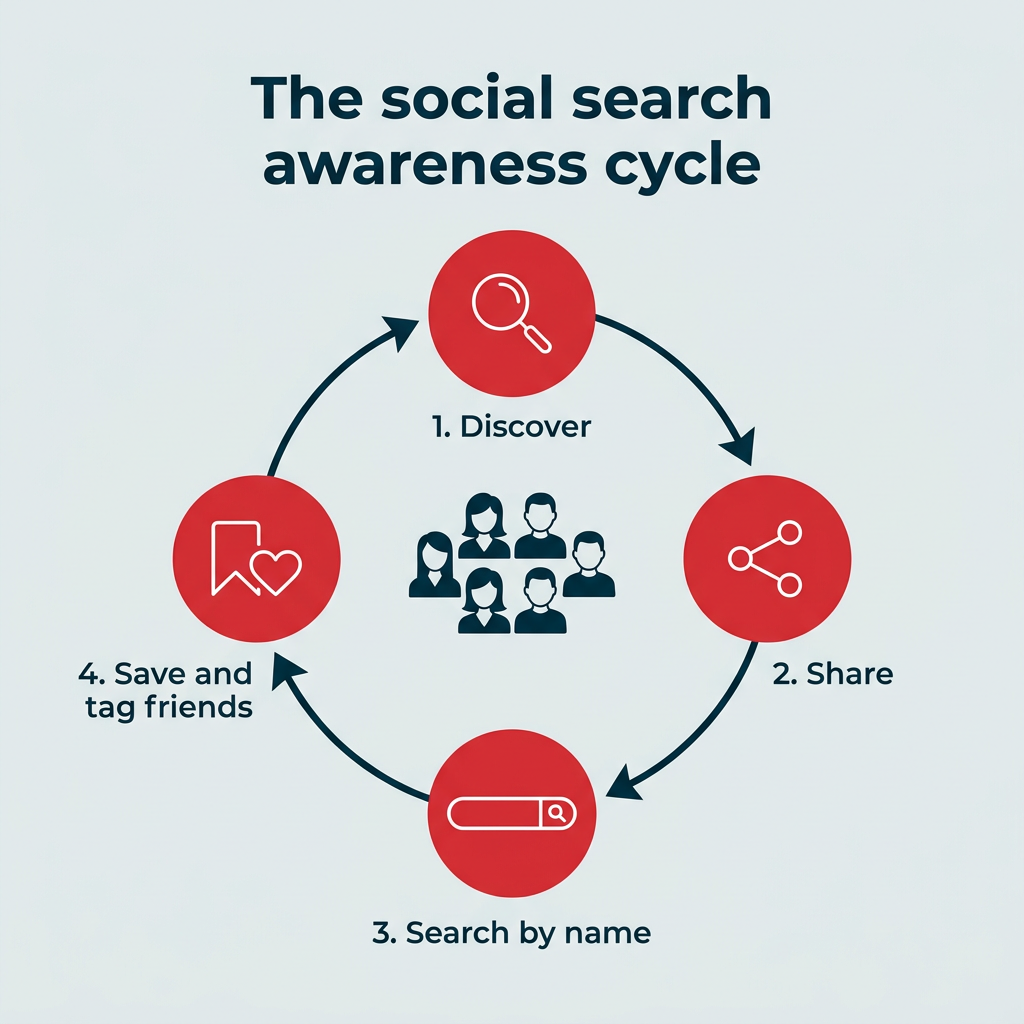
This discovery dynamic sets off a powerful compounding cycle. Digital natives discover a brand via social lookup or algorithmic feeds, share that information with peers, and frequently generate authentic user-generated content (UGC). Word-of-mouth recommendations subsequently drive direct name-based searches for the brand on social apps, surfacing both official corporate content and peer endorsements. These interactions generate saves, shares, and tag-based comments that reinforce the brand’s visibility to wider networks.
Furthermore, social search serves as an invaluable instrument for competitive intelligence. By routinely searching industry keywords and niche terminology on social platforms, organizations can instantly identify emerging competitors, map out the precise vocabulary and hashtags favored by target demographics, and uncover critical market gaps. For instance, a software firm observing widespread social queries regarding export frustrations can immediately address the documentation gap with targeted content, transforming organic consumer research into actionable product strategy.
Actionable Framework for Social Search Optimization

Implementing an effective social SEO strategy requires a disciplined, repeatable approach to profile optimization, content creation, and metadata management. Organizations looking to maximize their visibility across social search engines should adhere to the following best practices:
-
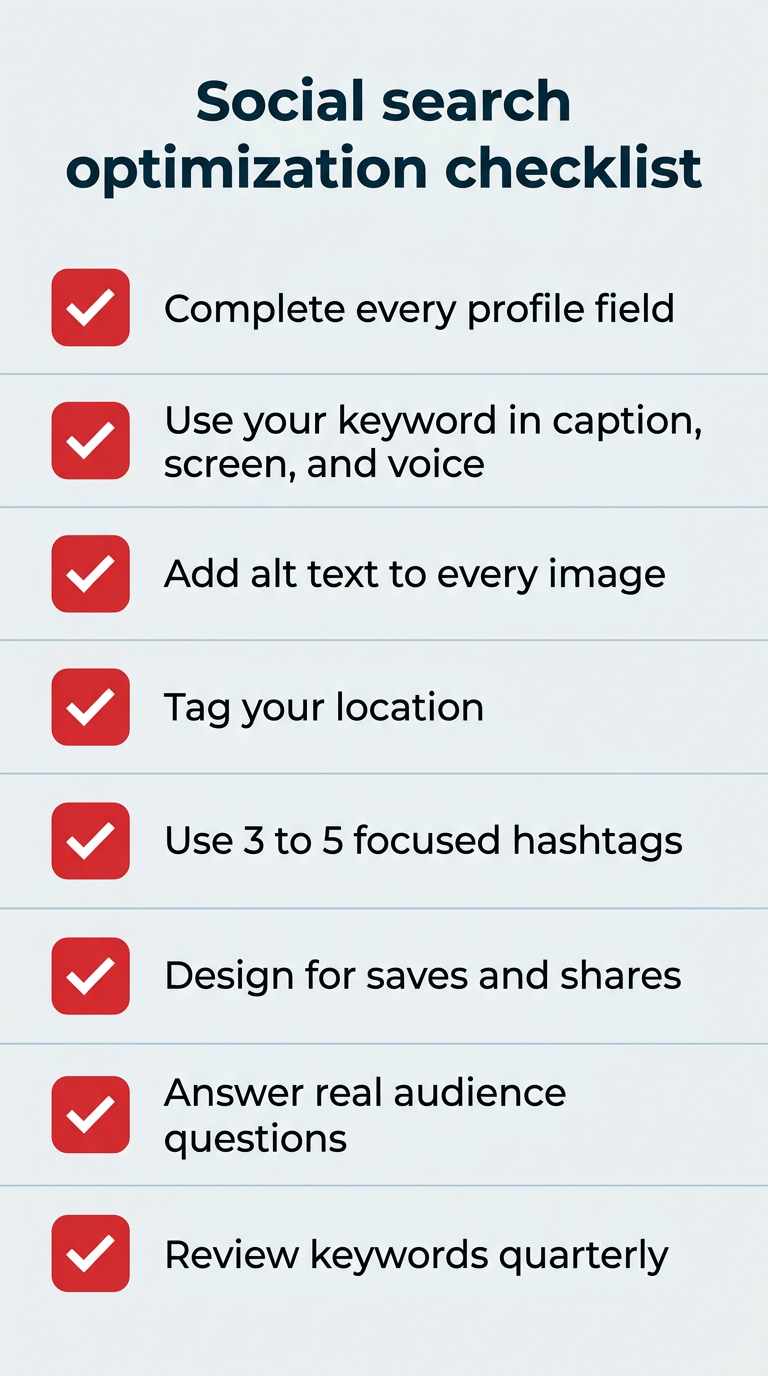
Optimize every profile for search: A brand’s profile is its most consistent digital asset, appearing universally in brand-name searches. Incorporate relevant, descriptive keywords naturally into account names, handles, bios, and About sections. Ensure all metadata fields, including physical locations, contact options, and industry categories, are completely filled out using language familiar to the target audience rather than insular corporate jargon.

-
Integrate keywords naturally across content: Embed primary target keywords into post captions, on-screen text overlays, and spoken audio tracks. Because modern social platforms automatically generate transcripts for video content, speaking target keywords clearly enhances contextual indexing.
-
Leverage location tagging and alternative text: Utilize robust location-tagging features on platforms like TikTok, Instagram, and Facebook to capture high-intent local searchers or travelers. Additionally, write descriptive alternative text for images and graphics, treating it as an opportunity to provide clear context rather than a keyword-stuffing exercise.
-
Focus on high-value engagement signals: While hashtags remain useful for basic categorization, their relative weight has diminished as AI-driven keyword search has matured. Instead, prioritize content metrics that directly influence search rankings, such as saves, shares, watch time length, and meaningful comments. Content that prompts users to bookmark and save is heavily favored by search algorithms for long-term visibility.
Enterprise Tools and Cross-Platform Monitoring Solutions
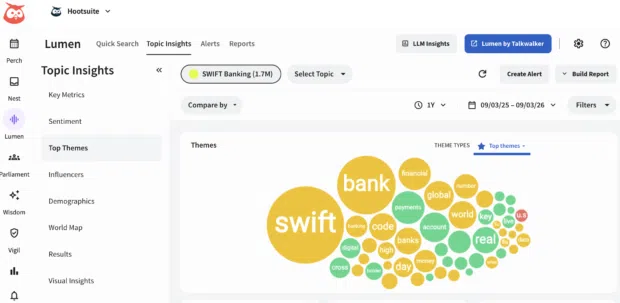
Because no single tool natively masters every social ecosystem, digital marketing teams typically pair dedicated social listening software with advanced search workarounds. Enterprise-grade solutions such as Lumen by Talkwalker monitor tens of millions of global websites and dozens of social networks across multiple languages, utilizing advanced natural language processing to evaluate sentiment, track visual brand logos in images and videos, and analyze spoken audio in podcasts.
For mid-market and growing teams, integrated platforms like Hootsuite provide streamlined social listening and quick-search functionalities directly within the same dashboard used for content publishing and analytics. This integration allows marketing teams to seamlessly transition insights gathered from social search trends directly into their editorial calendars without cumbersome data export steps. Complementary methods—such as utilizing Google advanced search operators with Boolean parameters—allow practitioners to execute rapid cross-platform spot-checks for brand mentions, consumer sentiment, and influencer availability.

Compliance, Privacy, and Ethical Considerations
As organizations scale their social search and monitoring operations, adherence to strict privacy regulations and platform terms of service is paramount. Analyzing publicly accessible social content constitutes legitimate market research, but the collection, storage, and utilization of consumer data must comply with regional data privacy laws such as the GDPR and CCPA. Brands must ensure that automated scraping tools or third-party aggregators respect user privacy preferences and platform rate limits. Establishing clear internal compliance protocols prevents legal exposure and ensures that a brand’s social search practices remain transparent, ethical, and sustainable over the long term.

Ultimately, the maturation of social media search engines represents a permanent evolution in digital behavior. Brands that fail to adapt their publishing strategies to account for social SEO risk losing visibility among younger, digitally native demographics who view social platforms as their primary gateway to the internet. By treating social channels as robust search engines, optimizing profiles and content with natural keywords, and leveraging advanced listening tools, organizations can secure enduring visibility, deepen audience engagement, and maintain a decisive competitive edge in an increasingly crowded digital marketplace.