
TikTok has cemented its position as a dominant global force in digital media, crossing a monumental milestone by labeling more than one billion artificial intelligence-generated videos on its platform. This staggering figure illustrates both the explosive democratization of generative AI tools among everyday creators and the platforms aggressive push toward absolute transparency. As synthetic media blurs the line between reality and fabrication, regulatory bodies and platform architects alike are racing to establish guardrails that protect consumers from mass deception. For content creators, digital marketers, and global brands alike, understanding TikToks evolving AI disclosure framework is no longer optional—it is a critical requirement for maintaining platform compliance, audience trust, and brand reputation.
The rapid evolution of generative video, audio, and image tools has fundamentally transformed how digital content is produced. Platforms that once hosted purely organic, human-captured footage are now inundated with hyper-realistic AI avatars, cloned human voices, and entirely synthetic environments. In response to this paradigm shift, TikTok implemented robust policy updates within its Community Guidelines, specifically targeting the Integrity and Authenticity of content circulating through its recommendation algorithm. These guidelines establish strict parameters regarding what synthetic content requires explicit labeling, what remains strictly prohibited, and how automated detection systems work behind the scenes to police the platform.

Understanding the Mechanics of TikToks AI Disclosure Framework
At its core, TikToks policy permits the integration of artificial intelligence into creative workflows, provided that creators transparently disclose its use whenever the technology generates or significantly alters realistic-looking people, scenes, or audio. The policy explicitly casts a wide net over media that could easily deceive an average viewer into believing a synthetic creation is authentic. This includes deepfakes, AI-generated video loops of individuals who do not exist, and synthetic audio that precisely replicates a real persons vocal cords without their explicit consent.
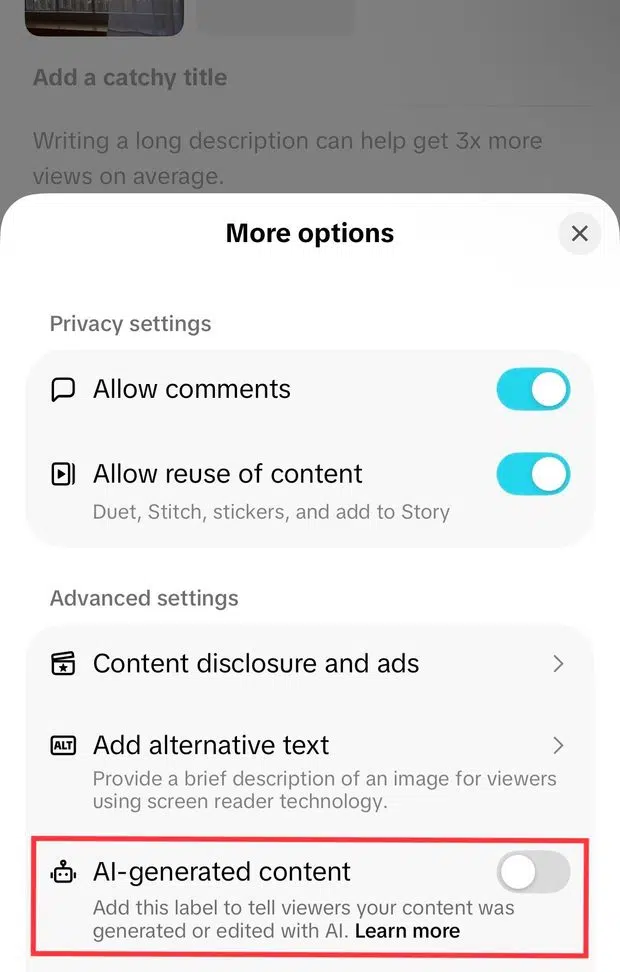
To enforce these mandates efficiently, TikTok relies on a tripartite labeling system: the Creator Toggle, Automated Detection Labels, and Paid Ad Disclosures. The Creator Toggle is a manual switch built directly into the mobile app interface, allowing organic publishers to tag their videos before hitting the upload button. When activated, a discreet yet visible tag reading Creator labeled as AI-generated appears directly beneath the video caption. Conversely, Automated Detection Labels are applied unilaterally by TikToks proprietary systems. These automated flags are triggered either when content is generated using TikToks native AI creative suite or when uploaded files contain embedded metadata, such as Content Credentials, which trace the digital lineage of a file back to its AI-generated roots. For corporate entities and media buyers operating within TikTok Ads Manager, specific ad disclosures are mandatory for any sponsored content featuring realistic synthetic elements. Failure to apply these ad-level tags during the campaign setup phase can result in immediate ad rejections, wasted media budgets, and suppressed audience reach.

Differentiating Between Mandatory Disclosures and Standard Edits
A common point of friction for digital marketers is determining precisely where the threshold lies between a benign digital touch-up and a mandatory AI disclosure. TikTok maintains a pragmatic stance on this distinction, focusing primarily on the realism and perceptual impact of the final output. Traditional post-production techniques that have been standard in the film and television industry for decades do not require labeling. Simple color correction, basic video cropping, reframing, and framing adjustments are entirely exempt from disclosure requirements. Similarly, everyday cosmetic filters—such as those that digitally apply makeup, smooth skin blemishes in real-time, or alter lighting dynamics—are permitted without tags.
Furthermore, auxiliary text-based AI tools do not trigger the policy. Creators utilizing large language models to draft video scripts, write engaging captions, or brainstorm content strategies can do so freely without labeling their final posts as AI-generated. The boundary is decisively crossed, however, the moment AI is deployed to construct realistic visual human features, swap faces between subjects, manipulate spoken dialogue in a pre-recorded clip, or synthesize vocal performances. If an AI-generated component has the capacity to make a viewer falsely believe a real person performed an action or uttered a statement they never actually did, the disclosure label becomes legally and platform-mandated.

The High Stakes for Global Brands and Enterprise Marketers
For major corporations and consumer brands, the implications of TikToks AI disclosure policy extend far beyond simple platform compliance. In an era where consumer skepticism is at an all-time high, brand authenticity is a fragile asset. Utilizing generative AI to depict fictional customer testimonials or synthetic product experiences without explicit disclosure can trigger severe consumer backlash. When audiences feel deliberately deceived, brand equity evaporates rapidly, often resulting in severe public relations crises that outlast the lifespan of the offending social media post.
Moreover, the regulatory landscape enforced by bodies such as the Federal Trade Commission in the United States adds a layer of legal complexity to corporate social media strategies. Sponsored content and influencer partnerships compound these risks. Brands often enforce strict internal compliance guidelines regarding synthetic media, but partner creators may adopt laxer standards, utilizing unvetted AI tools for visual effects or voiceovers. If an influencer publishes an unlabeled AI-generated sponsored post containing a brand name, the liability frequently falls back on the corporation. Consequently, forward-thinking marketing teams are actively overhauling their standard operating procedures, incorporating explicit AI governance into creator briefs, and establishing mandatory multi-tier approval workflows to catch compliance oversights before content goes live.

Step-by-Step Implementation for Content Creators and Marketing Teams
Integrating AI disclosure checks into an enterprise publishing calendar requires deliberate structural changes. Marketing organizations are increasingly adopting specialized social media management ecosystems—such as Hootsuite and its modular suites like Perch and Vigil—to automate governance and enforce compliance across distributed teams. Building a resilient internal process involves four foundational phases:
First, teams must audit and document the specific platform-by-platform disclosure rules. Because digital regulations are fragmented, a creative asset that requires explicit AI labeling on TikTok might be governed differently on competing networks like Meta or YouTube. Samsung famously faced public scrutiny when identical AI-generated campaigns were labeled on YouTube but omitted on TikTok, demonstrating that cross-platform consistency is vital for maintaining corporate credibility.

Second, brands must establish unequivocal expectations within creator briefs and influencer contracts. Before any external partner begins production, guidelines must explicitly define permissible AI use, mandatory approval milestones, and the precise mechanics of disclosure. This contractual clarity must also intersect with traditional endorsement disclosures mandated by regulatory frameworks like the FTC.
Third, teams must implement rigorous internal handoff protocols. In large agencies and enterprise marketing departments, content passes through numerous hands—from copywriters and AI prompt engineers to video editors and final schedulers. Without a centralized tracking mechanism, the scheduler publishing a final video may have no operational awareness that the background was synthesized using a generative diffusion model. Mandating explicit internal tags during asset handoffs eliminates this dangerous blind spot.
Finally, organizations must embed compliance reviews directly into their existing content approval workflows. Utilizing customizable approval chains ensures that every asset is routed to a designated compliance officer who verifies whether synthetic elements are present and whether the appropriate disclosure tags are attached.
Implications, Market Outlook, and Future Governance
As artificial intelligence technology continues to mature at an exponential rate, social media platforms will undoubtedly refine their detection capabilities and policy enforcement mechanisms. TikTok has already begun testing features that empower users to actively filter out AI-generated content from their personal feeds. While TikTok currently maintains that manual or automatic AI labeling does not inherently penalize a creators organic reach or algorithmic distribution, the introduction of user-side filtering tools signals a shifting digital ecosystem. Content that is transparently labeled as synthetic may soon experience natural downward pressure in reach among audiences who deliberately choose to curate purely human-generated feeds.
Ultimately, TikToks aggressive stance on AI transparency serves as a bellwether for the broader social media industry. The billion-labeled-videos milestone underscores the reality that artificial intelligence is permanent infrastructure, not a temporary marketing fad. Organizations that adapt early—by building transparent disclosure workflows, empowering cross-functional governance teams, and prioritizing audience trust—will successfully navigate the synthetic media revolution. Those that attempt to obfuscate the origin of their digital content face severe algorithmic penalties, legal repercussions, and irreversible damage to their public reputation.