As TikTok continues its exponential growth toward an estimated 1.37 billion global users in 2025, the platform has firmly transitioned from a purely entertainment-driven short-form video application into a formidable economic engine. With initiatives like TikTok Shop projected to surpass $20 billion in U.S. sales alone by 2026, content creators, independent entrepreneurs, and multinational brands alike are increasingly focusing their digital marketing efforts on the platform. However, translating views into sustainable revenue requires a nuanced understanding of monetization mechanisms, strict eligibility thresholds, and strategic revenue diversification.

The economic viability of TikTok varies dramatically depending on the chosen monetization path. While casual users may generate minimal returns from organic view counts, professional creators and established businesses often build lucrative enterprises by integrating native platform tools with external sales funnels. Industry experts consistently emphasize that relying on a single revenue stream is a precarious strategy; instead, successful participants typically stack multiple monetization methods, combining native payouts with affiliate marketing, sponsored partnerships, and off-platform digital storefronts.
Evolution of TikTok Monetization: A Historical Chronology
Understanding how to make money on TikTok requires examining how the platform’s financial infrastructure has evolved over recent years. In its earlier iterations, the platform relied heavily on the Creator Fund—a static pool of capital designed to compensate creators based on overall view counts. However, critics and creators frequently complained that the Creator Fund offered erratic and ultimately insufficient payouts, often leading to creator burnout and low-incentive content.

Recognizing these limitations, TikTok systematically restructured its creator economy. The platform phased out the older fund and introduced the Creator Rewards Program, specifically designed to incentivize high-quality, original content exceeding one minute in duration. Simultaneously, TikTok expanded its e-commerce capabilities by launching TikTok Shop, bridging the gap between social media engagement and transactional retail. This evolution shifted the paradigm from passive ad-revenue sharing to active social commerce, allowing creators to act as storefronts and affiliate marketers directly within the application ecosystem.
Native Platform Programs: Direct Payouts from TikTok
For creators seeking to monetize without managing physical inventory or negotiating independent brand deals, TikTok offers several built-in programs accessible directly through the TikTok Studio interface. Each native program maintains distinct eligibility criteria regarding follower counts, account types, and geographic availability.
The Creator Rewards Program
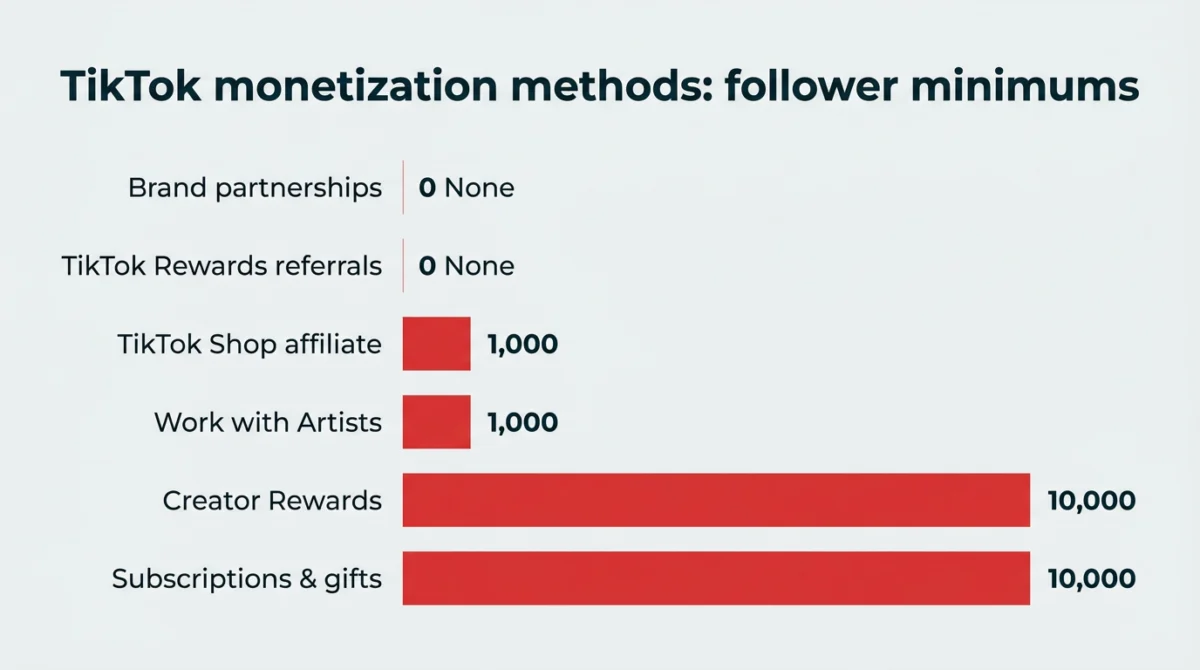
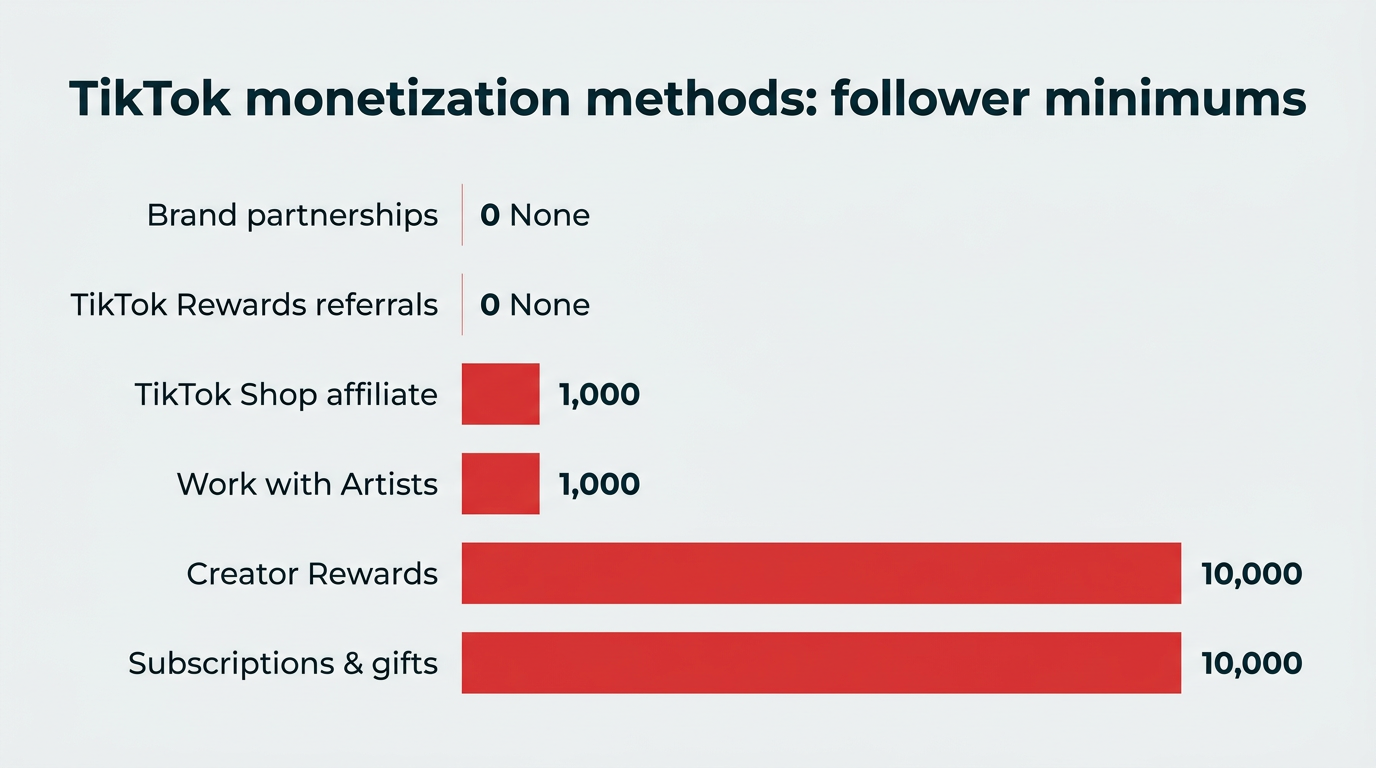
Replacing the legacy Creator Fund, the Creator Rewards Program compensates creators for original videos that perform well based on specific engagement metrics, notably play duration and audience retention. To qualify, creators generally need a minimum of 10,000 followers and at least 100,000 legitimate video views within the preceding 30 days. Furthermore, payouts are restricted to "qualified views"—defined as views lasting at least five seconds on original videos longer than one minute. This structural shift explicitly penalizes clickbait and rewards deep, sustained audience engagement.
Live Gifting, Subscriptions, and Series
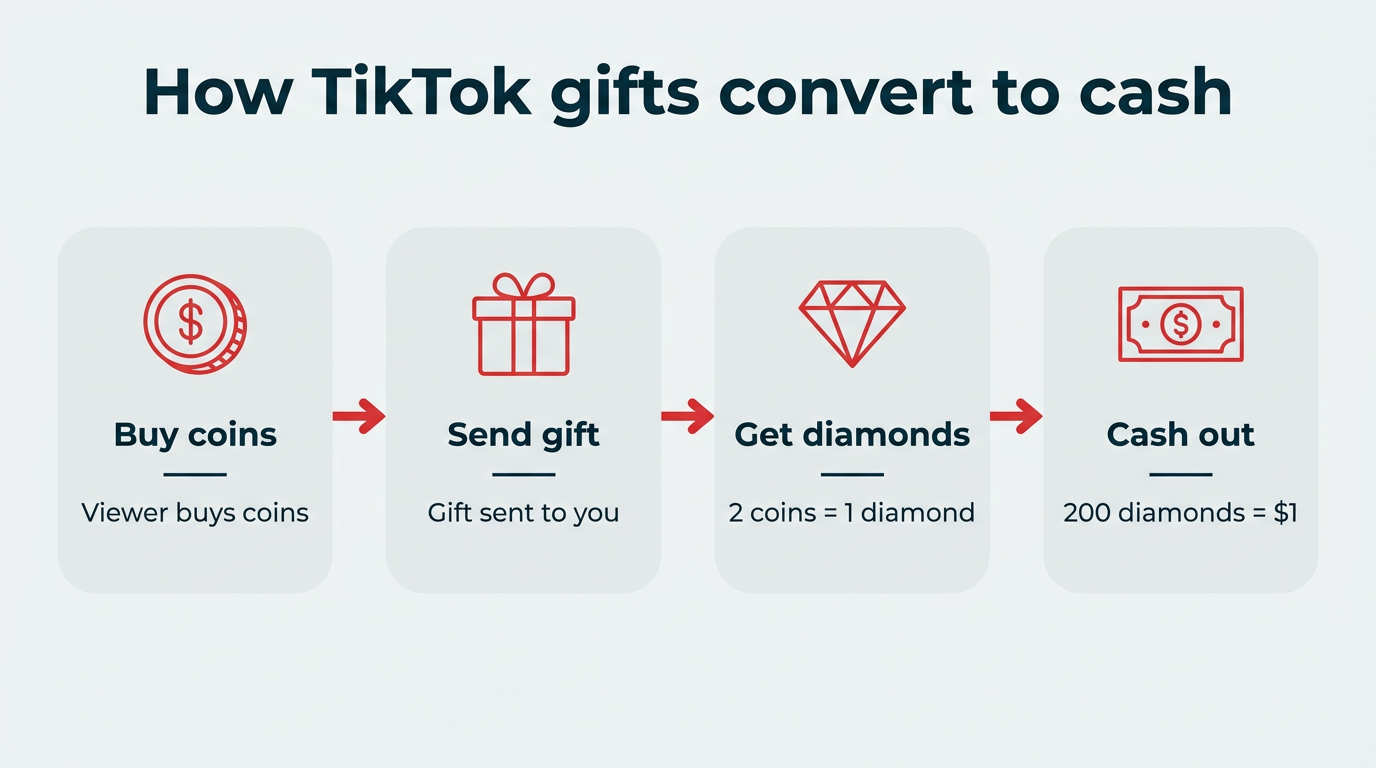
Interactive features such as TikTok LIVE allow creators to cultivate real-time relationships with their audiences while generating capital through virtual gifts. Viewers purchase coins within the application to send digital gifts during live broadcasts or standard videos; these gifts convert into "diamonds," which creators can subsequently cash out.
Additionally, features like TikTok Series enable creators to place up to 80 premium videos—each up to 20 minutes long—behind a paywall, transforming specialized expertise into a predictable stream of passive income. Subscription communities offer another robust alternative, providing dedicated followers with exclusive perks, custom badges, and subscriber-only chats for a recurring monthly fee.
Specialized and Invitation-Only Features
Other native revenue streams include TikTok Pulse, an ad-revenue sharing initiative that places advertisements alongside top-performing content, though participation is strictly invitation-based. Programs like "Work with Artists" allow creators with at least 1,000 followers to earn commissions by featuring specific independent music tracks in their content, driving exposure for musicians while compensating creators based on algorithmic performance.

Brand Partnerships and Sponsored Content
Influencer marketing remains one of the most lucrative avenues for generating substantial income on TikTok. Sponsored content involves receiving financial compensation, free products, or experiential perks in exchange for promoting a brand or product within a video.
Rates for sponsored content are entirely unstandardized, fluctuating wildly based on an influencer’s follower count, audience engagement rate, niche specialization, and the specific usage rights demanded by the advertiser. While micro-influencers often initiate monetization through product-exchanges or modest flat fees, established creators with highly targeted followings routinely negotiate thousands of dollars per post. To streamline this process, TikTok operates the Creator Marketplace, a centralized hub connecting brands with vetted content creators. Industry professionals stress that maintaining audience trust requires a careful equilibrium: creators must transparently disclose sponsored partnerships and strictly vet products to ensure they genuinely align with their community’s interests.

Social Commerce and Affiliate Marketing
The most significant financial opportunities on TikTok are frequently tied to retail and commerce. With social commerce rapidly expanding, selling products directly through the platform has become a cornerstone of modern digital entrepreneurship.
TikTok Shop and E-Commerce Integration
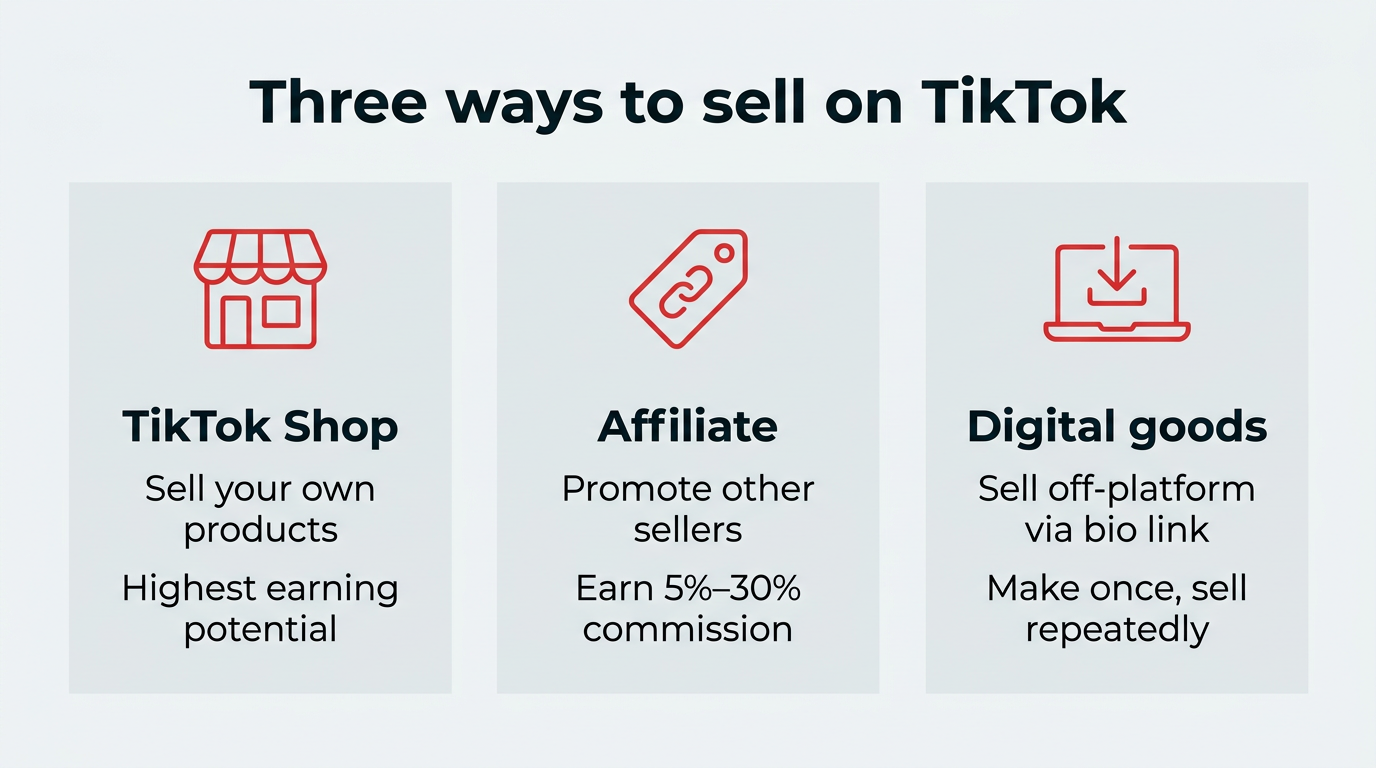
TikTok Shop allows businesses and verified sellers to establish native e-commerce storefronts. Consumers can discover, evaluate, and purchase physical products without ever leaving the application. While this friction-free shopping experience dramatically boosts conversion rates, sellers must account for platform referral commissions and fulfillment logistics. Furthermore, TikTok Shop is geographically restricted to select markets, including the United States, the United Kingdom, and portions of Southeast Asia, requiring businesses to maintain local fulfillment infrastructure.
Affiliate Marketing Commissions
Creators who lack physical inventory can nevertheless capitalize on retail trends by participating in affiliate marketing. Through the TikTok Shop affiliate marketplace, creators can browse available products, generate unique tracking links, and embed them directly into their content. When a viewer completes a purchase via the embedded link, the creator earns a commission—typically ranging from 5% to over 30% depending on the brand category and product margin. This method effectively decouples revenue generation from follower counts, allowing nimble content creators to monetize niche expertise efficiently.
Off-Platform Digital Products
For creators specializing in educational content, design assets, or digital services, utilizing external storefronts such as Stan Store, Gumroad, or Shopify offers a viable workaround to TikTok’s lack of direct digital product sales. By directing traffic via bio links, creators can sell e-books, Notion templates, preset bundles, and coaching services, capturing high profit margins without inventory constraints.
Strategic Implications and Industry Analysis
The rapid professionalization of the TikTok economy carries profound implications for digital marketing and independent labor. As platform algorithms continuously refine their preference for high-retention, authentic content, the barrier to entry has evolved from simple technological access to sophisticated content strategy and audience analytics.
From an economic perspective, TikTok’s aggressive push into social commerce threatens traditional e-commerce paradigms, forcing legacy retailers to adapt their digital strategies to hyper-fast, video-first consumer journeys. Concurrently, the rise of specialized consulting and creator-coaching demonstrates that expertise in platform navigation has itself become a high-value commodity.

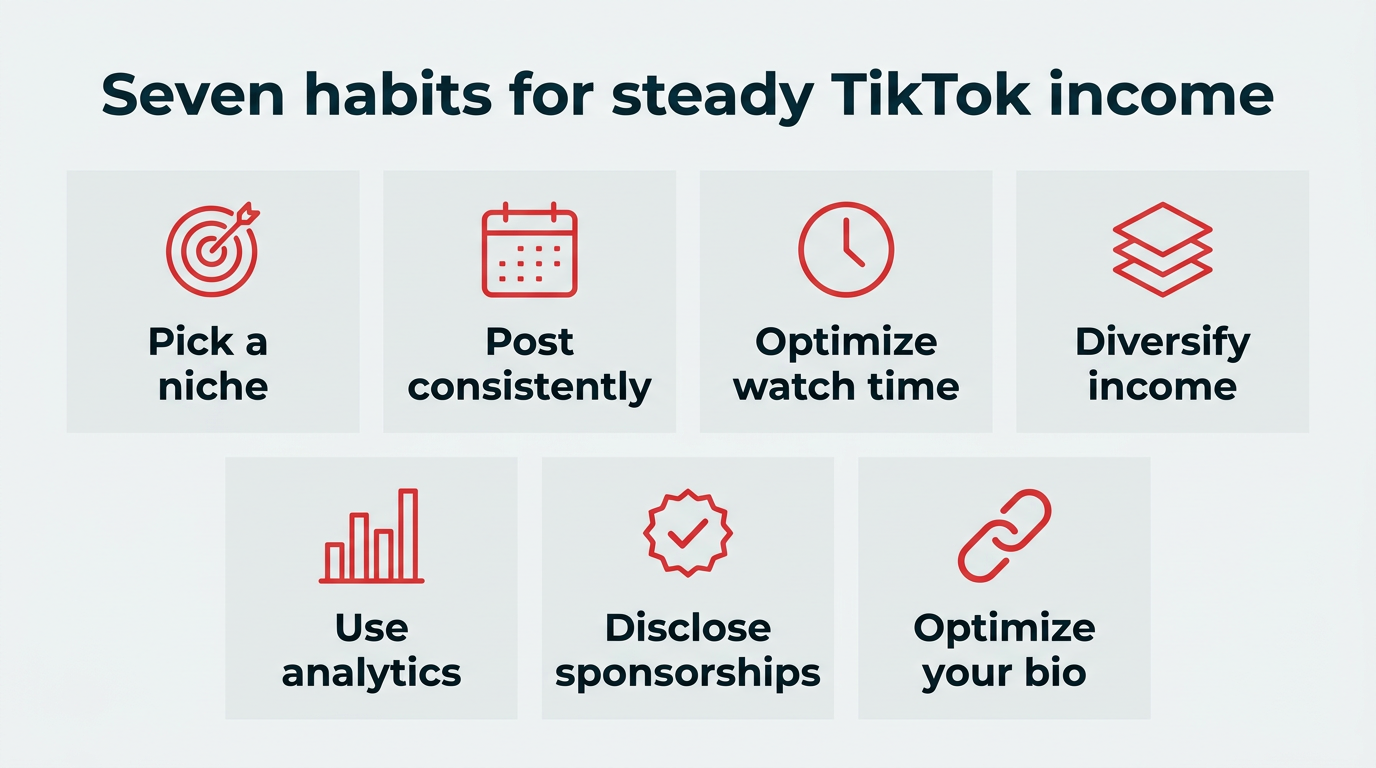
Ultimately, financial success on TikTok is rarely the result of a single viral video. Sustainable revenue generation demands a diversified portfolio approach—stacking native rewards, strategic affiliate marketing, and brand partnerships while rigorously analyzing audience retention metrics and platform policy updates. As the digital landscape matures, creators and businesses that treat TikTok as a dynamic business ecosystem rather than a lottery system will continue to capture the platform’s vast economic potential.