The landscape of social media commerce has undergone a profound transformation, moving far beyond the traditional boundaries of simple brand endorsements into a multifaceted digital economy. As Instagram solidifies its position as a primary engine for the creator economy, understanding how to monetize content effectively has become an essential enterprise for digital publishers, influencers, and independent businesses alike. Driven by a projected $10.52 billion in US influencer marketing spending, according to eMarketer data, the platform continues to capture the largest share of corporate marketing budgets among major social networks. This financial momentum shows no signs of slowing, with industry forecasts projecting total US expenditures to surpass $13.7 billion by 2027.
Crucially, the financial opportunities within this ecosystem are no longer reserved exclusively for mega-celebrities or accounts boasting millions of followers. Market analysis from Statista highlights that creators with modest followings—specifically those maintaining between 1,000 and 10,000 followers—comprise the largest share of global influencer accounts. Micro- and nano-influencers collectively claim approximately 45.5% of total brand spending, proving that high engagement rates and niche authority often outweigh raw audience size in the modern monetization playbook.

Foundational Setup for Creator Monetization
Before capitalizing on these financial streams, creators must properly configure their profiles to unlock Instagram’s native toolsets. Transitioning from a standard personal profile to a Professional account—either as a Creator or a Business—is the indispensable first step. Creator accounts are specifically designed for public figures, artists, and influencers, offering flexible categorization and specialized analytics, whereas Business profiles cater directly to commercial entities selling physical or digital goods.
Once established, navigating to the Professional Dashboard allows creators to inspect their Account status. This critical window verifies eligibility for monetization, flags any policy violations, and determines whether content is actively recommended to non-followers. Additionally, opting into the native Creator Marketplace streamlines brand partnerships. By compiling a comprehensive profile detailing niche expertise, audience demographics, and collaborative preferences, creators position themselves to receive direct campaign inquiries in a dedicated inbox folder, bypassing the friction of cold pitching.
Expanding Revenue Channels: The Twelve Core Monetization Strategies
Modern Instagram monetization spans three distinct pillars: brand partnerships, direct platform tools, and independent revenue generation. Navigating this ecosystem successfully requires diversifying income streams beyond traditional sponsorships.

-
Working with Brands on Sponsored Content
Sponsored posts remain the bedrock of influencer marketing. Brands pay creators to produce in-feed photos, carousels, Stories, or Reels highlighting products or services. In 2026, sponsored content heavily favors authenticity, integrating seamlessly into organic formats like "Get Ready With Me" videos or day-in-the-life vlogs rather than traditional, hard-sell advertisements. -
Affiliate Marketing Programs
Affiliate marketing allows creators to earn commissions by embedding trackable purchase links within Story link stickers, link-in-bio hubs, and Broadcast Channel messages. Supported by platforms like Amazon Associates, LTK, and ShareASale, affiliate income compounds over time, enabling evergreen Reels to generate recurring commissions long after their initial publication. -
Reels Ad Revenue Sharing
Instagram compensates qualifying creators through an ad revenue-sharing model tied directly to Instagram Reels. Rather than a flat rate per view, earnings fluctuate based on niche ad demand, viewer demographics, and qualifying play counts. Because access is invitation-based, maintaining an active, original publishing schedule remains the most effective strategy for securing eligibility.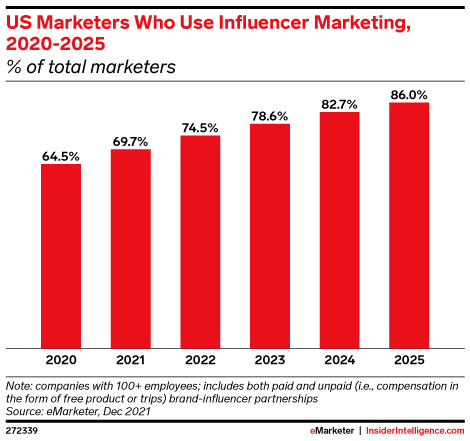
-
Instagram Subscriptions
Subscriptions offer predictable, recurring monthly income by allowing followers to pay a self-selected fee—ranging from $0.99 to $99.99 per month—for exclusive content. Subscribers gain access to subscriber-only Stories, Lives, Reels, and broadcast chats, alongside a distinct purple badge that elevates their visibility in comment sections. -
Live Badges and Virtual Gifts
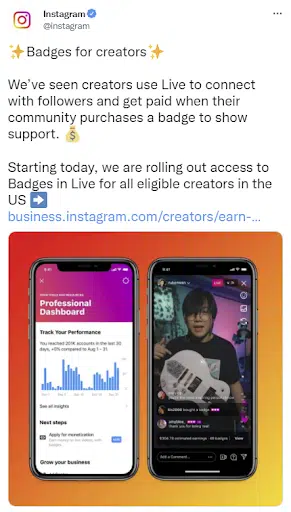
During live-streaming sessions, viewers can purchase Badges priced between $0.99 and $4.99 to show direct financial support, which highlights their comments with a dedicated heart icon. Similarly, virtual Gifts can be sent on eligible Reels, rewarding creators whose audiences feel a genuine sense of digital community. -
Digital Products and Infoproducts
Selling digital assets—such as e-books, preset packs, online courses, and template libraries—offers exceptionally high profit margins. Creators utilize link stickers, pinned posts, and automated direct messaging keywords to guide interested followers from free educational content to paid digital resources.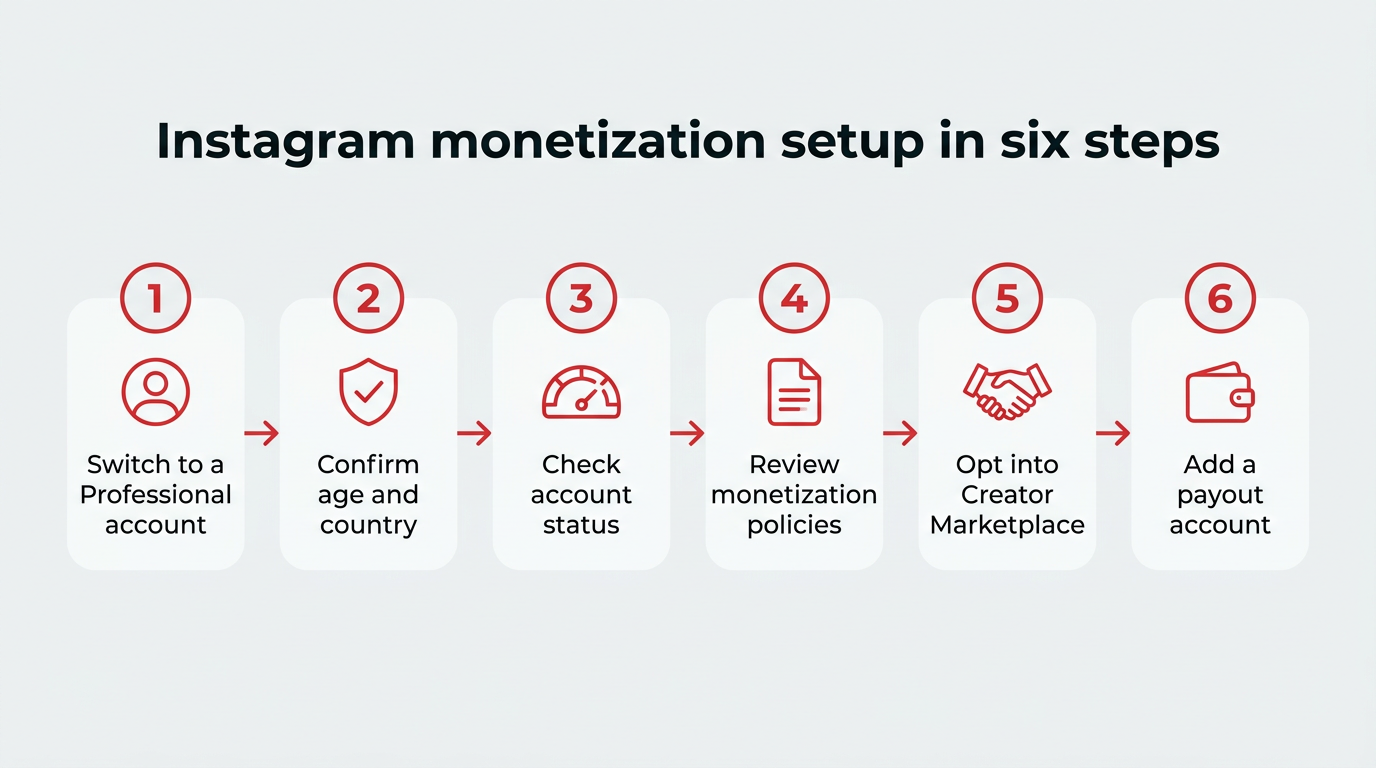
-
Instagram Shops and Social Commerce
For merchants selling physical goods, Instagram Shops bridge the gap between discovery and purchase. By tagging products directly across posts, Reels, and Stories, brands eliminate the friction of redirecting potential buyers to external websites. -
Content Licensing (UGC and Allowlisting)
User-Generated Content (UGC) licensing involves producing media specifically for a brand’s internal channels or paid ad campaigns, decoupling earnings from the creator’s follower count. Allowlisting, or whitelisting, grants brands permission to run paid advertisements directly from a creator’s handle, leveraging their personal credibility for targeted ad spend. -
Broadcast Channels for Audience Conversion
Broadcast Channels serve as one-to-many messaging threads that deliver updates directly to a follower’s primary inbox. Because participants have consciously opted in, conversion rates for affiliate links, product drops, and announcements significantly outperform traditional in-feed posts.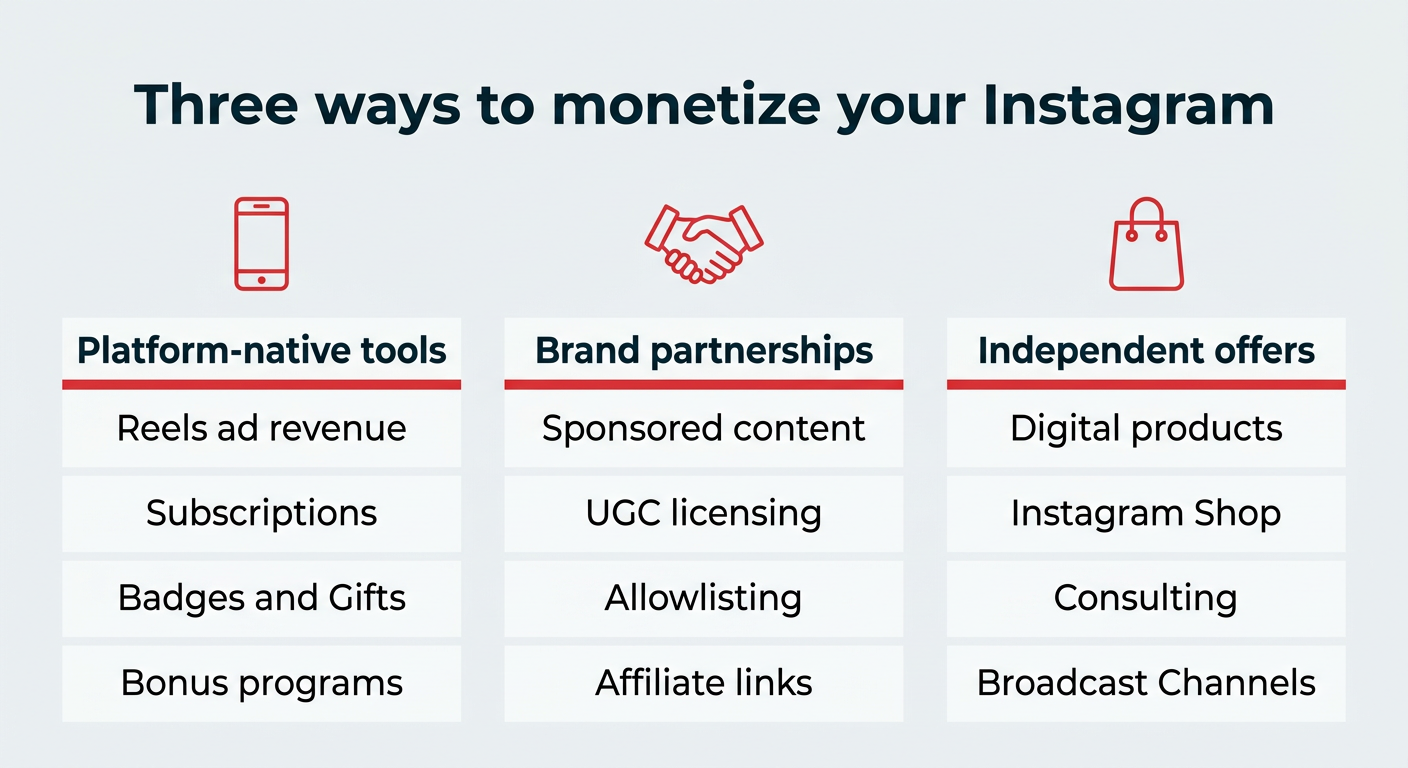
-
Consulting and Coaching Services
Monetizing specialized expertise through one-on-one strategy sessions, portfolio reviews, or ongoing mentorship provides an immediate path to revenue. Creators leverage link-in-bio booking tools and testimonial Stories to validate their professional authority. -
Exclusive Access via Close Friends
Operating as a manual subscription tier, the Close Friends feature enables creators to gate specific Stories and posts for members who have arranged payment externally. This method provides a viable alternative in regions where native Instagram Subscriptions are unavailable. -
Platform Bonus Programs
Instagram periodically deploys invitation-only bonus programs rewarding performance milestones tied to Reels plays and Live engagement. While unpredictable, these initiatives serve as lucrative financial bonuses for creators keeping their accounts in strict compliance.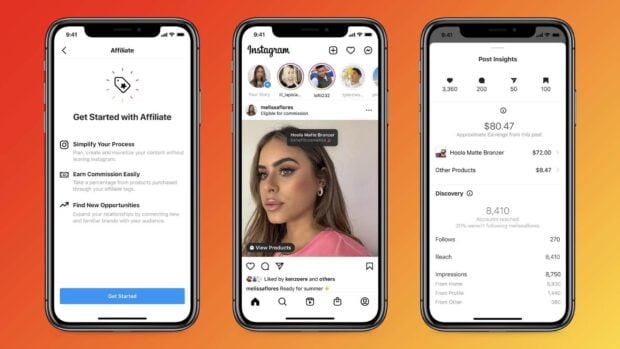
Pricing Strategies and Rate Benchmarks for Brand Deals
Determining appropriate compensation for brand partnerships requires looking beyond outdated metrics. While the legacy rule of thumb suggested charging $100 per 10,000 followers, modern influencer pricing factors in content format, engagement rates, and commercial usage rights.
Estimated industry standard rates span across tiered follower brackets:
- 1K to 10K Followers: $75 to $350 per asset
- 10K to 50K Followers: $250 to $1,000 per asset
- 50K to 100K Followers: $750 to $2,500 per asset
- 100K to 500K Followers: $1,500 to $7,500 per asset
- 500K+ Followers: $5,000+ per asset
Alternatively, calculating rates based on Cost Per Engagement (CPE) offers a more equitable metric. By multiplying recent average engagements (likes, comments, shares, and saves) by a standard factor of $0.16 (ranging typically between $0.14 and $0.20), creators establish data-backed pricing. Furthermore, commercial usage rights, allowlisting permissions, and exclusivity clauses should always be billed as distinct line items separate from the organic posting fee.
Broader Implications and Industry Transparency
As the creator economy matures, industry watchdogs continue to address systemic disparities in influencer compensation. Advocacy initiatives, such as the @influencerpaygap account founded by Adesuwa Ajayi, have played a vital role in exposing historical pay gaps affecting Black, Indigenous, and creators of color. Emphasizing pay transparency and open rate sharing empowers independent publishers to negotiate equitable agreements and avoid chronic underpricing.
Ultimately, maintaining sustainable income on Instagram demands adherence to strict platform policies and federal disclosure requirements. The Federal Trade Commission (FTC) mandates clear and conspicuous disclosures—such as utilizing the "Paid Partnership" label or incorporating explicit text like "#ad" near the beginning of captions—for any sponsored material. By balancing diversified revenue streams with consistent audience engagement and rigorous compliance, creators can successfully navigate the evolving digital marketplace of 2026 and beyond.