As social media users navigate platforms like TikTok and Instagram, they increasingly encounter impeccably styled content creators promoting the latest fashion trends, driving luxury vehicles, and reviewing lifestyle products. Behind these polished profiles, however, lies a rapidly growing digital phenomenon: artificial intelligence influencers. While these virtual personas appear indistinguishable from real humans at first glance, they are entirely computer-generated entities powered by generative AI algorithms. For modern enterprises and digital marketing strategists, the integration of AI-driven models presents a paradigm shift in how brands build awareness, manage production costs, and interact with target audiences. Yet, this technological evolution also introduces profound questions regarding consumer trust, regulatory compliance, and brand authenticity.
Understanding the Genesis and Mechanics of Virtual and AI Influencers
To evaluate the current landscape, industry professionals must first distinguish between traditional virtual influencers and generative AI models. Virtual influencers have existed for nearly a decade; a notable pioneer is Miquela Sousa, commonly known as Lil Miquela, who was created in 2016 using artist-driven computer-generated imagery (CGI). Miquela’s musical output and digital presence were initially managed by a collective of human artists, songwriters, and designers rather than autonomous machine learning algorithms. Despite her synthetic origins, Miquela secured representation with prominent talent agencies such as CAA and collaborated with luxury fashion houses including Prada, Calvin Klein, and Gucci.

In contrast, contemporary AI influencers like Aitana Lopez—a Spanish virtual fitness model developed by the Barcelona-based tech agency The Clueless—rely heavily on generative AI technologies to produce continuous imagery, captions, and localized video content. Lopez has amassed hundreds of thousands of followers on Instagram and reportedly generates upwards of $11,000 monthly through commercial partnerships with mainstream brands like Amazon, Victoria’s Secret, and Olaplex.
Brands are increasingly drawn to these digital avatars for three primary operational advantages: absolute creative control, reduced long-term production costs, and infinite content scalability. Ruben Cruz, founder of The Clueless, noted that Aitana Lopez was intentionally designed to circumvent the logistical challenges, scheduling conflicts, and unpredictable personal egos associated with human talent. Unlike human creators who require rest, breaks, and personal time, AI influencers can operate continuously, executing complex campaigns across multiple global markets without creative friction.
Consumer Perception, Trust Deficits, and the Skepticism Factor
Despite the operational efficiencies promised by synthetic media, consumer reception remains deeply divided. Market research and qualitative studies indicate that the deployment of AI influencers carries a substantial risk of eroding consumer trust. According to findings published via ResearchGate regarding consumer perceptions of AI-generated marketing, nearly 45.3% of users view advertisements featuring AI influencers without taking any action, 28.3% ignore the content entirely, and only 26.4% actively engage by clicking or searching for further information.

Furthermore, industry surveys conducted by platforms like Clutch reveal that 71% of consumers question product recommendations if they discover a human influencer utilized AI-generated content, while 53% are significantly less likely to purchase from brands known to incorporate synthetic media into their social strategies. Consumer sentiment on digital forums frequently highlights a deep-seated aversion to deception, with many users stating that discovering a brand uses a fake person to simulate a genuine human experience permanently damages brand loyalty.
However, consumer skepticism is not entirely uniform. Studies show that audiences exhibit higher receptivity when AI is utilized transparently for educational or sci-fi-themed entertainment purposes rather than personal lifestyle endorsements. Consequently, the core challenge for modern enterprises is navigating the delicate boundary between innovative digital storytelling and perceived deception.
Chronology of Major Virtual Influencer Campaigns
The integration of virtual personalities into mainstream advertising is not entirely new, and historical campaigns offer critical lessons regarding strategic execution.

In 2018, French luxury house Dior partnered with the stylized virtual character Noonoouri to recreate its Rouge Dior Ultra Rouge launch film, delivering a nearly shot-for-shot tribute to the original commercial starring actress Natalie Portman. This campaign demonstrated how high-end brands could leverage distinct animation styles to capture younger demographic cohorts on Instagram without attempting to deceive consumers into believing the avatar was human.
By 2022, fashion retailer PacSun expanded the medium by collaborating with Miquela for its back-to-school and holiday campaigns. The partnership relied on Miquela’s pre-existing digital community of roughly three million followers, allowing the brand to integrate seamlessly into a pre-established online ecosystem.
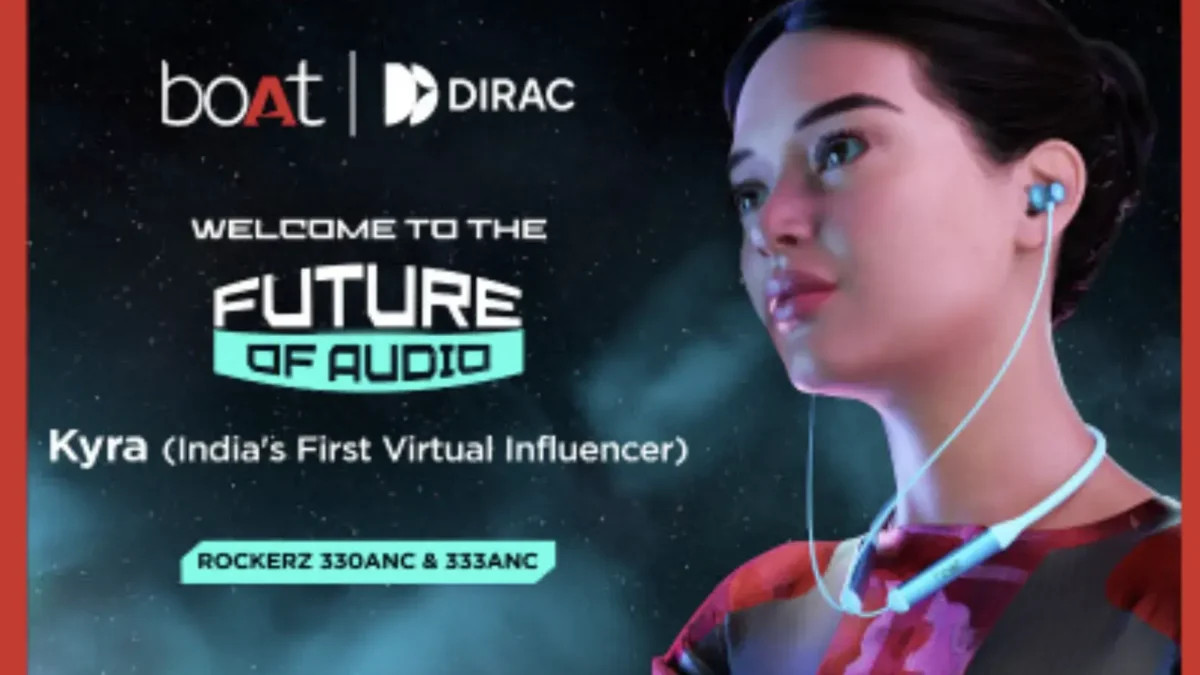
That same year, audio brand boAt partnered with Kyra, India’s first virtual influencer developed by FUTR Studios, for the #FutureOfAudio campaign. Kyra’s launch was amplified by Amazon Prime Video to promote the sci-fi series The Peripheral, utilizing a thematic setting where synthetic reality naturally aligned with the narrative of the entertainment property.
In Latin America, consumer electronics giant Samsung introduced its virtual ambassador, Sam, developed in collaboration with Cheil and Lightfarm. Sam transcended standard social media posting by hosting global product launches, interviewing regional creators live during Galaxy Unpacked events, and serving as a localized brand mascot. Samsung reported tangible commercial success tied to these initiatives, including notable sales increases on regional live-shopping portals. However, industry data indicates that brand partnerships with AI social accounts experienced a temporary contraction, falling by approximately 30% during the first eight months of 2025 compared to the previous year, signaling a broader market recalibration toward measured authenticity.

Financial Implications: Total Cost of Ownership vs. Production Savings
From a financial perspective, proponents argue that AI influencers dramatically lower production expenditures by eliminating traditional overhead costs associated with photography crews, lighting setups, travel, and talent management fees. Initial setup expenses for a proprietary AI influencer can range anywhere from several hundred dollars to over $100,000, depending on the complexity of the model, software licensing, and ongoing rendering requirements.
However, financial analysts emphasize that evaluating the true return on investment requires a total-cost-of-ownership model. Enterprises must factor in hidden operational expenditures, including legal compliance reviews, risk management reserves, content rework hours to correct anatomical glitches or cultural missteps, and public relations monitoring. Furthermore, because AI avatars lack lived personal experiences, they cannot authentically validate physical results in product categories such as skincare, health supplements, or financial planning. In these sectors, the immediate savings realized on production can be entirely offset by declining conversion rates and diminished consumer trust.
Regulatory Landscapes and Global Compliance Requirements

As the deployment of synthetic performers accelerates, regulatory bodies and social media platforms are establishing stringent compliance frameworks to protect consumers from deceptive marketing practices.
In the United States, the Federal Trade Commission (FTC) maintains that existing endorsement guidelines apply equally to virtual and human influencers, requiring clear disclosures for paid partnerships. Furthermore, state-level legislation is emerging; for example, New York enacted regulations requiring specific disclosures for advertisements featuring AI-generated synthetic human performers.
Internationally, regulatory oversight is even more pronounced. The European Union’s landmark Artificial Intelligence Act introduced mandatory transparency obligations under Article 50, which took effect in August 2026. These regulations mandate that any content generated or heavily modified by AI—as well as AI systems interacting directly with natural persons—must be clearly and conspicuously labeled as artificial. Major social media platforms, including Meta, TikTok, and YouTube, have correspondingly updated their platform policies to require automated or manual labeling of synthetic media. Failure to comply with these emerging legal standards exposes corporations to substantial financial penalties and severe reputational damage.
Strategic Recommendations for Marketers

To successfully leverage AI-assisted content workflows without alienating target audiences, marketing executives must adopt a disciplined, transparent operational strategy. Industry experts recommend establishing comprehensive brand voice guidelines, implementing tiered human approval processes for all published assets, and standardizing clear disclosure templates across all active communication channels.
Ultimately, while generative AI and virtual influencers offer unprecedented creative flexibility and scalability, long-term brand equity relies on maintaining transparency, respecting consumer intelligence, and prioritizing genuine human connection where credibility matters most.