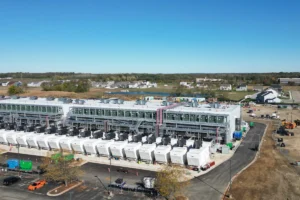
Data centers have emerged as a primary flashpoint during this midterm election cycle, evolving from obscure infrastructure projects into central pillars of political campaigns for the U.S. House and Senate. While federal candidates debate the national implications of the artificial intelligence boom, the real-world trajectory of these facilities—and the broader digital economy—is being decided at town halls and statehouses across the country. As the race for local governance intensifies, the outcome of these lower-profile contests may ultimately hold more weight for the nation’s economic future than the balance of power in Washington, D.C.
The Economic Stakes of the AI Infrastructure Boom
The scale of investment currently flowing into hyperscale data centers is unprecedented in the history of industrial infrastructure. Hyperscalers—the massive cloud computing providers driving the AI revolution—are committing hundreds of billions of dollars annually to expand their physical footprint. Projections suggest that by 2027, annual expenditures for these projects will exceed the $1 trillion mark.
This capital infusion has become a significant driver of national economic health. JPMorgan analysts recently estimated that AI-related infrastructure investment accounted for approximately one-fifth of total GDP growth over the past year. Furthermore, projections from ING suggest that as these facilities come online and increase computing capacity, AI-related economic contributions could expand to encompass one-third of U.S. growth by 2026. However, this growth is increasingly perceived as fragile, with the stock market showing signs of volatility as investors weigh the possibility of an "AI bubble" that could face sudden regulatory headwinds.
The Shift from Federal Policy to Local Regulation
While federal agencies and the executive branch have largely facilitated the expansion of data centers through regulatory streamlining and executive orders, the political momentum is shifting toward local opposition. Analysts, including Michael Pearce, chief U.S. economist at Oxford Economics, argue that Washington’s ability to influence the actual construction of these sites is limited compared to the granular control exerted by municipal and state officials.
"For the direction of the U.S. economy, the composition and direction of governance at the state level may matter more than whether the Democrats ‘win’ the House or the Senate," said Thierry Wizman, global FX and rates strategist at Macquarie. Wizman suggests that a potential "blue wave" at the local level could result in a surge of lawmakers hostile to the massive energy demands and land-use requirements of data centers, effectively stalling the expansion that underpins the current AI-driven market optimism.
Chronology of Conflict: The Loudoun County Precedent
The friction between corporate expansion and local concerns reached a breaking point on Tuesday, when Amazon announced the cancellation of a high-profile data center project in Loudoun County, Virginia. The situation serves as a bellwether for the growing tension in regions previously considered "data center havens."
- February 2026: Amazon Web Services (AWS) acquired prime real estate in Loudoun County for $427 million, intending to build a massive data center complex.
- Spring/Summer 2026: Local residents and civic groups intensified their opposition, citing concerns over power grid strain, noise pollution, and the impact on local property values.
- October 2026: It was revealed that the land purchase had blindsided county leaders, who were already navigating a political climate of "data center fatigue."
- Late October 2026: Amazon formally agreed to abandon the data center plans. As part of the settlement, the company committed to repurposing the site for mixed-use and residential development, donating 25 acres for a community arts and recreation center, and providing a $5 million contribution to a local housing fund.
This outcome highlights a shift in corporate strategy. Companies are increasingly finding that the "path of least resistance" involves negotiating community benefits packages rather than relying on existing zoning rights, a reality that complicates the long-term cost models of hyperscalers.
The Political Pendulum in Key Regions
Texas, long viewed as a business-friendly environment and a primary hub for tech infrastructure, is also experiencing a shift. Republican Governor Greg Abbott, once a vocal booster of the state’s data center industry, has pivoted toward a more skeptical stance as he faces a rigorous re-election campaign against Democratic challenger Gina Hinojosa. This pivot underscores a broader reality: when data centers begin to compete with residential energy needs or create perceived burdens on local infrastructure, their political support evaporates, regardless of party affiliation.
Economists have identified several key battlegrounds where midterm outcomes will dictate the pace of future construction:
- Texas: Balancing energy grid stability with industrial demand.
- The Carolinas: Managing the impact on environmental land use.
- The Midwest (Ohio, Illinois, Wisconsin): Facing increased scrutiny over water usage and power supply capacity.
Implications for the 2028 Presidential Cycle
If current midterm trends persist, the "anti-data center" sentiment could transcend local politics and become a national platform issue for the 2028 presidential cycle. If voters demonstrate a clear preference for candidates who prioritize environmental or community-focused restrictions on digital infrastructure, the industry may face a period of significant regulatory uncertainty.
"If this year’s elections show that an anti-data center stance wins political contests, it could put data center regulation at the heart of the 2028 campaign," Pearce noted. This potential for future regulation has already prompted a "race to build," with developers pushing for early construction starts throughout mid-2026 to lock in permits before potential legislative moratoriums are enacted.
Fact-Based Analysis: Does Regulation Spell Disaster?
Despite the alarm regarding local moratoriums and grid bottlenecks, analysts suggest that the immediate impact on the U.S. economy may be less severe than market skeptics fear. There is a structural lag between the construction of a building and the actual deployment of computing hardware. Because the primary economic value of these projects is derived from the high-tech equipment installed within them—a process that typically trails construction by six to eight quarters—the "surge" of investment seen in the last 18 months is already "baked into" the economic forecast for the next two years.
Furthermore, some market experts, including Daniel Skelly of Morgan Stanley Wealth Management, argue that a cooling off of the current pace could be beneficial. The current frenetic rate of buildout has created acute shortages in skilled labor and power capacity. If political pushback forces a more measured, elongated growth cycle, it could prevent a "blow-off top"—a scenario where the market overheats and suffers a catastrophic collapse.
Conclusion: The New Reality of Digital Infrastructure
The political landscape surrounding data centers is no longer a peripheral issue; it is an economic variable as important as interest rates or trade policy. As the midterms conclude, the focus will shift from campaign rhetoric to the implementation of local ordinances. While the long-term AI investment cycle remains robust due to persistent demand for compute power, the era of unbridled expansion is likely coming to an end.
Developers who can successfully demonstrate that their projects provide tangible community dividends—such as tax relief, school funding, and critical infrastructure improvements—will likely navigate the changing landscape. Conversely, those who fail to align with local interests face an increasingly difficult path forward. For investors and policymakers alike, the lesson is clear: the future of the American data economy is no longer just being written in Silicon Valley, but in the zoning hearings and town council chambers of the American heartland.