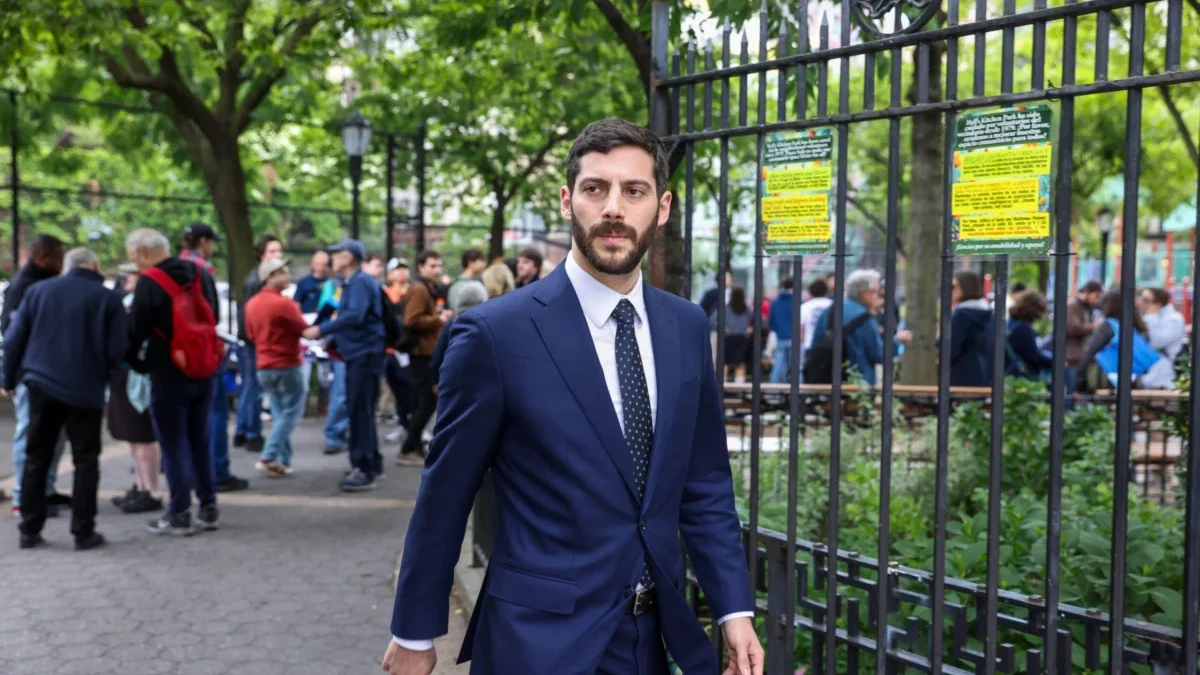
Alex Bores, a former Palantir engineer who transitioned into a career in New York state politics, has become a central figure in the escalating national debate over artificial intelligence regulation. After spearheading New York’s frontier AI safety law, the RAISE Act, Bores recently faced a brutal introduction to the sheer force of Silicon Valley’s political influence during his unsuccessful bid for a congressional seat vacated by Rep. Jerry Nadler. His primary race, which saw more than $40 million in total outside spending, became the most expensive House contest of the election cycle, pitting well-funded industry-backed super PACs against one another in a clash that signaled a new era of AI-centric campaign finance.
Following his defeat, Bores has launched a new nonprofit organization, Who Decides, alongside his former chief of staff, Anna Myers. The group aims to raise $30 million by 2028, with an initial $10 million already secured. The mission of Who Decides is to coalesce disparate AI advocacy groups into a unified front, providing them with the resources to set a common policy agenda rather than allowing the AI industry to dictate the terms of the debate.
The Anatomy of an AI-Driven Primary
The congressional race in Manhattan served as a microcosm of the broader tension between legislative oversight and corporate autonomy. Bores, who campaigned on a platform of robust AI safety and transparency, found himself in the crosshairs of Leading the Future, a super PAC supported by OpenAI president Greg Brockman and venture capital firm Andreessen Horowitz. The PAC poured more than $7.6 million into the race to oppose Bores, specifically targeting his work on the RAISE Act.
Conversely, Public First Action—a group bolstered by $20 million in funding from Anthropic—supported Bores’ candidacy. The sheer volume of capital flooding the district underscored the industry’s recognition that the precedent set in New York could influence federal policy. Despite the massive financial support in his corner, Bores was unable to overcome the spending disparity and the political headwinds of the district, losing the primary.
For Bores, the defeat was not merely a personal loss but a catalyst for systemic change. He argues that the public is currently in a "limited time" window where the fundamental questions regarding AI governance remain unanswered. While voters typically hold a clear ideological framework for issues like healthcare or environmental policy, AI exists in a legislative "gray area" where even the framing of the debate is subject to intense corporate lobbying.
Legislative Chronology: From Albany to D.C.
The development of the RAISE Act in New York provides a roadmap for the difficulties of passing AI-specific legislation. Passed late last year after a fraught legislative session in Albany, the act required the construction of a massive, 55-organization coalition encompassing stakeholders ranging from AI policy experts to educational advocates.
The opposition to the bill was notably more consolidated. Bores characterizes the resistance as a small, influential subset of Silicon Valley stakeholders who advocate for a total absence of regulation. By the time the bill reached the Governor’s desk, it had been stripped of several key provisions, including mandatory third-party audits and robust whistleblower protections. While Bores maintains that the RAISE Act remains the most rigorous state-level safety bill in the country, the process highlighted the inherent difficulty of passing protective legislation when faced with aggressive industry pushback.
The current federal landscape is equally volatile. In 2025, an attempt by Senator Ted Cruz to incorporate a 10-year federal preemption of state-level AI laws into a broader legislative package was defeated in a 99–1 Senate vote. This effort represented a direct attempt to neutralize local initiatives like those in New York. However, the current momentum is shifting toward a new federal bill co-sponsored by Senators Cruz, Amy Klobuchar, and Majority Leader John Thune. While proponents argue the bill focuses on necessary safety testing and incident reporting, critics—including Bores—suggest it may be a Trojan horse designed to federalize AI oversight in a way that ultimately invalidates stricter state-level protections.
Public Sentiment vs. Political Reality
The disconnect between public sentiment and legislative action is a recurring theme in modern American politics. According to a recent Gallup poll, a significant majority of Americans support stricter gun laws, yet Congress has struggled to implement meaningful reforms for decades, a phenomenon often attributed to the influence of well-funded lobbying groups. Bores believes the AI debate is currently tracing a similar path.
Data from the Annenberg Public Policy Center suggests that the public is eager for government intervention. A survey conducted between February and March 2026 found that 65% of Americans believe the government has done "too little" to regulate AI. This desire for oversight cuts across political lines, with 77% of Democrats, 72% of independents, and 53% of Republicans supporting more aggressive federal action.
However, the industry’s own messaging has been inconsistent, complicating the policy landscape. In May 2023, OpenAI CEO Sam Altman appeared before the Senate Judiciary Committee to request, and even encourage, government regulation. By May 2025, his position had shifted significantly, as he warned the Senate Commerce Committee that mandatory government approval processes for AI development would be "disastrous." This about-face, contrasted with the more consistent pro-regulation stance of Anthropic’s Dario Amodei, has left many policymakers skeptical of industry-led voluntary frameworks.
The Strategy of Who Decides
The primary objective of Bores’ new nonprofit, Who Decides, is to provide a counterweight to the industry’s lobbying power. Rather than attempting to match the record-breaking spending of corporate-backed PACs, the organization intends to focus on building grassroots capacity across 11 battleground states. The goal is to assist local organizations in developing their own policy agendas, ensuring that the legislative floor for AI safety is built upon a broad, democratic consensus.
This strategic pivot was accelerated by the recent resignation of Jacob Coxon from Anthropic, an event that Bores believes has signaled a renewed sense of urgency among federal legislators. Bores notes that in the week following the resignation, he was contacted by 16 members of Congress seeking guidance on the policy implications. While these initial inquiries have been limited to Democrats, Bores has emphasized that his organization is committed to a non-partisan approach, inviting input from any political stakeholder interested in establishing a baseline of accountability.
Implications for the Future of Tech Governance
The core challenge, according to Bores, is avoiding what he terms a "circular firing squad" among AI advocates. He observes that well-intentioned activists frequently splinter their efforts, prioritizing narrow sub-issues over the broader necessity of cohesive regulation. By uniting these groups under a "shared floor" of common goals, Who Decides hopes to create a more effective advocacy network that can survive the intense scrutiny and financial pressure of election cycles.
The implications of this effort are significant. If Who Decides succeeds in creating a sustainable, state-based advocacy model, it could change the calculus for future candidates, making it harder for industry-backed PACs to drown out public concerns. However, the path forward remains precarious. As technology continues to evolve faster than the legislative process, the battle to define the role of the state in AI oversight will likely define the political discourse for the remainder of the decade.
Ultimately, the struggle over AI regulation is a debate about the balance of power between the architects of transformative technology and the representatives of the public interest. As Bores noted in his discussions with Fortune, the fundamental questions—who governs the machines, and by what standards—are currently being contested in an environment heavily skewed by private capital. Whether a grassroots-oriented nonprofit can effectively influence this trajectory remains an open question, but the emergence of Who Decides suggests that the era of unchallenged industry dominance in AI policymaking may be facing its first serious, organized test.