Managing digital media, particularly when dealing with diverse sources and formats, presents a significant operational challenge for businesses and developers alike. The ability to seamlessly ingest, modify, and distribute these assets in an optimized manner is crucial for user experience, application performance, and overall business efficiency. In response to this growing demand, Filestack has emerged as a robust and versatile solution, offering a unified platform designed to streamline the entire media lifecycle, from initial upload to final delivery.
The complexities of media management are often exacerbated by the variability of incoming files. Users may submit content in any state, size, or format, requiring developers to implement extensive custom coding to ensure compatibility and desired outcomes. This is where third-party services like Filestack aim to alleviate the burden. The platform promises to simplify the intricate processes of uploading, transforming, and delivering media assets in a highly optimized and user-friendly fashion.
The Filestack Ecosystem: Onboarding and Core Functionality
The journey into the Filestack ecosystem begins with a straightforward, risk-free onboarding process. Prospective users can sign up for a free account, which typically includes a 21-day trial period, offering full access to the platform’s extensive libraries and features. This trial period allows developers to explore the full capabilities of Filestack without immediate financial commitment, fostering a trial-and-error environment conducive to integration.
Upon successful registration, users gain immediate access to Filestack’s comprehensive code libraries, designed to facilitate integration into existing applications. A critical component of the onboarding and integration process is the platform’s documentation. Filestack’s documentation is frequently lauded by developers for its clarity, depth, and wealth of practical examples. It serves as an indispensable resource, providing detailed usage information and code samples that significantly reduce the learning curve and accelerate implementation. This emphasis on developer experience is a key differentiator, aiming to transform a traditionally complex task into a more manageable and efficient workflow.
Seamless Uploading: Bridging the Gap Between Users and Content
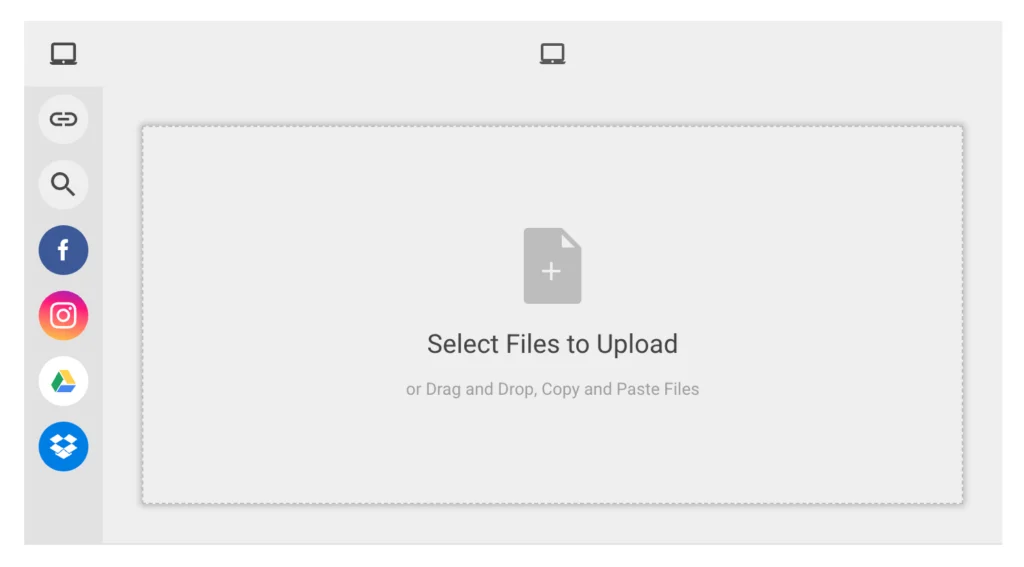
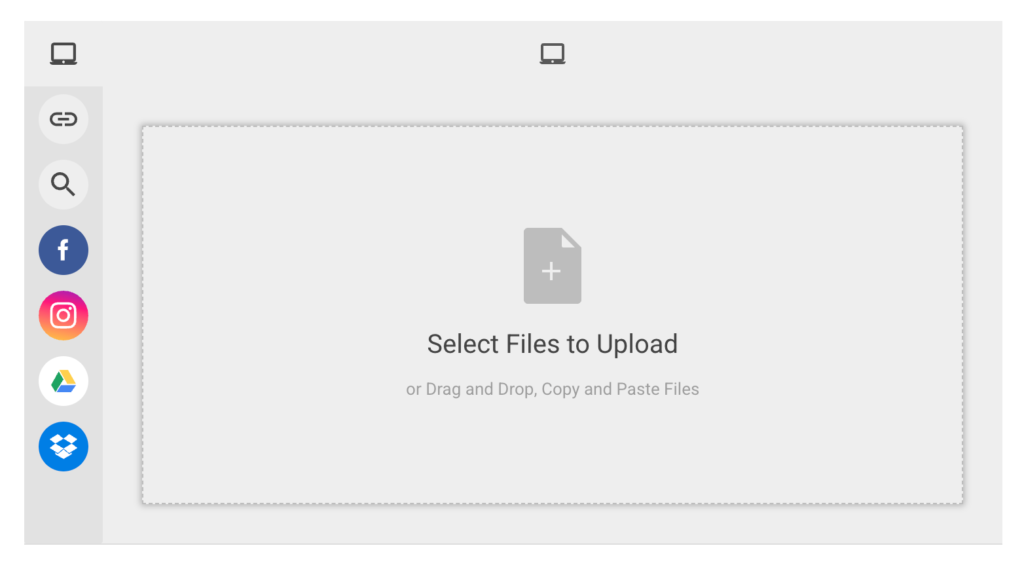
A cornerstone of the Filestack platform is its intuitive and feature-rich file uploading capabilities. For front-end applications, Filestack provides a readily implementable UI component that can be integrated with minimal effort. The typical JavaScript implementation involves initializing the Filestack client with an API key and then invoking the picker.
// Using JavaScript
const client = filestack.init("YOUR_API_KEY"); // Replace with your actual API key
const picker = client.picker();
picker.open();
This simple snippet generates an elegant, highly functional, and visually appealing file uploading interface. This component is not merely a basic file selector; it integrates with over 20 popular cloud storage and social media services, including Google Drive, Dropbox, GitHub, Facebook, and Instagram. This broad integration means users can effortlessly source files from their preferred online repositories or social profiles, eliminating the need to download and re-upload. Furthermore, the UI component supports drag-and-drop functionality, a user-friendly feature that enhances the uploading experience and is widely adopted across modern web applications.
For developers who prefer or require back-end uploading, Filestack also offers robust server-side libraries. The Python library, for instance, provides a clear and concise way to programmatically upload files.
from filestack import Client

# Replace with your actual API key
API_KEY = "YOUR_API_KEY"
client = Client(API_KEY)

store_params =
    'location': 's3',  # Example: Store in an S3 bucket
    'path': 'folder/subfolder/', # Specify a path within the storage location
    'upload_tags':
        "project": "marketing_campaign", # Example of custom tags
        "source": "user_upload"


# Replace with the actual local path to your file
file_path = 'path/to/your/local/image.jpg'
file_link = client.upload(filepath=file_path, store_params=store_params)

print(f"Uploaded file URL: file_link.url")
This back-end approach offers greater control over the upload process, allowing for automated uploads as part of larger workflows, batch processing, and integration with existing server-side logic. The availability of multiple code libraries across different programming languages underscores Filestack’s commitment to developer flexibility and ease of integration, a significant advantage in a diverse technological landscape.
Transformative Capabilities: Tailoring Media to Specific Needs
Once files are successfully uploaded, the next critical stage in media management is transformation. Users often upload files in their raw, original state, which may not be suitable for direct presentation or integration into specific application contexts. Filestack’s transformation engine addresses this by enabling rapid and facile modification of media assets. This capability extends to a wide array of file types, including images, videos, and even documents.
The transformations can be applied in two primary modes: real-time processing, where modifications are applied on-the-fly when a URL is accessed, or through synchronous workflows, where transformations are pre-processed and stored. This flexibility allows developers to choose the approach that best suits their application’s performance requirements and operational needs.
For image manipulation, Filestack leverages URL parameters to enact transformations. This method is particularly powerful for dynamic resizing and effect application. For example, resizing an image to a specific width can be achieved with a simple URL modification:
https://cdn.filestackcontent.com/resize=width:300/pdn7PhZdT02GoYZCVYeFBeyond simple resizing, a more complex array of visual adjustments can be chained together. This includes applying color filters, rotating images, and even adding stylistic borders, as demonstrated by this example:
https://cdn.filestackcontent.com/resize=width:300/sepia=tone:80/polaroid/pdn7PhZdT02GoYZCVYeFThe scope of Filestack’s transformation capabilities extends far beyond basic image adjustments. The platform supports a comprehensive suite of commands, enabling developers to:
- Image Editing: Crop, rotate, flip, adjust brightness, contrast, saturation, and apply various filters (e.g., grayscale, sepia, blur).
- Video Processing: Transcode videos to different formats, adjust resolution, trim, and extract thumbnails.
- Document Handling: Convert documents to various formats (e.g., PDF to JPG), extract text, and optimize for web display.
- Watermarking: Add text or image watermarks to protect intellectual property.
- Face Detection and Recognition: Identify and process facial features within images.
- Metadata Manipulation: Read, write, and remove EXIF data and other metadata.
- File Optimization: Compress files to reduce size without significant loss of quality.
These commands can be intricately combined, allowing for the creation of highly customized media assets that precisely meet the presentation requirements of any application. The ability to orchestrate complex transformations through simple URL parameters or programmatic calls significantly reduces the need for heavy server-side processing or dedicated image editing software.
Furthermore, for applications where end-users might need to perform transformations themselves, Filestack offers a user-friendly Transformation UI. This component empowers users to directly manipulate uploaded media through an intuitive graphical interface, fostering a more interactive and self-service content creation experience.
Reliable Delivery: Ensuring Performance and User Experience
The final, yet equally critical, phase of media management is delivery. The speed and reliability with which media assets are delivered to end-users can have a profound impact on user retention, engagement, and conversion rates. Slow-loading images or videos can lead to frustration and abandonment, directly affecting business outcomes.
Filestack addresses this through its robust Content Delivery Network (CDN). When a Filestack URL is accessed for the first time, whether it involves storage aliases or transformations, the CDN caches a copy of that asset. This cached copy remains available for 30 days. After this period, the asset is only re-cached upon subsequent requests, ensuring that delivery remains efficient without unnecessary storage overhead. This intelligent caching mechanism significantly reduces latency and improves load times, providing a consistently fast and reliable experience for users accessing media content.
The CDN’s global distribution ensures that media is served from the closest geographical server to the user, further optimizing delivery speeds. This is particularly important for applications with a global user base.
Broader Implications and Analysis
The comprehensive nature of Filestack’s platform addresses a critical gap in the digital infrastructure for many businesses. By consolidating upload, transformation, and delivery into a single, integrated service, Filestack enables developers to:
- Reduce Development Time and Costs: By abstracting away the complexities of media handling, Filestack significantly shortens development cycles and reduces the need for specialized in-house expertise or expensive third-party tools for each stage of the media lifecycle.
- Enhance User Experience: Faster upload speeds, more intuitive interfaces, and quicker media delivery contribute directly to a better user experience, which is increasingly a key differentiator in competitive markets.
- Improve Application Scalability: Filestack’s infrastructure is built to handle large volumes of media, allowing applications to scale efficiently without the burden of managing their own media storage and processing pipelines.
- Unlock Creative Possibilities: The extensive transformation capabilities empower developers and designers to create visually rich and dynamic content, pushing the boundaries of what’s possible within web and mobile applications.
The trend towards richer media content in digital experiences—from e-commerce product showcases and social media feeds to educational platforms and streaming services—continues to grow. According to Statista, video content is expected to account for over 82% of all consumer internet traffic by 2022, a figure that has likely only increased since. Similarly, the visual nature of modern web design emphasizes the importance of high-quality images. Platforms like Filestack are instrumental in enabling businesses to meet these evolving content demands efficiently and effectively.
In essence, Filestack offers a powerful, end-to-end solution that transforms a historically challenging aspect of software development into a streamlined and manageable process. By providing developers with the tools to upload, transform, and deliver media with unprecedented ease and flexibility, Filestack empowers businesses to focus on their core offerings, confident in the knowledge that their media assets are handled with optimal performance and efficiency. The platform’s commitment to developer-centric design, coupled with its robust feature set, positions it as a valuable asset for any organization aiming to leverage rich media in their digital strategies.