Navigating the constantly evolving landscape of digital advertising requires precision, especially when deploying capital across major social media ecosystems. For social media managers, marketing directors, and business owners, uploading an asset with incorrect dimensions or substandard resolution is a frequent operational hurdle. While such errors often stem from simple oversights, their consequences directly impact campaign performance, manifesting as diminished engagement rates, higher cost-per-acquisition metrics, and suboptimal return on ad spend. Meta, the parent company of Facebook and Instagram, routinely updates its platform guidelines, aspect ratios, and file size tolerances to accommodate new hardware capabilities and shifting user consumption habits. Consequently, maintaining an up-to-date repository of creative specifications is no longer optional; it is a fundamental requirement for executing successful paid acquisition strategies.
Background and Context of Platform Evolution

Over the past decade, Meta has transitioned its advertising infrastructure from a desktop-centric model to a mobile-first, highly immersive ecosystem. The introduction of dynamic formats such as Stories, Reels, and interactive collection ads has fundamentally altered how brands communicate with consumers. In the early days of social media marketing, static image dimensions were relatively uniform, typically favoring landscape orientations. However, the ubiquity of smartphones has reversed this trend, placing a heavy premium on vertical and square visual formats that maximize screen real estate.
As digital real estate becomes more competitive, platforms have tightened technical guardrails to ensure user experience remains uninterrupted. Poorly scaled images or lagging, low-framerate videos are systematically deprioritized by Meta’s ad delivery algorithm, which favors content that drives high user retention and positive sentiment. Understanding these mechanical shifts provides essential context for why adherence to precise pixel dimensions and compression limits directly influences campaign viability.
Chronology of Modern Ad Formats
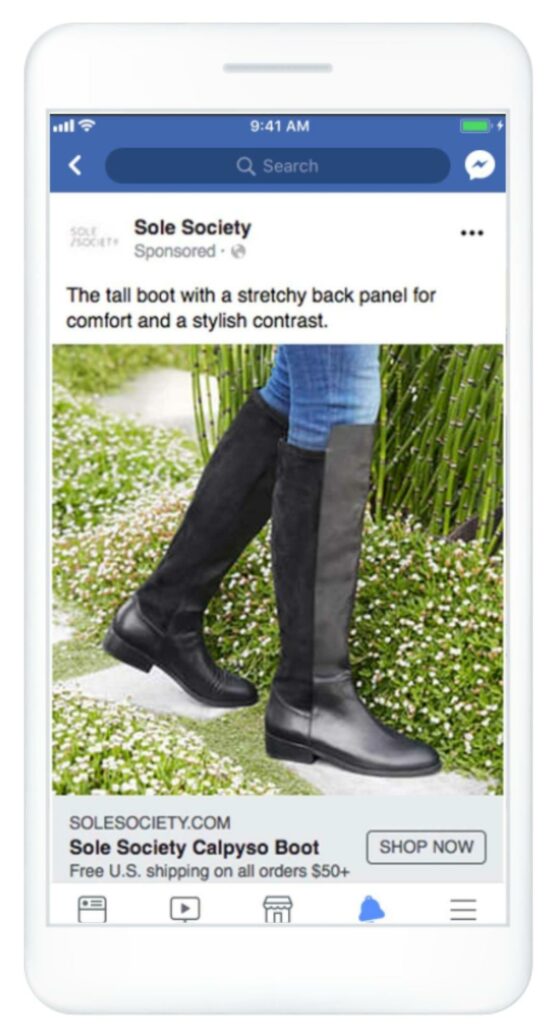
The integration of diverse ad placements has rolled out progressively alongside user adoption curves. In-feed placements represent the foundational bedrock of Meta advertising, tracing their lineage back to traditional desktop news feeds before evolving to seamlessly blend with user-generated content on mobile devices.
Following the success of in-feed placements, Meta introduced in-stream video ads to capture high-intent audiences consuming long-form or live video content. This was followed by the rollout of carousel and collection formats designed specifically to bolster mobile e-commerce by enabling multi-product displays within a single ad unit.
More recently, ephemeral formats such as Facebook and Messenger Stories—modeled after competitive short-form viewing habits—have shifted the creative standard toward immersive 9:16 vertical video and imagery. Similarly, the expansion of the Audience Network has allowed advertisers to push native, banner, and interstitial placements out to third-party mobile applications and external websites, extending campaign reach far beyond the native Facebook application.
Technical Specifications by Placement
Achieving optimal visual fidelity requires strict adherence to technical design parameters across each distinct placement category. Below is a comprehensive breakdown of current requirements for image and video assets.
Facebook In-Feed Ads
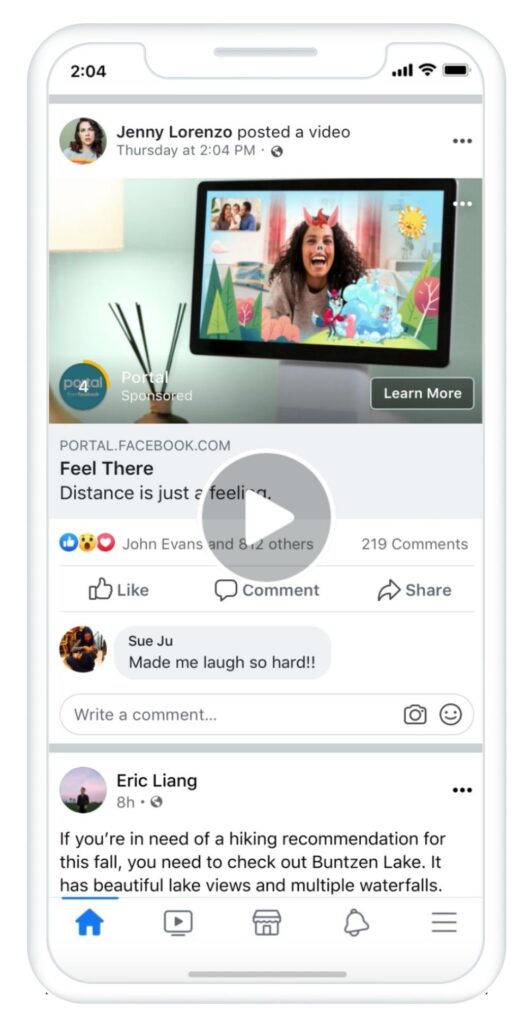
In-feed ads appear directly within the user’s primary news feed, interspersed organically between posts from friends, family, and followed pages.

- Images: Supported file types include JPG and PNG. The maximum allowable file size is 30 MB. While the minimum dimension is 600 x 600 pixels, Meta recommends a resolution of at least 1080 x 1080 pixels with an aspect ratio ranging from 1.91:1 to 1:1. Text recommendations advise keeping primary text to 125 characters, headlines to 27 characters, and descriptions to 27 characters.
- Videos: Supported formats comprise MP4, MOV, and GIF. The maximum file size is capped at 4 GB, with a minimum resolution of 120 x 120 pixels and a recommended resolution of at least 1080 x 1080 pixels. Aspect ratios should be 1:1 for desktop or mobile, or 4:5 for mobile-only deployments. Video lengths can span from 1 second to 241 minutes.
Facebook In-Stream Video Ads
Tailored for capturing high-intent traffic and conversions, in-stream video ads play mid-roll or pre-roll during video content.
- Images: Formats include JPG and PNG, with a maximum file size of 30 MB and minimum dimensions of 600 x 600 pixels. Resolutions should meet or exceed 1080 x 1080 pixels at a 1.91:1 or 1:1 ratio. Primary text should target 125 characters, and headlines should remain under 40 characters.
- Videos: Formats accepted are MP4, GIF, and MOV up to 4 GB. Supported aspect ratios are 16:9 or 1:1, with runtimes ranging between 5 seconds and 10 minutes.
Facebook In-Feed Carousel Ads
Carousel formats enable advertisers to showcase between two and 10 scrollable images or videos within a single ad unit, allowing for distinct landing page URLs per card.
- Assets: Images require JPG or PNG formats (maximum 30 MB), while videos require MP4, MOV, or GIF (maximum 4 GB). Minimum dimensions are 600 x 600 pixels for images and 120 x 120 pixels for videos, both adhering to a 1:1 aspect ratio and a minimum resolution of 1080 x 1080 pixels.
- Text: Primary text is capped at 125 characters, headlines at 32 characters, and descriptions at 18 characters, with a mandatory landing page URL.
Facebook Collection Ads
Designed specifically for e-commerce enterprises, collection ads pair a primary hero video or image with a grid of three product images, linking directly to a full-screen Instant Experience landing page.

- Assets: JPG, PNG, MP4, MOV, and GIF formats are supported, adhering to a 1:1 aspect ratio and a minimum resolution of 1080 x 1080 pixels. File size limits remain at 30 MB for static assets and 4 GB for video.
- Text: Primary text should be 125 characters, and headlines should not exceed 40 characters.
Facebook Instant Articles Ads
Instant Articles provide a mobile-optimized publishing format for fast-loading, text-heavy editorial content distributed across the platform.
- Images: JPG and PNG files up to 30 MB, with a minimum size of 600 x 600 pixels and a recommended resolution of 1080 x 1080 pixels at a 1:1 ratio.
- Videos: MP4, MOV, or GIF up to 4 GB, featuring a 16:9 video aspect ratio and a 1:1 image aspect ratio, with lengths spanning 1 second to 241 minutes.
Facebook Marketplace Ads
Marketplace ads target users actively browsing local or regional product listings within the platform’s commerce hub.
- Images: JPG and PNG up to 30 MB, minimum 600 x 600 pixels, recommended 1080 x 1080 pixels at a 1:1 ratio.
- Videos: MP4, MOV, or GIF up to 4 GB, maintaining a 1:1 ratio and a resolution of at least 1080 x 1080 pixels.
Facebook Right Column Ads
Restricted exclusively to desktop users, right column ads offer a landscape-oriented display positioned adjacent to the main feed.

- Assets: JPG and PNG for images; MP4, MOV, or GIF for videos. Minimum dimensions require 254 pixels in width and 133 pixels in height, with resolutions reaching at least 1080 x 1080 pixels at a 1:1 ratio. Headlines are recommended to stay within 40 characters.
Facebook Stories and Messenger Stories Ads
Vertical, full-screen immersive formats that appear between organic user stories.
- Images: 9:16 aspect ratio, JPG or PNG up to 30 MB, with a minimum width of 500 pixels and a resolution of at least 1080 x 1080 pixels. Advertisers must leave approximately 14% (250 pixels) of the top and bottom margins free of critical text or logos to prevent interface overlapping.
- Videos: MP4, MOV, or GIF up to 4 GB, utilizing a 9:16 ratio for Messenger Stories or 9:16, 1:1, or 4:5 for Facebook Stories, with lengths ranging from 1 second to 2 minutes for Messenger and up to 241 minutes for Facebook.
Facebook Audience Network Ads
Extending campaign reach to vetted third-party publisher websites, applications, and mobile games.
- Images: 9:16 aspect ratio, JPG or PNG up to 30 MB, with minimum dimensions of 398 x 208 pixels.
- Videos: MP4, MOV, or GIF up to 4 GB, featuring 1:1 or 4:5 aspect ratios and a minimum resolution of 1080 x 1080 pixels.
Analysis of Implications and Strategic Optimization

Failing to align creative assets with platform-specific technical requirements introduces measurable friction into media buying operations. When an image fails to meet minimum pixel thresholds, automated compression algorithms step in, often resulting in pixelation, blurred typography, or distorted brand elements. In competitive digital auctions, where user attention spans are measured in milliseconds, visual degradation directly suppresses click-through rates and elevates customer acquisition costs.
Furthermore, strategic placement optimization requires marketers to evaluate where their target demographics spend the majority of their time. For instance, while desktop-only right column ads maintain niche utility for retargeting campaigns, mobile-first video placements across feeds, Reels, and Stories command the lion’s share of consumer engagement and conversion volume. Industry analysts consistently emphasize that omnichannel campaigns yielding the highest return on investment are those built on native asset creation—customizing creative dimensions for each specific placement rather than relying on a single resized master file.
Industry analysts and platform representatives frequently stress that future-proofing marketing operations relies heavily on automation tools and centralized management suites. Enterprise-grade social media management platforms—such as Hootsuite—allow marketing teams to streamline the deployment of paid and organic campaigns across Facebook, Instagram, and supplementary channels. By consolidating asset management, scheduling, and cross-channel performance analytics into a single dashboard, organizations can mitigate human error, ensure strict adherence to technical design specifications, and continuously optimize return on ad spend across complex, multi-format media strategies.