Agentic Commerce Transforms E-commerce, Driving Billions in Sales and Ushering in a New Era of Personalized Shopping Experiences

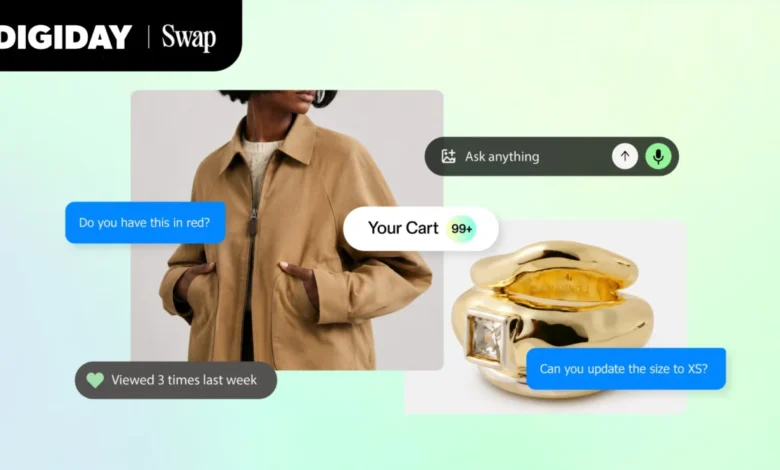
Artificial intelligence has rapidly become the quintessential entry point in modern e-commerce, fundamentally altering how consumers interact with brands and discover products. Shoppers are increasingly relying on sophisticated AI-powered summaries and intelligent assistants, moving beyond mere product recommendations to leverage AI agents for evaluating options, making informed purchase decisions, and even seamlessly completing transactions. This seismic shift is highlighted in a recent State of the Industry report, sponsored by Swap, which delves into how brands, retailers, and agencies are strategically adopting agentic commerce, including the pioneering concept of agentic storefronts, to significantly enhance the overall shopping journey.
The impact of this transformation is already staggering. According to robust Salesforce data, AI and agentic tools were instrumental in driving a remarkable 20% of all retail sales during the intensely competitive 2025 holiday shopping season, translating into an astounding $262 billion in holiday spending. This unprecedented penetration signals a critical imperative for businesses: adapt or be left behind. In response, a significant number of brands and retailers are actively implementing advanced agentic tools to provide hyper-personalized shopper experiences and unlock new avenues for growth. More profoundly, some industry pioneers are embarking on a complete re-imagining of the traditional e-commerce model, transitioning from static, grid-based websites to dynamic, agentic storefronts that offer intuitive, conversational experiences, guiding customers meticulously through every stage of their purchasing journey.
The new State of the Industry report, a collaborative effort between Glossy and Swap, surveyed 80 key respondents from brands, retail organizations, and agencies to gauge their adoption of these transformative agentic tools. The findings are compelling: an overwhelming 90% of respondents confirmed they are already utilizing AI to enhance their consumers’ shopping experiences, underscoring the widespread recognition of AI’s strategic importance.
Understanding the Agentic Revolution in E-commerce
The concept of "agentic commerce" represents a significant evolution beyond traditional e-commerce and even earlier forms of AI-driven personalization. It’s not merely about chatbots or recommendation algorithms; it’s about intelligent agents capable of understanding context, remembering past interactions, asking clarifying questions, and proactively guiding a customer through a complex decision-making process, often culminating in a purchase.
Juan Pellerano-Rendon, Chief Marketing Officer at Swap, articulates this distinction vividly. "Most people hear ‘agentic commerce’ and immediately think about the discovery moment: how does my brand show up when someone asks an AI what jacket to buy?" Pellerano-Rendon observed. "That’s a real and important question to surface in LLMs, but it’s only the entry point." He emphasizes that the true transformative power lies in what transpires after initial discovery. "What makes our first agentic storefront genuinely transformative is what happens after discovery. A real agent doesn’t just surface a product and hand the consumer off to a static website," he explained. "It understands context, it asks questions, it remembers what you looked for last time. That continuity is what changes the economics." This implies a shift from transactional interactions to sustained, personalized relationships.
As AI technology becomes increasingly integrated into daily life, particularly within the digital commerce landscape, a lexicon of new, often interrelated, terms has emerged to describe its diverse capabilities. Agentic commerce encompasses a spectrum of these, from AI-powered search and conversational interfaces to virtual try-ons and full-fledged agentic storefronts. The core differentiator is the agent’s ability to act autonomously, often across multiple steps, to achieve a user’s goal, rather than merely responding to discrete queries.
The Rapid Ascent of AI in E-commerce: A Chronological Overview
The acceleration of AI adoption in e-commerce can be traced through several key developments:
- Pre-2025: Foundational AI and Early Personalization: Before the widespread integration of generative AI, e-commerce platforms utilized AI for basic tasks such as product recommendations based on browsing history, personalized email marketing, and rudimentary chatbots for customer service. These tools, while helpful, often operated in silos and lacked the conversational depth and contextual understanding of modern AI agents.
- 2025 Holiday Season: AI as a Major Sales Driver: The 2025 holiday shopping season marked a pivotal moment. Salesforce data revealed that AI and agents contributed to 20% of all retail sales, accounting for a staggering $262 billion in spending. This demonstrated AI’s transition from a supplementary tool to a core sales engine. The sheer volume of transactions facilitated by AI underscored consumer readiness and preference for these new interfaces.
- Late 2025: Tech Giants Embrace Agentic Capabilities: Major technology players quickly responded to this burgeoning trend. Google, for instance, rolled out new shopping features throughout 2025 for its Gemini AI platform, including advanced price comparisons and virtual try-ons. Similarly, in October 2025, Amazon introduced its AI-powered "Help Me Decide" feature, designed to offer users personalized recommendations for similar products based on their past shopping history. These moves by industry giants signaled a broader validation and commitment to agentic commerce.
- 2026: Widespread Brand and Retailer Adaptation: By 2026, the report indicates that brands and retailers are actively adapting their online presences, embracing the presence and utility of AI agents. This year is characterized by a significant move towards integrating agentic tools across various facets of the e-commerce experience.
- Projected Growth to 2030 and Beyond: Looking ahead, industry forecasts paint an even more dramatic picture. Bain & Co. projects the U.S. agentic commerce market could surge to between $300 billion and $500 billion by 2030, potentially comprising 15% to 25% of overall e-commerce. McKinsey’s estimates are even more ambitious, suggesting that AI agents could orchestrate as much as $1 trillion in U.S. B2C retail revenue by 2030, with global projections reaching $3 trillion to $5 trillion. These figures underscore the profound, long-term impact expected from agentic commerce.
Industry Adoption and Strategic Shifts
The Glossy and Swap survey provides crucial insights into how brands, retailers, and agencies are navigating this evolving landscape. The high adoption rate—90% already using AI to enhance customer experience—is a clear indicator of the technology’s perceived value. However, the implementation strategies vary. More than half of the respondents (56%) primarily rely on internal agentic AI tools, suggesting a desire for greater control and customization, while 33% predominantly partner with third-party tech providers, leveraging specialized expertise. An additional 11% employ a balanced mix of both internal and external solutions.

A critical first step in adopting agentic commerce is ensuring discoverability. The survey found that a majority of respondents (71%) have configured their e-commerce sites to be discoverable by AI agents. However, a concerning 20% remain unsure, and 9% explicitly state their sites are not AI-discoverable. This "discoverability gap" represents a significant competitive vulnerability.
Juan Pellerano-Rendon highlights the urgency. "The window to get ahead of this is narrower than most brands realize," he warns. "Discoverability in an agentic world isn’t just about SEO anymore. It’s about whether your product catalog, your brand context, and your customer data are structured in a way that an AI agent can actually work with." This implies a need for rich, structured data that AI can interpret and utilize effectively, moving beyond keyword optimization to semantic understanding.
Previous Glossy+ Research from 2025 further underscores the urgency, revealing that AI has already impacted traditional search traffic. More than one-third of brand and agency professionals (37%) reported decreases in upper-funnel search traffic, and 21% observed declines in lower-funnel search traffic due to AI. This indicates that consumers are increasingly bypassing traditional search engines, opting for AI assistants for product discovery, thereby redirecting valuable traffic away from brands unprepared for this shift.
Beyond Discovery: The Full Funnel Impact of Agentic AI
Agentic commerce is far from limited to initial product discovery. As AI tools become more sophisticated and accessible, they are permeating every stage of the e-commerce funnel, transforming the entire shopping experience. Brands are leveraging agentic AI for deeper engagement and conversion optimization.
Key applications identified in the survey include:
- AI-native/conversational product discovery (46%): Moving beyond static filters to interactive, dialogue-driven product exploration.
- In-chat purchasing (46%): Enabling customers to complete transactions directly within a conversational interface, reducing friction.
- Virtual try-on (41%): Offering immersive experiences that help customers visualize products, particularly in fashion and beauty, thereby increasing confidence and reducing returns.
- Personalized recommendations based on user preferences (39%): Delivering highly relevant suggestions informed by a deep understanding of individual tastes and past behaviors.
- Voice-to-checkout (31%) and hyper-individualized homepages (30%): Emerging applications that promise even greater convenience and customization.
The strategic implementation of agentic AI is exemplified by brands like Pandora, which developed Gemma, an AI sales agent designed to guide customers through emotionally charged conversations about gifting, relationships, and memories. As reported by Glossy, Gemma refines its recommendations based on learned insights, suggesting relevant jewelry pieces and eloquently explaining their connection to the customer’s narrative, mirroring the personalized guidance of an expert in-store associate. This illustrates the potential for AI to foster deeper emotional connections with consumers.
Pellerano-Rendon emphasizes the cumulative effect of these agentic capabilities across the funnel, creating a seamless and continuous customer journey. "Seventy percent of shoppers leave a site without buying, and a significant portion of that abandonment isn’t price or indecision; it’s friction," he noted. "They couldn’t find the piece that matched the occasion, the fit, the aesthetic. When an agent closes that gap, when it understands you’re looking for something specific for a specific moment, conversion follows."
To power these sophisticated interactions, organizations require accurate and actionable data. The survey highlights the most critical data sources:
- Core product attributes (56%): Product names, descriptions, materials.
- Review signals (54%): Ratings and review content, offering social proof and deeper product insights.
- Customer and payment data for checkout (45%): Essential for seamless transaction completion.
- Real-time inventory data (39%): Preventing frustration from out-of-stock items.
- Shipping and return policies (39%): Providing transparency and building trust.
- FAQs (38%): Addressing common queries proactively.
- Current pricing and offers (36%): Ensuring competitive and up-to-date information.
Furthermore, 43% of respondents integrate existing brand content and communication guidelines, such as voice and tone, into their agentic AI tools. This demonstrates a clear prioritization of maintaining brand identity and ensuring these tools act as authentic extensions of the brand.
The continuous learning loop is a key advantage. "Each layer builds on the last, and the data from one interaction makes the next one smarter," Pellerano-Rendon stated. He further emphasized the untapped potential of intent data: "Intent data, captured in real time, is the most underutilized asset in commerce right now. Traditional e-commerce generates click data. An agentic storefront generates conversation: what a customer asked for, how they described what they wanted, what they tried on and rejected before they converted. That signal is infinitely richer, and most brands don’t have the infrastructure to capture it, let alone act on it." This rich conversational data offers unprecedented insights into customer needs and preferences.
The Emergence of Agentic Storefronts: Redefining the Digital Shop Floor

Beyond integrating AI into existing websites, a more radical innovation is gaining traction: the agentic storefront. These are fundamentally AI-native, immersive, and conversational digital experiences designed to guide shoppers from initial discovery all the way through to purchase, entirely within a brand’s own digital domain. This represents a paradigm shift from the conventional static e-commerce website.
Pellerano-Rendon envisions a future where traditional websites coexist with, but are distinct from, agentic storefronts. "A .com and a .ai can coexist and serve meaningfully different experiences to different consumer segments," he suggests. He posits that the static website, with its product grids and search bars, will eventually feel as archaic as a mall directory—functional but not the preferred choice when a superior, more engaging option exists.
The survey data confirms this growing trend: 70% of respondents are currently experimenting with or actively using some form of an agentic storefront. A significant 40% are already actively deploying one, while another 23% plan to do so within the next 12 months. Only a small minority (7%) currently have no plans in this area, underscoring the rapid mainstreaming of this technology.
For those investing heavily in agentic commerce and storefronts, the objectives are clear and multifaceted. Improved brand discovery is a leading goal for 62% of significant investors, reflecting the changing landscape of consumer search behavior. Increased conversions (57%), enhanced UX/personalization (56%), and reduced customer acquisition costs (50%) are also high priorities. Additionally, 43% aim to create entirely new revenue channels, while others focus on mitigating traditional e-commerce challenges, such as reducing customer returns (49%) and fostering increased customer loyalty (47%). These goals collectively demonstrate a holistic understanding of agentic storefronts as a driver for both immediate sales and long-term brand equity.
Navigating the Challenges: Data, ROI, and Cost
Despite the clear opportunities, brands and retailers anticipate certain challenges in the widespread adoption of agentic storefronts. The top concerns cited are data requirements (57%) and the critical need for effective measurement of agentic storefront ROI (57%).
The challenge of ROI measurement is not new to emerging technologies. Modern Retail reported that even major brands like Fabletics, while leveraging AI engines like Perplexity and ChatGPT for checkout and traffic, still lack clear metrics on sales attribution from these AI interactions. This highlights a broader industry need for standardized measurement frameworks for agentic commerce.
However, Pellerano-Rendon offers a nuanced perspective on ROI for agentic storefronts, especially when they operate alongside traditional e-commerce sites. He suggests that running .ai domains parallel to existing .com sites allows for direct comparison of key metrics such as conversion rates, average order value, return rates, and time on site between the two experiences. This side-by-side analysis can provide concrete, measurable data on performance. He also points to compelling early results: "The data we’re already seeing — 2x conversion rates, 3x time on site, 20% reduction in returns — tells us consumers do prefer the better option when they have access to it."
Cost is another significant concern for 46% of respondents currently using agentic commerce. Moreover, while more than half (53%) express concerns about low consumer interest or trust in agentic storefronts, brand safety (35%) and diminished brand identity (35%) are perceived as less significant hurdles. This suggests that the immediate focus is on practical implementation and demonstrating value, rather than fundamental concerns about brand perception.
Cost, Bandwidth, and Data Quality: Barriers to Adoption
For the minority of respondents not yet engaged in agentic commerce or storefronts, specific obstacles prevent their adoption. Cost and bandwidth emerge as the primary barriers. Interestingly, while data requirements are a leading challenge for adopters, only a small percentage (8%) of non-adopters cite insufficient data or data quality as their reason for holding back.
Pellerano-Rendon addresses the data concern directly: "One of the most common concerns we hear is that brands don’t know if their data is ready. The honest answer is, it doesn’t need to be perfect to start. What matters is that you own it. That ownership is the foundation on which everything else is built." This underscores the importance of data governance and strategic data collection over immediate perfection.
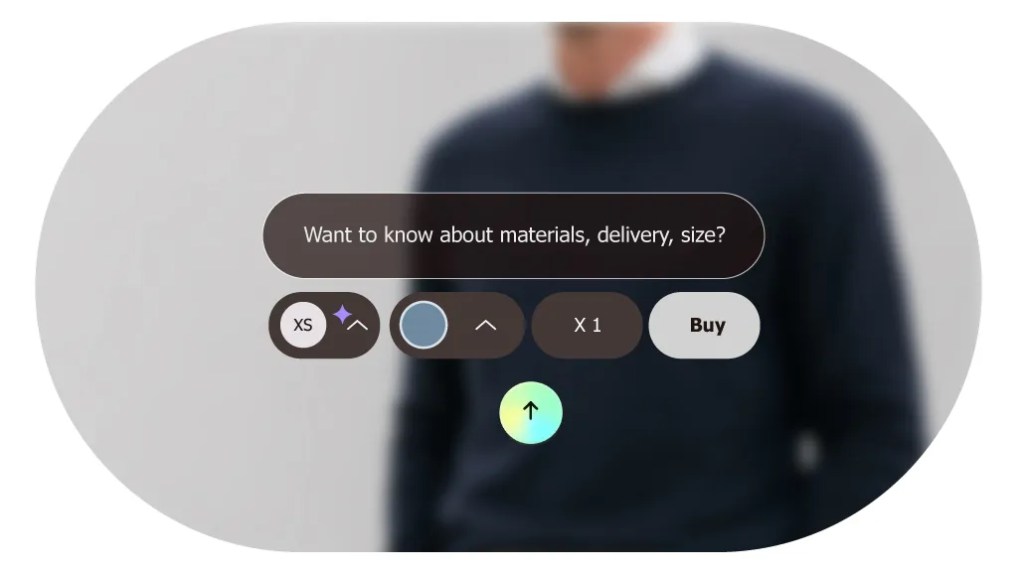
Predictably, 42% of non-adopters indicated that lower costs would be necessary to incentivize their investment in agentic AI commerce and/or storefronts. Similarly, 53% of current users stated that reduced costs would accelerate their existing investments. Beyond cost, both adopters and non-adopters agreed that technology improvements and more comprehensive technical training would likely spur increased investment, highlighting the need for user-friendly platforms and skilled personnel.
Pellerano-Rendon issues a strong call to action for hesitant brands: "What I would say to brands in the resistance or wait-and-see camp: the signal from shoppers is already unusually strong for something this early. Consumer engagement with agentic storefronts is moving faster than brand adoption. That gap doesn’t usually close in the brand’s favor. The category has early movers and everyone else, and the early movers are building a data and experience advantage that will be very difficult to close later." This emphasizes the first-mover advantage in establishing a superior customer experience and accumulating proprietary interaction data.
The Future of Agentic Storefronts: An Inevitable Evolution
The outlook for agentic commerce and storefronts is overwhelmingly positive. A vast majority of respondents—88% of current adopters and 58% of non-adopters—anticipate increasing their investment in this technology over the next 12 months. This includes a significant 25% of current adopters who expect to substantially increase their investment, signaling deep commitment.
These bullish attitudes are not mere speculation but reflect tangible market shifts already in motion. As previously mentioned, industry leaders like Bain & Co. and McKinsey forecast multi-hundred-billion to multi-trillion dollar markets for agentic AI by 2030. The beauty and fashion industries, in particular, are at the vanguard of this change. Nielsen reports that 49% of consumers are already receiving beauty recommendations from generative AI, actively seeking more personalized shopping experiences.
"2026 is the year this goes from early adopter territory to a recognized strategic priority," Pellerano-Rendon asserts. "You’ll start to see brands that launched agentic storefronts in the last 12 months posting results that are hard to argue with, and that will pull the rest of the market forward."
The competitive advantage for early adopters is multifaceted. Beyond technology, it lies in data. Agents continuously learn from every customer conversation, virtual try-on, and occasion-specific request, generating proprietary interaction data that refines the experience and makes future interactions more precise. This creates a powerful flywheel effect where better data leads to better agents, which in turn leads to more engagement and even richer data.
Pellerano-Rendon advises brands to approach this not as a vendor transaction but as a product relationship. "The brands getting the strongest results are the ones treating this as a product relationship, not a vendor relationship, iterating constantly, sharing feedback and letting the agent learn from real customer behavior," he explains. "Our approach is always to build in close partnership with the brand. Every client we work with has a different catalog, a different customer, a different set of constraints. The agent needs to reflect that." This collaborative, iterative approach ensures the AI agent truly embodies the brand’s unique identity and serves its specific customer base effectively.
For stakeholders embarking on their journey with agentic commerce and storefronts, Pellerano-Rendon recommends transcending the limitations of traditional static sites. The focus should be on envisioning and creating shopping experiences that genuinely serve customers better. "Commerce is shifting faster than it has at any point in the last two decades. The static website had a remarkably long run," he concludes. "What replaces it will be shaped by the brands willing to move before the mainstream catches up. The opportunity isn’t just to adopt a new channel. It’s to define what modern commerce looks like for your category before someone else does." The message is clear: the future of e-commerce is conversational, intelligent, and agent-driven, and the time for brands to lead this transformation is now.
About Swap:
Founded in 2022 by Sam Atkinson and Zach Bailet, Swap built the first agentic storefront, replacing traditional static websites with immersive, agent-led commerce experiences that take shoppers from product discovery to virtual try-on to checkout in a single branded flow. Trusted by over 800 brands, Swap also provides best-in-class infrastructure for cross-border transactions, returns, inventory management, tax, and global compliance, helping merchants sell anywhere and scale globally on one unified platform. To learn more, visit Swap Commerce.