Networks Grapple with Presidential Address Amidst Election Claims and Evolving Media Landscape

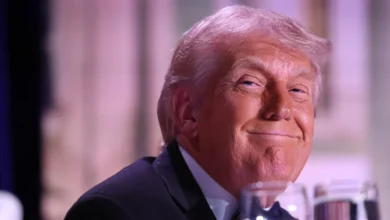
President Donald Trump is scheduled to address the nation tonight at 9 p.m. Eastern, sparking considerable debate within media circles regarding the potential content of his remarks and the responsibility of broadcast networks in televising them. Reports indicate that the President intends to use a significant portion of his speech to reiterate claims about the 2020 election, an assertion he himself confirmed to reporters earlier this week, labeling it "really big news" concerning the nation’s need to "shape up" regarding free and fair elections. This anticipated focus on unsubstantiated election fraud claims presents a dilemma for major news outlets, forcing a reevaluation of established journalistic standards for live national broadcasts.
The President’s Address and Networks’ Deliberation
The prospect of President Trump leveraging a national address to disseminate unproven theories about the 2020 election has put television networks in a difficult position. Despite Trump’s persistent claims over the past six years, there has been no credible evidence to support the assertion that the 2020 election was rigged or unfair. This context is crucial as networks weigh their editorial decisions. Trump’s cryptic remarks about a "big announcement" concerning elections have also fueled speculation about whether he might propose drastic changes to election procedures in the United States, raising the stakes for broadcasters.
The fundamental challenge for networks lies in balancing the public’s right to know what the President says with the imperative to avoid amplifying misinformation. As CNN chief political analyst David Axelrod, a former senior adviser to President Barack Obama, noted in a social media post on Wednesday, the bar for securing prime-time presidential addresses has historically been exceptionally high. Axelrod tweeted, "I remember from my time in the WH how hard it was to persuade the networks to carry prime time presidential addresses. They had to be on matters of the utmost urgency and importance. Wonder if tomorrow’s will be held to that standard?" This sentiment reflects a long-standing journalistic principle that national airtime should be reserved for matters of undeniable public importance and genuine news value, not merely political messaging or unsubstantiated claims.
Former CNN anchor Jim Acosta was even more direct in his independent show, arguing strongly against airing the President’s speech live. "In dictatorships, the state media have to go along with the government, and they have to air these crazy lies to the public to brainwash people. We have a choice in this country. The networks have a choice in the country, and they should absolutely, positively not air this madman on Thursday night," Acosta stated, underscoring the perceived ethical obligation of independent media to challenge and not propagate what they deem to be untruths.
Precedent and Public Interest: A Historical Context
Network decisions regarding live presidential addresses are not unprecedented. In 2022, major broadcast networks such as ABC, CBS, and NBC opted not to air a speech by former President Joe Biden, in which he warned about threats to democracy. These networks reportedly deemed Biden’s speech "more political than newsworthy" for live coverage, though it was carried live on CNN and MSNBC. Notably, Fox News, the most-watched cable news channel, did not air it. Similarly, in 2014, broadcast networks declined to air a prime-time address by former President Barack Obama on his immigration reform plan, with Politico reporting at the time that the speech was considered "overtly political." Cable news channels, including Fox News and CNN, did broadcast Obama’s remarks.
These past instances highlight a discernible pattern where broadcast networks, in particular, exercise a gatekeeping function, evaluating presidential addresses against a standard of non-partisanship and immediate news value. If President Trump’s speech tonight focuses heavily on election claims, it is highly probable that it will be characterized as "overtly political," making it susceptible to similar decisions by networks. The challenge for networks is amplified by the current polarized media environment, where decisions to air or not air can be interpreted through a partisan lens, regardless of editorial integrity.
Innovative Approaches to Combat Misinformation
In light of the potential for the President to make unsubstantiated claims, a Poynter Report reader offered an innovative solution to the dilemma: broadcasting the address on a tape delay. This approach would allow networks to use text overlays to contest or fact-check statements in real-time. For example, if the President were to make a claim lacking evidence, a text overlay could state, "There is no evidence to support this claim," or reference a court ruling that has already dismissed such assertions.
The reader argued, "Yes, give Trump his podium — but don’t let his statements go unchallenged when either (a) they require evidence, or (b) they have already been dismissed for lack of evidence. Treat these claims the way a court would: demand proof." This suggestion reflects a growing demand for media to not just report statements, but to actively contextualize and verify them, especially from powerful figures. While a tape delay could introduce logistical challenges and potentially be criticized for editorializing, it represents a proactive step in journalistic responsibility to ensure an informed public, offering a middle ground between outright refusal to broadcast and uncritical amplification. The adoption of such a strategy would signify a significant evolution in how news organizations handle live political speeches in an era of rampant misinformation.
Press Freedom Under Scrutiny: Subpoenas and Source Protection
Beyond the immediate question of the President’s address, the broader landscape of media freedom and government interaction with the press is currently under considerable strain. The Trump administration recently escalated its pressure on the New York Times by issuing subpoenas to five of its journalists. These subpoenas demand that the journalists reveal confidential sources for their reporting on security concerns surrounding a Qatari-donated Boeing 747-8 jet, which President Trump planned to use as Air Force One. This move came after the administration had already attempted to block the Times from publishing the story altogether.

Joe Kahn, Executive Editor of the New York Times, publicly addressed the situation in a video statement posted on the Times website. He emphasized the critical role of an independent news media in a democracy, particularly in reporting on how public officials protect national security and utilize taxpayer dollars. Kahn highlighted that the President’s choice of aircraft, and the associated security concerns, are matters of clear public interest, affecting not only the President but also hundreds of other government officials, congressional members, and journalists who travel on the plane.
The government’s claim that the journalists are not the direct target of the investigation, but rather their sources, was dismissed by Kahn as a thinly veiled attempt at intimidation. He asserted, "We see this, though, as an attempt to intimidate the journalists and The Times itself, and we’re going to continue to report both about Air Force One and on the circumstances around the government use of prosecutorial power to intimidate the independent news media." In a tangible defense of press freedom, the Times filed a motion on Wednesday to quash the subpoenas. David McCraw, the Times’ top lawyer, condemned the subpoenas as "abusive and improper," stating they were "brought in bad faith to punish The Times for its coverage" and violated the constitutional rights of the publication and its journalists. This legal battle underscores the ongoing tension between government transparency and national security, and the vital role of confidential sources in investigative journalism.
White House Internal Leak Investigations
In parallel to its external pressure on the New York Times, the White House has reportedly intensified its internal efforts to identify the sources of leaks to the Times and other news organizations. CNN reported that FBI Director Kash Patel and White House Chief of Staff Susie Wiles are leading an investigation. As part of this probe, "some officials" within the White House have been asked to surrender their personal phones for examination.
The investigation reportedly centers on individuals who were traveling with President Trump or played a role in the trip involving the Qatari-donated plane, the subject of the Times’ controversial report. Interestingly, CNN noted that not all officials who were asked to turn over their phones have complied, suggesting potential internal resistance or concerns about privacy and legal implications. Such internal investigations, particularly those involving requests for personal devices, can have a chilling effect on internal communications and whistleblowing, further complicating the flow of information to the public and potentially stifling dissent within government ranks.
Local TV Ownership and Regulatory Shifts
The media landscape is also facing significant structural changes, particularly concerning local television ownership. Al Tompkins, a senior faculty member at the Poynter Institute, highlighted in his recent piece, "The FCC sets the stage for a showdown over local TV ownership," that the Federal Communications Commission (FCC) is poised to vote on August 6 on a proposal that could dramatically reshape the industry. This proposal aims to loosen long-standing limits on how many television stations a single company can own.
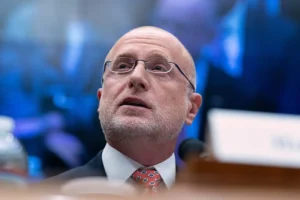
FCC Chairman Brendan Carr announced the vote in an op-ed for Breitbart, framing the initiative as an effort to "restore balance to the broadcast airwaves." Carr critiqued the current ownership cap, which restricts station groups from reaching more than 39% of the U.S. population. He argued that this cap, originally designed to prevent monopolies, now inadvertently protects dominant national programmers like Disney and Comcast, whose content reaches 100% of the population through various platforms. According to Carr, local broadcasters are struggling to compete, lacking the power to preempt or refuse national programming that may not align with community values. He stated that national programmers are increasingly charging local TV stations for airing their shows, leading to a "hollowing out" of local stations and a reduction in their ability to produce independent, local news.
Carr’s proposal, if approved, would technically preserve the 39% cap but introduce "case-by-case" exemptions when the FCC determines such exceptions would serve the public interest. This move could lead to further consolidation in local media ownership, with significant implications for media diversity, the quality and independence of local news, and the overall media ecosystem. Proponents argue it could empower local stations to compete more effectively, while critics fear it could reduce localism and increase the influence of larger corporate interests, potentially leading to more centralized and less diverse news content.
Media Owners and Political Tensions: The Baltimore Sun Case
Adding another layer to the complex interplay between media, politics, and ownership, a unique legal confrontation is unfolding in Maryland. David Smith, the owner of The Baltimore Sun and executive chairman of Sinclair Broadcast Group, is threatening to sue Maryland Democratic Governor Wes Moore. This is a reversal of the typical dynamic where politicians sue media outlets.
The dispute stems from Moore’s appearance on MS NOW on June 16. When questioned about The Baltimore Sun’s critical reporting on his administration and military record, Moore dismissed the reporting as a political hit and attempted to link Smith to the disgraced billionaire financier Jeffrey Epstein. Smith’s attorney subsequently sent a letter to Moore, arguing that the Governor’s remarks were potentially defamatory and demanding "a clear, unequivocal public retraction and correction" or a factual basis for the claim. The letter emphasized that such a false assertion could cause "serious reputational harm, including public contempt and scorn, diminished business relationships, and damage to personal and professional standing."
In response, Moore’s personal attorney, Joseph Sandler, defended the Governor’s statement, asserting its "absolute and indisputable truth." Sandler’s letter, first shared with Semafor, stated that Epstein’s funds had owned several hundred thousand dollars’ worth of investments in Sinclair when Smith was the chairman and CEO. This legal skirmish highlights the intense scrutiny and personal attacks that can arise in the current political and media environment, particularly when media ownership is tied to perceived political agendas, as Sinclair Broadcast Group has often been characterized.
The current media landscape is marked by profound challenges, from the ethical dilemmas of broadcasting presidential addresses laden with unproven claims to the fundamental battles over press freedom and source protection. Regulatory shifts concerning media ownership and direct legal confrontations between media proprietors and political figures further underscore an environment in flux. As networks weigh their responsibilities tonight, their decisions will not only impact public perception of the President’s message but also shape the evolving standards of journalism in a deeply divided nation, where the pursuit of truth and the preservation of an informed citizenry remain paramount.