The management, processing, and delivery of user-generated digital media have historically presented significant engineering hurdles for software development teams. As applications increasingly rely on external inputs—ranging from high-resolution photographs and compressed videos to multi-page enterprise documents—developers face the daunting task of building robust pipelines to ingest files of arbitrary sizes, formats, and states. Historically, engineering departments either dedicated substantial internal resources to custom-code proprietary ingestion engines or cobbled together disjointed third-party storage, processing, and content delivery network (CDN) solutions. Today, however, the paradigm is shifting toward comprehensive file-management utilities designed to abstract these low-level complexities entirely. Among these platforms, Filestack has emerged as a prominent enterprise solution, offering end-to-end tooling that handles upload mechanisms, real-time media transformations, and optimized content delivery through a unified interface.
The evolution of web and mobile applications over the past two decades underscores a dramatic escalation in media consumption and creation. In the early eras of the internet, file uploads were typically restricted to basic text documents or small JPEG images, handled adequately by rudimentary server-side scripts. As smartphones equipped with multi-megapixel cameras and high-definition video recording capabilities became ubiquitous, the average file size generated by end-users skyrocketed. Furthermore, the diversification of cloud storage providers—such as Google Drive, Dropbox, iCloud, and social media networks like Facebook and Instagram—created an expectation among consumers that applications should allow seamless file importation from any cloud repository rather than just local device storage.
For software architects, this shift introduced profound scalability challenges. Accepting arbitrary file inputs without rigorous validation and normalization risks catastrophic security vulnerabilities, including arbitrary file upload attacks, server-side request forgery, and storage exhaustion. Consequently, engineering teams found themselves repeatedly solving the same foundational problems: constructing multi-part upload handlers, integrating disparate third-party OAuth authentication flows for cloud drives, provisioning image-processing servers using libraries like ImageMagick, and configuring complex caching rules on global CDNs. These auxiliary infrastructure tasks often consumed valuable engineering bandwidth that would have been better allocated toward core product development.
Recognizing this widespread operational inefficiency, cloud infrastructure providers began developing specialized file-handling utilities around 2010. The foundational premise was simple: decouple file management from primary application servers and offer it as a service via robust application programming interfaces (APIs) and software development kits (SDKs). Filestack entered this ecosystem by positioning itself not merely as a cloud storage bucket, but as an intelligent middleware layer capable of intercepting, altering, and delivering media assets on demand.
Adopting such infrastructure typically begins with evaluation and integration phases. Platforms in this sector generally lower the barrier to entry by offering time-bounded trial periods, granting developers unrestricted access to comprehensive code libraries and documentation. According to developer surveys and industry adoption metrics, the quality of a platform’s technical documentation significantly influences its rate of adoption. Comprehensive documentation featuring copy-pasteable code snippets, well-defined API references, and interactive sandbox environments allows engineering teams to validate a utility’s feasibility within hours rather than weeks.
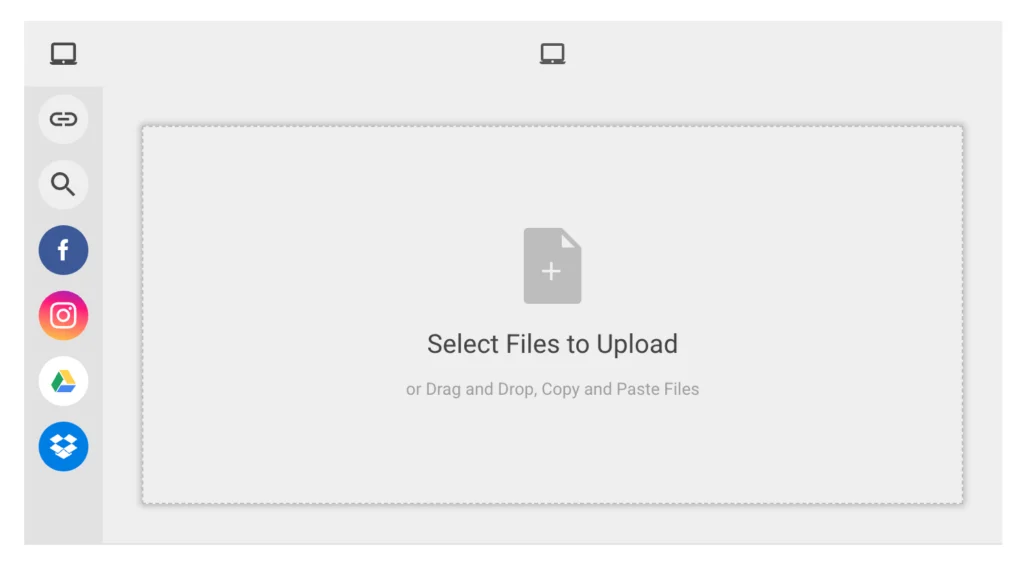
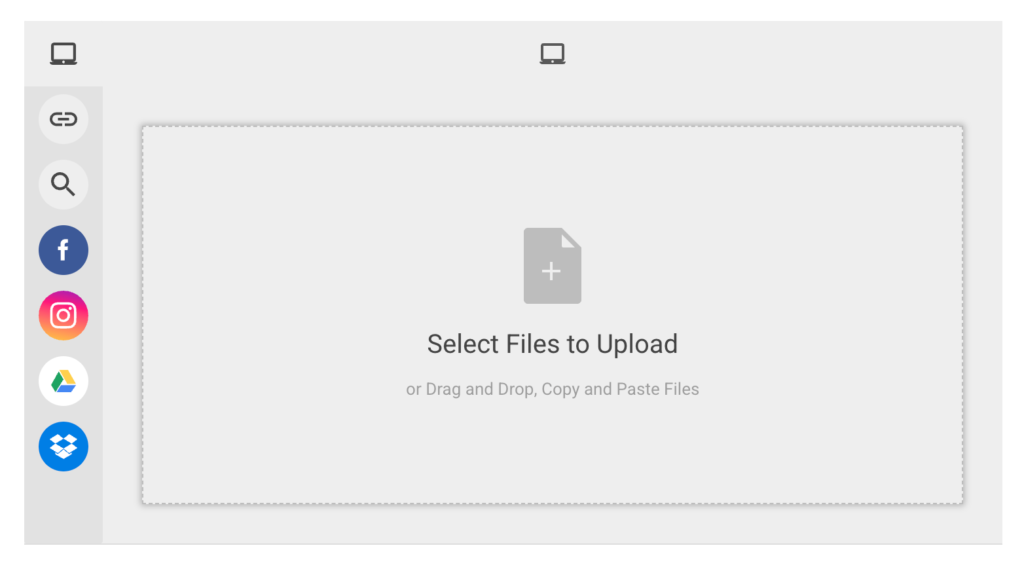
The initial technical touchpoint in any media pipeline is the ingestion phase. Modern file-upload utilities aim to eliminate friction for both the end-user and the developer. On the client side, this is typically achieved through modular JavaScript components that render customizable file-picker interfaces.
Using JavaScript, an integration can be initialized with minimal code:
const client = filestack.init("your_api_key");
const picker = client.picker();
picker.open();
This simple invocation generates an accessible, feature-rich user interface component. Beyond basic local file selection, these components natively integrate with more than twenty popular third-party repositories, including Google Drive, Dropbox, GitHub, Facebook, Instagram, and various enterprise cloud storage providers. Users can also utilize drag-and-drop functionality, which has become an expected standard for desktop web interfaces.
For scenarios where client-side rendering is unnecessary or where automated server-to-server transfers are required, developers rely on backend libraries. For instance, server-side ingestion via Python allows direct communication with cloud storage backends, such as Amazon S3, complete with custom directory structuring and metadata tagging:
from filestack import Client

client = Client("your_api_key")

store_params =
    'location': 's3',
    'path': 'folder/subfolder/',
    'upload_tags':
          "department": "engineering"


filelink = client.upload(filepath='path/to/filename.jpg', store_params=store_params)
By abstracting the underlying authentication protocols required to communicate with cloud object stores, these libraries drastically reduce the lines of boilerplate code required to maintain secure ingestion pipelines.
Once files are successfully ingested into the ecosystem, the subsequent challenge is transformation. End-users invariably upload assets in disparate dimensions, color profiles, compression ratios, and aspect ratios. Displaying raw, unoptimized media directly within a modern web or mobile application layout inevitably leads to degraded user experience, slow page load speeds, and excessive bandwidth consumption.
To combat this, file management utilities provide real-time transformation engines capable of processing images, videos, and documents dynamically via URL parameters or programmatic workflow definitions. For example, adjusting an image’s geometric properties and applying aesthetic filters can be accomplished by appending specific transformation tasks directly to the content delivery network URL:
// Resize an image to a specific width
https://cdn.filestackcontent.com/resize=width:300/pdn7PhZdT02GoYZCVYeF

// Apply multiple transformations including tone adjustments and borders
https://cdn.filestackcontent.com/resize=width:300/sepia=tone:80/polaroid/pdn7PhZdT02GoYZCVYeF
This declarative approach to media transformation eliminates the necessity of maintaining dedicated worker servers—such as Celery queues paired with FFmpeg or GraphicsMagick instances—to pre-render every conceivable asset variation. Instead, transformations occur on the fly, and the resulting assets are cached for subsequent requests. Furthermore, platforms often provide graphical user interface modules that allow end-users themselves to crop, rotate, or apply filters to their uploaded media before final submission, empowering users while maintaining strict structural parameters for the application.
The final critical component of the media lifecycle is delivery. The speed and reliability with which digital assets are rendered to end-users directly correlate with core business metrics, including bounce rates, session durations, and conversion rates. Industry studies consistently demonstrate that even a one-second delay in page load time can result in measurable drops in user retention and e-commerce transactions.
To mitigate latency, modern file infrastructure leverages globally distributed Content Delivery Networks (CDNs). When a transformed or stored asset is requested for the first time, the CDN caches the response at edge locations geographically proximate to the end-user. Subsequent requests are served instantly from the edge cache without taxing the origin storage servers. Standard caching policies within these architectures typically maintain cached copies for a designated duration—frequently thirty days—before re-validating or re-fetching the asset from the origin repository. This balance ensures optimal performance while accommodating necessary content updates.
From an economic and strategic perspective, the adoption of managed file infrastructure reflects a broader industry trend toward microservices and specialized software-as-a-service (SaaS) integration. Rather than treating file upload, transformation, and delivery as core intellectual property, organizations increasingly recognize these functions as commoditized utilities best outsourced to dedicated providers.
Industry analysts note that shifting media management to specialized cloud platforms yields several measurable financial and operational benefits. First, it reduces infrastructure maintenance overhead, allowing small and mid-sized development teams to deploy enterprise-grade media pipelines without expanding their DevOps headcount. Second, it enhances application security; specialized providers continuously patch vulnerabilities related to file parsing exploits and distributed denial-of-service (DDoS) attacks targeting media endpoints. Finally, predictable, usage-based pricing models enable companies to align their infrastructure expenditures directly with user growth and data consumption metrics.
Despite these advantages, software architects must carefully evaluate potential vendor lock-in and data sovereignty compliance when selecting a file management utility. Ensuring that raw assets remain exportable to primary cloud buckets owned by the enterprise—such as Amazon S3, Google Cloud Storage, or Microsoft Azure Blob Storage—is a common architectural safeguard practiced by engineering teams. By maintaining ownership of the underlying data repositories while leveraging external processing and delivery layers, organizations strike a balance between operational efficiency and data portability.
Ultimately, the maturation of tools like Filestack illustrates how the software development landscape continues to abstract infrastructure complexities. By standardizing the ingestion, transformation, and delivery of digital assets through robust APIs and comprehensive SDKs, modern developer platforms empower engineering organizations to focus their creative and technical energies on building exceptional core product experiences rather than reinventing foundational file-handling pipelines.