The modern digital marketing landscape is experiencing a fundamental structural shift as search engines evolve from traditional link-directory lists into conversational, generative AI assistants. According to recent empirical studies from the Pew Research Center, when users are presented with automated AI summaries in search engine results pages, they significantly reduce the frequency with which they click through to external websites, frequently terminating their research journeys entirely within the search interface. This behavioral evolution has forced marketing departments and enterprise organizations to reallocate budgets toward Answer Engine Optimization (AEO), creating a high-stakes dilemma for digital strategists: should an enterprise invest in a specialized, dedicated platform engineered specifically for generative AI interaction, or rely upon the expanded capabilities of legacy search engine optimization suites?
To answer this strategic question, enterprise marketing leaders are increasingly evaluating two divergent products: Scrunch, an Agent Experience Platform (AXP) designed to actively optimize server-side delivery for automated crawlers, and Ahrefs Brand Radar, an advanced AI monitoring extension integrated within an established, comprehensive SEO infrastructure. While both products address the declining click-through rates associated with zero-click searches, their technological philosophies, operational methodologies, and target user bases vary substantially. Understanding these differences requires examining engine and surface coverage, prompt methodologies, citation tracking depth, workflow actionability, pricing structures, and native alternatives such as HubSpot’s emerging AEO product ecosystem.
The Architectural Divide: Specialist Agent Optimization Versus All-in-One SEO Ecosystems
The core distinction between Scrunch and Ahrefs Brand Radar lies in how they interact with artificial intelligence. Developed by Sitecore, Scrunch functions primarily as an Agent Experience Platform rather than a traditional monitoring dashboard. It operates at the network edge, utilizing real-time detection mechanisms to identify incoming automated AI agents—such as OpenAI’s ChatGPT, Anthropic’s Claude, and Perplexity—and subsequently serves them a token-optimized, highly structured version of corporate web assets. Meanwhile, human users continue to view the standard, graphically rich interface. This architecture aims to reduce the computational and token overhead for AI crawlers, theoretically improving ingestion rates and brand representation within generative summaries.
Conversely, Ahrefs Brand Radar approaches generative visibility from within a deeply established SEO ecosystem. Rather than modifying server responses at the edge, Brand Radar tracks brand mentions, citations, and visibility metrics alongside traditional keyword data, backlink profiles, and comprehensive site audits. By embedding AI analytics directly into the existing Ahrefs user interface, the platform appeals directly to SEO professionals who want to maintain unified workflows without adopting entirely separate operational tools. Furthermore, Brand Radar benefits from Ahrefs’ expansive historical database, correlating generative visibility shifts with long-term organic search performance metrics.

Engine and Surface Coverage Matrix
When evaluating AEO software, digital analysts emphasize the necessity of separating engines from surfaces. An engine refers to the underlying large language model or generative product generating the response—such as ChatGPT, Google Gemini, or Microsoft Copilot. A surface, by contrast, represents the specific user-facing environment where brand mentions or summaries materialize, including Google AI Overviews, Google AI Mode, specialized shopping modules, YouTube video transcripts, Reddit community threads, and TikTok feeds.
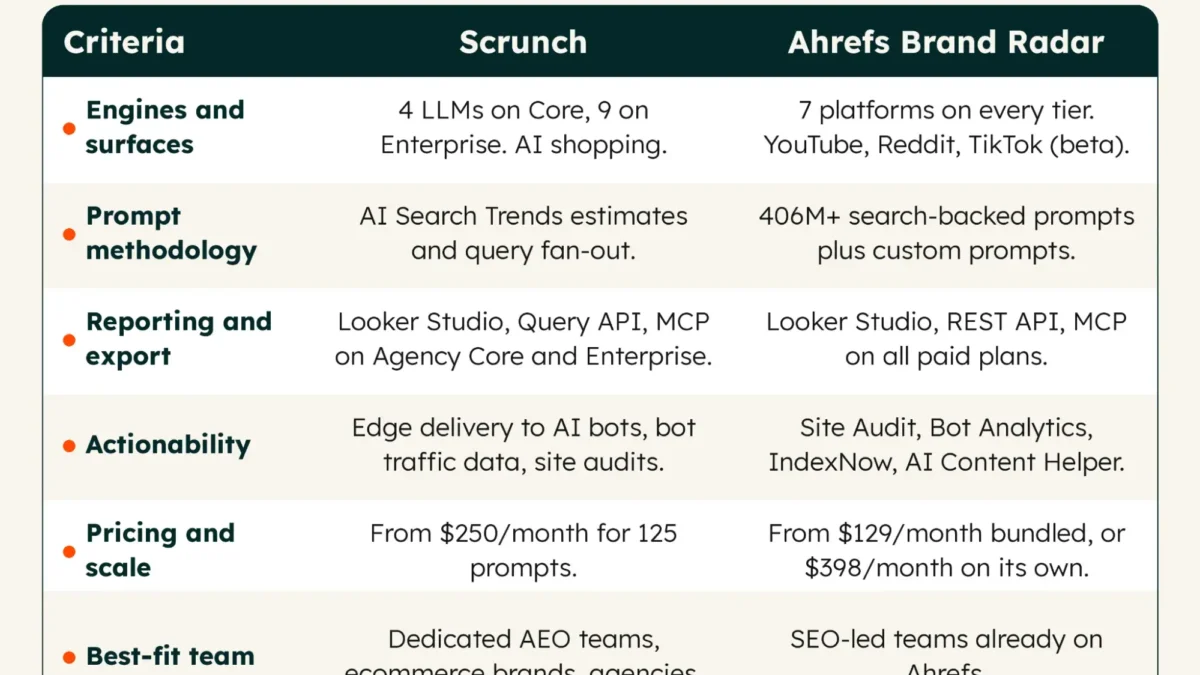
Ahrefs Brand Radar provides broad baseline monitoring across seven major platforms on all tiers, extending its utility beyond text-based LLMs into multi-channel digital ecosystems. It tracks YouTube metadata and transcripts, monitors Reddit conversations, incorporates emerging tracking for TikTok, and includes dedicated oversight for Google Business Profiles via its GBP Monitor feature.
Scrunch structures its engine coverage hierarchically. Its core tier monitors four major large language models, while enterprise-level subscriptions expand coverage to nine engines, integrating advanced deployments of Claude, Gemini, Meta AI, Google AI Mode, and Grok. While Ahrefs generally achieves wider surface coverage across non-LLM channels, Scrunch distinguishes itself through specialized vertical capabilities, notably its dedicated shopping visibility module designed specifically for e-commerce enterprises seeking product-level representation inside generative commercial queries.
Prompt Methodology and Data Integrity
The underlying data methodology governing prompt creation heavily influences the reliability and strategic value of any AI visibility platform. Ahrefs Brand Radar constructs its analytical framework upon a proprietary database comprising over 406 million monthly search-backed prompts. These prompts are derived from real-world keyword queries executed by actual human users rather than synthetically generated simulations. This design enables marketing teams to tie generative visibility directly to validated consumer search demand. In addition, users can input customized, brand-specific prompt arrays.

Scrunch employs a combination of AI Search Trends estimation models and proprietary Query Fan-out analysis. This methodology calculates how generative search engines autonomously expand a single user query into an array of sub-queries, helping organizations identify latent content gaps, topical blind spots, and emerging consumer intent variations. Because generative AI outputs fluctuate dynamically based on user location, session context, and exact phrasing, industry experts advise treating all AI visibility metrics as directional trends rather than absolute market shares. Consistent longitudinal tracking across standardized prompt sets remains the most reliable method for measuring competitive momentum.
Actionability, Technical Workflows, and Integration Capabilities
Data reports are only as valuable as the operational workflows they influence. Scrunch and Ahrefs handle actionability through starkly contrasting mechanisms. Scrunch empowers technical teams by analyzing agent traffic patterns—differentiating human site visitors from automated LLM scrapers—and executing page-level audits that uncover technical roadblocks. Its edge-delivery optimization claims to reduce page transfer sizes for bots by approximately 26 percent, conserving thousands of tokens during AI ingestion cycles. Additionally, Scrunch offers Looker Studio connectors, specialized Query APIs, and custom Model Context Protocol (MCP) access on advanced tiers.
Ahrefs operationalizes insights through its traditional technical SEO suite. Automated 24/7 technical recommendations, Site Audit utilities, and IndexNow integrations facilitate rapid content recrawling and immediate error remediation. Furthermore, Ahrefs includes an MCP server across all paid tiers, enabling professionals to query live Ahrefs data directly inside natural language interfaces like Claude and ChatGPT. REST API access and Looker Studio integrations ensure that automated reporting workflows can be customized to corporate specifications.
Pricing Dynamics and Scalability Considerations
Evaluating the financial investment required for AEO software demands a rigorous scenario analysis rather than a superficial comparison of entry-level sticker prices. Subscription pricing models vary significantly across the industry:

- Scrunch: Structured around unique prompt counts and modular features. Entry plans include foundational site audits and user licenses, while agency and enterprise tiers scale to include unlimited seats, advanced API integrations, and single sign-on (SSO) protocols.
- Ahrefs Brand Radar: Bundled within comprehensive SEO subscription tiers (Lite, Standard, and Advanced), where AI tracking sits alongside traditional backlink and keyword tools. Additional custom prompt checks can be purchased ala carte to scale monitoring capabilities.
Crucially, the units of measurement differ between platforms. Scrunch typically counts unique tracked prompts, whereas Ahrefs counts individual prompt execution checks. Enterprise buyers must carefully project prompt volume growth—accounting for product variations, regional modifications, and buyer journey stages—to avoid unexpected overage fees or restrictive tier caps as their AEO programs mature.
The HubSpot-Enterprise Alternative and Native Integrations
As the market matures, native ecosystem solutions are entering the fray to eliminate the friction of managing fragmented, standalone dashboards. HubSpot offers dedicated AEO capabilities designed specifically for organizations whose content marketing, CRM data, and campaign execution already reside within the HubSpot environment.
HubSpot’s AEO product offerings are split into two primary deployments. A standalone AEO software product provides brand visibility scoring, sentiment analysis, competitor share of voice tracking, citation analysis, and prioritized content recommendations across ChatGPT, Gemini, and Perplexity without requiring the HubSpot Content Management System. Simultaneously, integrated AEO functionality within Marketing Hub Professional and Enterprise leverages CRM-derived intelligence to automatically suggest high-value prompt variations. Crucially, these insights connect directly to native content creation tools, allowing marketing teams to generate optimized editorial drafts aligned with specific brand voices with a single click.
While HubSpot’s native solution covers fewer underlying engines than specialized standalone platforms and lacks server-side bot optimization features, its primary advantage lies in operational efficiency. For organizations deeply invested in HubSpot’s ecosystem, native AEO eliminates data silos, centralizes campaign attribution, and streamlines the transition from visibility analytics to direct content creation.
Industry Implications and Strategic Recommendations

The integration of generative search optimization into mainstream corporate strategy underscores a permanent transformation in digital discovery. As consumer behavior shifts decisively toward zero-click AI summaries, marketing executives must adopt a structured, methodical approach to evaluation and implementation:
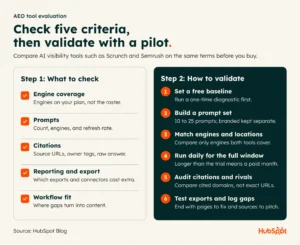
- Baseline Diagnostic Phase (Days 1–7): Construct an initial array of 20 to 30 buyer-centric prompts. Manually query priority engines to record baseline visibility, brand representation, and cited domain sources.
- Validation and Tool Comparison (Days 8–14): Implement shortlisted software solutions—whether evaluating Scrunch, Ahrefs Brand Radar, or native HubSpot options—to cross-reference tool-generated outputs against manual observations.
- Execution and Remediation (Days 15–24): Address identified visibility gaps by deploying targeted content updates, technical crawlability fixes, or digital PR campaigns aimed at securing citations from authoritative third-party sources frequently referenced by LLMs.
- Longitudinal Measurement (Days 25–30): Monitor prompt performance trends continuously, recognizing that generative AI outputs require sustained optimization cycles rather than immediate, one-off corrections.
Ultimately, the choice between specialist platforms like Scrunch and comprehensive SEO suites like Ahrefs depends entirely on an organization’s existing technical infrastructure and strategic priorities. Organizations requiring edge-level server control and dedicated shopping visibility will find specialized platforms invaluable. Conversely, teams deeply entrenched in traditional organic search workflows will achieve maximum efficiency by deploying AI visibility extensions within established ecosystems like Ahrefs or native CRM environments like HubSpot.