
As the United States approaches the one-week countdown to the midterm elections, the news industry is engaging in a familiar high-stakes scramble: converting a surge in civic interest into a stable, long-term subscriber base. For digital publishers, this election cycle is not merely about traffic volume; it is a critical litmus test for a business model currently undergoing a structural transformation. With traditional referral pathways from social media and search engines experiencing significant, sustained decline, newsrooms are moving away from the "traffic-at-all-costs" mentality, prioritizing instead the direct, authenticated relationships that define sustainable modern journalism.
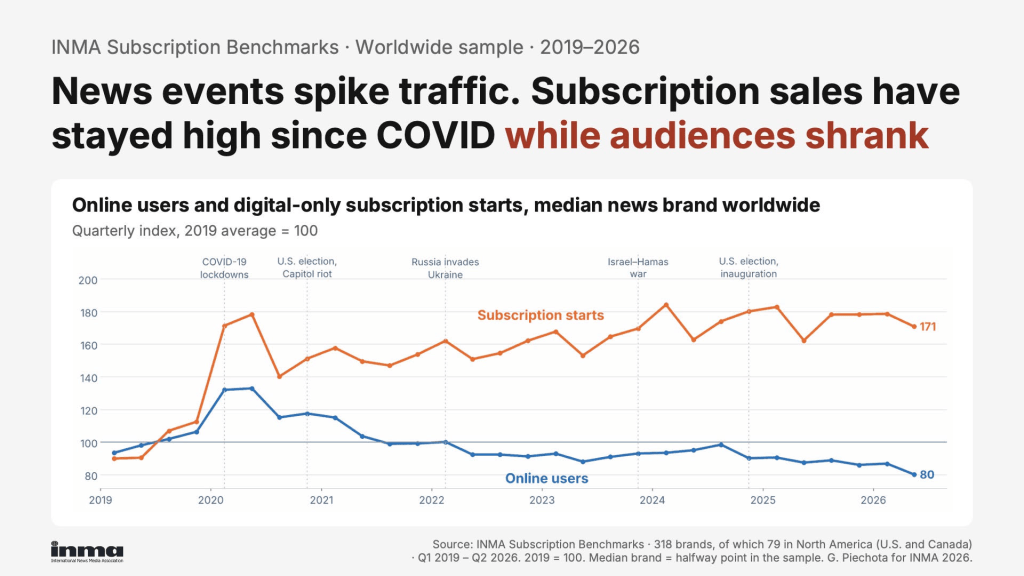
The current landscape is defined by a paradox: while the volume of casual visitors arriving via search or social referrals has hit historical lows, the propensity of loyal readers to pay for high-quality, trusted reporting has paradoxically increased. Industry data indicates that while the typical publisher reaches roughly 20% fewer readers per month than they did in 2019, the volume of quarterly subscription sales has seen an increase ranging from 50% to 85% among the most successful news brands. This shift suggests that the era of mass-market, advertising-dependent news reach is fading, replaced by a more intimate, value-driven exchange between newsrooms and their readers.
The Shift Toward Direct Audience Ownership
For years, the publishing industry relied on the "megaphone effect"—major news events would trigger massive, temporary traffic spikes from external platforms. Today, that strategy is viewed as increasingly fragile. Greg Piechota, researcher-in-residence at the International News Media Association (INMA), notes that the volatility of referral traffic has made direct ownership of the audience the primary objective.
"Growth now depends entirely on the ability to capture and convert the casual reader at the exact moment they are most engaged," Piechota explains. "Because social media and search algorithms are effectively shrinking the funnel, the window for conversion during major news events has become the most valuable real estate in the digital publishing ecosystem."
The data supports this pivot. An analysis of over 3,000 global news brands reveals that even in the face of declining monthly active users, publishers that lean into subscription-based models are seeing higher lifetime value (LTV) per reader. In North America, while total subscriber counts for large regional newspaper chains have fluctuated—often struggling to retain those acquired through short-term, low-cost promotions—national and metro news outlets have managed to grow their subscriber bases by approximately 10% in the current year.

Strategic Playbooks: From Dynamic Paywalls to Interactive Tools
Different publishers are adopting distinct strategies to capitalize on the midterm cycle. Reuters, for instance, has reported a 50% spike in new subscriptions linked directly to their election coverage and the integration of dynamic paywall technology. By leveraging live blogs and high-speed, unbiased reporting, the agency is reinforcing its reputation as a "utility" for professional and casual readers alike. To bolster this, Reuters has expanded its Washington D.C. newsroom, invested in investigative teams, and entered into content-bundling partnerships, such as the one with the USA Today Network, to ensure their journalism reaches a wider, yet targeted, audience.
Conversely, The New York Times is doubling down on a model of "open-access utility." By removing the paywall for their midterm election app and providing free access to poll trackers, explainers, and real-time results, the organization is betting that the quality of their user experience will serve as the most effective long-term acquisition tool. This strategy aims to onboard millions of casual readers into their ecosystem, with the hope of converting them into permanent subscribers once the immediate election cycle concludes.
Politico is simultaneously executing a platform consolidation strategy, launching a unified global app that merges their free and premium tiers. According to Cally Baute, chief commercial officer at Politico, the goal is to demonstrate the practical, professional value of their reporting. By providing high-level political intelligence that influences the daily decision-making of their readers, Politico aims to anchor its subscription value proposition in necessity rather than news cycle interest.
Emerging players like The Hill are taking a more technical route. By integrating proprietary interactive election tools—such as those developed in partnership with the Decision Desk HQ—The Hill provides a "data-first" experience that differentiates its offering from commodity news. This has translated into a trial-to-paid conversion rate of over 75%, proving that when publishers offer tools that help readers visualize complex election data, they are significantly more likely to secure a paid commitment.
The Challenge of Retention Beyond the Hook
The most significant hurdle facing publishers is the post-election "cliff." History shows that many subscribers acquired during election cycles are "one-and-done" users who churn as soon as the political fervor subsides. Experts suggest that the post-election phase is now the most important part of the cycle.
"The election is the hook, not the habit," says Piechota. "Publishers who succeed in the long term are those who use the election to introduce readers to the breadth of their content—lifestyle, sports, newsletters, and non-news products like games. If you don’t transition the reader from a ‘political news junkie’ to a ‘brand loyalist’ within the first ninety days, the subscription will likely expire."
This trend is echoed by the broader industry move toward bundled services. By incorporating gaming, cooking, or lifestyle content into news subscriptions, publishers are creating a "sticky" ecosystem that provides value even when the political cycle is quiet.
Broader Implications: The AI and Regulatory Frontier
Beyond the immediate election coverage, the industry is navigating a volatile regulatory and technological environment. The rise of generative AI has prompted a global confrontation between publishers and tech giants like Meta. Recently, a coalition of Norwegian publishers took legal action against Meta, seeking to block the company’s new terms of service, which would allow for the broad scraping of news content to train AI models. This mirrors a larger, global tension: as platforms seek to monetize information through AI, publishers are fighting to reclaim the value of their intellectual property.
The urgency of this fight is underscored by the decline in traffic to legacy sites. Data from September shows double-digit declines in website traffic for major outlets, including a 49.1% year-over-year decline for Politico and a 36% decline for Vox. In response, publishers are increasingly looking toward "owned" platforms—apps, newsletters, and direct-to-consumer video—to circumvent the platform-dependent traffic model.
Key Metrics and Industry Outlook
The current state of the industry can be summarized through several critical metrics:
- 625%: The year-over-year revenue growth in social-video sponsorships for companies like People Inc., highlighting the shift toward native platform monetization.
- 20%: The estimated decline in publisher eCPMs on desktop environments following recent privacy-focused identity blocks, pushing publishers further toward subscription-based revenue.
- 75%: The conversion rate for The Hill’s trial-to-paid model, a benchmark for effective mid-market subscription strategies.
As the midterm elections conclude, the industry’s focus will shift from acquisition to retention. The publishers that thrive in the coming years will be those that have successfully transformed their editorial products into essential tools for their readers. By combining high-trust journalism with interactive, data-rich user experiences and a diverse content bundle, media organizations are attempting to build a sustainable future that is independent of the whims of search algorithms and social media feeds.
The midterm election is, in this context, a massive, live-action stress test for the future of digital journalism. Whether the industry can turn this political moment into a permanent structural advantage remains to be seen, but the clear consensus in newsrooms today is that the path forward lies in the direct, unmediated relationship between the journalist and the reader. As the digital landscape continues to fragment, the publishers who can provide clarity, accuracy, and utility will be the ones who define the next era of the news business.