In a development that has sent shockwaves through the American political landscape, Michigan Democratic Congresswoman Haley Stevens has officially withdrawn her support for her party’s Senate nominee, Abdul El-Sayed, and announced her endorsement of his Republican opponent, former Congressman Mike Rogers. This unprecedented cross-party endorsement comes on the eve of a pivotal midterm election, threatening to further destabilize a race that is already being scrutinized for its potential to determine the future control of the United States Senate.
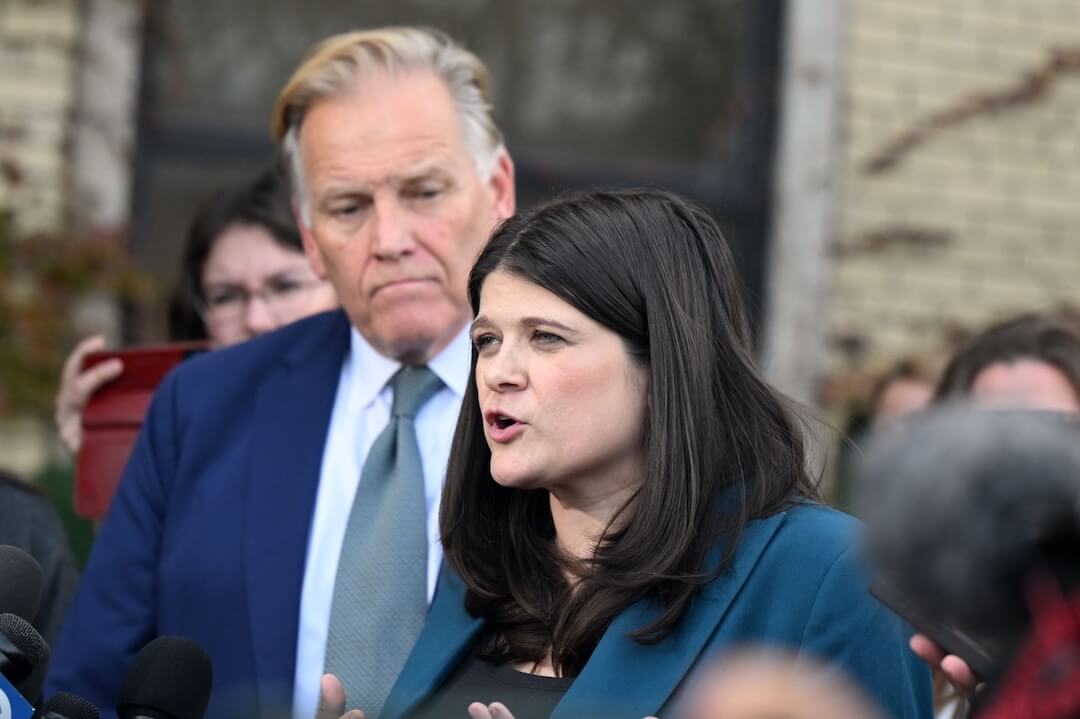
The announcement, delivered via a succinct video message on Sunday, marked a definitive rupture in the Michigan Democratic coalition. Stevens, a moderate who has long positioned herself as a champion of centrist policy and a vocal supporter of Israel, cited personal irreconcilable differences and a fundamental breakdown in communication with El-Sayed’s campaign as the primary drivers of her decision. "Our Democratic nominee for U.S. Senate, Abdul, said that I was no longer welcome in his campaign and that I should stay away," Stevens stated in the video. "And he’s right. And that’s why I am endorsing Mike Rogers for the United States Senate today."
A Chronology of a Fractured Alliance
The roots of this political fissure extend back to the contentious August primary, which saw El-Sayed, an outspoken progressive, narrowly defeat the incumbent-aligned Stevens. While the immediate aftermath of the primary suggested a formal, if fragile, unity, the reality behind the scenes was marked by deep ideological and personal animosity.
The relationship reached a breaking point last week. Following the circulation of a controversial video from an unaffiliated third-party group—a video that Stevens labeled as antisemitic—she demanded that El-Sayed publicly denounce the content. El-Sayed’s refusal to engage with the demand, which his campaign viewed as a distraction and an unfair association, led to a total collapse of party cohesion. By Saturday evening, the atmosphere had become so volatile that Stevens, who had previously assured her staff that she would not defect, reversed course entirely.
The escalation was rapid: on Sunday morning, while El-Sayed was appearing at a Detroit church to rally his base, Stevens was spotted at a different Detroit church, standing alongside Mike Rogers. The public optics of the endorsement, coupled with the immediate resignation of over half of Stevens’ staff—including her chief of staff, Justin German—underscored the gravity of the internal revolt.
The Landscape of the Michigan Senate Race
The Michigan Senate seat is currently one of the most fiercely contested battlegrounds in the country. Recent data from the New York Times/Siena College polling suggests that El-Sayed maintains a lead of approximately 11 points over Rogers. However, the unexpected endorsement from a high-profile Democratic figure like Stevens introduces a variable that pollsters are struggling to quantify.
In Michigan, a state with roughly 10 million residents, the political margin of error is slim. With nearly two million ballots already cast through early and absentee voting—representing approximately 45% of the expected total electorate—the timing of the endorsement is critical. Political strategists are currently debating whether Stevens’ move will influence undecided independent voters or if it will simply serve as a polarizing footnote in a cycle already defined by high-stakes partisan divide.
Official Responses and Internal Fallout
The response from the Democratic establishment was immediate and scathing. Senate Minority Leader Chuck Schumer characterized the endorsement as a "despicable betrayal," emphasizing the party’s collective effort to fend off what he described as "racist and Islamophobic" attacks against El-Sayed. Similarly, Michigan Democratic Party chair Curtis Hertel issued a statement clarifying that Stevens is no longer considered a member of the state party apparatus.
The impact extended to Michigan’s other Senate seat, currently held by Democrat Elissa Slotkin. While Slotkin had previously maintained a neutral stance, hoping to focus on bread-and-butter issues like inflation and the cost of living, she broke her silence following the Sunday development. "Anyone who makes an election this important about themselves, and not Michiganders and our democracy, should think hard about whether they are serving the greater good," Slotkin wrote on social media.
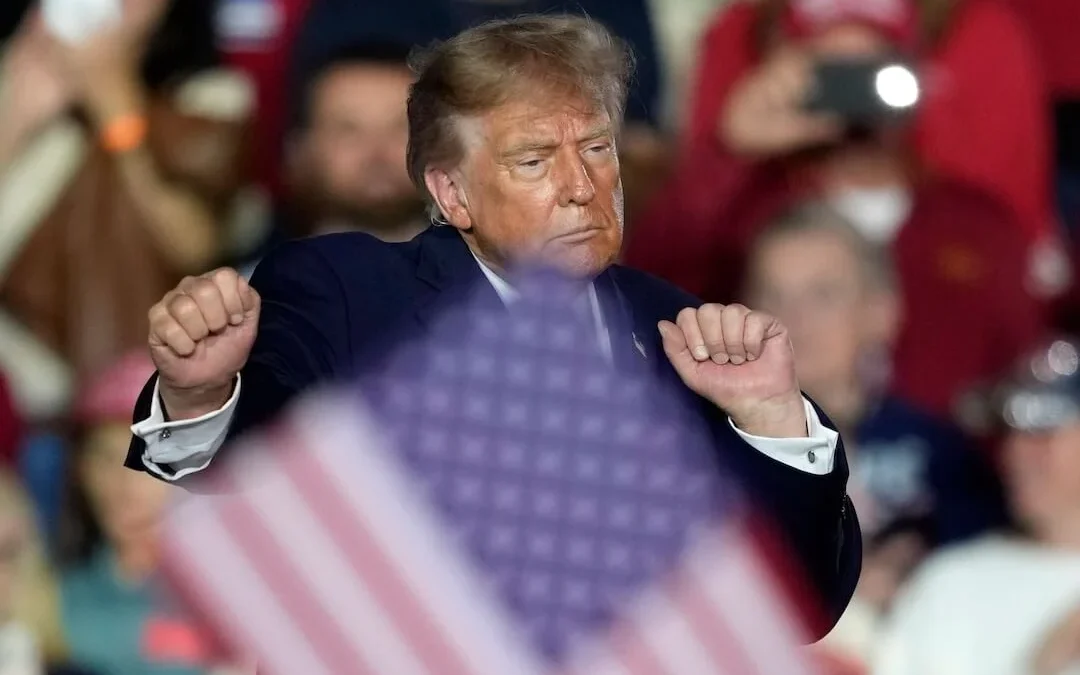
Conversely, the Republican camp has leaned into the chaos. President Donald Trump, speaking at a rally in Iowa, lauded Stevens’ move as a display of "great and almost unprecedented loyalty." While Republicans are celebrating the internal Democratic combustion, analysts caution that the long-term impact on the electorate remains uncertain.
Broader Implications for the Democratic Party
Beyond the immediate electoral math, the Stevens-El-Sayed conflict serves as a microcosm of broader fault lines within the Democratic Party. The friction between the moderate wing and the progressive faction—particularly concerning foreign policy, the role of Israel in the Middle East, and the party’s messaging strategy—is expected to persist well into the 2028 presidential cycle.
Mehdi Hasan, a prominent political commentator, argued that the incident highlights a failure in the party’s candidate vetting and coalition-building process. "There needs to be a lot of soul-searching among centrist former Stevens supporters," Hasan noted during an appearance on MS NOW, pointing out the irony of a Democrat endorsing a candidate who has faced his own controversies regarding rhetoric directed at the Muslim-American community.
Contextualizing the Political Climate
The tension in the Michigan race has been exacerbated by the aggressive rhetoric of the national stage. President Trump’s recent comments at campaign rallies, in which he repeatedly misidentified El-Sayed’s name and made derogatory remarks, have kept the campaign cycle in a state of constant agitation.
Simultaneously, the role of artificial intelligence in political analysis has become a point of contention. A recent study by the New York Times, utilizing AI to analyze years of presidential speeches, found that the current rhetoric is increasingly characterized by "black-and-white thinking," higher profanity, and decreased coherence. This academic look at the state of political discourse provides a backdrop for the current Michigan crisis, suggesting that the "rambling" nature of modern political warfare is making it increasingly difficult for candidates to maintain professional boundaries or focus on policy-driven agendas.
Judicial and Media Considerations
Adding to the atmosphere of legal and media scrutiny, the judiciary has recently intervened in other facets of the political sphere. A federal judge recently dismissed a $10 billion defamation lawsuit brought by Donald Trump against the publisher of the Wall Street Journal. The suit, which stemmed from reporting on a 2003 birthday letter sent to Jeffrey Epstein, was described by U.S. District Judge Darrin P. Gayles as "grasping at straws." This legal setback for the former president occurred in the same 48-hour window as the Michigan endorsement drama, further highlighting the volatility of the current political cycle.
Conclusion: A Pivotal Moment
As Michigan voters head to the polls, the focus remains on whether the Stevens-Rogers alliance will shift the needle. Political analysts, including Dan Pfeiffer of the "Pod Save America" podcast, argue that while the news is "megalomaniacal" and highly distracting, it may not be a game-changer. Stevens lacks a deeply entrenched, loyal grassroots base, and the vast majority of Democratic voters remain focused on the broader mission of securing a check on the executive branch.
The coming days will be defined by how the El-Sayed campaign manages the fallout. By focusing on the 9,999,998 voters who are not part of the political establishment, El-Sayed is attempting to steer the conversation back to the issues that impact the daily lives of Michiganders. Whether this effort will be successful in the shadow of such a high-profile betrayal remains one of the most compelling questions of the 2026 election cycle. The fracture in Michigan is not just a local story; it is a signal of the challenges ahead for a party attempting to navigate deep internal divides while attempting to maintain a fragile majority in the U.S. Senate.