At the annual Meta Connect conference in Menlo Park, California, Meta Platforms laid out a definitive strategic evolution, signaling a major corporate pivot from its long-term virtual reality metaverse ambitions toward ubiquitous artificial intelligence. Led by CEO Mark Zuckerberg and Chief AI Officer Alexandr Wang, the technology giant showcased an expansive ecosystem centered around the newly launched "Muse" personal AI agent. Alongside this software breakthrough, Meta introduced next-generation hardware iterations, including privacy-enhanced smart glasses, innovative audio-only wearables, high-profile celebrity collaborations, and a radically redesigned virtual reality headset that achieves a fivefold weight reduction compared to its predecessor.
The announcements delivered during the multi-day keynote address underscore a fundamental recalculation within Meta’s product pipeline. While the company famously rebranded to focus on the immersive metaverse several years ago, the unprecedented acceleration of generative AI and large language models necessitated a shift in priorities. Zuckerberg acknowledged this during his opening remarks, explaining that while Meta initially believed immersive virtual environments would precede artificial superintelligence, the explosive trajectory of AI compelled the company to place intelligent agent functionality front and center across all hardware verticals.
The Centerpiece: Meta Muse and Advanced Enterprise Partnerships
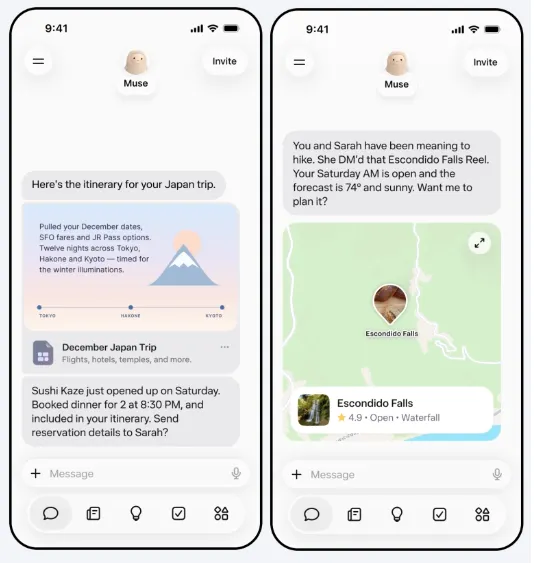
The core innovation unveiled at Meta Connect 2026 is Muse, a personal AI agent designed to act as an omnipresent digital assistant for consumers and professionals alike. Unlike earlier, more siloed chatbot applications, Muse is engineered for deep ecosystem integration and autonomous functionality. A critical cornerstone of the Muse rollout is its security architecture. Addressing growing consumer anxieties regarding data harvesting and surveillance capitalism, Meta introduced Meta Secure VM—a private data processing framework designed to ensure that user inputs and personal data processed by Muse remain completely encrypted and inaccessible, even to Meta employees.
During the conference, Chief AI Officer Alexandr Wang detailed the functional expansion of Muse, highlighting upcoming features such as dedicated email addresses assigned directly to AI agents to improve cross-platform utility and task execution. Furthermore, Meta announced a sweeping series of commercial partnerships with major global brands, including Walmart, Best Buy, Gap, Sephora, Expedia, Instacart, and Wayfair. These integrations allow Muse users to execute complex, multi-step commercial transactions—such as ordering groceries, booking travel, or purchasing apparel—directly through conversational prompts within the AI interface.
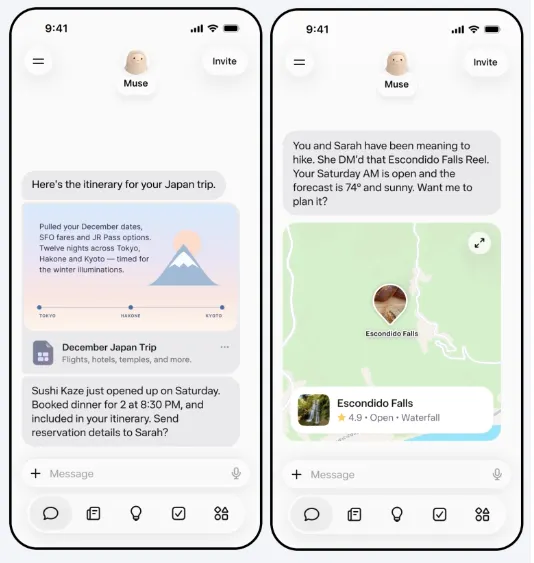
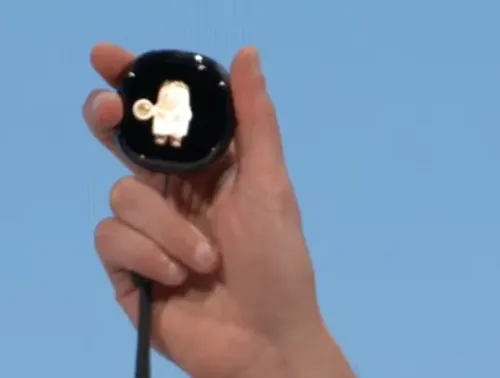
Geographic expansion and personalization were also highlighted. Muse is officially rolling out in Canada, expanding its footprint beyond the United States, and will soon feature customizable voice options, allowing users to tailor the auditory persona of their AI assistant. Additionally, Zuckerberg offered a glimpse into a hardware product still in active development: the Muse Charm. Described as a Tamagotchi-inspired digital companion device, the charm offers a pocket-sized form factor that provides persistent, screen-free access to a user’s Muse agent without requiring the user to wear smart glasses.
Privacy Focus and the Evolution of Ray-Ban Meta AI Glasses
Building on the commercial momentum of its previous wearable devices, Meta dedicated a significant portion of the conference to its expanding lineup of smart glasses. The presentation directly addressed recent public controversies concerning unauthorized visual recordings and potential vulnerabilities in physical LED indicator lights. In response, Meta announced the implementation of private processing frameworks for all smart glasses, mirroring the strict data isolation guarantees established for the Muse platform.
To alleviate consumer apprehension surrounding camera-enabled wearables, Meta introduced a dedicated line of audio-only AI glasses. These frames provide seamless connectivity to Meta AI services via high-fidelity directional audio while eliminating the optical capture capabilities that frequently spark privacy debates in public spaces.
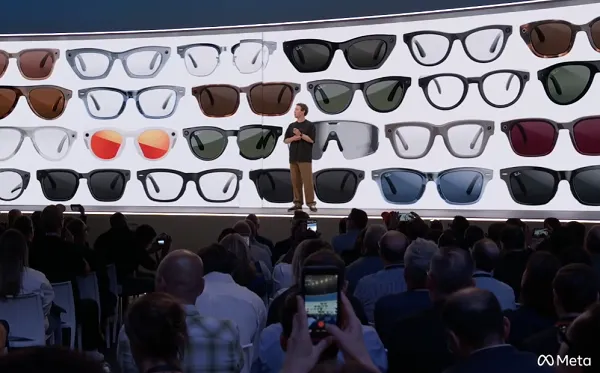
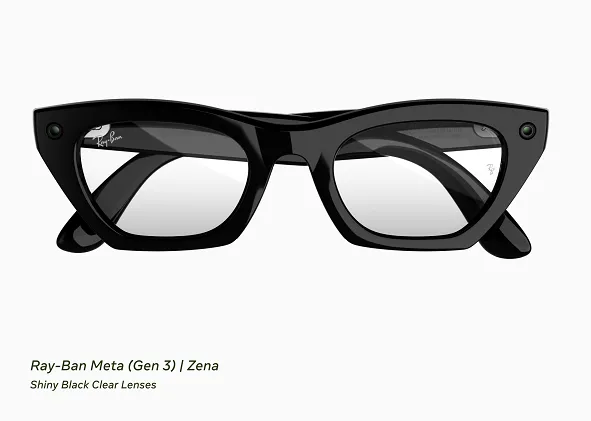
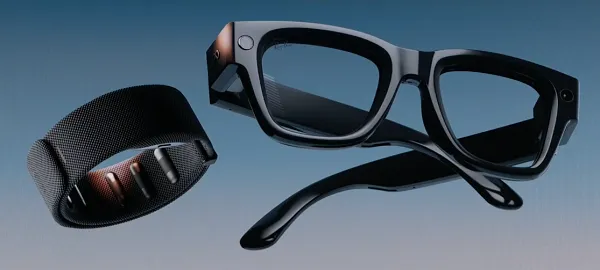
For users seeking advanced visual capabilities, Meta previewed the upcoming Ray-Ban Meta Gen 3. The new model features a significantly slimmed-down physical frame, extended battery life, and upgraded capture sensors. Most notably, the Gen 3 incorporates Dolby Atmos spatial audio capture, enabling the device to record three-dimensional soundscapes that accurately reproduce the auditory environment of recorded scenes. Meta also expanded its style catalog, introducing Aviator and Zena frame variations alongside an updated Adventurer model priced at $249.
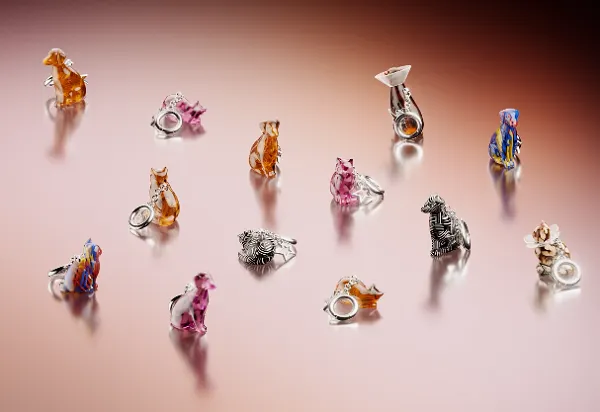
Capitalizing on the cultural success of previous celebrity partnerships—such as its past collaboration with Kylie Jenner—Meta announced a new collection designed in conjunction with K-Pop superstar Lisa. The custom frames feature design elements inspired by the artist’s personal pets, cementing Meta’s strategy of positioning tech hardware as fashion-forward lifestyle accessories. Meanwhile, demand for the high-end Meta Display glasses remains exceptionally high, with Zuckerberg confirming that the company is actively ramping up manufacturing to resolve months-long backorders and expand regional availability.
A Paradigm Shift in Virtual Reality: The Ultra-Lightweight Meta VR Glasses
The hardware showcase culminated in a major revelation from Zuckerberg and Reality Labs Chief Andrew Bosworth regarding the company’s next-generation virtual reality hardware. Breaking away from the self-contained, front-heavy design philosophy of the Meta Quest 3, Meta introduced a new class of VR glasses that weigh five times less than current mainstream headsets.
This dramatic reduction in weight—bringing the headset down to approximately 100 grams—was achieved by decoupling the primary computing architecture and battery from the visor itself. In the new configuration, the VR glasses house only the optical displays and essential sensors. Processing, power storage, and graphical rendering are handled by a separate, pocket-sized computational unit—referred to as the "puck"—which connects to the headset via a specialized optical tether and easily clips onto a user’s clothing or bag.
This architectural shift allows the device to function simultaneously as a virtual cinema, an expansive multi-monitor computer workspace, and a high-performance gaming platform. Deeply integrated with the Muse AI agent, the new VR system enables users to navigate menus, organize virtual workspaces, and execute tasks via natural conversational commands. Priced at $1,299, the Meta VR glasses are scheduled to begin shipping in the spring, marking a critical milestone in the ongoing convergence of spatial computing and artificial intelligence.
Implications and Market Outlook
The announcements made at Meta Connect 2026 illustrate a mature, highly focused corporate strategy. By pivoting foundational research and development toward agentic AI frameworks like Muse and solving persistent consumer friction points—such as weight in VR headsets and data privacy in smart wearables—Meta is attempting to cement its dominance across the next generation of consumer electronics.
The integration of retail heavyweights into the Muse ecosystem signals a shift toward transactional AI assistants capable of generating direct e-commerce revenue. Simultaneously, the introduction of modular, lightweight VR hardware addresses the primary physical deterrents that have historically limited mainstream enterprise and consumer adoption of virtual reality. As these products roll out to global markets throughout the coming year, Meta’s aggressive convergence of ambient AI and spatial hardware will face rigorous evaluation from consumers, regulators, and industry competitors alike.