The digital landscape is defined by a fierce competition for human attention. Research from the Nielsen Norman Group indicates that users often decide whether to stay on a webpage within the first 10 to 20 seconds. In this high-stakes environment, the opening line of a blog post functions as the critical threshold between engagement and abandonment. While headline optimization is frequently discussed in content strategy, the transition from the headline to the body text represents a secondary, yet equally vital, point of conversion.
The Anatomy of Reader Retention
A reader’s decision to continue reading is rarely accidental. It is a psychological response to the perceived value presented in the first few sentences. When a writer fails to bridge the gap between a compelling headline and the core content, bounce rates increase significantly. Data from various content marketing analytics firms suggest that even a slight improvement in opening engagement can result in a 20% to 30% increase in average time-on-page metrics. The objective is not merely to capture attention but to establish an immediate, logical flow that incentivizes the reader to commit to the remainder of the article.
1. Pinpointing and Addressing User Pain Points
The most reliable method for securing reader commitment is the early identification of a specific need. By acknowledging a problem the reader is actively attempting to solve, the writer builds immediate rapport. This technique relies on the "problem-agitation-solution" framework, which establishes the author as a credible authority. By explicitly stating that the post will provide a solution to a previously identified pain point, the writer creates a "promise" that the reader feels compelled to verify.
2. The Strategic Deployment of Binary Questions
Psychological studies in copywriting suggest that asking a question that prompts a "yes" response builds a momentum of agreement. This technique is designed to align the reader’s internal state with the content of the article. By asking, "Have you ever struggled with X?" the writer validates the reader’s experience. If the reader answers affirmatively, they have effectively self-selected into the target audience, making them significantly more likely to engage with the subsequent analysis or solution.
3. Leveraging Curiosity Through Intrigue
Human cognition is inherently drawn to information gaps—the space between what we know and what we want to know. Posing an intriguing question that hints at an upcoming revelation acts as a cognitive trigger. When a writer presents an unconventional perspective or a counter-intuitive question, they force the reader to resolve the tension created by that query. This method is particularly effective for long-form investigative or analytical pieces where the goal is to lead the reader through a complex narrative.
4. The Impact of Personal Anecdotes and Pattern Breaking
Standardizing content delivery can lead to "banner blindness," where readers tune out familiar patterns. Introducing a personal anecdote—even one that seems tangentially related—functions as a pattern interrupt. When a writer shares a human experience, such as a misunderstanding or a relatable social error, they shift the tone from purely transactional to relational. This shift makes the content more memorable and distinguishes the author from the thousands of other voices in the digital sphere.
5. Utilizing Analogies for Conceptual Clarity
Complex topics often suffer from high bounce rates because the reader feels overwhelmed by technical jargon or abstract concepts. Starting with an analogy allows the writer to map a new, difficult concept onto a familiar, everyday experience. This technique bridges the gap between the known and the unknown, providing the reader with a mental scaffold that makes the rest of the post easier to process and digest.
6. The Assertiveness of the Bold Claim
In an era of information saturation, directness is a highly valued trait. A bold claim—a strong assertion regarding a trend, a solution, or a predicted outcome—serves to command attention immediately. This approach requires that the author has the evidence to support the claim, as the reader will proceed with a critical eye. When executed correctly, it establishes authority and confidence, compelling the reader to evaluate the evidence provided in the body of the text.
7. Navigating Controversy to Drive Engagement
While risky, addressing a controversial topic or a widely held industry misconception can act as a powerful catalyst for engagement. By challenging the status quo, a writer invites debate. This does not imply generating hostility but rather presenting a dissenting opinion backed by logical reasoning. Readers are naturally inclined to investigate perspectives that challenge their own, provided the argument is presented with professional integrity rather than mere provocation.
8. Engaging the Senses Through Vivid Imagery
Writing that evokes sensory imagery allows the reader to "see" the scenario being described. By using descriptive, grounded language, a writer can transform an abstract topic into a tangible reality. This technique is frequently used in long-form journalism to pull the reader into the heart of a story, ensuring that the content is felt as much as it is understood.
9. The Authority of Startling Statistics
Data-driven openers offer an immediate sense of gravity to a piece. A well-placed, counter-intuitive, or startling statistic serves as an objective hook that demands attention. It signals to the reader that the post is grounded in empirical research rather than mere opinion. For instance, citing that "only 1% of users engage with this specific metric" provides an immediate sense of urgency or exclusivity that encourages the reader to discover why that number is so low.
10. Establishing Credibility Through Quotes
The use of a high-authority quote at the beginning of an article provides instant social proof. By leveraging the words of a recognized expert or a respected historical figure, the writer aligns their content with established wisdom. This technique is highly effective for setting the tone of an article, particularly in fields where academic or professional credibility is paramount.
11. The Visual Hook
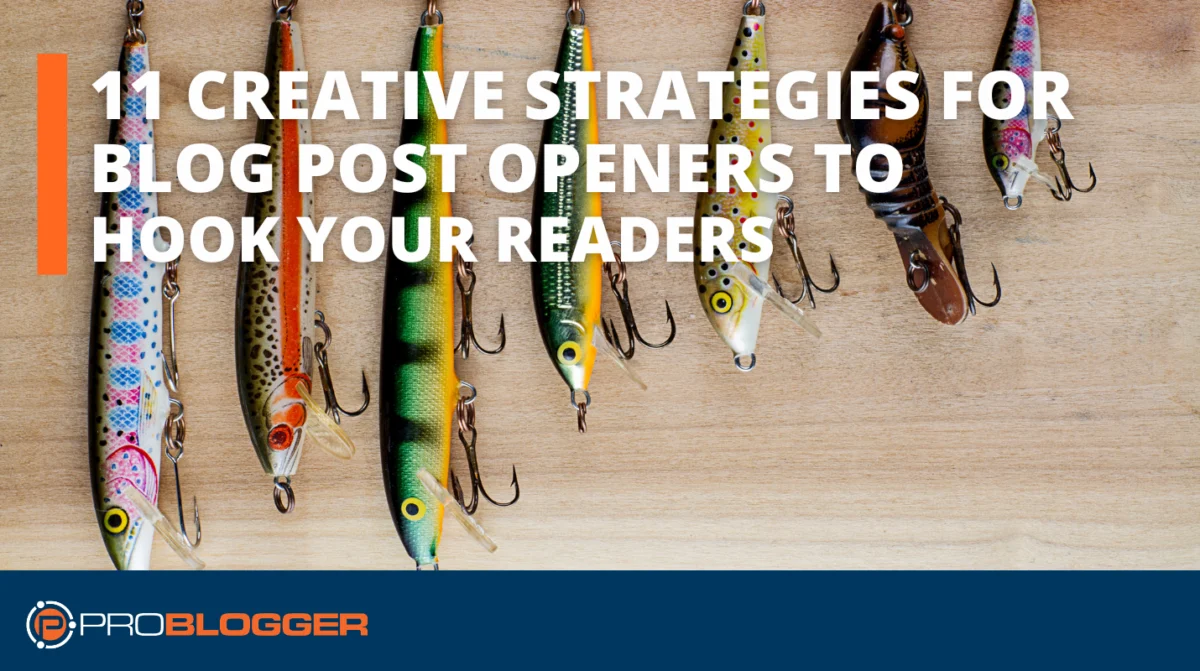
In modern content management, the distinction between text and imagery is narrowing. A high-impact, relevant image at the start of a post can be just as effective as a well-crafted sentence. In many cases, the image serves as the initial "opener," drawing the reader into the headline and the text that follows. For visual-heavy content, this is often the most important factor in driving initial click-through rates from RSS feeds and social media platforms.
Strategic Implications and Professional Synthesis
The integration of these 11 strategies requires a nuanced understanding of one’s audience. No single method is universally effective; the choice of an opener must align with the tone of the publication and the specific intent of the article. Over-utilization of a single technique—such as constant "yes" questions—can lead to reader fatigue, where the audience becomes desensitized to the stylistic device.
A professional approach to content creation demands that the opening line be treated as a strategic asset. By analyzing metrics such as bounce rate, scroll depth, and average time-on-page, content creators can iterate on their opening strategies. The goal is to create a seamless, compelling narrative journey that begins the moment the reader’s eyes touch the screen. As digital content continues to evolve, the ability to synthesize these psychological hooks with high-quality, reliable information will remain the defining characteristic of successful professional writers and publishers. Mastery of the opening line is not just about craft; it is about respecting the reader’s time by delivering immediate, undeniable value.