When the Philadelphia Eagles secured their position in the 2025 Super Bowl, the city’s official tourism marketing agency, Visit Philadelphia, launched a grassroots digital campaign that bridged the gap between traditional sentiment and modern social media strategy. By deploying a dedicated "Eagle Hotline" and placing physical rotary phones in high-traffic urban corridors, the organization invited fans to leave voice messages for the team. What began as a simple community outreach initiative quickly evolved into a viral sensation, generating nearly 3,000 voicemails in just two weeks and culminating in a multimedia campaign that garnered 2 million impressions, 1.5 million video views, and more than 130,000 individual engagements.
The success of the campaign highlights a significant shift in destination marketing, moving away from high-gloss, curated advertisements toward raw, user-generated content (UGC) that captures the authentic spirit of a locale. For Visit Philadelphia, the objective was not merely to promote hotel stays or restaurant bookings, but to foster a sense of "civic pride" that would resonate both with locals and a national audience watching the city during one of the world’s most-viewed sporting events.
The Genesis of the Eagle Hotline: From Inspiration to Execution
The concept for the hotline did not emerge in a vacuum. The timeline of the project began in the summer of 2024, when Visit Philadelphia’s director of photography and videography attended a Professional Golfers’ Association (PGA) event. During the tournament, he observed a unique activation: a vintage rotary phone where attendees could record messages for their fathers, which were later compiled into a poignant Father’s Day tribute.
Recognizing the emotional resonance of the medium, the idea was brought back to the Visit Philadelphia social media team, led by Eric Cortes, the organization’s senior director of social media. However, the team exercised strategic patience, opting to shelf the concept until a moment of significant cultural gravity occurred. That moment arrived as the Philadelphia Eagles began their dominant run through the NFL playoffs toward the 2025 Super Bowl.
“Ideas don’t need to be new to work,” Cortes noted during a retrospective on the campaign. “They just need the right moment. The idea may not be for tomorrow, but it could be for a year from now.” This philosophy of maintaining a "creative bank" allowed the team to move rapidly once the Eagles clinched their Super Bowl berth, transforming a dormant concept into an active campaign within days.
Implementation and the "Low-Friction" Participation Model
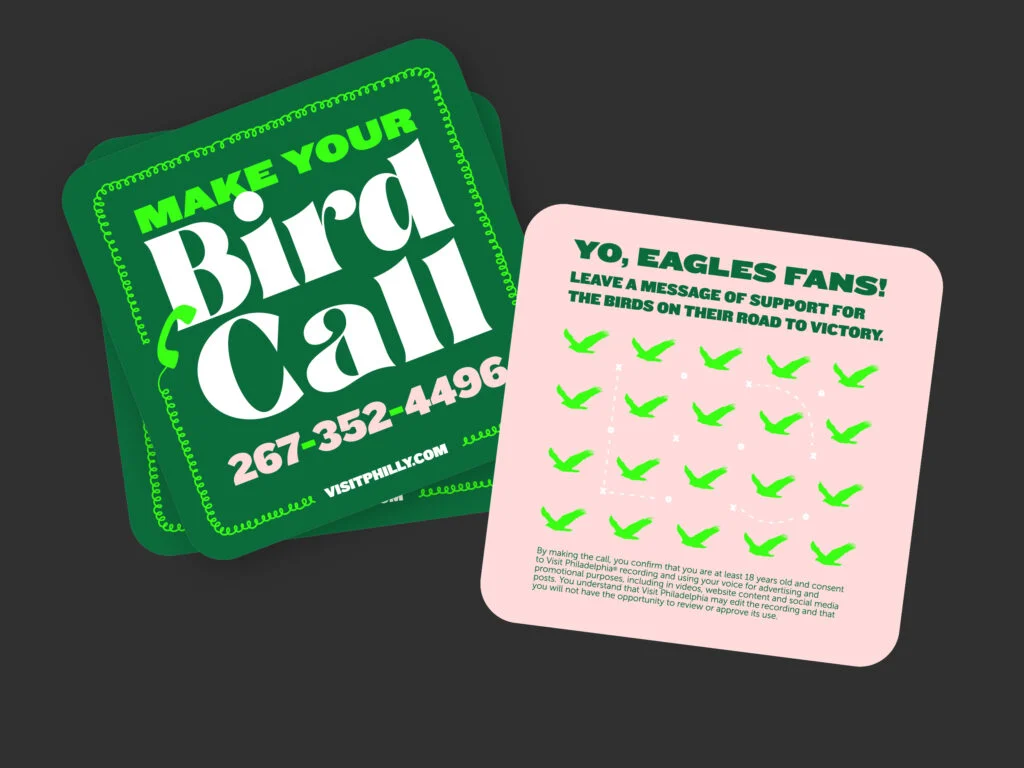
To maximize participation, Visit Philadelphia adopted a multi-channel approach. They established a digital hotline number that could be dialed from any phone and supplemented this with physical installations. Five vintage-style rotary phones were placed in high-visibility areas across the city, including transportation hubs and popular tourist landmarks.
The prompt given to the public was intentionally minimalist: “Leave a message for the Eagles on their road to victory.” By keeping the instructions broad and the barrier to entry low, the agency encouraged a wide spectrum of responses. Unlike many corporate campaigns that require participants to sign complex waivers or follow multi-step digital funnels, the Eagle Hotline relied on the simplicity of a phone call. A brief legal disclaimer informed callers that their recordings might be used for promotional purposes, but otherwise, the floor belonged to the fans.
The resulting data set was a chaotic, heartfelt, and humorous cross-section of Philadelphia’s fan base. The messages ranged from traditional "Go Birds" cheers and elaborate eagle screeches to deeply personal promises. One caller famously pledged to name their firstborn child after quarterback Jalen Hurts should the team secure the championship. Others used the platform to vent frustrations at rival teams or to share stories of how the Eagles had served as a bonding force for their families across generations.
Analyzing the Data: Engagement and Reach
The quantitative results of the campaign far exceeded industry benchmarks for the tourism and hospitality sector. According to data provided by Visit Philadelphia, the campaign included 40 unique social media posts, which achieved an average engagement rate of 7.59%. In comparison, standard social content in the tourism industry typically fluctuates between 2.5% and 3.8%.
Key performance indicators (KPIs) for the campaign included:
- Total Impressions: Approximately 2 million.
- Video Views: 1.5 million across platforms including TikTok, Instagram Reels, and YouTube.
- Total Engagements: 130,000+.
- Landing Page Traffic: 37,000 page views from 33,000 unique users between January 27 and February 14, 2025.
The campaign also attracted high-profile participation, which served to validate the initiative and expand its reach. Notable figures who left messages included Philadelphia Mayor Cherelle Parker, legendary soul singer Patti LaBelle, and various members of the Philadelphia City Council. This blend of "everyman" enthusiasm and celebrity endorsement created a comprehensive narrative of a city unified behind its team.
Content Repurposing and the Editorial Process
One of the primary challenges faced by the communications team was the sheer volume of data. Reviewing 3,000 voicemails was a labor-intensive process that required the collective effort of the social media and content teams. Staff members manually listened to each recording, categorizing them by theme—such as "emotional," "humorous," "aggressive," or "celebrity."
These recordings were then repurposed into various content formats. Shorter "highlight reels" were created for TikTok and Instagram, focusing on the most eccentric or high-energy clips. The centerpiece of the campaign was a two-minute "civic pride" video. This production combined approximately 50 different voicemails, layered over high-quality footage of Philadelphia’s skyline, neighborhoods, and fans.
Cortes observed that the final product sounded remarkably cohesive, almost as if it had been scripted. “The messages fit together so naturally that the final video sounded scripted, even though each recording came from a different caller,” he said. This organic synergy is a hallmark of successful UGC campaigns, where the collective voice of the community creates a more compelling narrative than a single copywriter could produce.
Looking toward the future, the agency noted that artificial intelligence and automated transcription tools would likely play a larger role in such campaigns. AI could be used to filter for profanity, group messages by sentiment, or identify mentions of specific players, significantly reducing the man-hours required for editorial review while still allowing humans to make the final creative decisions.
Economic and Strategic Implications for Philadelphia
While the campaign did not focus on direct conversion metrics, such as hotel bookings, its strategic value lies in "destination branding." Major sporting events like the Super Bowl provide a window of national and international attention. By positioning Philadelphia as a vibrant, passionate, and unified city, Visit Philadelphia enhanced the city’s reputation as a "must-visit" sports and culture destination.
The "civic pride play" serves a dual purpose. First, it engages the local population, turning residents into brand ambassadors. When locals are excited about their city, that energy is palpable to visitors. Second, it creates a "vibe" that attracts tourists who are looking for authentic experiences rather than sterilized tourist traps.
The economic impact of the Eagles’ Super Bowl run extended beyond social media metrics. During such periods, Philadelphia typically sees a surge in retail sales for team merchandise, increased foot traffic in sports bars and restaurants, and a general uptick in "staycation" activity among suburban residents. The Eagle Hotline campaign successfully captured this economic energy and translated it into digital capital.
Conclusion: Lessons for the Communications Industry
The Visit Philadelphia voicemail campaign offers several key takeaways for communications and marketing professionals. First, it underscores the importance of "listening" over "broadcasting." By providing a platform for the audience to speak, the agency gained access to authentic content that resonated more deeply than traditional ads.
Second, it demonstrates the value of simplicity. In an era of complex algorithms and high-production-value content, a simple phone call remains a powerful tool for human connection. The "low-friction" model ensured that anyone, regardless of their technical proficiency, could participate in the city’s story.
Finally, the campaign reinforces the necessity of strategic timing. By holding onto a good idea until the perfect cultural moment arrived, Visit Philadelphia was able to maximize the impact of their resources. As the city continues to position itself on the global stage—looking forward to events like the 2026 FIFA World Cup and the United States Semiquincentennial—the Eagle Hotline serves as a blueprint for how to turn local passion into global engagement.
Ultimately, the campaign proved that in a world of digital noise, the most effective way to get people’s attention is to give them the microphone. By turning 3,000 voicemails into a unified roar of support, Visit Philadelphia didn’t just market a city; they documented a moment in its history.