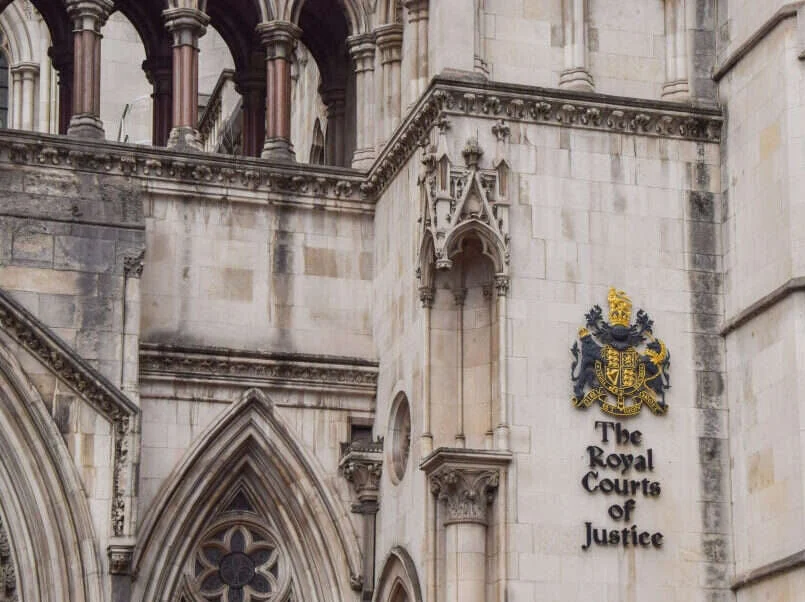
London — A legal showdown at the Royal Courts of Justice has placed the delicate balance between freedom of the press and the preservation of individual life under intense scrutiny. The High Court in London is currently reviewing a high-stakes application for an injunction brought by a well-known public figure, legally identified only by the cipher "PPT," who is attempting to permanently block two major British media organisations—ITN and Guardian News and Media (GNM)—from publishing a series of severe allegations regarding his personal conduct.
The claimant, whose identity remains strictly protected by reporting restrictions, faces accusations of utilizing his considerable public status and influence to engage in inappropriate and exploitative sexual activities with numerous young women over an extended period. The ongoing trial, presided over by Mr Justice Nicklin, is not tasked with determining the truth or factual accuracy of the underlying claims. Instead, the court must resolve a complex legal question: whether the publication of these allegations should be restrained, weighing the severe mental health vulnerabilities and suicide risks cited by the claimant against the profound public interest arguments advanced by the media houses.
The Nature of the Allegations and the Media Investigation
The legal battle stems from a collaborative and extensive journalistic investigation conducted by reporters from both GNM and ITN. According to submissions presented by Gavin Millar KC, representing the two media entities, the investigation was both wide-ranging and rigorous, spanning months of inquiry and involving direct communication with more than 100 individuals.
Among those interviewed by journalists were personal acquaintances, professional colleagues, and a significant cohort of women who stepped forward to share accounts of their interactions with the claimant. Millar told the court that the accounts gathered from various independent sources—many of whom had no prior connection to one another—revealed a striking consistency in behavioral patterns. The core of the intended publication focuses on an alleged abuse of power and professional status over many years to pursue and engage young women in exploitative circumstances.
Furthermore, legal representatives for the publishers underscored that the public interest threshold for running the story is exceptionally high. Millar emphasized that several of the women who came forward had experienced severe psychological trauma, mental health crises, and long-term illness directly linked to the claimant’s alleged actions. Consequently, the media organisations argue that reporting these patterns of behavior is a matter of vital public accountability and journalistic duty.
Severe Health Trauma and Suicide Risk Claims
In stark opposition to the publishers’ stance, Sara Mansoori KC, representing the unnamed claimant, painted a grim picture of the immediate and catastrophic human toll the impending publication has already inflicted upon her client. Mansoori informed Mr Justice Nicklin that the claimant vehemently denies any wrongdoing, but argued that the release of the story would have a devastating, fatal impact on his life.
Detailing the severity of the claimant’s psychological distress, Mansoori revealed that he made an initial suicide attempt almost immediately upon receiving formal correspondence letters from ITN and GNM detailing the allegations and requesting a right of reply. She clarified to the court that this drastic reaction was not merely a superficial response to the existence of negative press, but rather the result of cumulative, long-term trauma and an overwhelming dread of public exposure and what she termed "trial by media."
Following the initial crisis, the claimant reportedly absconded from medical care and subsequently made a second suicide attempt, leading to months of specialized hospitalisation, involuntary psychiatric detention, and comprehensive clinical evaluations by more than ten independent medical professionals.
In her written submissions, Mansoori stressed the exceptional nature of the case, pushing back against any suggestion that medical concerns were being manufactured merely as a tactical legal maneuver to silence journalists. "This is not a case where an individual has spuriously raised ‘mental health’ concerns in the face of an impending publication that they do not wish to occur," Mansoori stated. She added that the claimant has completely relinquished his public profile, asserting that he "has no intention of returning to public life," and argued that judicial intervention is urgently required to prevent a fatal outcome.

Balancing the Right to Life and Press Freedom
The legal arguments before Mr Justice Nicklin have opened a profound debate regarding the intersection of Article 2 of the European Convention on Human Rights (the right to life) and Article 10 (freedom of expression).
Mansoori argued that the state, through the judiciary, has a fundamental obligation to intervene and protect human life when an individual faces imminent and mortal danger resulting from external pressures. She contended that allowing the publication to proceed under these specific, fragile medical circumstances would effectively disregard the absolute sanctity of life in favor of journalistic timing.
Conversely, Gavin Millar countered this constitutional argument on behalf of ITN and GNM. He submitted that while the state undeniably holds a duty to safeguard life, extending that principle to this case would demand unprecedented and unwarranted state censorship. Specifically, it would require judicial interference in the lawful, constitutionally protected activities of independent news organisations simply to preempt an autonomous, self-inflicted act by the claimant. Millar argued that accepting the claimant’s position would effectively grant high-profile individuals a veto over investigative journalism whenever the psychological weight of scrutiny becomes burdensome.
Judicial Warnings Against Online Speculation
As the courtroom drama unfolded, the anonymity of the claimant became a secondary battleground. Given the high-profile nature of the case and the involvement of prominent news institutions, significant speculation regarding the identity of "PPT" has circulated widely across social media platforms and online forums.
At the opening of the proceedings, Mr Justice Nicklin issued a stern, explicit warning to the public, media commentators, and internet users, directing them to halt all speculation surrounding the man’s identity. The judge emphasized that the unchecked spread of rumors undermines the integrity of the judicial process and fails to respect the legal parameters set by the court.
"The existence of online speculation, however confidently expressed or widely repeated, does not authorise anyone to identify, or purport authoritatively to identify, PPT in connection with these proceedings," Mr Justice Nicklin cautioned. He further underscored that online repetition does not elevate unverified gossip into established legal fact, warning that breaches of reporting restrictions could carry serious legal consequences.
Broader Implications for British Media Law
Legal analysts are monitoring the current proceedings closely, noting that the court’s final ruling could establish a crucial legal precedent regarding how English courts handle pre-publication injunction applications where severe mental health crises and self-harm risks are credibly documented.
While traditional privacy and defamation law frequently grapples with injunctions concerning confidential information, private sexual matters, and reputation management, the integration of extensive psychiatric evidence and active suicide risk introduces an extraordinary humanitarian dimension. If the court grants the injunction, it may create a pathway for other public figures facing ruinous exposures to halt reporting by demonstrating acute medical vulnerability. Conversely, a dismissal of the injunction would reaffirm the robust protections afforded to investigative journalism, signaling that personal health crises—however severe—cannot inherently override the public interest in exposing alleged abuses of power and status.
The high-stakes hearing is scheduled to conclude, with Mr Justice Nicklin reserving his final judgment to be delivered in writing at a subsequent date.
Anyone affected by the issues raised in this report can contact the Samaritans in the UK for free, confidential support day or night by calling 116 123 or visiting samaritans.org.